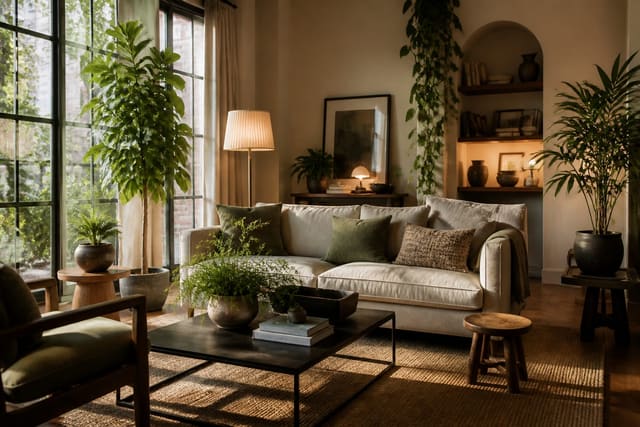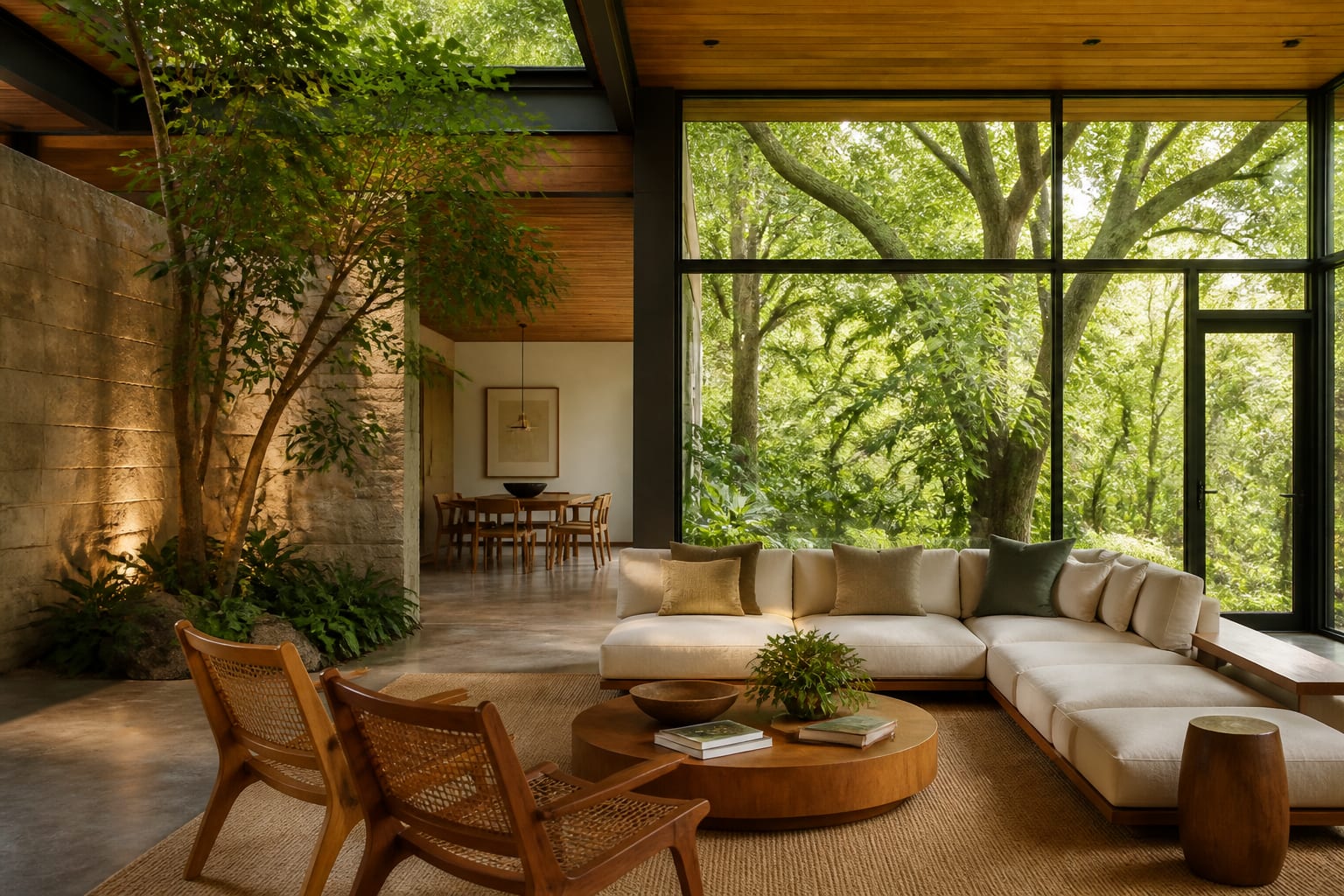
Biophilic design is the practice of strengthening your home's connection to nature, and done well it makes a room measurably calmer rather than merely decorated with plants. The core idea is simple: humans respond to daylight, greenery, natural materials, and organic forms, so good design pulls those elements indoors on purpose. This guide explains what biophilic design actually means, where the concept comes from, and how to apply it room by room. It also covers the common missteps that turn a thoughtful nature-led space into a cluttered jungle that ignores the principles entirely.
The Core Idea Behind Biophilic Design
Biophilic design rests on the premise that people feel and function better near nature, so it deliberately builds those connections into interiors. The term joins the Greek roots for life and love, and the modern design movement formalized around the 1980s before spreading into mainstream homes over the following decades. At its heart, the approach asks every room to answer one question: how does this space link a person back to the natural world? That link arrives through several channels at once. Direct nature means actual daylight, plants, water, and fresh air. Indirect nature covers natural materials, organic shapes, earthy colors, and imagery of landscapes. Spatial qualities cover the human craving for both prospect and refuge, the open view paired with a sheltered nook. A genuinely biophilic room usually combines all three rather than relying on a single houseplant. Research into these spaces points to lower stress, better focus, and improved rest, which is why offices, hospitals, and schools have adopted the principles alongside homes. The practical takeaway is that biophilic design is a system, not a shopping list. You position seating within about 10 feet of a view, you specify oak instead of laminate, and you choose a sage wall over a stark white one, in service of that single nature connection. Keep roughly 60 percent of surfaces in grounding tones, and hang nature imagery near 60 inches at eye level. When the channels reinforce each other, even a small apartment feels grounded and restorative. Understanding the framework first prevents the most common error, which is buying plants while ignoring the light, materials, and layout that actually carry the effect. Think of plants as the visible signal of biophilic design and the light, materials, and forms as the structure beneath that signal, holding the whole connection together.
See also our guide to Houseplant Care Guide for more on what is biophilic design.
How Light, Views, and Air Do the Heavy Lifting
Plants get the attention, but daylight, views, and airflow drive most of biophilic design's measurable benefits, so prioritize them before anything green arrives. Aim to seat people within roughly 8 feet of a window wherever possible, because proximity to natural light strongly shapes mood and the body's daily rhythm. Keep glazing as unobstructed as you can, choosing sheer panels over blackout drapes so light reaches deep into the room through the afternoon. Where a real view exists, frame it by placing seating to face it, since even a glimpse of trees or sky delivers the restorative effect researchers associate with the style. Warm artificial light matters too, so specify bulbs around 2700K in living and rest areas to echo late-day sun rather than the harsh 4000K cast of a typical office. Air completes the trio, meaning operable windows, cross-ventilation, and a few air-cleaning plants all contribute to a room that feels alive rather than sealed. Position your tallest, leafiest plants where morning sun lands so they thrive and reinforce the daylight you already have. If a room faces a blank wall, mount a mirror perpendicular to the window to carry light an extra several feet across the space. These moves cost little and require no rare materials, yet they account for far more of the biophilic payoff than the number of pots on your shelves. Get light, view, and air right first, and the plants and materials simply build on a foundation that already feels connected to the outdoors. A room with one clear window, a real view, and fresh moving air will read as biophilic long before a single fern arrives on the shelf.
For a related angle on what is biophilic design, read Indoor Plant Styling Ideas.
Materials, Colors, and Organic Forms
When daylight and views are set, biophilic design leans on materials, color, and shape to keep the nature connection going even on a gray day. Favor materials that came from the natural world and show it, such as solid wood with visible grain, stone with real veining, wool, linen, jute, cork, and bamboo. These surfaces carry subtle irregularity and texture that the eye reads as organic, unlike the flat uniformity of high-gloss plastic and laminate. Color should mirror landscapes you respond to, anchoring walls in warm whites, clay, sage, or stone and reserving deeper greens and ochres for accents. Keep at least 60 percent of a room in these grounding neutrals so the scheme stays restful rather than busy. Organic form is the quietest principle and often the most overlooked, meaning curves, arches, and irregular edges that echo nature's lack of straight lines. A round table about 48 inches across, a curved sofa, or a pebble-shaped rug all soften a room without a plant. Float a curved console near 30 inches high to break the grid of straight cabinetry. Biomorphic patterns help too, so a leaf-print cushion or a wood grain that ripples across a cabinet front extends the theme into the details. Texture does heavy lifting in these spaces because it gives the eye somewhere to rest, which is why a tonal room full of natural fibers never feels boring. The aim is layering, so a wool rug, an oak table, a linen sofa, and a stone bowl together create a habitat that holds attention even before greenery enters the picture at all. Aim for at least three distinct natural textures in any room, since a single material repeated everywhere flattens into monotony rather than reading as the layered variety of an outdoor setting.
Applying Biophilic Design Room by Room
Biophilic design adapts to every space, but each room rewards a slightly different emphasis, so tailor the principles to how you use the area. In a living room, prioritize a daylight-facing layout, tiered plants, and natural-fiber upholstery to create a restful gathering space. In a bedroom, lean harder into refuge by lowering the lighting, choosing linen bedding, and keeping a single calming plant rather than a crowd, since rest depends on quiet. A home office benefits most from a desk set within 8 feet of a window and 2700K to 3000K task light, plus a plant within arm's reach to ease eye strain during long focus blocks. Bathrooms suit humidity-loving greenery like ferns and pothos, along with stone, wood-look tile, and a frosted window that admits light while keeping privacy. Kitchens welcome a herb garden on the sill, butcher-block counters, and open shelving in warm wood that softens the room's hard working surfaces. Across all of them, hold to a few rules: protect daylight, choose at least one genuinely natural material per surface, and keep your palette grounded in earthy neutrals. Resist the urge to fill every corner, because negative space is part of nature too and a cramped room loses the calm you are chasing. Start with the single room where you spend the most time, since concentrating the effort there delivers the clearest benefit before you expand the approach. Applied this way, biophilic design scales from a rented studio to a whole house without ever feeling like a costume, because each room reflects its real purpose. Once one room proves the approach, you can carry the same daylight, material, and palette rules into the next space with growing confidence rather than guessing from scratch each time.
Here are the common mistakes to avoid: - Buying plants while ignoring daylight, layout, and natural materials entirely - Overcrowding every corner until the room feels cluttered, not calm - Painting all walls green so plants no longer stand out - Using harsh 4000K bulbs that erase the warm natural mood - Choosing fake plants and laminate that the eye reads as synthetic
Bring the look home with Re-Design
Curious how biophilic design would look in your actual home rather than a showroom? Open Re-Design, upload a photo of any room, and preview the style mapped onto your real walls, windows, and furniture. You can test warm sage walls against your current light, see where a tall plant belongs, and judge whether oak or stone suits the space before spending anything. Re-Design turns the abstract principles in this guide into a concrete picture of your own room, making it far easier to commit to changes that work.
Frequently Asked Questions
Is biophilic design just about adding plants?
No. Plants are one part, but daylight, views, natural materials, organic shapes, and earthy colors carry most of the effect. A room with great light, oak furniture, and sage walls can feel deeply biophilic even with only one or two plants in it.
Does biophilic design actually have benefits?
Studies consistently link nature-connected interiors to lower stress, sharper focus, and better rest, which is why hospitals, schools, and offices adopt the approach. The benefits come from the full system of light, greenery, and natural materials working together, not from a single decorative plant.
Can I apply biophilic design in a small apartment?
Absolutely. Prioritize daylight by keeping windows clear, add a few low-light plants, choose natural materials for key surfaces, and ground the palette in earthy neutrals. Because biophilic design is a system rather than a square-footage requirement, even a studio can feel restorative.