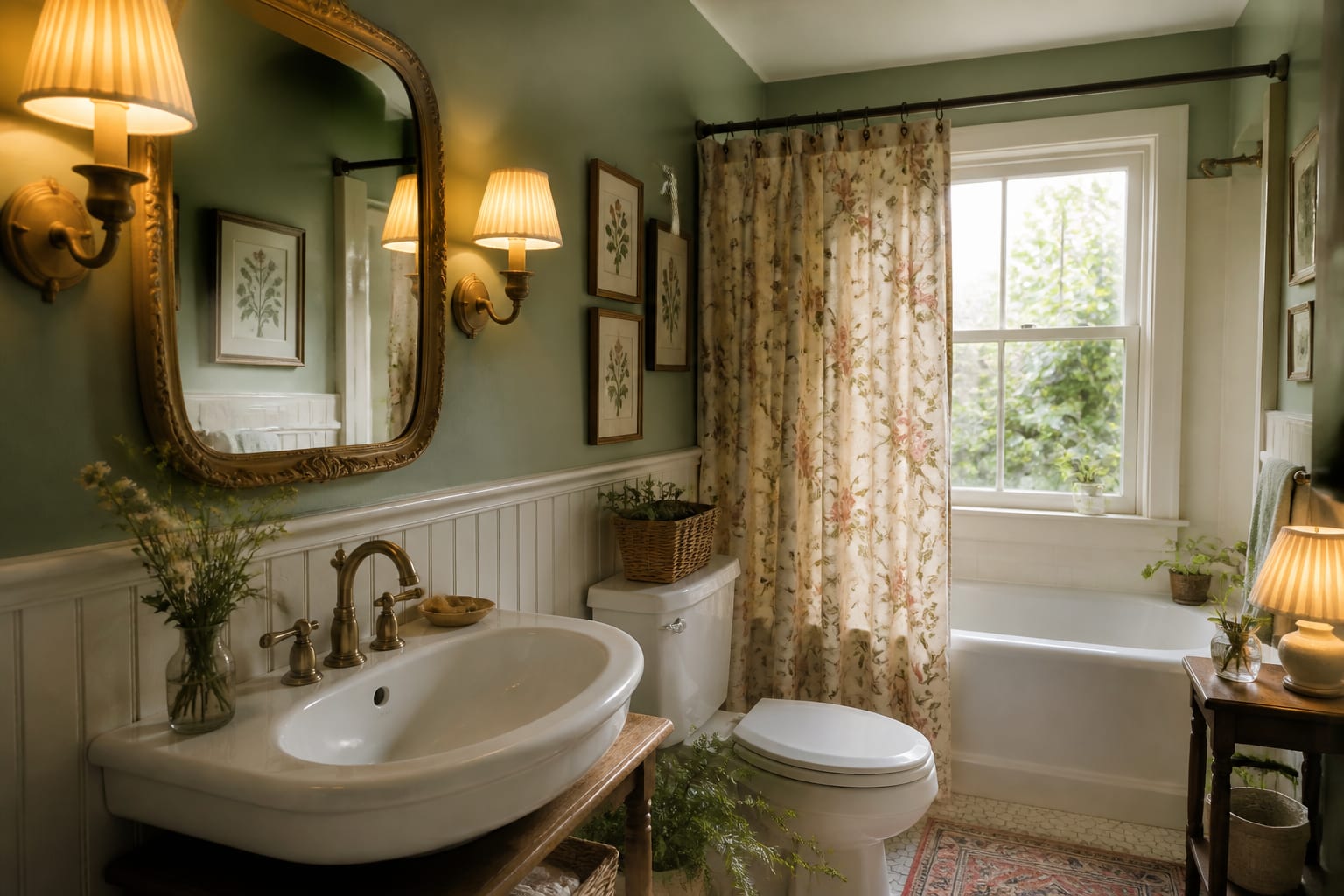
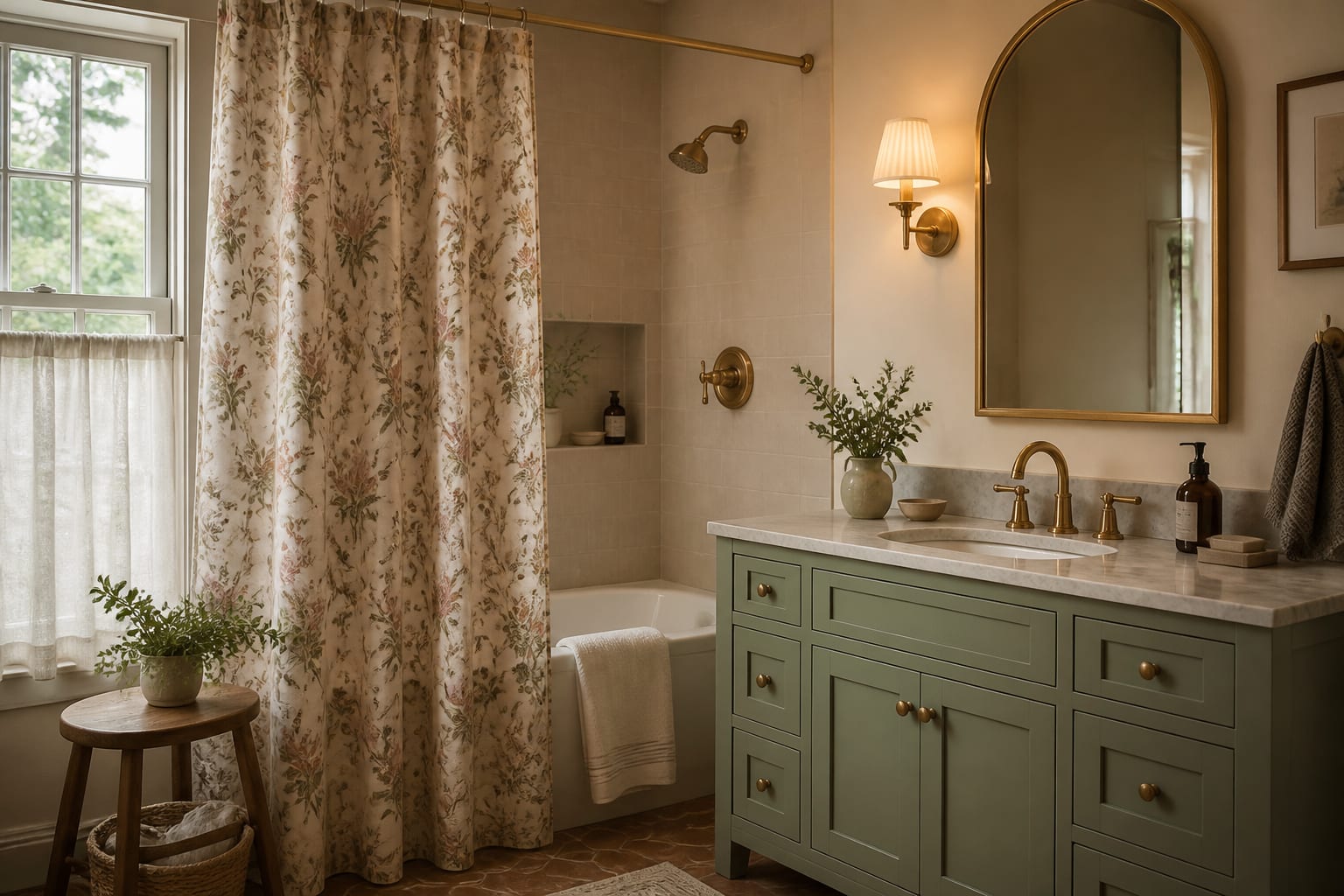
A cottagecore bathroom looks and feels like a garden-touched retreat by combining one strong botanical pattern, moisture-safe vintage pieces, warm 2700K lighting, natural texture, and tightly edited storage. The faucet, mirror, light, and shower curtain matter more than tiny decorative accents. The goal is romance that survives steam, toothpaste, and real morning routines.
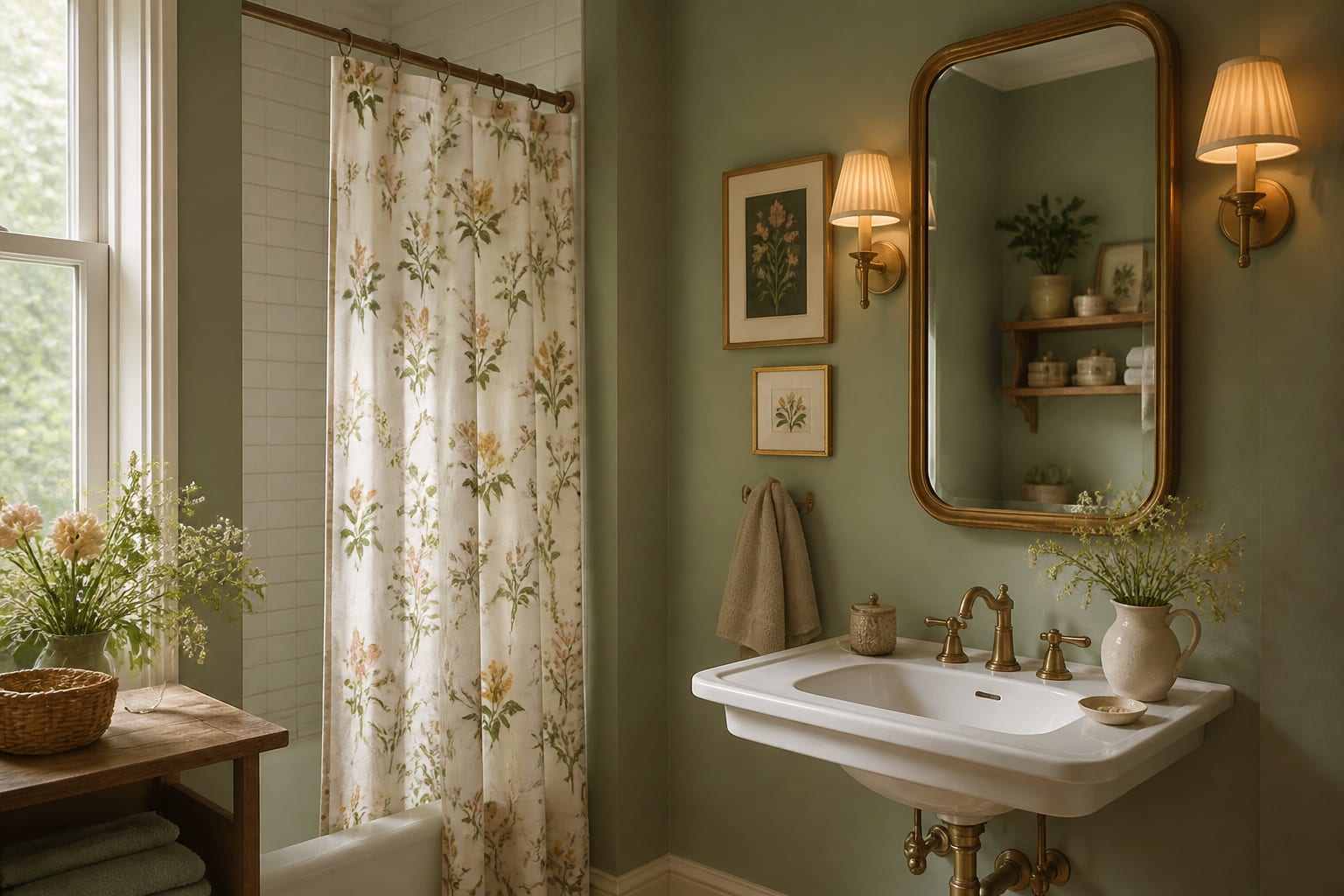
What makes a bathroom feel cottagecore instead of kitschy?
A cottagecore bathroom mixes botanical softness with old-house materials: painted wood, aged metal, linen or cotton, ceramic, warm glass, and pieces that look collected rather than matched. It should suggest a garden sink room, not a themed display.
Start with cream, putty, chalky sage, faded rose, dusty blue, mushroom, soft olive, or butter yellow. Stark white tile can work if warmed by brass, wood, or fabric. Beige builder tile pairs better with a cream that leans yellow or gray than with bright white paint.
Scale separates pretty from fussy. In a standard 5 ft x 8 ft bath, the shower curtain is often the largest surface, so treat it like wallpaper: a medium floral, block print, or trailing vine cotton curtain can carry the whole mood. If the floor tile is already patterned, keep the curtain quieter and put the garden reference in art or a Roman shade instead.
Vintage doesn't mean fragile. A beveled mirror, porcelain knob, antique-style hook, marble tray, or brass picture light adds age without adding upkeep. In very small baths, borrow the scale discipline from tiny powder room design: a few strong moves outperform ten delicate accents.
Which cottagecore bathroom ideas actually change the room?
Pick five or six ideas that suit your plumbing, tile, and cleaning habits — these affect the surfaces you notice first.
- Hang a floral shower curtain (72 in x 72 in standard, or 84 in extra-long for a low ceiling) as the room's main pattern, mounted near ceiling height.
- Replace a flat mirror with a vintage oval, arched, or scalloped mirror 2 in–4 in narrower than the vanity to soften hard tile lines.
- Paint the vanity sage, mushroom, cream, or dusty blue with 1 in–1.5 in ceramic or antique brass knobs for a touch point upgrade without overwhelming the cabinet.
- Add beadboard or painted wainscot to about 36 in–48 in high on dry walls, keeping shower walls simpler to maintain.
- Use a washable cotton runner in front of a double vanity, leaving 2 in of floor visible near door swings.
- Install a shallow 6 in–8 in wall shelf for folded washcloths, a small vase, and one jar — display space without stealing elbow room.
- Frame botanical prints behind glass, hung 57 in–60 in on center, to protect them from moisture.
- Choose a bridge faucet, cross handles, or a curved spout where plumbing allows; a vintage silhouette at the sink reads more permanent than seasonal accessories.
How do you keep a floral bathroom practical?
A floral bathroom stays practical when the romance is washable, wipeable, and lifted off the wettest zones. Dried flowers by the faucet, raw wood trays under soap, and paper labels near the shower all age badly.
Keep storage less visible than the style. Toothbrushes, razors, and skin care belong in a medicine cabinet, drawer, or lidded basket away from direct water. If shelving is open, give it one job — towels, jars, or art, not all three plus every bottle you own.
Choose plants for the bathroom you have. Ferns, pothos, and philodendron thrive on humidity if there's usable daylight; in a windowless bath, use branches, pressed botanical art, or a floral textile instead. For a greener version of the look, see biophilic bathroom ideas and keep the cottage layer more vintage than spa-like.
Common cottagecore bathroom mistakes
The smaller the bathroom, the less tolerance it has for extra objects.
- Buying every floral accessory makes the room look busy. Choose one lead floral and support it with solids, stripes, gingham, or plain painted wood.
- Ignoring existing tile creates a daily fight. Cool gray tile pairs with dusty blue, cream, and faded green; tan tile pairs with putty, aged brass, and olive.
- Using raw wood near water shortens the room's life. Favor sealed wood, ceramic trays, metal hooks, and glass jars in damp zones.
- Choosing undersized vanity lights weakens the sink wall. Two sconces around 18 in–24 in tall often beat a single builder-grade bath bar.
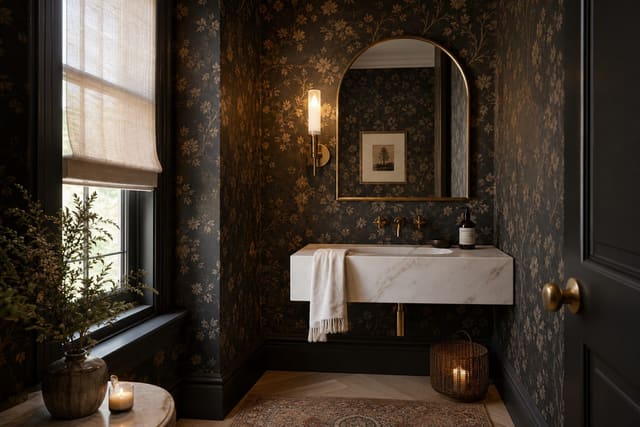
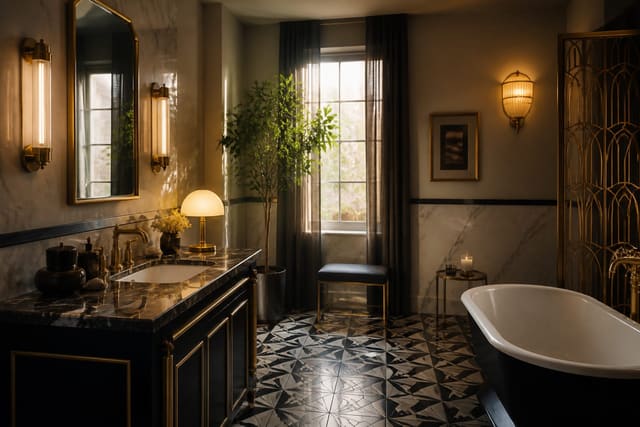
- Copying ornate hotel glamour pulls the room off theme. Compare that mood with art deco bathroom ideas — cottagecore wants softness and patina, not polish and geometry.
Use AI to preview your cottagecore bathroom before you commit
Cottagecore is risky in a bathroom because every material sits close together: curtain beside tile, mirror beside light, hardware beside faucet. Uploading a photo to Re-Design lets you test the full composition before ordering wallpaper, fixtures, or paint.
Compare at least three AI previews from the same standing height and distance: a floral curtain with plain walls, painted beadboard with a simple curtain, and botanical wallpaper behind the vanity only. This is especially useful in bathrooms with no window, yellow tile, or fixtures you can't replace, since it reveals whether sage paint fights the floor or a brass mirror warms up chrome plumbing. Keep tub position, door swing, and vanity size close to the real room.
What finishing details make the secret garden mood feel real?
Add one woven texture, one ceramic piece, one botanical reference, one aged metal, and one soft textile — that's enough for most bathrooms.
Choose two or three bath towels in cream, faded green, oatmeal, or dusty rose, plus hand towels with a small stripe or embroidered edge. Keep scent quiet: lavender, rosemary, geranium, fig, or unscented soap feels more convincing than competing candles. A single small vase can sit on the tank or vanity if it doesn't block the faucet or mirror.
Art finishes the room when it suits the moisture and scale — pressed ferns, garden sketches, and vintage flower prints all work. Keep frame spacing around 2 in–3 in in a grouping, away from direct shower steam.
Edit from the doorway before calling the room done. Remove whatever announces the theme too loudly, then confirm the bathroom still has pattern, warmth, storage, and softness — a place to wash your face, hang a damp towel, and start the day gently.
Frequently Asked Questions
What colors work best for a cottagecore bathroom?
Cream, putty, chalky sage, faded rose, dusty blue, mushroom, soft olive, and butter yellow all work well. Match undertones to your existing tile: cool gray tile suits dusty blue and cream, while tan tile suits putty and olive. Warm brass or wood hardware helps stark white tile feel intentional rather than clinical.
Can a small bathroom handle a busy floral pattern?
Yes, if it's the room's single lead pattern. Use one bold floral on the shower curtain or wallpaper panel, then keep towels, mats, and hardware calm and solid. Multiple competing florals in a small space usually look cluttered rather than charming.
Are plants necessary for a cottagecore bathroom?
No. Ferns, pothos, and philodendron do well with humidity and daylight, but windowless bathrooms should use branches, pressed botanical art, or floral textiles instead. Forcing a plant to survive in a dark, dry bathroom usually looks worse than skipping it.
What lighting temperature suits this style?
Aim for warm bulbs around 2700K at the vanity. Cooler light flattens cream tile and fades floral patterns, working against the vintage, sun-warmed mood cottagecore relies on.
How do I keep a floral bathroom easy to clean?
Keep anything within splash distance washable or wipeable: sealed wood, ceramic, glass, brass, and washable cotton. Store daily products in cabinets, drawers, or lidded baskets rather than on open shelves, and limit open surfaces to one clear job each.