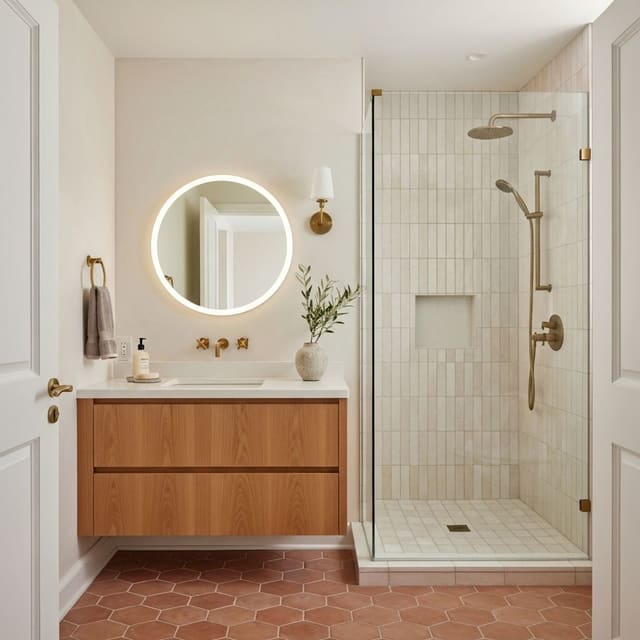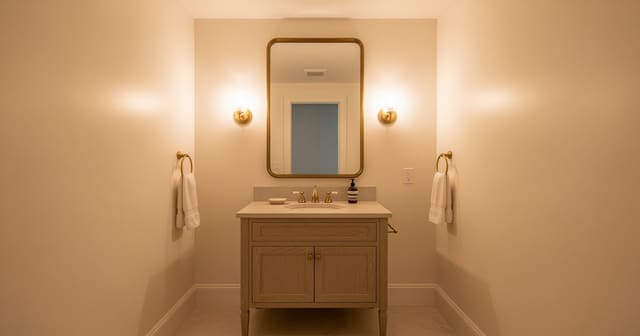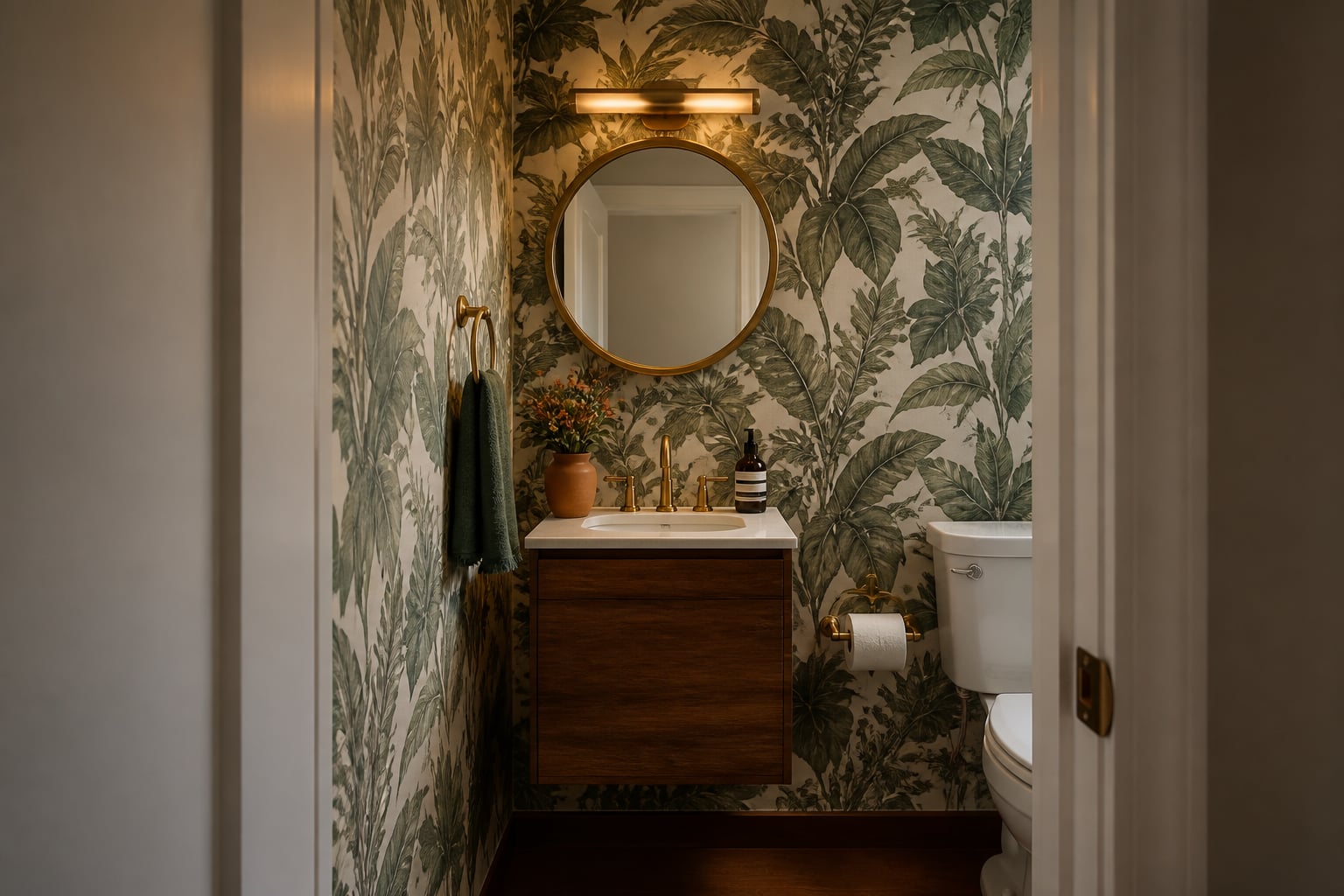
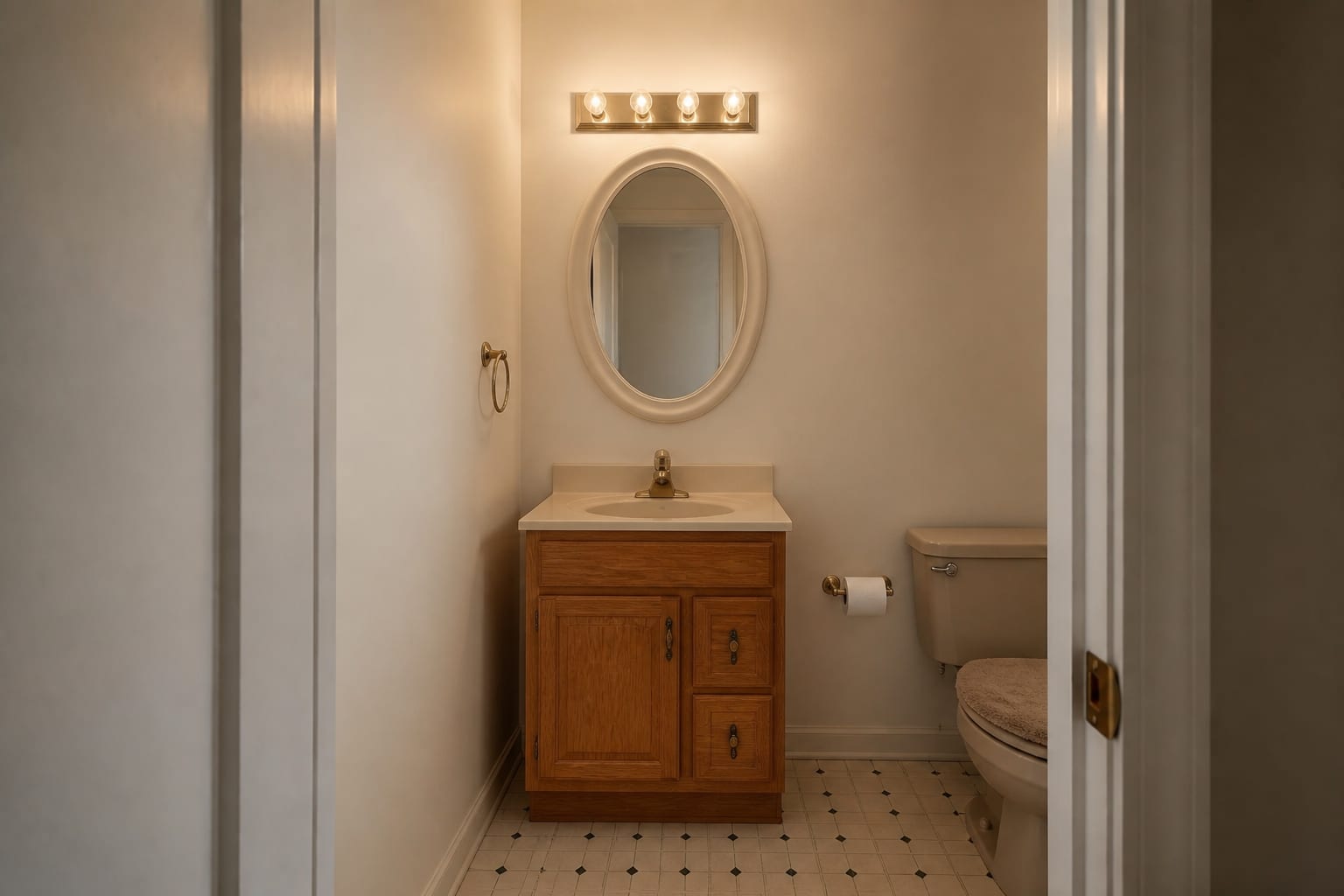
A powder room under 20 sq ft reads designed when the floor is a single graphic pattern, the wall above the vanity carries one strong moment (mirror, wallpaper, or art), and lighting is a pair of warm sconces flanking the mirror instead of an overhead fixture. Bland is the expensive mistake here: a tiny half bath has no tub or shower curtain to hide behind, so every visible choice matters immediately. The fix is choosing fewer, stronger elements, not adding more.
"A tiny powder room can carry drama when the footprint gets lighter first."
What makes a powder room under 20 sq ft feel intentional?
Keep the floor visually open, choose a compact sink, commit to one bold wall or tile move, and layer flattering light around the mirror. The room should feel deliberately edited, not starved.
Start with clearance. Aim for roughly 30 inches of clear width around the toilet centerline and at least 21 to 24 inches of clear floor in front of the bowl. If the door swings inward and nearly touches the toilet, consider an outswing door, pocket door, or narrow-profile toilet before spending on wallpaper.
The sink is the second make-or-break choice. In a bath under 20 sq ft, a 16 to 20 inch wall-hung or corner sink usually beats a vanity because it frees toes and sightlines. A pedestal works only if the base is slim; chunky columns read as furniture in the aisle.
Use surface pattern to add height. A vertical stripe, small-scale botanical paper, or stacked tile running to the ceiling makes walls feel taller than a half-painted builder room. The same logic behind small bathroom tile that looks bigger applies: fewer broken lines, stronger verticals, grout that doesn't shout over the wall.
The fixture decision that controls every tiny half bath
The sink and faucet combination decides how usable the room feels. People often pick the cute vanity first, then discover the door hits a drawer or guests have to stand sideways.
A floating vanity works if it's shallow: look for 10 to 15 inch depths, and avoid anything deeper than 18 inches unless the room is closer to a full 5 by 5 feet. Leave 4 to 6 inches of open floor visible below the cabinet; that shadow line lightens the room even in a dark finish.
A wall-mounted faucet saves counter depth but raises the planning bar. The spout must land over the drain, and the plumber needs blocking and valve access inside the wall. If plumbing changes aren't in the plan, choose a petite deck-mounted faucet with a short projection.
The mirror should not be timid. A 24 to 30 inch wide mirror can make a 20 inch sink wall look considered instead of undersized. With a low ceiling, use a tall or arched mirror that reaches within 6 to 10 inches of the ceiling.
Lighting has to flatter a face at close range. A single ceiling puck throws shadows under the eyes. Use one sconce on each side of the mirror when width allows, or one centered above it, with a warm 2700K to 3000K bulb.
Test this on your own room photo with ReDesign before committing; keep the doorway, walls, windows, and fixed features visible so the preview solves the room you actually have.
Which powder room design ideas earn their inches?
The ideas that work hardest add drama without stealing shoulder room: color, reflection, lighting, and wall-mounted storage instead of bulky freestanding pieces.
- Wrap the walls in one treatment. Wallpaper, limewash, beadboard, or full-height paint across all four walls feels calmer than an accent wall stopping at 48 inches, since the eye stops measuring where the feature begins.
- Go dark only if the edges are clean. Charcoal, oxblood, or ink blue can work in a windowless powder room, but trim and caulk need to be crisp. Pair it with a mirror at least as wide as the sink and bright enough light to keep the basin from disappearing.
- Use a shallow shelf instead of a medicine cabinet. A 4 to 6 inch ledge above the sink holds soap or a bud vase without turning the wall into furniture.
- Make the floor quiet if the walls are loud. Patterned wallpaper with a plain stone-look floor feels intentional; two busy patterns at once feels frantic in 18 sq ft.
- Let the toilet fade back. A skirted toilet with a smooth profile is calmer than a curvy trapway. Paint the wall behind it a continuous color and hang art above the tank so the eye moves upward.
Style can stay specific in a small footprint. Pull one detail from cottagecore bathroom ideas, such as a small-scale floral paper or unlacquered brass hook, rather than fitting a full vintage vanity and gallery wall into one powder room.
Common tiny powder room mistakes
The most common mistake is buying normal bathroom pieces in smaller quantities instead of choosing pieces made for tight clearance. A half bath needs a different hierarchy, not just less of a standard bathroom.
A bulky vanity is the first offender: 24 inches wide can still feel enormous at 21 inches deep beside a door swing. Choose shallow depth over drawer count, and store extra supplies elsewhere.
A timid wall color misses the opportunity. Beige doesn't automatically enlarge a small room; it often makes odd proportions more obvious. In a windowless room, saturated color or wallpaper makes the lack of daylight feel intentional.
Bad mirror scale hurts more than expected. A 16 inch mirror above a 20 inch sink creates a postage-stamp focal point. Go wider or taller so the mirror relates to the whole wall, not just the faucet.
Don't hang art, towel rings, shelves, and hooks on every surface. Keep the hand towel within 12 to 18 inches of the basin, then leave at least one wall visually quiet. Even a theatrical style needs editing: art deco bathroom ideas works best as a menu, not a checklist — pick two motifs, like a scalloped mirror and black-and-white floor, rather than chrome, fluted glass, and brass all at once.
Use AI to preview your powder room before you commit
A tiny powder room is ideal for AI design because small changes read dramatically in one photo. Upload a straight-on shot of the sink wall, a second from the doorway, and a third of the toilet wall if the room is narrow. Shoot one version with the overhead light on and one in natural adjacent-room light so shadows aren't exaggerated.
Ask for spatially specific changes: "powder room under 20 sq ft with wall-mounted white sink, dark green wallpaper, brass side sconce, tall arched mirror, simple pale floor tile, clear floor space." Run a second version with pale walls and a patterned floor to see whether the room needs drama on the walls or structure underfoot.
AI can't confirm plumbing code or exact door clearances, but it can show which direction fits your actual room before you order wallpaper or tile. Renters can preview peel-and-stick paper, a plug-in sconce, and a new mirror without touching plumbing; owners can compare a corner sink, wall-hung sink, and floating vanity side by side.
Frequently Asked Questions
What is the smallest functional powder room size?
A powder room works at 16 to 20 square feet with a 16 to 18-inch wall-mount sink, a round-front toilet (less depth than elongated), and a 24 to 30-inch swing-clear door opening.
Should a tiny powder room use a wall-mount or pedestal sink?
Wall-mount frees the floor visually and gives 4 to 6 inches of clearance for towel storage below. Pedestals waste floor space and offer zero storage; vanity cabinets only fit in rooms closer to 24 inches deep.
What lighting works best in a tiny powder room?
Two 2700K sconces flanking the mirror at face height beat one overhead fixture every time. Sconces flatter skin tones, remove shadow under the eyes, and add visual weight in a tight room.
Can I use bold wallpaper in a tiny powder room?
Yes. Small powder rooms are the best room in the house for saturated wallpaper or paint, because the short stay (under five minutes) makes intensity read as memorable rather than exhausting.
How do I store toilet paper and supplies with no storage?
Use a slim wall ledge above the toilet, a small wall cabinet, or a covered floor basket. Three-roll stacks on the tank read as clutter.
> Try this: Ready to see this on your own room? Open ReDesign and run the preview.
Three transformations to try
1. Wall-mount sink with two flanking sconces 2. Saturated wallpaper with white wainscot below 3. Cement-tile floor with simple white walls