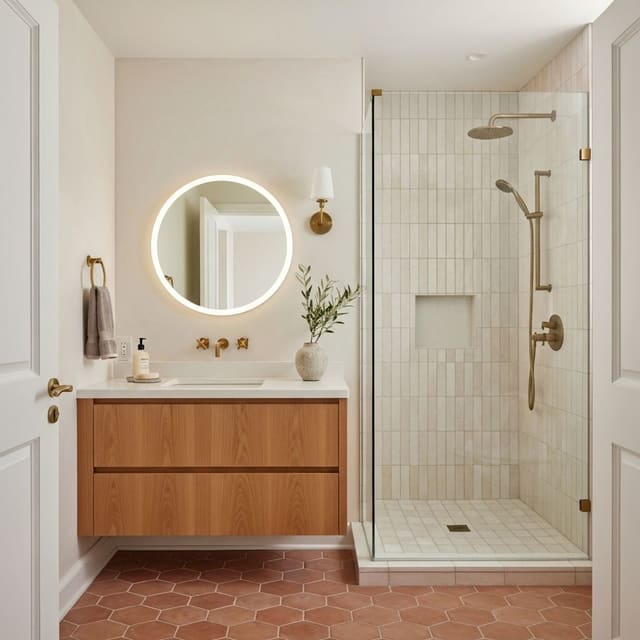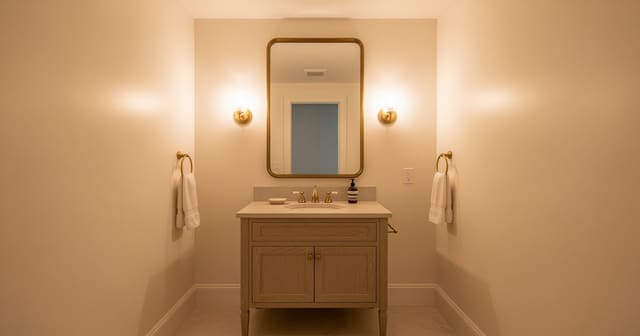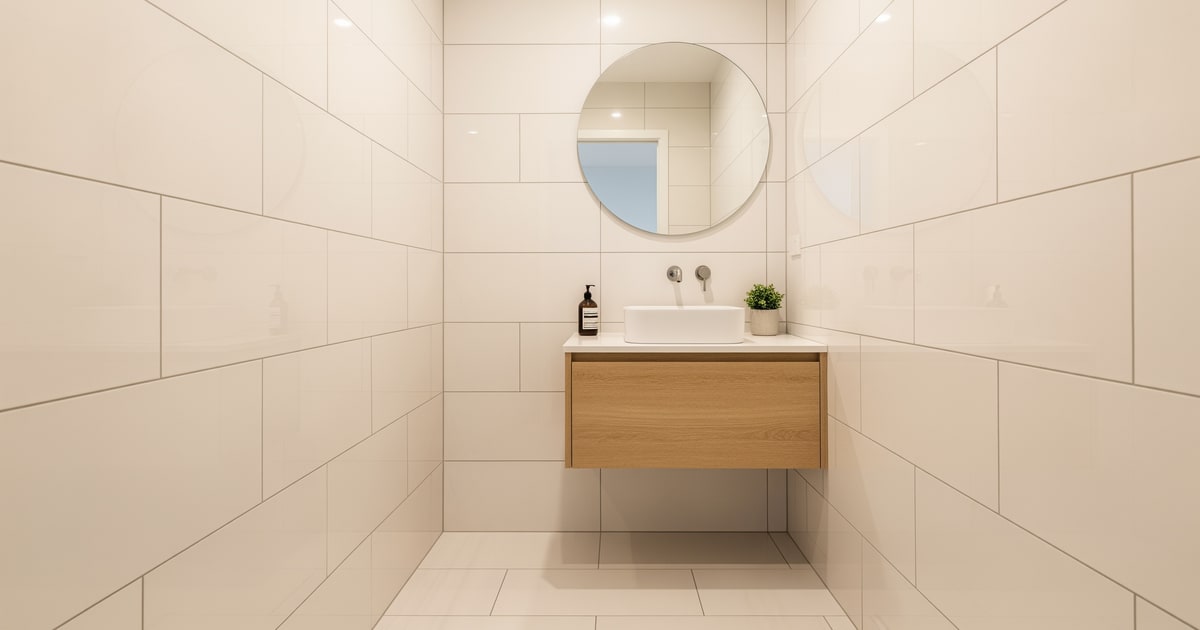
Tile makes a small bathroom look bigger when the format is large (12 by 24 inches or larger), the grout matches the tile so the joints visually disappear, the same tile runs from the floor up onto the shower walls (or the same tone in a related size), and the shower threshold goes curbless so the eye reads one continuous floor. Tile is the single most consequential decision in any small bathroom — bigger than the vanity, bigger than the paint, bigger than the fixtures. The wrong tile choice can shrink a bathroom by visual feet; the right one can add visible square footage that's not actually there. The mistake most owners make is choosing tile in a showroom under bright daylight and against a giant blank slab wall — exactly the opposite conditions of an actual small bathroom. The choices that win in showrooms often lose in real rooms.
What tile makes a small bathroom look larger?
Large-format tile (24"x48" minimum) in a single light, warm-toned color, run from floor to ceiling on at least one wall, with grout color matched to the tile. The combination minimizes grout lines, eliminates visual breaks, and tricks the eye into perceiving one continuous surface — which it reads as a larger room.
Tile size: bigger is almost always better in small spaces
The counterintuitive truth: in a small bathroom, larger tile makes the room feel bigger. A 4"x4" mosaic floor in a 30 square foot bathroom has hundreds of grout lines competing for attention; a single 24"x48" porcelain slab has six grout lines and reads as one continuous surface.
- Floors. 24"x24" porcelain minimum. 24"x48" is better. 36"x72" or full slab if the budget allows.
- Walls and shower. 12"x24" minimum. 24"x48" or larger for the most spacious feel.
- Backsplash behind the vanity. Continue the same large-format tile from the shower or floor — don't switch to a small mosaic. Visual continuity = visual size.
The one exception: a single accent surface (the shower floor, a niche, a single feature wall) where a small mosaic can add intentional texture. One small-tile zone is character; small tile everywhere is busy.
Test this on your own room photo with ReDesign before you choose the final direction; keep the doorway, walls, windows, main furniture, lighting, and awkward fixed features visible so the preview solves the room you actually have.
Tile color and how it reads in a small room
- Warm whites and very pale tones. Greige, blush, soft sage, putty, and warm cream all reflect more light and visually expand the room.
- Avoid stark cool whites. They look great in showrooms with full daylight; in a small actual bathroom they read cold and clinical.
- Avoid glossy black tile on the floor. Looks luxurious in renders, reads as a hole in a real room with mixed light.
- One bold color works if it's the only bold color. A single deep-green or terracotta wall in zellige tile can be stunning. Combined with a busy floor and a competing vanity, it collapses.
Tile pattern: pick one or pick none
- Stack-bond (straight grid). The cleanest, calmest, most spacious-feeling pattern. Always works.
- Vertical stack (subway tile turned 90°). Stretches the ceiling visually. Especially good in bathrooms with low ceilings.
- Herringbone. Beautiful in larger bathrooms; usually too busy in spaces under 40 sq ft. Save for floors only if you're using it.
- Hex and penny tile. Charming but visually noisy. Use on one zone (often a shower floor) and never wall-to-wall.
- Chevron, basketweave, and any complex pattern. Almost always wrong in a bathroom under 50 sq ft.
Grout color: the secret nobody talks about
Grout color is the single biggest tile decision after size. Most owners choose contrasting grout because it looks "designer" in catalogs — and then live with a busy, dated bathroom for ten years.
- Match grout color to tile color. A white tile gets warm-white or sand grout, never dark gray. A green tile gets green or putty grout.
- The result is visual continuity — the eye reads the wall as one surface rather than a hundred small squares.
- Reserve contrasting grout (white tile + dark grout) for kitchens, mudrooms, or large spaces where the pattern is the design feature. Almost never the right choice in a small bathroom.
Finish: matte for floors, polished for walls
- Matte or honed floor tile. Reads softer, feels less institutional underfoot, and is safer wet.
- Polished or semi-polished wall and shower tile. Reflects light back into the room. This is the single most underused trick in small-bathroom design. A polished wall tile in even a small shower turns the entire space into a light box.
- Zellige (handmade Moroccan tile). The hottest wall material in design right now for a reason — its slight irregularity catches light at different angles all day, which adds depth that uniform tile can't deliver.
Where to start the tile and where to stop
- Floor-to-ceiling in the wet zone. Run shower tile all the way to the ceiling, not just to standard 84" wainscot height. Stopping short visually shrinks the room.
- Continue floor tile into the shower rather than switching materials at the threshold. The eye reads continuous floor as continuous space.
- Wrap a single accent wall floor-to-ceiling. A single full-height wall in a contrasting material (zellige, vertical stack subway, or a slab) gives the room a focal point without busying the whole space.
Scale is the difference between calm and clutter. In most small bathrooms, 12 by 24 inch tile is the minimum worth considering, while 24 by 48 inch porcelain can make a standard tub wall read almost slab-like. Keep grout joints near 1/16 to 1/8 inch when the tile allows it, and choose grout within one shade of the tile. Mapei Warm Gray with warm white tile, or a pale bone grout with limestone-look porcelain, usually reads larger than a high-contrast grid. The light plan from windowless bathroom ideas matters here because tile that looked soft in a showroom can glare under one cold ceiling light.
The second finish pick is the edge. A Schluter Jolly profile in satin nickel or brushed brass looks cleaner than a raw tile edge, especially when the shower wall stops below the ceiling. If you own, tile the wet wall to the ceiling and keep the remaining walls painted in a high-LRV warm white; if you rent, use the same visual trick with a single extra-long shower curtain and one large washable bath mat in the tile color. Before committing to a busy mosaic, check the mirror and light relationship in the bathroom mirror lighting guide; reflection multiplies grout lines too.
Common small-bathroom-tile mistakes
- Small mosaic floors everywhere. Adds visual clutter and makes the room feel busy.
- Contrasting grout on white tile. Dates instantly and reads as a grid.
- Three different tile materials in one room. Floor, wall, and shower in three different tiles collapses the space.
- Stopping shower tile at 84" instead of going to the ceiling. Visually shortens the room.
- A small mosaic feature stripe across the shower. A 2010s trend that aged poorly. Replace with a single full-height feature wall.
- Glossy dark tile on the floor. Looks like a hole. Always.
- Using contrast grout as a default. Dark grout can be practical, but in a tiny bathroom it draws a grid over every surface and can make the walls feel closer.
- Using contrast grout as a pattern. In a tiny bath, a loud grid can become the dominant design even when the tile itself is expensive.
Use AI design to preview your tile before you order
A 30 square foot bathroom uses about 100 square feet of tile across all surfaces — and tile is non-returnable once cut. Use AI design to photograph your existing bathroom and preview the room in three different tile schemes — large-format warm white on every surface, zellige walls with stone floors, or a single bold accent wall — before placing a single order. You'll skip the showroom regret and land on a scheme that actually reads spacious.
Frequently Asked Questions
Does large-format tile make a small bathroom look bigger?
Yes — 12 by 24, 24 by 24, or larger tiles reduce grout-line frequency, which the eye reads as fewer breaks and a larger floor; 4-inch mosaics chop the room visually. Use the room photo to compare the visible layout and fixed constraints before committing, because door swings, windows, outlets, storage reach, circulation, and existing furniture decide whether the idea survives daily use.
Should grout match or contrast the tile in a small bathroom?
Match the grout to the tile color — when the grout disappears, the tile reads as one continuous surface and the room reads larger; contrast grout multiplies visible joints and shrinks the room. Keep the preview honest by leaving the problem area visible in the frame, then compare one conservative version against one bolder version before you buy lighting, paint, furniture, or storage.
Can the same tile run on floor and walls in a small bathroom?
Yes — using the same tile or a related tone on floor, walls, and shower removes visual breaks and reads bigger; mixing three or four finishes shrinks a small bathroom every time. Check the result against ordinary movement first: drawer clearance, chair pullout, walkway width, glare, switch access, and sightlines matter more than a perfect catalog angle.
Does a curbless shower help a small bathroom feel bigger?
Yes — a curbless shower extends the floor visually to the back wall and removes the threshold break; budget extra for waterproofing and linear drain when retrofitting. Use the image to narrow priorities and measurements before ordering anything custom; final purchases still need real dimensions, outlet locations, installation limits, and product clearances.
What tile color works best in a small bathroom?
Warm off-whites, soft greiges, and pale neutrals make a small bathroom read open; deep saturated tile reads dramatic in a powder room but cramps a full bathroom. If the preview invents architecture or hides the awkward feature you need solved, rerun it with stricter instructions so the result remains tied to your actual room.
> Try this: Ready to see this on your own room? Open ReDesign and run the preview.
Three transformations to try
1. Large 24x24 floor-and-wall tile with matched grout 2. Curbless shower with continuous floor tile 3. Single-tone tile palette across all surfaces