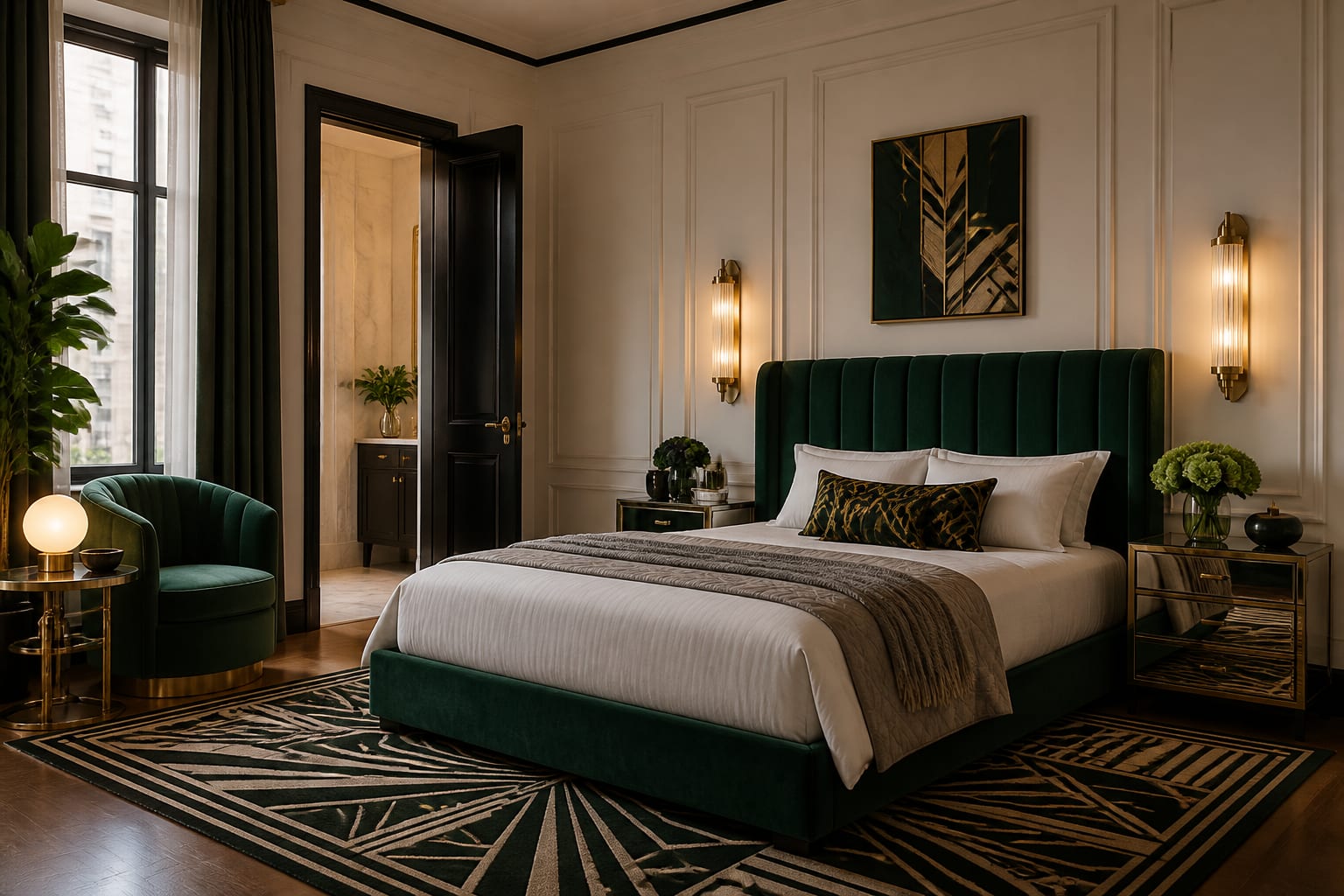
Art Deco bedroom ideas work when the room has architecture, not just shine: bold geometry, a glamorous bed wall, velvet or satin texture, warm metallics, symmetrical lighting, and one disciplined color story. Buy the strong shape before you buy the gold tray. The goal is a room that feels dramatic at night and calm enough to sleep in.
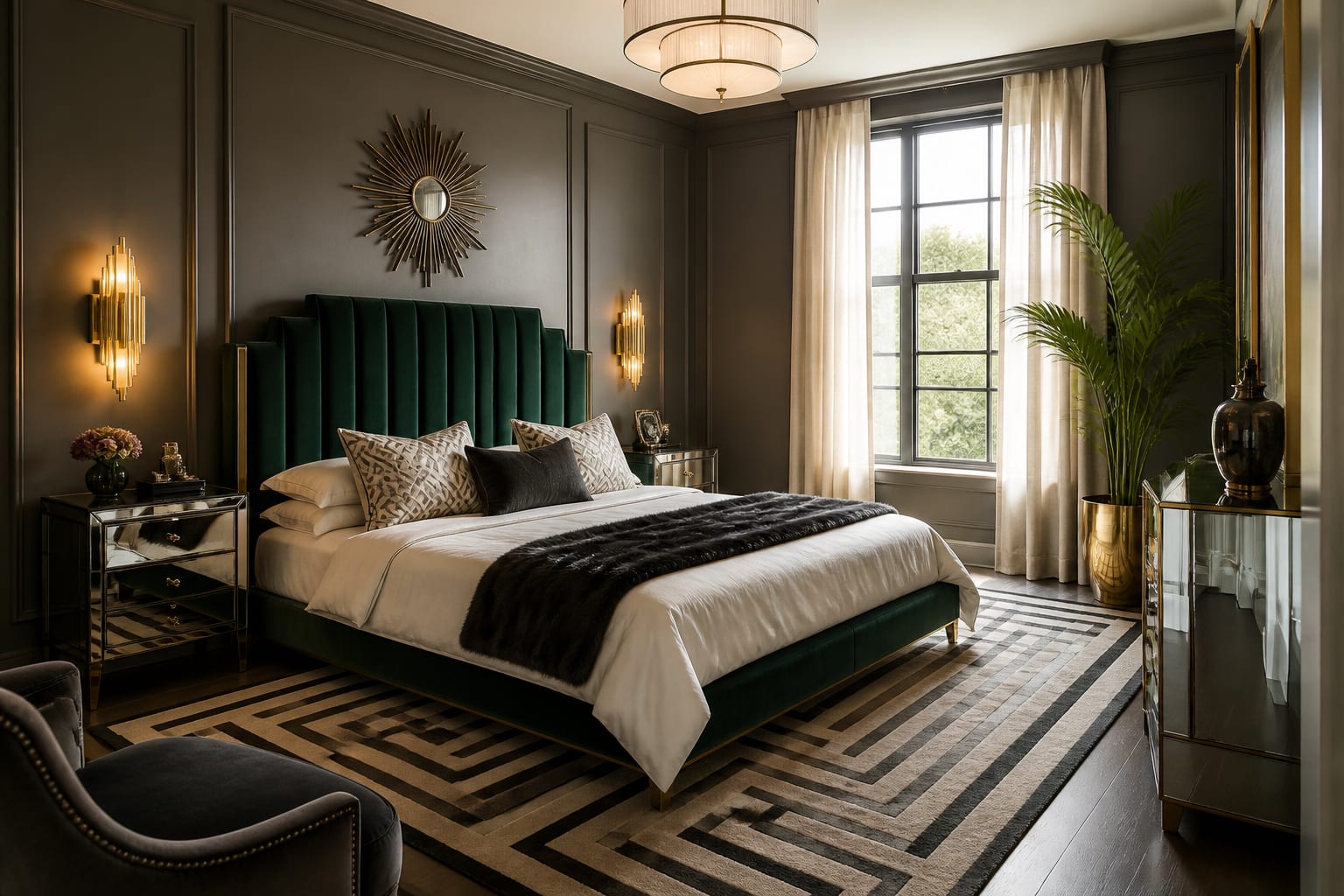
What makes a bedroom feel Art Deco instead of just glamorous?
Art Deco reads sharper than generic glamour because the shapes are controlled: symmetry, stepped lines, arches, fans, sunbursts, channeling, and fluting do the heavy work. The bed usually becomes the focal point since it's the largest form in the room, so every choice should frame it, balance it, or make it feel more deliberate.
Color needs depth beyond cream and black: oxblood, emerald, peacock blue, plum, tobacco, blush, walnut, and antique brass all read richer in a real bedroom. In tight rooms, the scale restraint behind a small master bedroom that feels luxurious applies directly: fewer oversized gestures beat a dozen delicate accessories.
Restraint matters, too. One velvet headboard or bench can carry the room; velvet curtains, pillows, lampshades, and wall panels all competing at once will not.
Which Art Deco bedroom ideas actually change the room?
Pick five or six ideas that change what you see from the doorway, then edit the rest harder than the style seems to invite.
- Tall headboard: channeling, scallops, or a stepped profile around 48–60 in tall gives the bed wall presence without crowding standard 8 ft ceilings.
- Symmetrical lighting: matching sconces or 24–28 in lamps on both nightstands make the room feel instantly intentional.
- Oversized geometric rug: leave 18–24 in visible on each side of the bed so pattern frames it instead of looking like a mat.
- Body-scale velvet: an upholstered bed, bench, chair, or pillow pair — velvet works where hands and eyes actually land.
- Repeated metal: brass, antique gold, or nickel on rods, lamp bases, frames, pulls, and mirror edges, in 3–5 spots.
- High, precise curtains: hung 6–10 in above the casing and 8–12 in past each side to stretch ceiling height.
- Statement nightstand: mirrored, burl wood, black lacquer, or fluted, within 2 in of mattress height for usability.
- Small reading seat, only with real clearance — the comfort logic from a layered reading corner with proper light still applies, shifted to velvet, brass, and walnut.
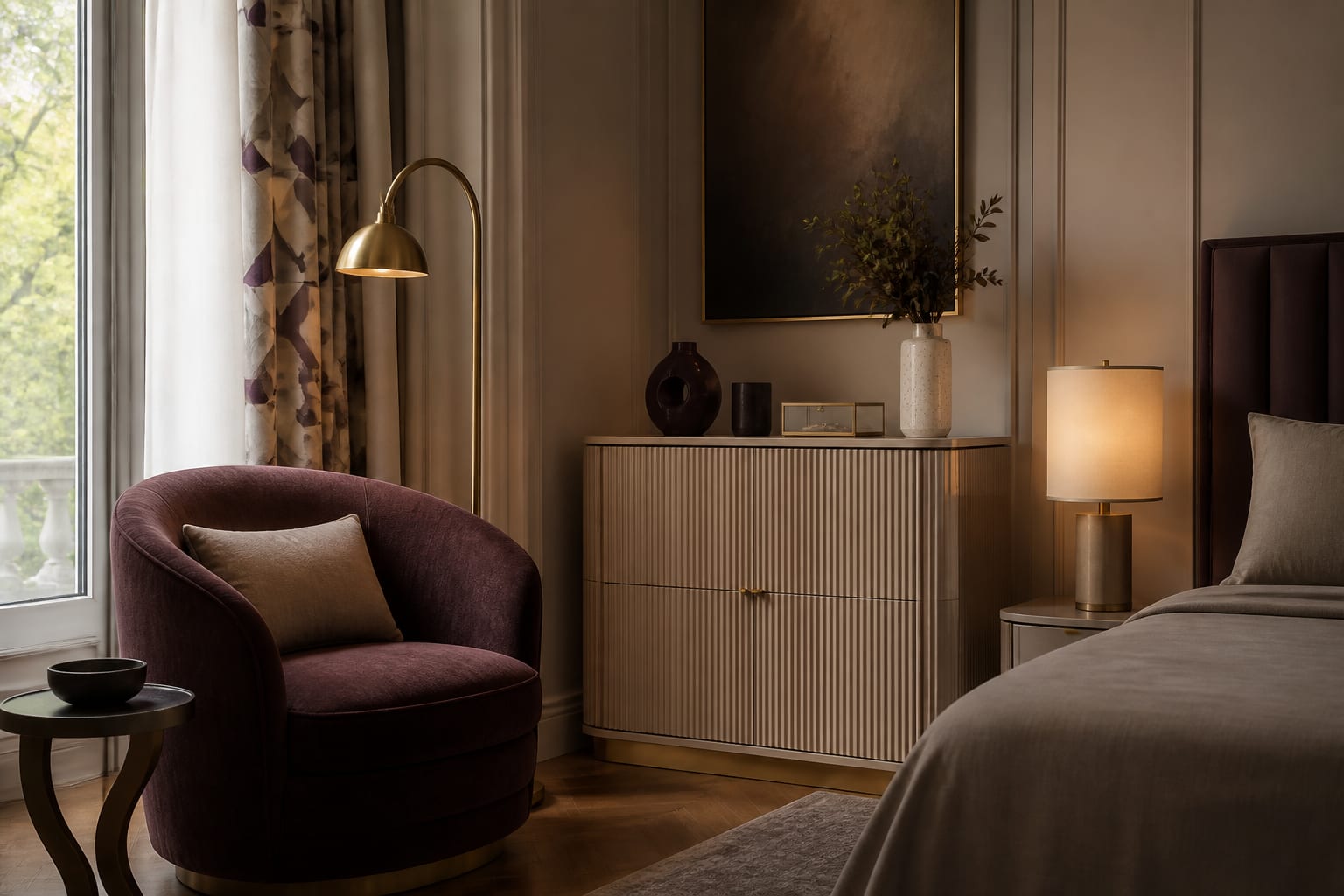
How should velvet, gold, and geometric prints work together?
Velvet should soften, gold should catch light, and geometry should set the rules — blur those roles and the room starts looking costumed. Let one category lead.
If the headboard is velvet, keep bedding calmer: crisp sheets, a satin-edge coverlet, two larger shams. If wallpaper carries a fan or chevron pattern, keep the headboard plain so the wall stays the main event. If the rug carries bold geometry, echo one of its colors in a lamp, throw, or framed print rather than adding a new jewel tone.
Gold decor convinces most when the finish isn't too yellow — antique, champagne, or brushed brass over mirror-bright metal. If the room already has chrome or silver hardware, keep the large metal quiet and add warm brass near the bed for glow.
Lighting decides whether any of this reads right. Use warm 2200K–2700K bulbs for bedside lamps and sconces; cool bulbs make brass glare and velvet go flat. A dimmer earns its keep for switching between reading light and evening mood.
Use AI to preview your Art Deco bedroom before you commit
Art Deco is risky to buy piece by piece because the expensive items are bold: wallpaper, headboard shape, rug pattern, metal finish, curtains, wall color. A brass lamp that looks elegant online can clash with your actual flooring, and a black wall can feel glamorous in one room and heavy in another.
Upload a straight-on photo of your bedroom to Re-Design and test full versions before buying anything permanent. Try a velvet headboard with quiet walls, geometric wallpaper behind the bed, and a version where drama lives only in lighting, mirrors, and the rug. Keep your real bed size, windows, ceiling height, and nightstand clearance visible so the preview reflects the room you actually have.
This matters most in rentals, north-facing rooms, or with furniture you must keep. A plain dresser might work with fluted hardware and a large mirror; a basic bed frame might just need a stronger headboard wall. If a preview shows a chair and lamp completing the room, compare it against a proper bedroom sitting area design before crowding a walkway.
Common Art Deco bedroom mistakes
Most mistakes come from buying shine before structure. The room needs to work half-asleep, in low light, with real routines.
- Buying small gold accessories first scatters the room; start with the headboard, rug, lighting, or wall treatment so glamour appears at room scale.
- Using every motif at once turns the room theatrical; pick one lead idea — fluting, fans, arches, or stepped geometry — and let the rest stay quiet.
- Undersizing the rug weakens the bed wall; if only the foot of the bed touches pattern, the room feels unfinished.
- Turning nightstands into display shelves ruins the restful function; keep a lamp, book, and water visible, and hide the rest in a drawer.
- Using cold white bulbs makes metallics glare and velvet flatten; warm layered light is what separates glamour from a harsh dressing room.
A quieter mistake is ignoring the architecture you actually have. Low ceilings, off-center windows, and rental flooring all shape how much Deco drama a room can carry — work with those limits instead of pretending a hotel suite is hiding inside every bedroom.
What finishing details make the bedroom dramatic but restful?
Add weight through a ribbed glass lamp, marble tray, lacquered box, walnut frame, or brass mirror — skip flimsy metallic decor that only photographs well cropped tight.
Art should relate to the bed rather than float randomly. Hang a standalone piece around 57–60 in on center, or 6–8 in above the headboard when it belongs to the bed wall; in groupings, keep 2–3 in between frames and repeat one finish.
Bedding should stay restrained since the room already has drama: two sleeping pillows, two larger shams, one lumbar, and a folded coverlet is usually enough. Let one surface stay quiet — plain sheets against a tufted headboard, or a calm wall beside a geometric rug.
Stand at the doorway and name the strongest Deco move in three seconds. If it's the headboard, rug, wallpaper, or lighting, the room has direction. If the answer is only "gold things," edit back until shape, material, and light carry the glamour.
Frequently Asked Questions
What colors work best for an Art Deco bedroom?
Cream and black are classic, but richer choices like oxblood, emerald, peacock blue, plum, tobacco, blush, and walnut tones read more convincingly in a real bedroom. Pair one deep color with warm metallics and a neutral base so the palette has depth without competing jewel tones fighting each other.
How much velvet is too much in a Deco bedroom?
One velvet headboard, bench, or chair is usually enough. Adding velvet curtains, pillows, and lampshades on top makes the room feel heavy rather than luxurious, so reserve the texture for the single surface hands and eyes touch most.
What bulb temperature suits Art Deco lighting?
Use warm bulbs between 2200K and 2700K for bedside lamps and sconces. Cool white light makes brass look harsh, flattens velvet, and works against the glow that defines Deco glamour, so a warm dimmable bulb is worth the small upgrade.
How do I mix gold with other metals in the bedroom?
Keep warm brass or antique gold as the dominant finish near the bed, and let any existing chrome or silver hardware stay quieter and further away. Mixing works when one metal clearly leads and the other plays a supporting, less visible role.
What's the biggest mistake in Art Deco bedroom design?
Buying small gold accessories before establishing structure. Start with the headboard, rug, lighting, or wall treatment first, since these room-scale choices create the geometry and focal point that smaller decorative pieces then support.