Art deco belongs in the kitchen far more than most people assume. A space full of hard surfaces and repeating cabinet fronts is the perfect canvas for the geometry, symmetry and metallic shine that defined the 1920s and 1930s. The trick is choosing two or three signature moves rather than coating every surface in chevrons and gold. A fan-patterned backsplash, fluted cabinet doors and a single brass-and-glass pendant can read as confidently deco without tipping into theme-restaurant territory. These ideas show how to bring real period drama into a functional kitchen while keeping it livable, durable and grounded in materials you actually want to cook around.
Start With a Geometric Backsplash
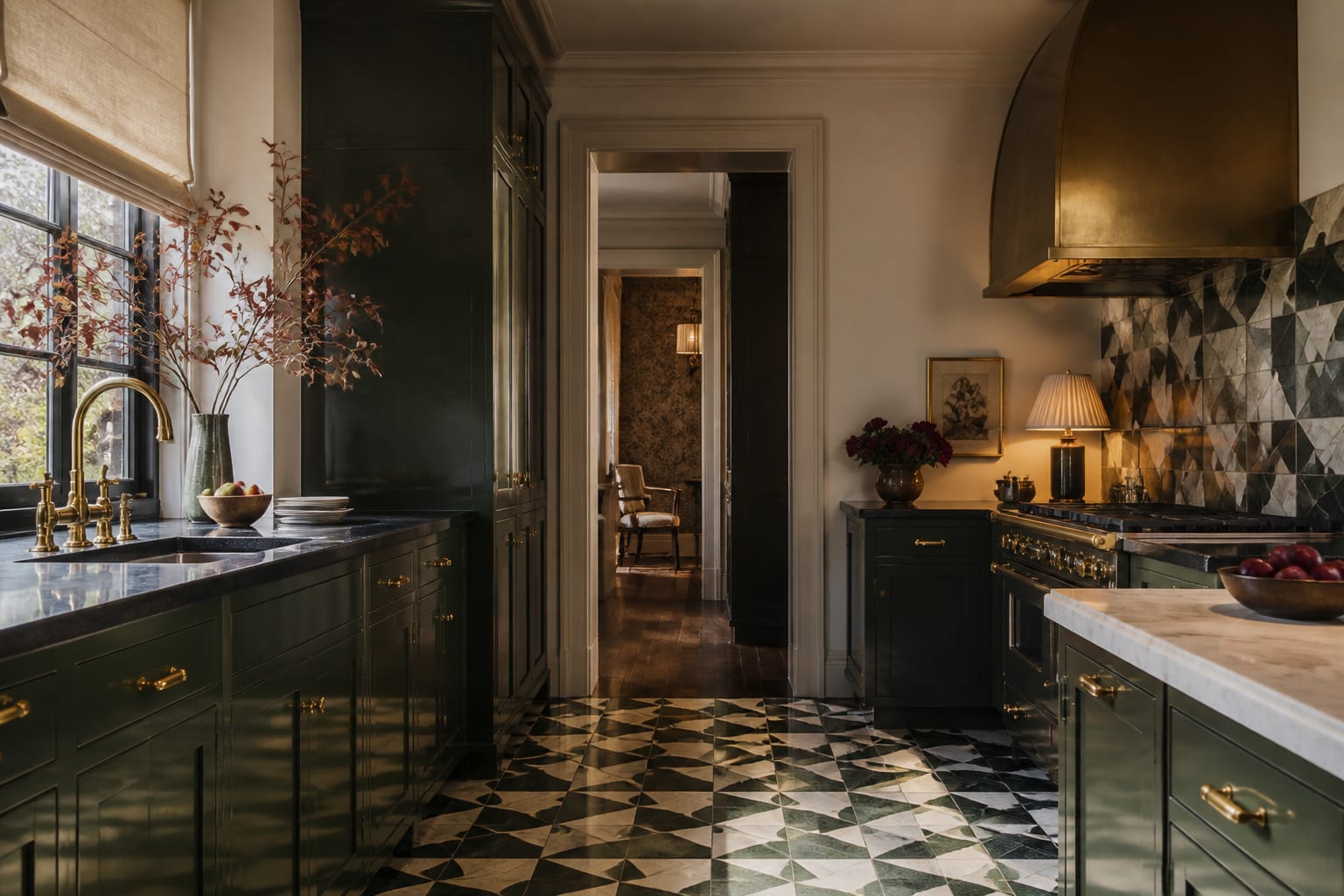
The backsplash is where an art deco kitchen earns its identity, so let it carry the most pattern in the room. Fan-shaped scallop tile, stepped ziggurat layouts and tessellating hexagons all read as authentically deco, especially when set in a contrasting grout that sharpens the lines. A black-and-white marble inlay running behind the range gives you symmetry and luxury without color risk, while a glazed emerald or sapphire tile delivers the jewel-tone richness the era loved. Keep the field tile and the feature pattern in the same family so the wall feels composed rather than busy. Scale matters more than people expect here. Larger geometric repeats suit generous walls and tall ceilings, while a tighter mosaic flatters a galley kitchen or a single run between counter and cabinets. Run the pattern all the way to the underside of the upper cabinets, or take it floor to ceiling on the range wall to create a deliberate focal point. If full tile coverage feels like too much commitment, a single inset panel behind the cooktop framed by a brass or nickel border captures the same drama in a smaller footprint. Repetition is the heart of the style, so echo the backsplash geometry somewhere else in subtle form, such as a matching fan motif etched into a cabinet glass insert or repeated in the island flooring. That visual rhyme is what separates a thoughtful deco kitchen from a random collection of patterns. Above all, resist mixing more than two distinct geometric motifs in one room, because the period prized clarity and order as much as it prized ornament, and a single confident pattern almost always outperforms three fighting for attention across the same sightline.
See also our guide to Kitchen Home Bar Design for more on art deco kitchen ideas.
Build Contrast With Black, Gold and Rich Color
Deco lives on contrast, and the kitchen color story should feel deliberate and a little theatrical. Matte black lower cabinets paired with creamy upper cabinets create the high-contrast base the era is known for, and the warmth of brass hardware reads beautifully against both. If all-black feels heavy, ground the room in deep forest green, oxblood, navy or charcoal and let those saturated tones do the dramatic work while neutral counters keep things breathable. Gold is the connective thread that ties the scheme together, appearing in cabinet pulls, faucet finishes, light fixtures and the thin metal trim around a feature panel. Use one metal temperature consistently so the brass, antique gold or champagne tones agree rather than clash. White or pale stone countertops with bold veining offer a clean counterpoint to dark cabinetry, and a waterfall edge in a dramatic marble adds the kind of sculptural luxury the period adored. Color blocking helps here too, so a single painted island in a jewel tone against quieter perimeter cabinets gives you a focal anchor without committing the whole room. Where you want extra richness, lean on natural materials with depth such as walnut, ebonized oak or honed black granite, all of which carry shadow and shine in a way that flat finishes cannot. The goal is a layered palette of roughly three core colors plus a metallic, balanced so no single element overwhelms the others. When the contrast is calibrated well, the kitchen feels glamorous and intentional from the moment you walk in, yet it still functions as a calm place to cook every day rather than a stage set you are afraid to use.
For a related angle on art deco kitchen ideas, read Cottagecore Kitchen Ideas.
Add Fluting, Brass Hardware and Lacquer
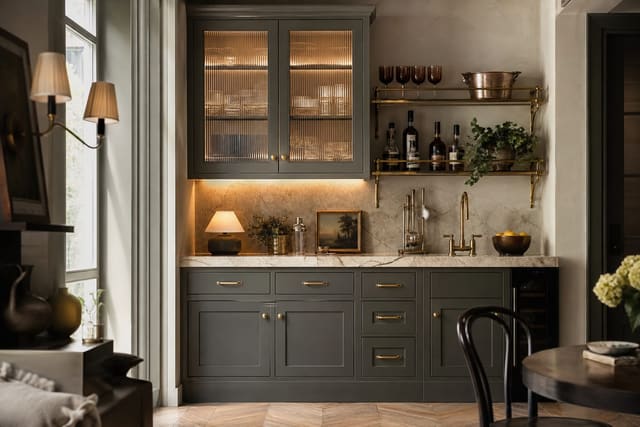
Texture is what gives a deco kitchen its tactile signature, and fluted or reeded surfaces are the fastest route there. Vertical channels on an island base, a range hood surround or lower cabinet fronts catch light and throw soft shadow, adding rhythm that flat slab doors simply cannot match. Reeded glass in upper cabinet doors offers the same ribbed effect while gently obscuring the contents, which keeps shelves looking tidy behind a luxe, slightly frosted veil. Pair these textured fronts with hardware that announces the era. Elongated brass bar pulls, knurled knobs and geometric escutcheon plates all feel correct, and oversizing the hardware slightly gives cabinetry the confident proportion deco favored. Keep the metal finish consistent across pulls, faucet, pot filler and any exposed shelf brackets so the brass reads as a designed system rather than an accident. Lacquer is the third layer, and it rewards restraint. A high-gloss island in deep green or black bounces light around the room and creates that polished, almost automotive sheen the period loved, but covering every cabinet in lacquer can feel cold and clinical. Reserve the glossiest finish for one or two focal elements and let the rest of the room sit in matte or satin to balance the shine. Crown the cabinetry with a stepped or layered molding profile rather than a single flat run, because that tiered silhouette echoes the skyscraper forms that inspired the movement. Even small details reinforce the theme, so a brass toe-kick strip, a fluted glass pendant or knurled drawer pulls quietly repeat the language. Layered well, these textures and finishes make the kitchen feel crafted and expensive without relying on a single dramatic gesture to carry the entire room.
Crown It With Statement Lighting
Lighting is the jewelry of an art deco kitchen, and it deserves a real budget rather than whatever pendant happens to be on sale. The era loved fixtures that doubled as sculpture, so look for tiered milk-glass globes, stepped opal shades, brass cage pendants and fluted glass cylinders that throw a warm, diffused glow. Over an island, a row of two or three matching pendants spaced evenly creates the symmetry deco demands, and hanging them roughly thirty to thirty-six inches above the counter keeps both light and proportion right. A single oversized fixture can work too, especially a fan-shaped or sunburst-inspired piece that becomes the clear focal point of the room. Layer the light rather than relying on one source. Under-cabinet strips wash the backsplash and let its geometry read after dark, while a discreet cove or toe-kick glow adds the soft ambient halo the style prizes. Wall sconces flanking a window or open shelf reinforce symmetry and bring the brass finish up to eye level where it registers most. Choose warm bulbs in the 2700 to 3000 Kelvin range so the metals glow amber rather than turning cold and blue, which instantly cheapens the effect. Dimmers are worth installing everywhere, because the same kitchen that needs bright task light for chopping should be able to drop to a low, glamorous evening setting in seconds. Treat the fixtures as a coordinated set in finish and form, then let one piece be the undeniable hero. When the lighting is right, it ties together the backsplash, the brass and the lacquered surfaces into a single confident composition, and it does the heavy lifting of making an ordinary kitchen feel like a destination room you genuinely look forward to walking into.
- Install a fan or scallop tile backsplash in marble, glazed ceramic or a jewel tone.
- Pair matte black lower cabinets with creamy uppers and consistent brass hardware.
- Add fluted or reeded fronts on the island base and lower cabinet doors.
- Hang a row of tiered milk-glass or brass cage pendants over the island.
- Choose a dramatic veined marble counter with a sculptural waterfall edge.
- Use reeded glass cabinet doors to soften open shelving while hiding clutter.
- Finish one focal island in high-gloss lacquer for that polished deco sheen.
- Crown cabinetry with a stepped, layered molding profile inspired by skyscrapers.
Bring the look home with Re-Design
Before you commit to a black-and-brass scheme or a bold fan-tile backsplash, test it on your actual kitchen first. Upload a photo of your current space to Re-Design and preview the look with different cabinet colors, hardware finishes and tile patterns layered in. Seeing how matte black reads against your light, or whether emerald tile flatters your floor, saves expensive mistakes before you buy a single fixture. Compare two or three deco directions side by side, share them with a contractor, and walk into the project knowing the glamour will land instead of guessing.
Frequently Asked Questions
What colors define an art deco kitchen?
Art deco kitchens rely on high contrast, usually a base of matte black or a saturated jewel tone like forest green, navy or oxblood, balanced against creamy neutrals and pale stone. Brass or gold is the unifying metallic thread. Aim for roughly three core colors plus one consistent metal finish so the palette feels deliberate rather than chaotic across the room.
Is art deco kitchen design hard to maintain?
Not especially, but finish choices matter. High-gloss lacquer shows fingerprints and needs gentle cleaning, so reserve it for islands rather than every door. Brass develops a patina over time, which many people love, though a sealed lacquered brass stays bright. Reeded glass and patterned tile actually hide smudges and crumbs well, making them practical choices for a busy working kitchen.
Can I get an art deco look on a budget?
Yes. Focus spending on one or two high-impact moves rather than a full renovation. A geometric peel-and-stick tile backsplash, swapped brass hardware and a single statement pendant deliver most of the era's drama for relatively little. Painting existing cabinets matte black and adding fluted trim panels are inexpensive upgrades that transform the room without replacing the cabinetry.