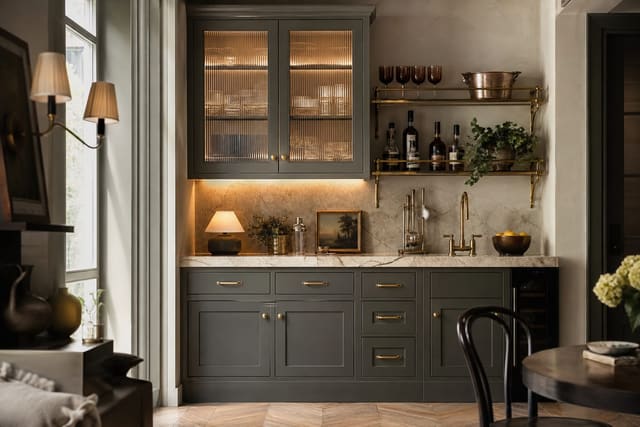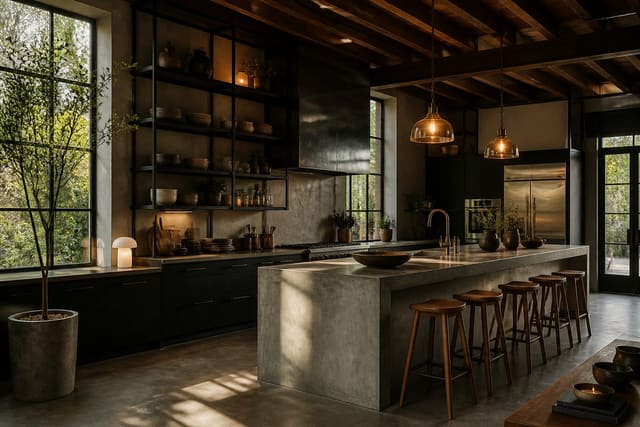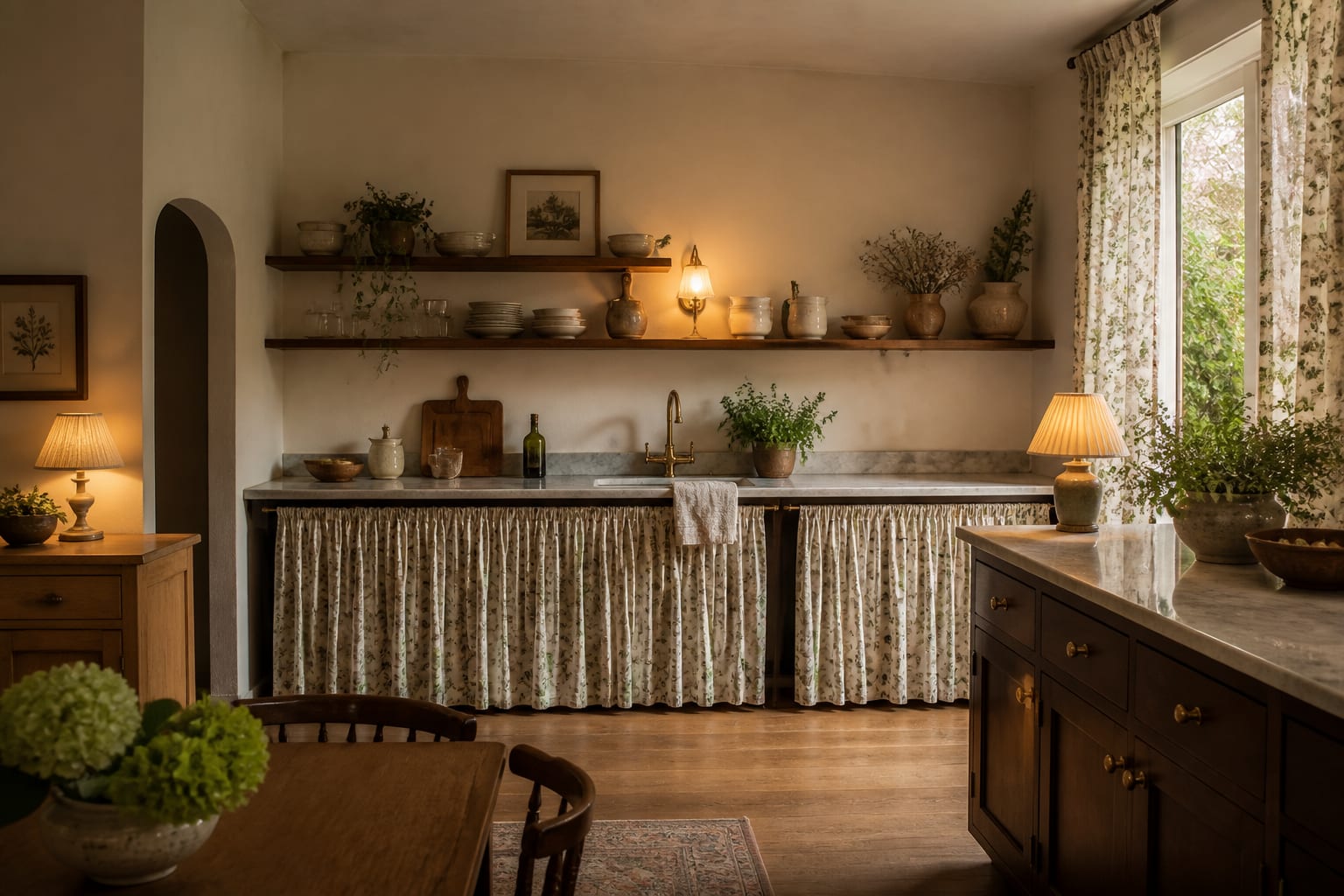
A cottagecore kitchen turns a plain kitchen into a hardworking cottage space softened by nature: warm wood, aged metal, botanical pattern, visible ceramics, and a few imperfect pieces that feel gathered over time. The sink, shelves, and lighting matter more than any accessory. A whimsical kitchen only works when it still handles dishes, breakfast, groceries, and weekday mess.
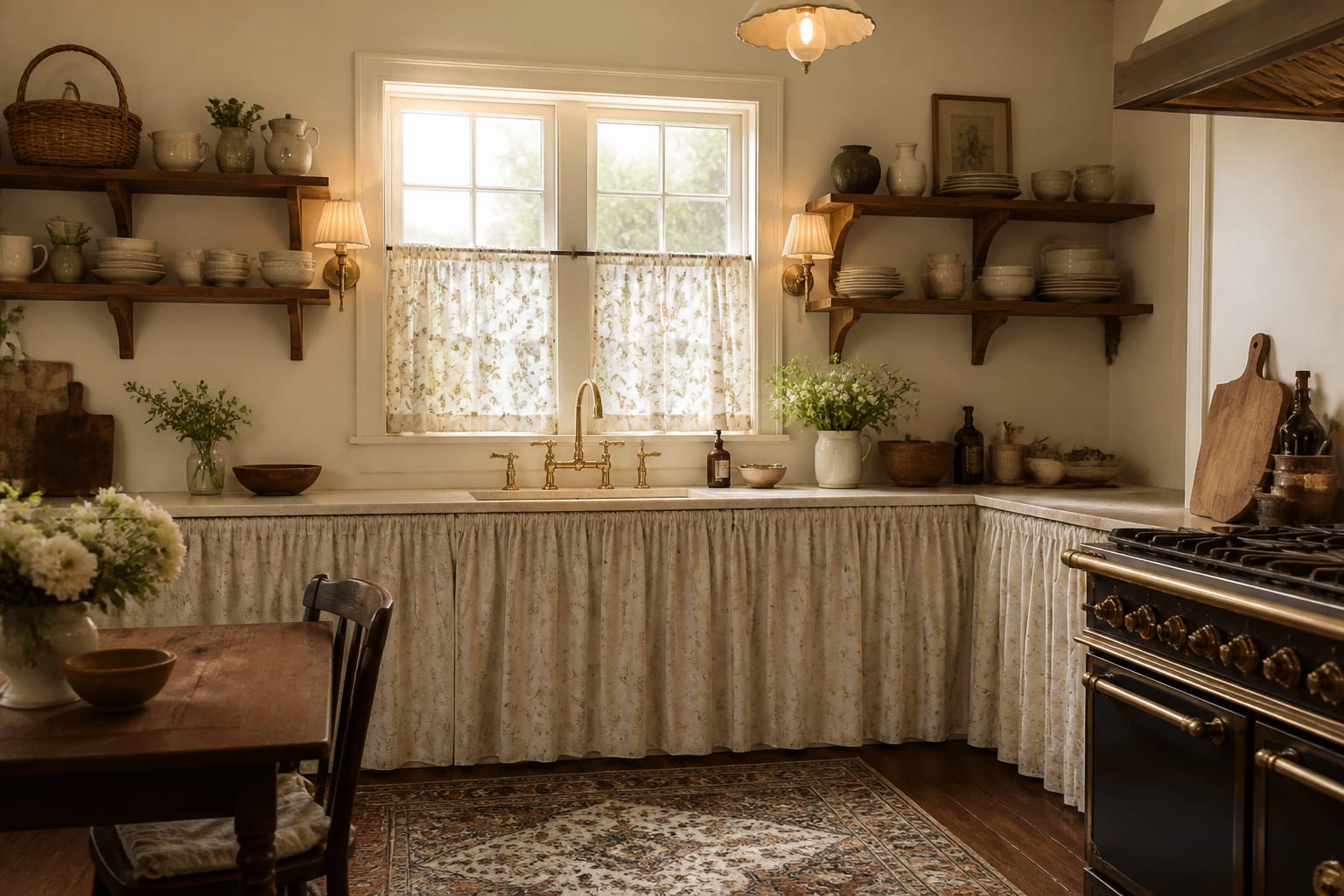
What makes a kitchen feel cottagecore instead of themed?
A cottagecore kitchen feels nature-inspired, practical, and gently old-fashioned, with warm materials, soft pattern, open display, and signs of handwork rather than a matching set of novelty decor. The difference is restraint: if every object screams "cottage," the room becomes costume; if the bones are simple and the details are tactile, it feels believable.
Start with surfaces built for daily use: butcher block, painted cabinets, soapstone-look counters, wood shelves, beadboard, peg rails, linen curtains, and ceramic knobs. You don't need all of them. In a rental, two wood shelves and a cafe curtain can outperform peel-and-stick pattern on every wall.
Color should feel sun-warmed, not sugary. Cream, putty, sage, muted ochre, faded terracotta, dusty blue, and mushroom brown are the safest base tones. If cabinets are already white, add warmth through wood cutting boards, woven shades, and antique brass pulls before repainting. In a small kitchen, keep the biggest fixed surfaces calm and spend the romance on fabric, lighting, and display.
Which cottagecore kitchen ideas actually carry the look?
Pick five or six moves that solve your kitchen's real problems rather than chasing every idea at once.
- Hang cafe curtains on the lower half of a window, rod mounted inside the frame or 1 in–2 in above it, to soften the sink area without blocking light.
- Replace one bank of upper cabinets with wood shelves only if you can keep 12 in–15 in of depth and 10 in of vertical clearance for plates.
- Add a skirt below the sink, island, or open base cabinet using washable linen or cotton, gathered at about 1.5 times the opening width, to hide plumbing and add movement.
- Mount a peg rail 48 in–60 in above the floor for aprons, market bags, and small tools, giving the wall purpose without a crowded gallery.
- Choose one floral or botanical pattern at a useful scale, such as roman shades, cafe curtains, wallpaper inside a glass cabinet, or a 2 ft x 6 ft runner.
- Swap cold hardware for aged brass, ceramic, wood, pewter, or blackened iron pulls around 1.25 in–1.5 in in diameter.
- Style open shelves with working objects first: plates, mugs on hooks, mixing bowls, jars, cookbooks, and one small plant.
- Build a small tea or preserves station on a tray no wider than 18 in–24 in, borrowing the hospitality of a kitchen home bar design without the cocktail-lounge feel.
Cottagecore can handle abundance, but keep it edible, useful, or textural: a basket of onions, a crock of wooden spoons, a stack of linen towels beat ten decorative signs.
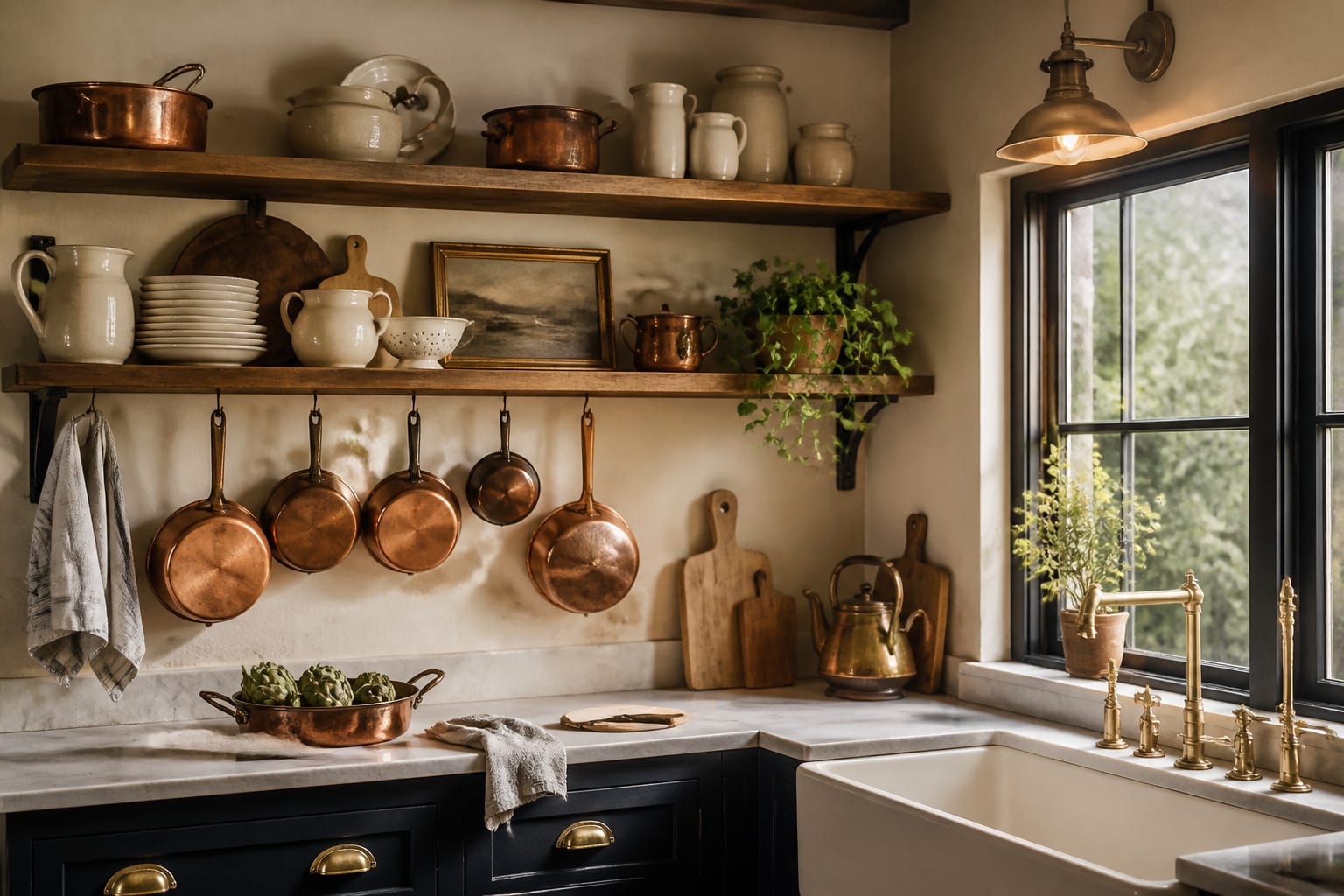
How should palette, lighting, and storage work together?
The palette needs a grounded base, the lighting needs warmth, and the storage needs enough closed space to keep charming pieces from competing with cereal boxes.
Painted cabinets work best with a little gray, brown, or yellow in the color. Pure white can look sterile beside florals; bright mint pushes toward retro diner. Try creamy white with sage, putty with aged brass, mushroom with walnut, or dusty blue with ironstone dishes. For a bolder version, borrow the color layering from maximalist kitchen ideas and cut the pattern count in half.
Lighting makes the mood real. Use bulbs around 2700K for pendants, sconces, and under-cabinet lighting, and avoid exposed cool bulbs over open shelves. A shaded pendant 30 in–36 in above an island gives a softer pool of light; choose glass, ceramic, fabric, or aged metal fixtures over a flat builder-grade disk.
Storage needs a clear hierarchy: daily dishes on the easiest shelves, baking tools in drawers near the prep zone, pantry goods behind doors or in jars you actually refill. The most photogenic cottagecore kitchens still have closed storage. If there's no pantry, use a freestanding hutch no deeper than 16 in–20 in.
What are the common cottagecore kitchen mistakes?
Cottagecore is forgiving, but not an excuse for clutter. Most mistakes come from buying the aesthetic before fixing the room's rhythm.
- Too many decorative objects make the counter unusable; keep at least 24 in of clear prep space near the sink or range.
- Florals in every category read as busy; pair one lead floral with gingham, ticking stripe, woven texture, or solid painted wood.
- Ignoring appliance color breaks the fantasy; if appliances are stainless, repeat a darker metal in lights or hardware.
- Tiny pendant lights weaken the room; two 10 in–14 in pendants over an island usually beat three small lanterns.
- Open shelving treated as a display case creates stress; store items you reach for weekly so daily use becomes part of the system.
Too much exposed black pipe, cage lighting, or raw steel tips the room toward industrial kitchen ideas, a sharper mood with less softness. If you already have black fixtures, balance them with fabric, pottery, warm wood, and rounded shapes.
How can you preview a cottagecore kitchen before committing?
Cottagecore depends on relationships between materials: cream against cabinet color, floral scale against tile, brass against appliances, wood tone against flooring. Uploading a kitchen photo to Re-Design lets you test the whole composition before ordering curtains, hardware, wallpaper, or a hutch.
Preview at least three versions from the same camera angle: botanical curtains with plain cabinets, painted lower cabinets with open shelves, and wallpaper or beadboard as the main feature. Keeping the angle consistent means you're comparing design choices, not photographs.
This is especially useful with fixed elements you can't replace, like rental backsplash, glossy floor tile, or black appliances. The preview shows whether sage cabinets calm busy tile or whether a skirted sink base looks charming instead of crowded. Keep the sink, window placement, and cabinet runs close to reality so the result feels achievable.
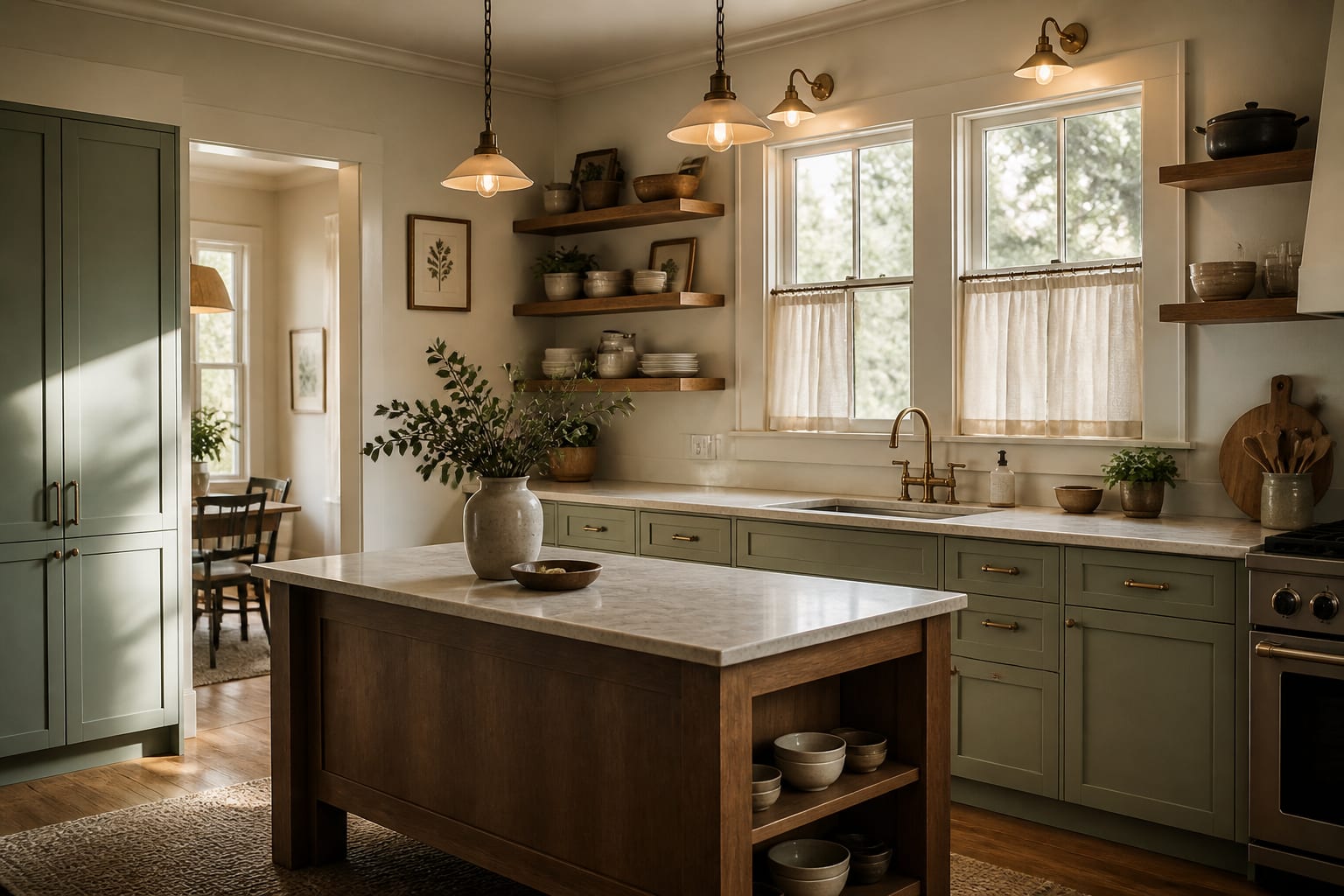
What finishing details complete the farmhouse-meets-forest look?
The final layer should feel touched by weather, hands, and cooking: a herb pot near the brightest window, a crock for wooden spoons, a botanical print, a woven tray, and one aged piece like a pine stool or thrifted hutch.
Keep art away from direct grease and steam. Hang a small frame 6 in–8 in above a shelf, or 57 in–60 in on center if it stands alone on a blank wall. A low-pile washable runner forgives crumbs; keep it 4 in–6 in from cabinet bases so doors open cleanly.
Choose culinary or sturdy plants like rosemary, thyme, pothos, or small ferns over delicate ones that sulk near heat. In weak daylight, use cut branches, dried herbs, or a vase of market flowers instead.
The last edit is the hardest: remove the piece that announces the theme too loudly. Cottagecore works best when the kitchen looks like someone actually bakes, washes greens, and keeps favorite dishes within reach.
Frequently Asked Questions
What colors work best for a cottagecore kitchen?
Cream, putty, sage, muted ochre, faded terracotta, dusty blue, and mushroom brown work best because they read as sun-warmed rather than sugary. Pair a calm cabinet color with warm wood and aged brass hardware. Avoid pure bright white or bright mint, which can push the room toward sterile or retro instead of soft and gathered.
Is open shelving necessary for cottagecore style?
No, open shelving helps but isn't required. A single set of wood shelves 12 in–15 in deep can carry the look, while the rest of storage stays closed behind painted cabinet doors. Closed storage actually keeps the room from feeling cluttered, so a mostly closed kitchen with one open shelf still reads as cottagecore.
How do I avoid making my kitchen look too theme-y?
Limit yourself to one lead botanical pattern and pair it with plain textures like linen, gingham, or painted wood. Keep at least 24 in of clear counter space near the sink or range. Remove any single piece that announces the theme too loudly, since restraint is what separates cottagecore from costume.
Can cottagecore work with stainless steel appliances?
Yes, but repeat a darker warm metal, such as aged brass or blackened iron, in your lighting and hardware so the stainless doesn't look stranded. Adding wood cutting boards, woven textures, and warm-toned lighting around the appliances also helps tie them into the softer palette.
What lighting temperature suits a cottagecore kitchen?
Bulbs around 2700K suit cottagecore best because they render cream paint, wood tones, and floral prints as warm rather than flat. Use shaded pendants, sconces, or fabric and ceramic fixtures instead of exposed cool bulbs, especially over open shelves where the light is most visible.