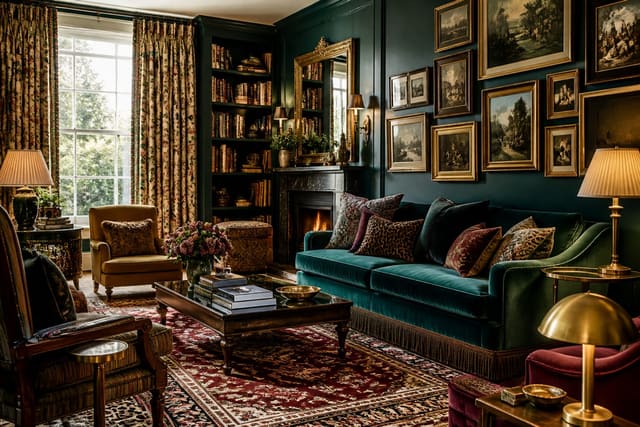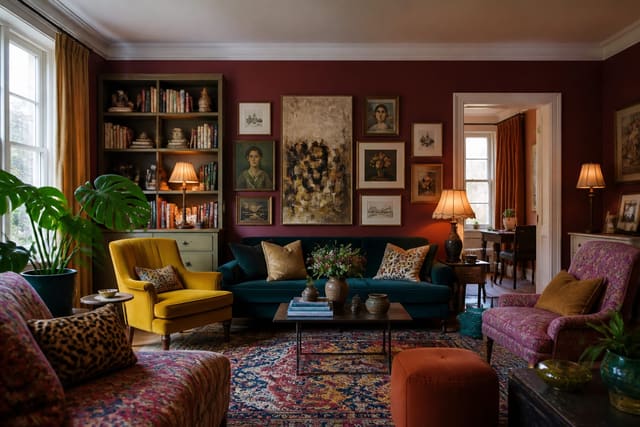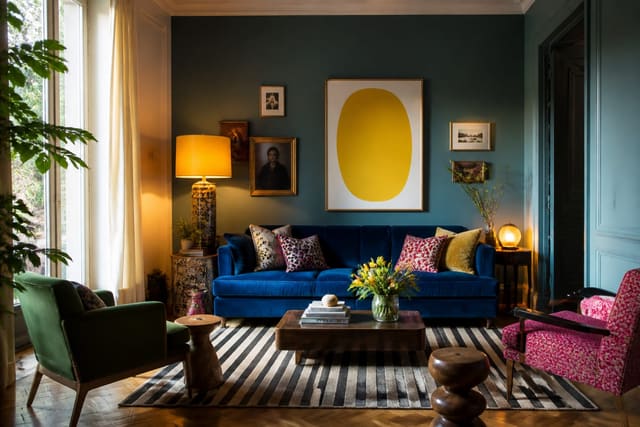
Maximalist kitchen ideas work when bold cabinets, patterned tile, brass hardware, and layered lighting share one clear point of view instead of competing for attention. The trick is choosing a dominant move, repeating a tight palette, and keeping enough clear counter and storage that the drama stays livable through daily cooking and cleanup.
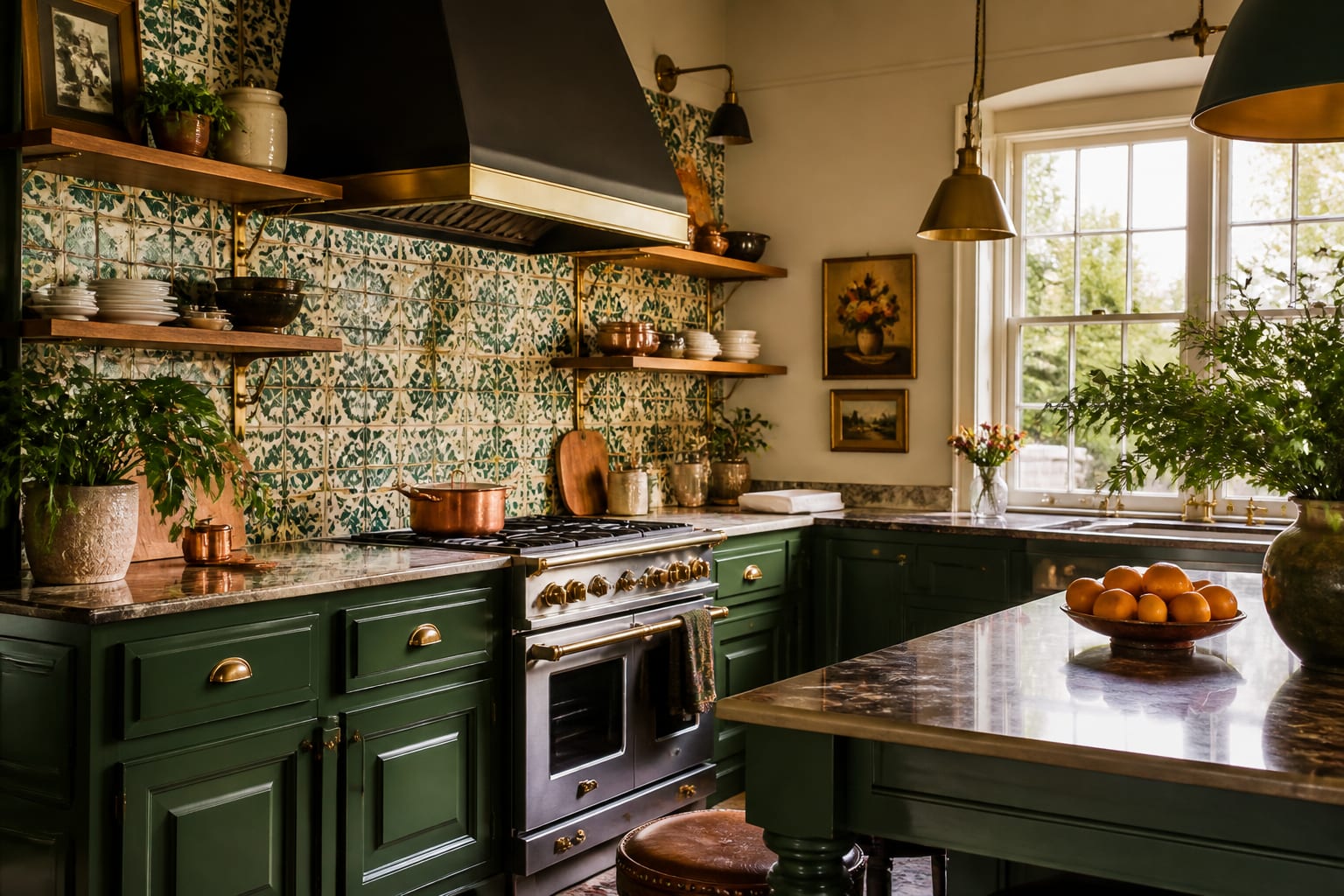
What does a maximalist kitchen look like?
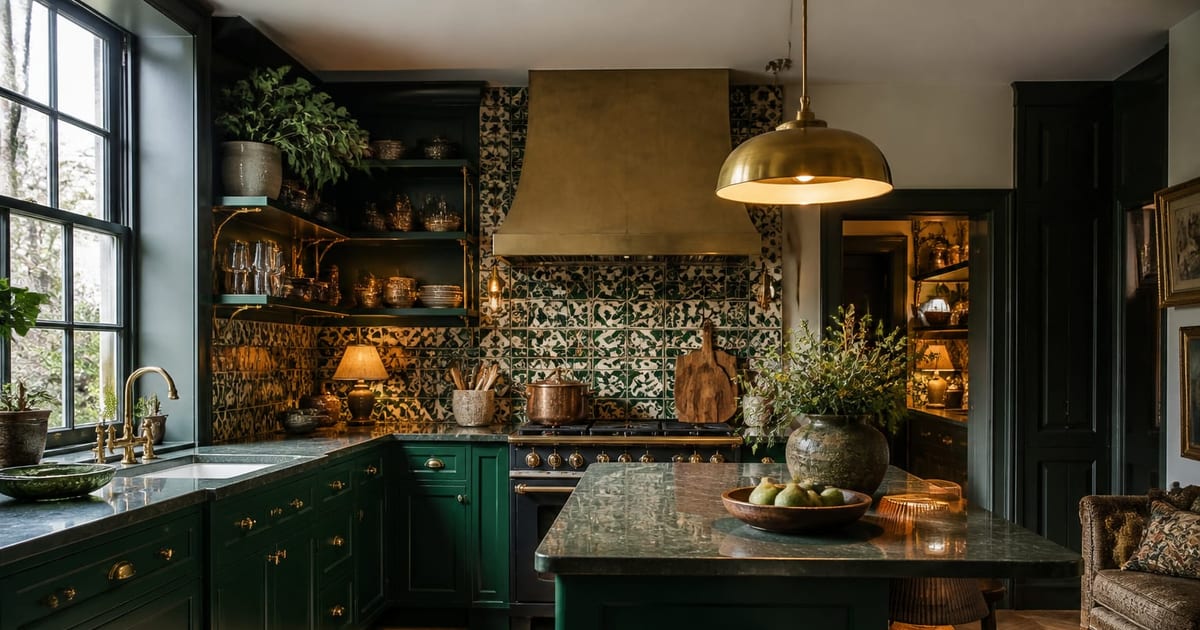
A maximalist kitchen is a confident, layered cooking room: colorful cabinets, graphic tile, warm metal, visible collections, strong lighting, and enough storage to keep the abundance controlled. It has hierarchy, not just volume. The cabinets might be peacock blue, the backsplash hand-painted, and brass repeating at the faucet, sconces, and pot rail.
If cabinets, counters, backsplash, floor, pendants, and stools all compete at equal volume, the room starts to feel like a showroom sample wall. The safer formula is one bold fixed surface plus edited layers. If patterned tile is the star, keep cabinet color calmer; if colorful cabinets are the headline, let the backsplash carry movement rather than five unrelated colors.
Which maximalist kitchen ideas make the biggest impact?
The strongest ideas change the kitchen's architecture, not just counter styling. Pick five or six that suit your light, cabinet condition, appliance finish, and tolerance for visual energy.
- Paint lower cabinets a saturated color (olive, oxblood, cobalt, aubergine, tobacco) and keep uppers lighter or open for drama at body height without boxing in a galley kitchen.
- Use patterned tile on one serious surface, like a full backsplash or range wall to the hood; 2 in x 8 in zellige-style or 6 in square graphic tile reads more intentional than a small accent strip.
- Choose brass hardware at real scale: 3 in–5 in pulls and 1.25 in–1.5 in knobs hold up against saturated paint better than dainty hardware.
- Add a hardworking runner (2'6" x 8' or 3' x 10', low-pile) to connect cabinet color, floor tone, and art in a long kitchen.
- Style open shelves as color composition with 10 in–12 in of vertical clearance, stacking daily plates, glassware, cookbooks, and one or two ceramic pieces.
- Hang statement pendants over an island 30 in–36 in above the counter in colored glass, brass, ceramic, or painted metal.
- Add art where kitchens usually go blank, like beside a pantry door or above a breakfast table; one 16 in x 20 in piece looks more deliberate than several tiny prints near the sink.
- Build a small drinks zone on dead counter space with a tray, wall rail, and task light, borrowing polish from kitchen home bar design without turning the whole room into a bar.
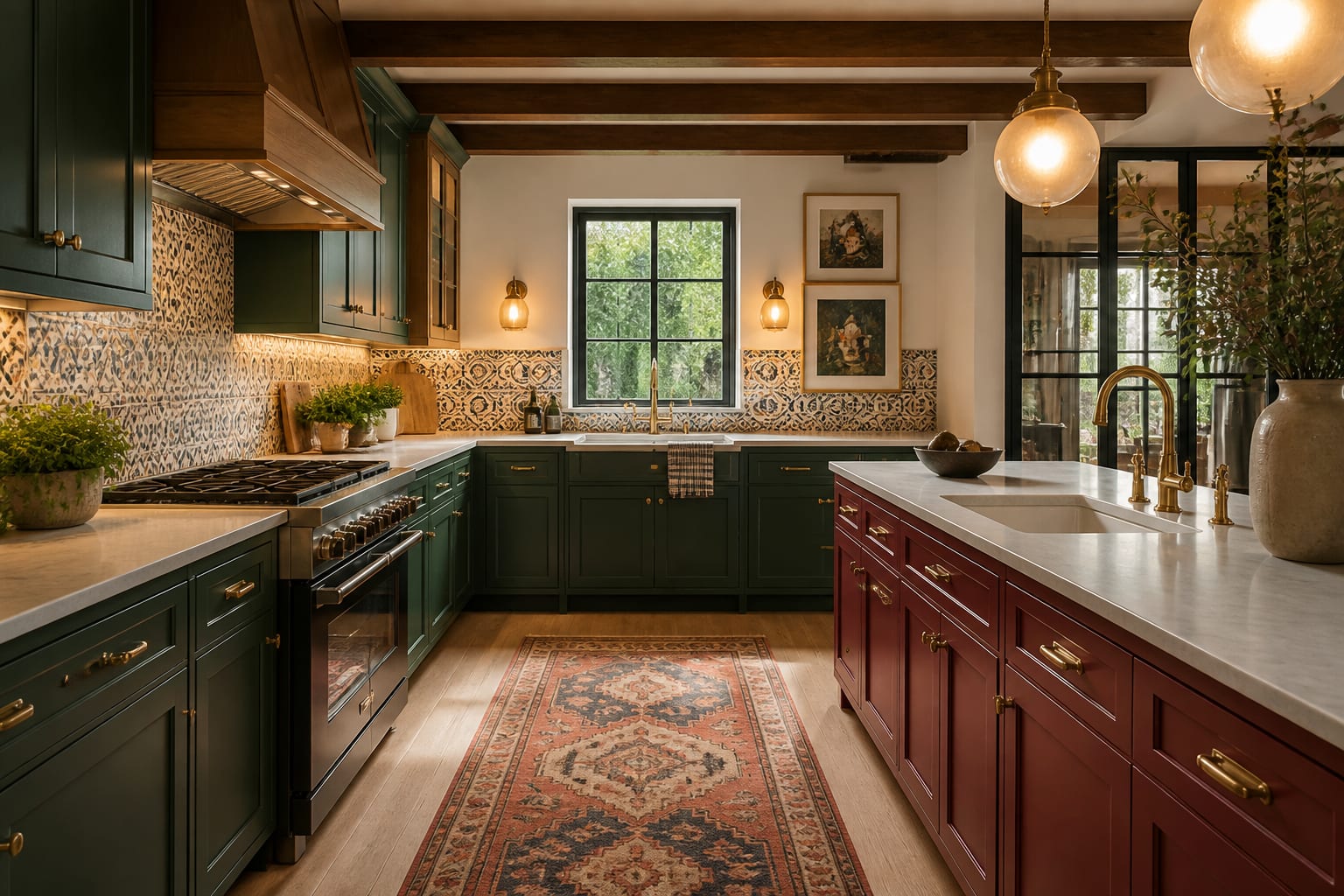
How do cabinets, tile, and brass compete without fighting?
Let cabinets carry the main color field, tile provide rhythm, and brass add warmth at the touch points. When all three try to be loudest, the kitchen loses its point of view.
Paint large sample boards, at least 8 in x 10 in, and check them beside your flooring, counters, and appliances rather than trusting a small swatch. North-facing kitchens cool down blue and green; west-facing kitchens intensify ochre, terracotta, and warm red by late afternoon.
Control tile pattern scale to the room: a small kitchen often looks richer with one full-height patterned range wall than pattern scattered across several small zones, while a kitchen with a large island and long sightlines can handle a stronger repeat if the counters stay quiet.
Repeat brass on pulls, faucet, sconces, or a pot rail, then anchor the room with one darker note, such as blackened iron stools, a walnut shelf, or a bronze pendant interior. If your taste runs sharper, check the metal logic in industrial kitchen ideas before adding exposed pipe or cage lights to a maximalist scheme.
What mistakes ruin a maximalist kitchen?
Most maximalist kitchens fail because drama gets added before anyone decides what should lead. Bold design still needs editing, storage, and enough blank counter to cook.
- Buying tile before choosing cabinet color. Test both together with the counter sample, not as separate purchases from different stores.
- Relying on small accessories alone. A red toaster and green vase won't create maximalism if the cabinets, lighting, and walls stay timid; choose one larger move and let accessories echo it.
- Ignoring appliance finish. Stainless, white, black, panel-ready, and colored appliances all shift the palette; repeat a matching note in art or fixtures so the appliance doesn't look stranded.
- Overfilling open shelves. Store what you use weekly, keep heavier objects near the ends, and leave enough air on middle shelves to see the tile and wall color.
- Confusing maximalism with cottage softness. If you love florals and cream paint, compare cottagecore kitchen ideas to decide whether you want romantic abundance or saturated drama; they can overlap but use contrast differently.
How can you preview a maximalist kitchen before committing?
Cabinet paint, backsplash tile, lighting placement, hood shape, and flooring are expensive to redo, so treat an AI preview as a composition test before ordering anything permanent.
Upload a straight-on kitchen photo to Re-Design and test full directions, not isolated products: one version with bold cabinets and calm tile, one with patterned tile and quiet cabinets, and one where drama sits in lighting, art, and rugs. Keep the same camera angle so you're comparing decisions, not views.
Keep fixed elements honest, like window size, appliance location, island footprint, and cabinet run, so you can see whether emerald lowers work with your floor, whether brass fights a stainless range, or whether that patterned tile stays exciting after ten seconds.
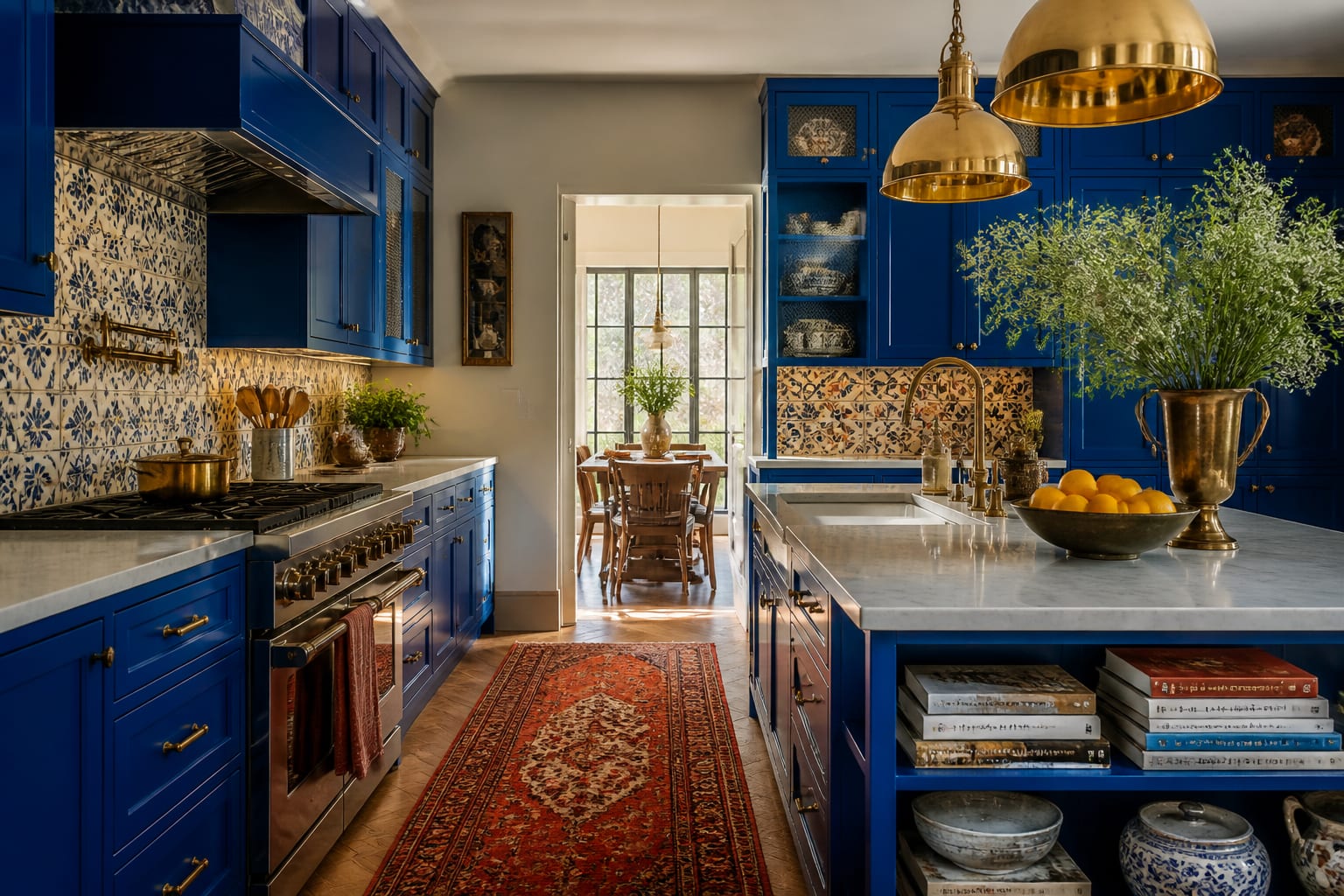
What final details make a maximalist kitchen feel personal?
The last layer should make the kitchen feel cooked in, not decorated: a ceramic fruit bowl, framed art, wood cutting boards, a brass tool rail, worn cookbooks, a vintage runner, and dishes worth seeing daily.
Lighting decides whether bold color reads expensive or harsh. Use warm 2700K bulbs for pendants, sconces, and under-cabinet lights rather than one cold ceiling fixture doing all the work, and position under-cabinet lights toward the front rail so they light the counter, not the backsplash unevenly.
Edit from the doorway: if the kitchen's main idea isn't obvious in a few seconds, remove whatever adds a new color, pattern, or metal without helping the room. A finished maximalist kitchen feels fearless and usable, with cabinets that have conviction, tile with rhythm, brass with warmth, and counters clear enough for real food.
Frequently Asked Questions
What is the easiest way to start a maximalist kitchen?
Start with one dominant move, such as saturated lower cabinets, a full patterned backsplash, or a statement hood, rather than changing everything at once. Let that single choice set the palette, then add tile, brass hardware, lighting, and display pieces that echo its colors instead of introducing competing ones.
Is brass hardware necessary for a maximalist kitchen?
No, but warm metal like brass, unlacquered brass, or aged bronze adds glow that pairs well with saturated cabinet colors and patterned tile. Use it on pulls, faucets, sconces, and rails at a real scale, 3 in–5 in pulls work well, and anchor it with one darker material so the kitchen doesn't feel like a metal showroom.
How do I keep a bold kitchen from feeling cluttered?
Repeat two or three colors across cabinets, tile, textiles, and dishes, keep at least 24 in of clear prep space, and edit open shelves down to items you use weekly. Hierarchy, one lead surface supported by calmer layers, is what separates intentional maximalism from visual noise.
Should patterned tile or cabinet color come first?
Choose cabinet color first, then test tile samples directly beside it and the countertop, since tile and cabinets sit next to each other in every sightline. Buying tile before settling on cabinet color is one of the most common reasons maximalist kitchens feel disjointed.
Can I preview a maximalist kitchen design before renovating?
Yes. Upload a straight-on photo of your kitchen to an AI tool like Re-Design and test full design directions, bold cabinets with calm tile, or patterned tile with quiet cabinets, using the same camera angle each time. This lets you compare real options before committing to paint, tile, or lighting that's costly to change.