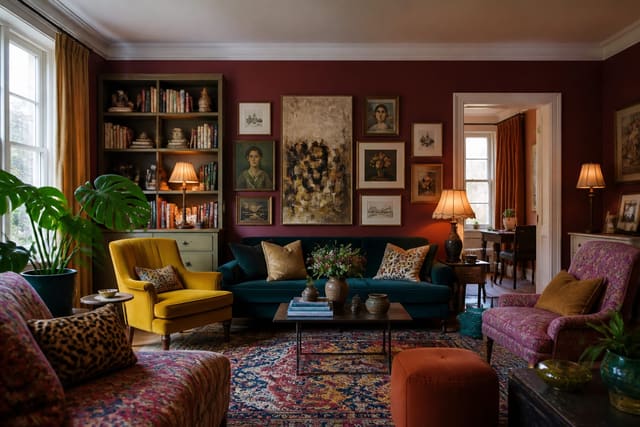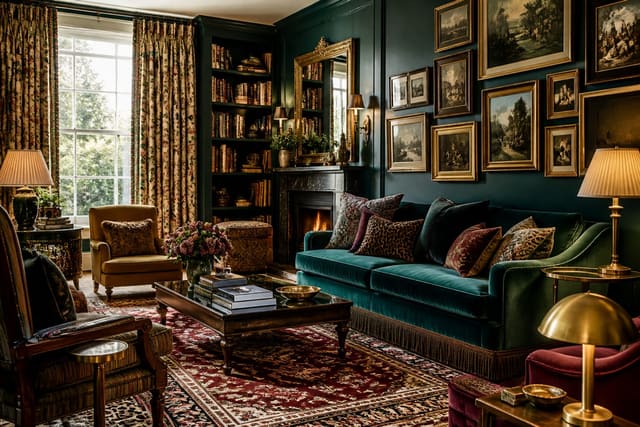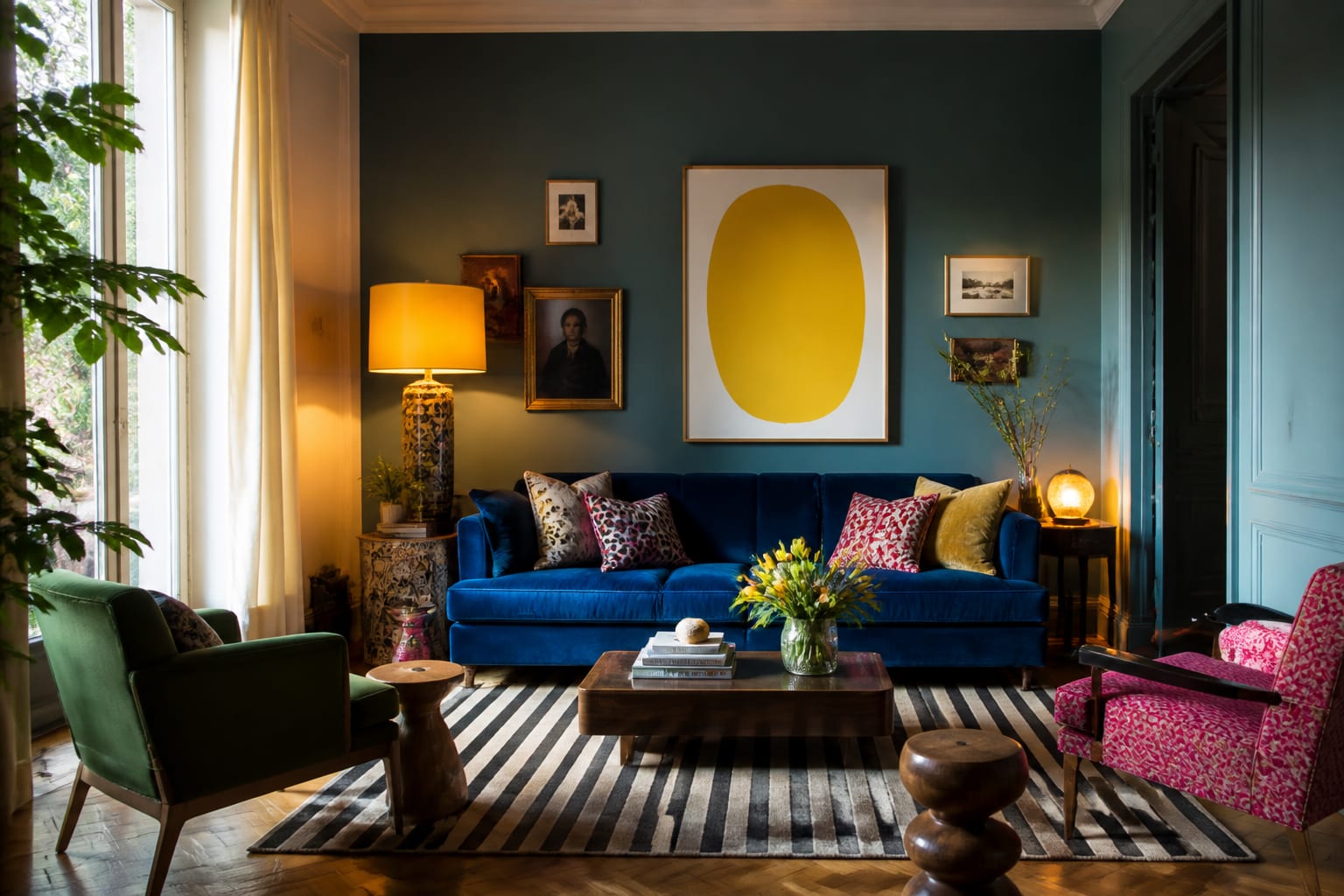
Dopamine decor is an interior design approach that uses joyful color, pattern, texture, art, and personal objects tied to your own habits and light — not trending shades — to make a home feel more energizing and emotionally rewarding. Done well, it reads as intentional and grown-up, not chaotic.
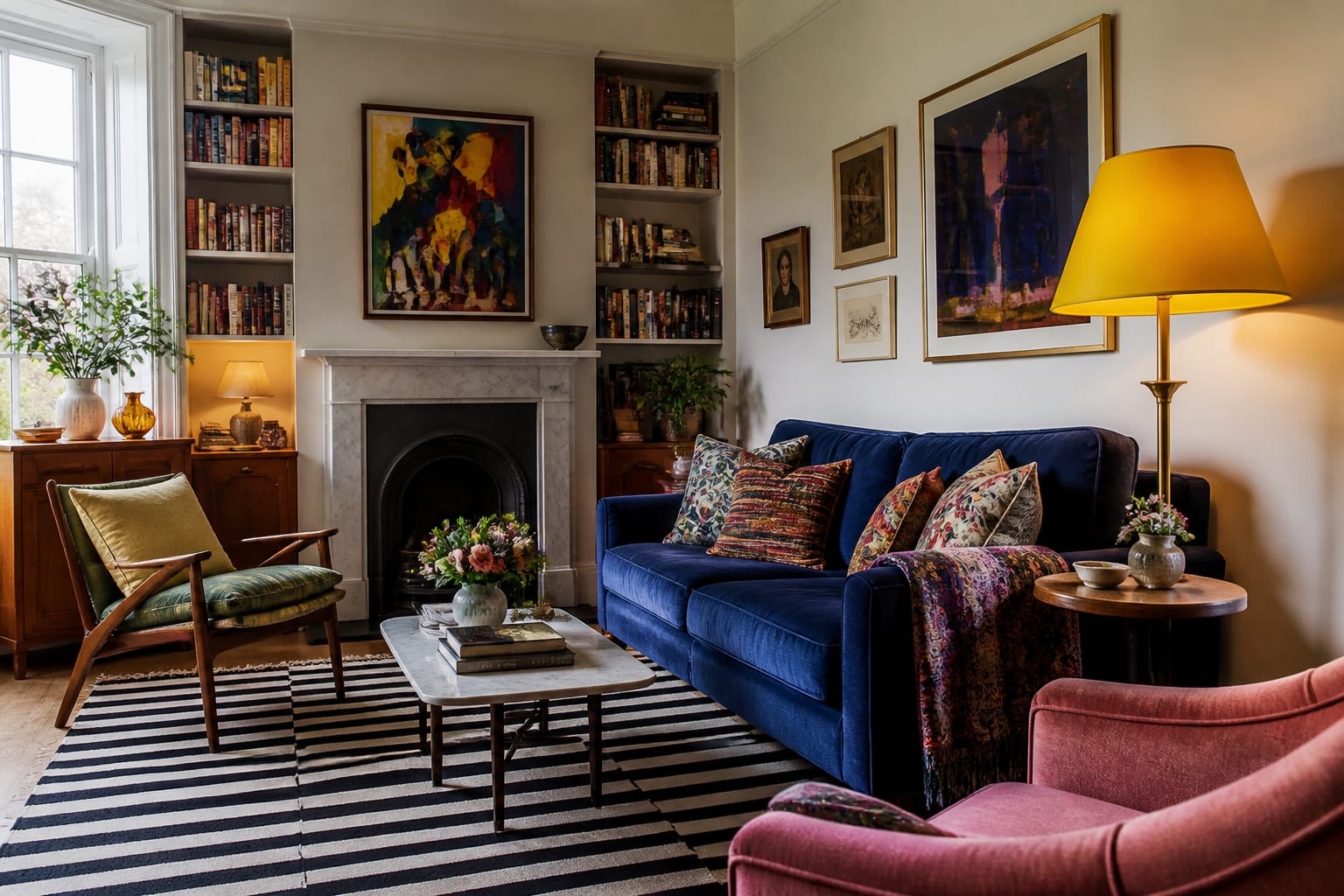
What is dopamine decor?
The name is casual, not clinical; a throw pillow doesn't prescribe a brain chemical. The useful idea is that a home can be designed around delight as seriously as it's designed around storage or resale value.
The best version has a point of view: a lemon-yellow powder room, a cobalt bookcase, a striped hallway runner. The weak version is novelty objects that look fun for five minutes and annoying by Tuesday. If you like layered rooms, read about maximalism in interior design; dopamine decorating is its brighter, mood-led cousin, but it still needs editing.
Which dopamine decor ideas actually change a whole home?
The strongest ideas shift what you see from the doorway. Small colorful accessories help, but they can't carry a room with weak lighting or undersized furniture. Choose five or six moves that match your personality rather than forcing every room into the same candy-colored mood.
- Paint one architectural plane — a door, bookcase, stair riser, or pantry wall — in a joy color; a contained surface lets coral or cobalt feel intentional without shouting.
- Choose one saturated upholstery piece at body scale, like a velvet chair or painted bench; furniture carries color more convincingly than small objects.
- Swap timid lampshades for color or pattern, keeping table lamps around 24 in–30 in tall; warm light through a pleated raspberry or ochre shade adds joy after dark.
- Use a rug with real presence — 8 ft x 10 ft minimum in a living room, 2'6 in x 8 ft in a hallway — to connect furniture and ground the palette.
- Hang art at proper scale, one 24 in x 36 in piece or a tight cluster with 2 in–3 in between frames; personal art beats generic cheerful prints.
- Add a surprise color in a contained zone, like the inside of a cabinet or closet, so the house gets personality without exhausting the main rooms.
- Mix one playful pattern with calmer support fabrics; a stripe or checkerboard works best when nearby pillows or curtains repeat one color.
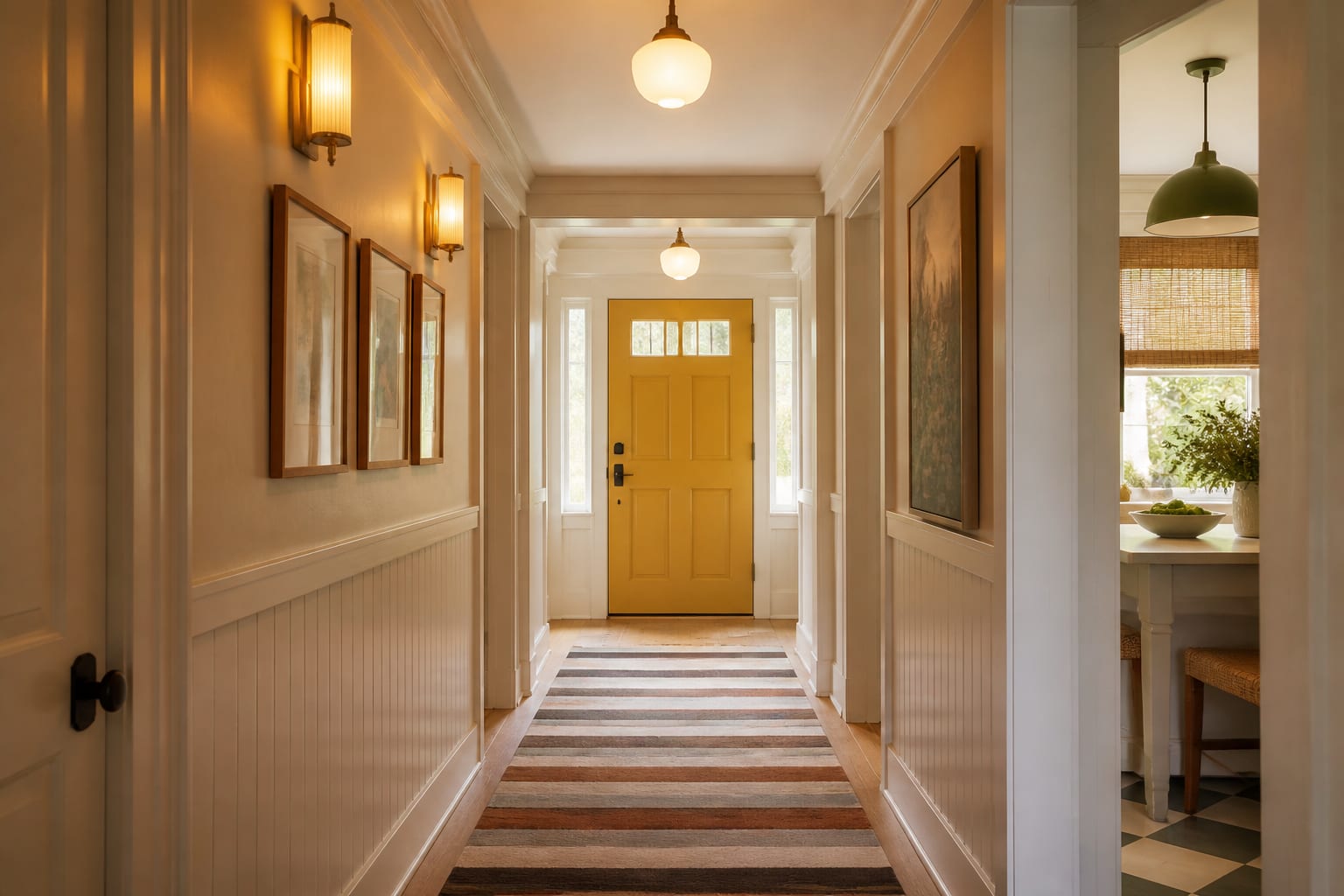
How should color, pattern, and light work without chaos?
Dopamine decorating fails when every surface competes for attention. A happy home still needs hierarchy: one dominant color moment, one or two supporting colors, and enough quiet texture to make bright pieces readable.
A simple formula: one bright anchor, one repeated echo, one neutral buffer. A living room might pair a cobalt sofa with blue in art and a vase, plus warm wood. A kitchen might use tomato-red stools, red in a framed print, and cream cabinets.
Lighting decides whether the room feels warm or frantic. Use 2700k bulbs in living rooms, bedrooms, and dining spaces; 3000k can work in kitchens or baths with already-warm finishes. Cool blue-white bulbs make pink, yellow, and green look harsher. Layer a 58 in–64 in floor lamp with a 24 in–30 in table lamp so bright color glows rather than glares.
For a bolder envelope, colour-drenching a room from baseboard to ceiling is a strong move — keep furniture simpler when walls and trim share one color. For a richer, moodier joy, see burgundy and wine home decor; happiness doesn't require citrus and bubblegum pink.
| Color move | Best place to use it | Why it works |
|---|---|---|
| Bright painted door | Hall, pantry, bedroom, utility room | Repeatable punctuation mark across the palette. |
| Patterned rug | Living room, entry, hallway | Hides wear while setting the room's mood. |
| Colorful lampshade | Bedside, console, reading corner | Shapes both daytime style and nighttime atmosphere. |
| Saturated ceiling | Powder room, dining nook, small office | Adds surprise without crowding wall space. |
Common dopamine decor mistakes
Mistakes usually come from chasing visible cheer instead of designing for how a room is used.
- Buying every cute object in one color looks merchandised; pick three to five related shades and vary material — wool, lacquer, ceramic, linen, glass, wood.
- Ignoring scale turns joy into clutter; one large artwork or rug usually beats fifteen tiny scattered objects.
- Using only bright color with no grounding tone feels weightless; add walnut, blackened metal, navy, or deep plum for contrast.
- Forgetting storage makes playful rooms stressful; keep mail, cables, and toiletries behind doors so the intentional color stays the focal point.
- Copying someone else's palette can backfire; don't force a color that carries a bad memory just because it photographs well.
A whole home doesn't need the same intensity everywhere. Give the entry a quick hit, let the living room carry pattern, make the bedroom softer, and save the wildest idea for a powder room or closet.
Use AI to preview your joyful home before you commit
Dopamine decorating is hard to judge from product photos because color changes when it touches your floor, daylight, sofa, and wood tones. Uploading a room photo to Re-Design lets you test joyful versions before ordering paint, wallpaper, rugs, or a saturated chair.
Try three directions from the same viewpoint: one color-led (a painted wall or trim), one pattern-led (rug, curtains, art), and one object-led (calmer furniture, joy from lamps and pillows). Keep real windows, flooring, and furniture visible so the preview reflects the home you actually have.
This is especially useful if you rent, share a home with a color-skeptic partner, or must keep big pieces that aren't joyful on their own. A gray sectional may brighten with a tomato-red lamp; a black dining set can ground yellow or pink so it reads sophisticated rather than chaotic.
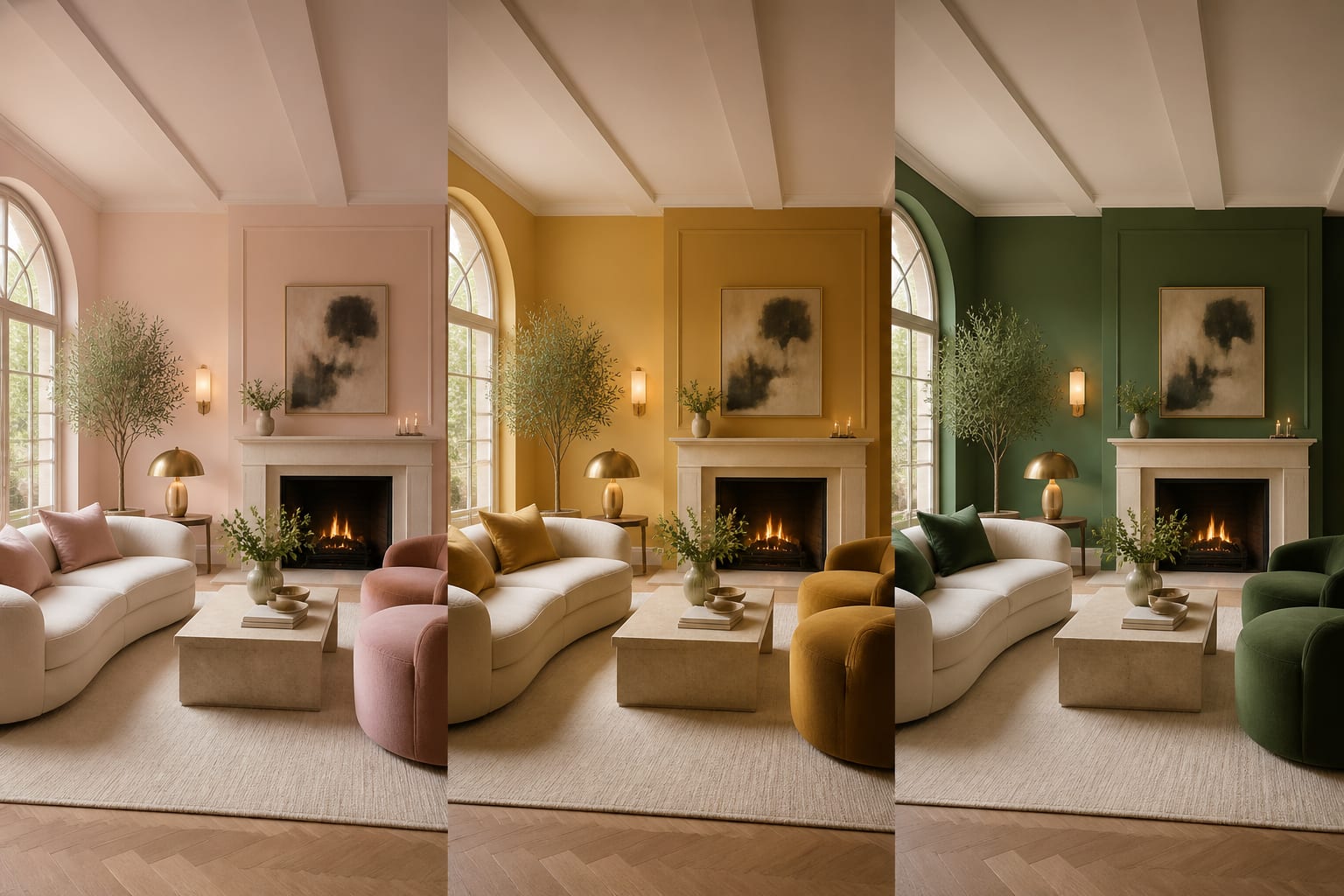
What finishing details make the happiness feel personal?
The final layer should prove the room belongs to a specific person, not a trend folder. Use souvenirs, children's drawings, records, handmade ceramics, and inherited pieces — but give them room, light, and contrast so they read as chosen rather than dumped.
Hang standalone art around 57 in–60 in on center. Use pillows in stronger sizes, like 22 in squares on a deep sofa, instead of piling up small cushions. Let curtains touch or nearly touch the floor; playful fabric looks cheap floating above the baseboard.
Edit from the doorway: name the happiest thing in the room within three seconds. If you can't tell whether the joy comes from color, art, or lighting, remove the newest object and look again. Dopamine decor isn't about more stuff — it's about giving delight a clear place to live.
Frequently Asked Questions
What is dopamine decor?
Dopamine decor is an interior design approach that uses joyful color, pattern, texture, art, and personal objects to make a space feel energizing and emotionally rewarding. It works best when tied to your own memories and light rather than trending shades, and when one clear anchor per room keeps the effect from tipping into visual clutter.
How do I add dopamine decor without making a room look chaotic?
Use one dominant color, one or two supporting echoes, and a neutral or natural buffer like wood or stone. Repeat the anchor color at least three times through fabric, art, and paint, and keep lighting warm (around 2700k) so saturated colors glow instead of clashing.
What's the biggest mistake people make with dopamine decor?
The most common mistake is buying many small novelty objects in the same color instead of committing to one or two larger, well-scaled moves like a painted door, a saturated chair, or a full-size rug. Small scattered accents read as clutter rather than intentional joy.
Can I try dopamine decor if I rent or share a home with someone more neutral?
Yes. Contained moves like a painted closet interior, a colorful lampshade, or a bold rug are reversible and low-risk. Using an AI tool to preview color-led, pattern-led, and object-led versions of your actual room helps you and a skeptical partner agree before committing to paint or furniture.
Does dopamine decor mean using bright, saturated colors everywhere?
No. Effective dopamine decor gives different rooms different intensities: a quick color hit at the entry, a layered look in the living room, something softer in the bedroom, and the boldest idea saved for a small space like a powder room.