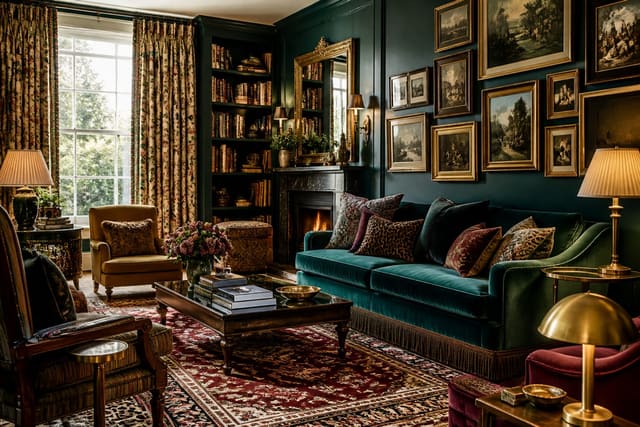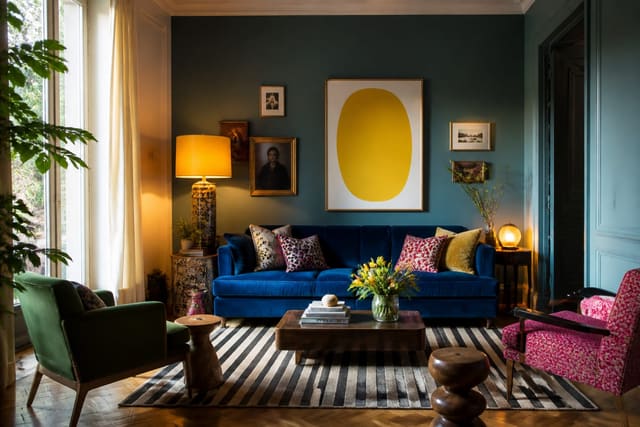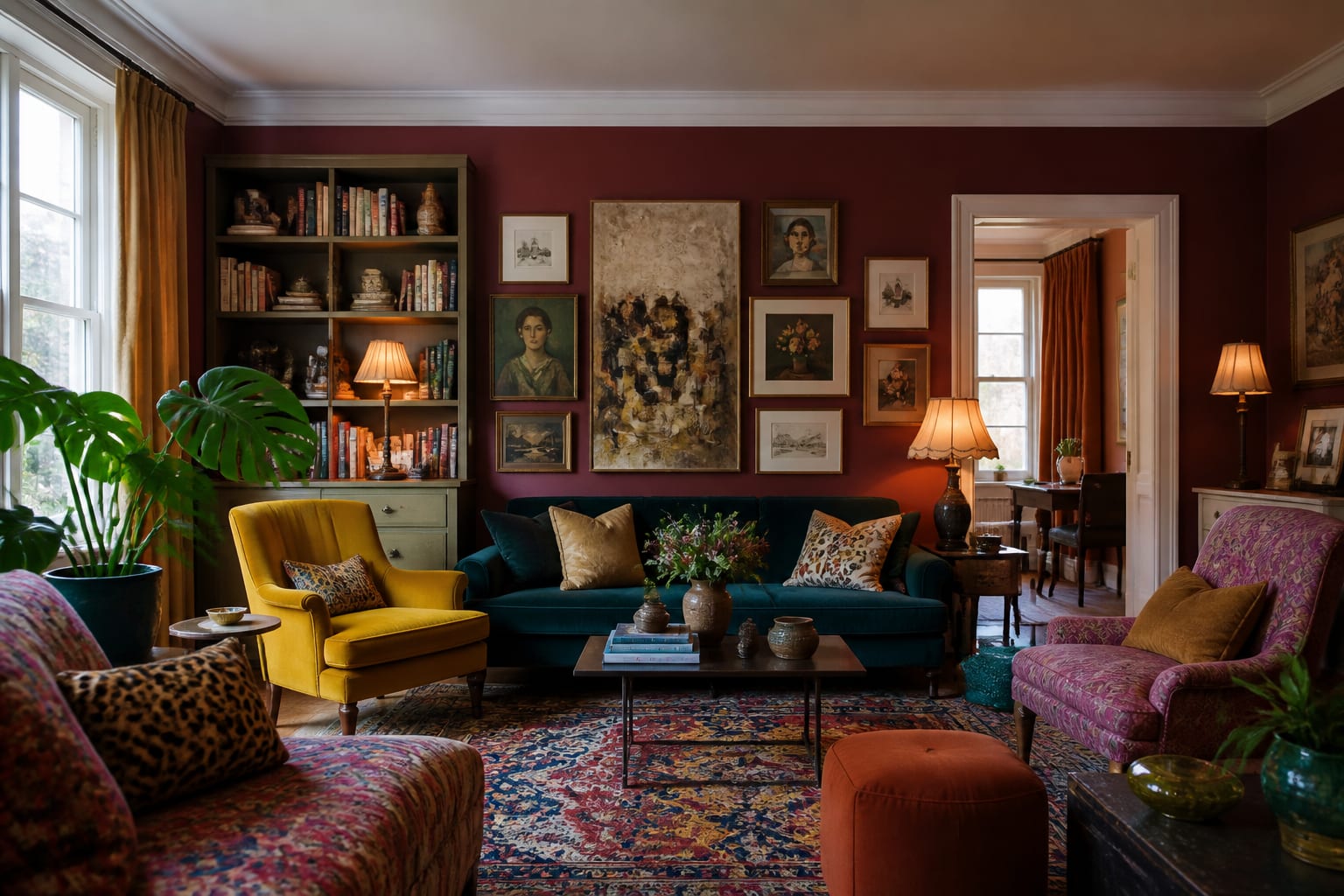
Maximalism interior design is an intentional more-is-more style that layers color, pattern, art, and personal collections around one clear anchor, not an excuse to buy everything. The best maximalist rooms are highly edited: they use repetition, real scale, and layered lighting so abundance reads as confident rather than cluttered.
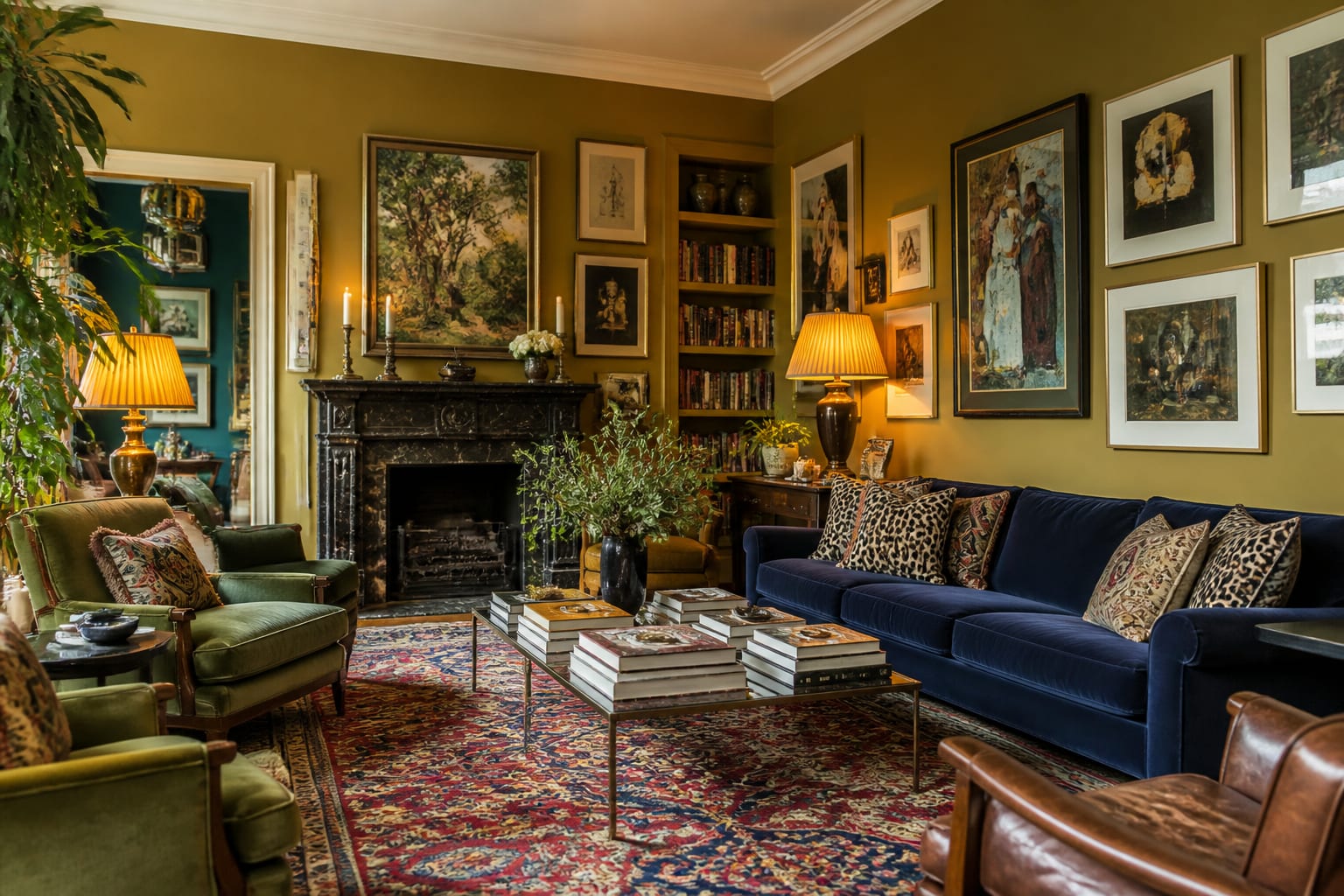
What Is Maximalism in Interior Design, Really?
Maximalism layers color, pattern, art, objects, texture, and personal history around a clear point of view. It's the opposite of blank-room decorating, but not the opposite of discipline — the room still needs a focal point, working circulation, and useful lighting. Think of it as abundance with a spine: a color family, an art collection, a wall of books, or a bold paint decision that lets a leopard pillow, a lacquered tray, and a vintage portrait live in the same room without looking like strangers.
Related styles help clarify the boundaries. If your home mixes eras but stays calmer overall, you're closer to maximalist versus eclectic design. If the drama comes mainly from painting walls, trim, and shelves in one saturated family, you're using colour drenching in interior design as a maximalist tool.
How Is Maximalism Different From Clutter?
Clutter has no job; maximalism gives most things a role — color, memory, contrast, or function. A coffee table buried in mail and dead candles is clutter; one with a tray, two weighty books, and a sculptural object is maximal because pieces vary in height and purpose deliberately.
Use the doorway test: stand at the entrance and name the room's idea in three seconds. "I own many things" means the room needs editing. "Deep green walls with brass and art" means it has direction. Good maximalism also leaves negative space in unexpected places — a plain lampshade or a closed cabinet lets the loud pieces actually be seen.
What Are the Core Elements of a Maximalist Room?
The core elements are scale, repetition, contrast, and personal evidence. You don't need all of them at full volume, but you need enough for the room to feel deliberate at first glance.
- Anchor first. A saturated sofa, 9 ft x 12 ft rug, painted bookcase, or 36 in x 48 in artwork gives the room a center of gravity; scattered small decor rarely carries the look.
- Repeat color three times. If aubergine appears on a wall, echo it in art, a pillow welt, or a lampshade so wild pieces converse instead of compete.
- Vary pattern scale. Pair one large botanical, one medium geometric, and one small stripe; matching scale creates buzz, varied scale creates rhythm.
- Size the rug correctly. An 8 ft x 10 ft rug is a living-room minimum, 9 ft x 12 ft is better; front furniture legs should sit on it.
- Hang curtains like architecture. Mount rods 6–10 in above the casing and extend them 8–12 in past each side for generous, intentional-looking fabric.
- Layer light at several heights. Use warm bulbs around 2700K plus a floor lamp, table lamp, and sconce so deep colors don't flatten after sunset.
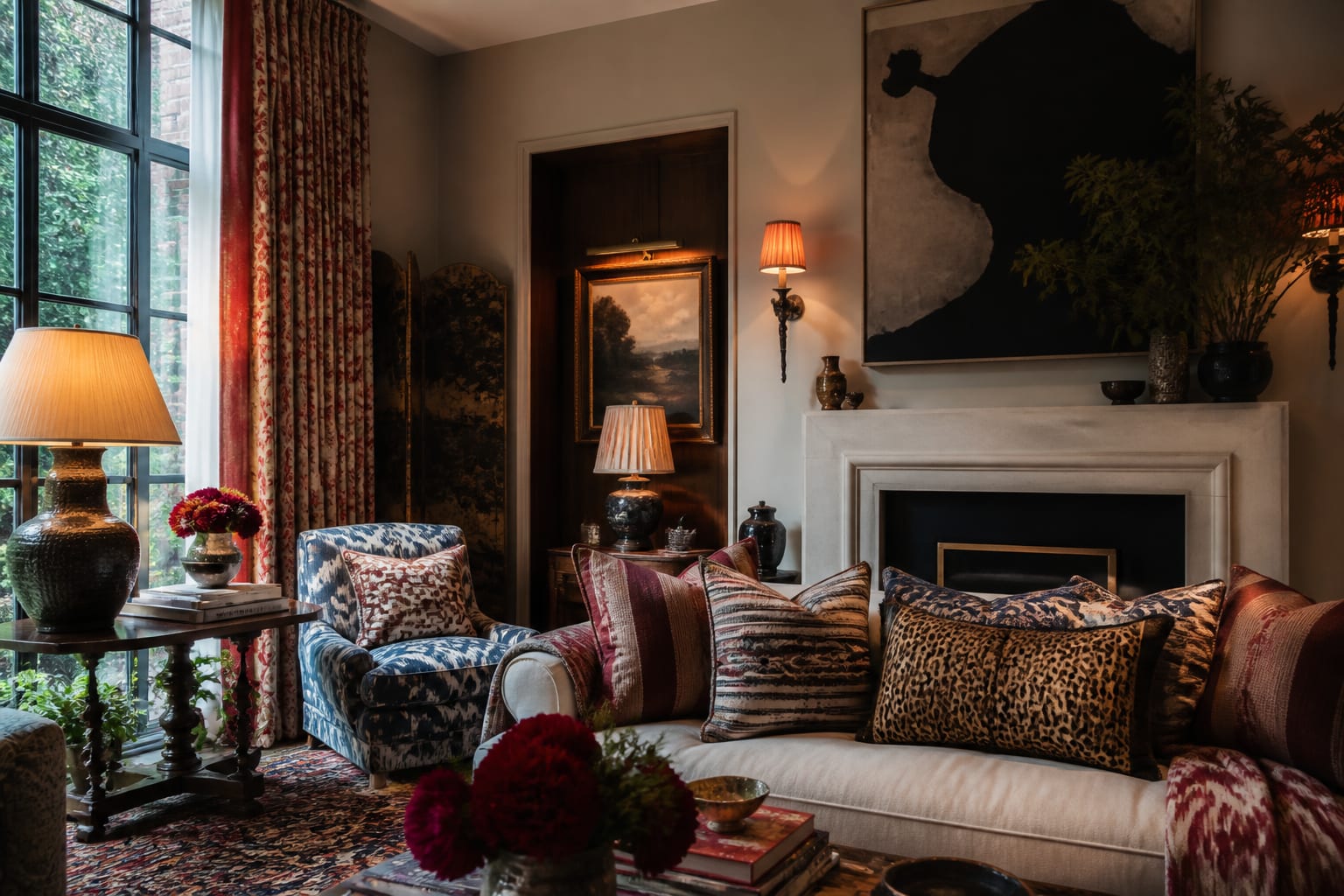
Personal evidence matters most — books you'd keep past a trend, inherited ceramics, travel finds, and odd objects placed with care. The more personal the room, the more it needs structure.
What Mistakes Ruin a Maximalist Room?
Most failures come from adding intensity before deciding what should lead.
- Buying only tiny accessories. Ten bright objects on a shelf aren't a maximalist room; commit to a larger move like wall color, a rug, or upholstery.
- Using every pattern at once. Florals, animal prints, and geometrics can mix, but need shared color and varied scale — drop one pattern if everything shouts at the same distance.
- Ignoring function. Leave 30–36 in for main walkways and 14–18 in between sofa and coffee table, with closed storage for everyday clutter.
- Cold lighting. One cool ceiling bulb makes bold rooms feel harsh; warm shaded lamps make saturated color and brass feel intentional at night.
- Over-theming. If every object announces jungle, disco, or Victorian, the room loses the layered intelligence maximalism needs. Let one idea lead, then complicate it with other eras.
Can You Preview a Maximalist Room Before Buying?
Maximalism is risky to assemble piece by piece since relationships matter more than individual objects — a wallpaper sample can look gorgeous alone and frantic beside your rug. Upload a photo of your actual room to Re-Design and test full directions before ordering expensive pieces: one with bold walls and calm furniture, one with pattern concentrated in rug and curtains, one built from art, books, and lamps. Keep the same camera angle each time so you're judging design decisions, not a prettier photo.
This matters most in rentals, north-facing rooms, or homes where a sofa or cabinet run must stay put. If drenched walls shrink the room in preview, move the drama to textiles and art instead. For a brighter, playful take on abundance, see dopamine decor ideas.
How Do You Start Maximalism Without Making a Mess?
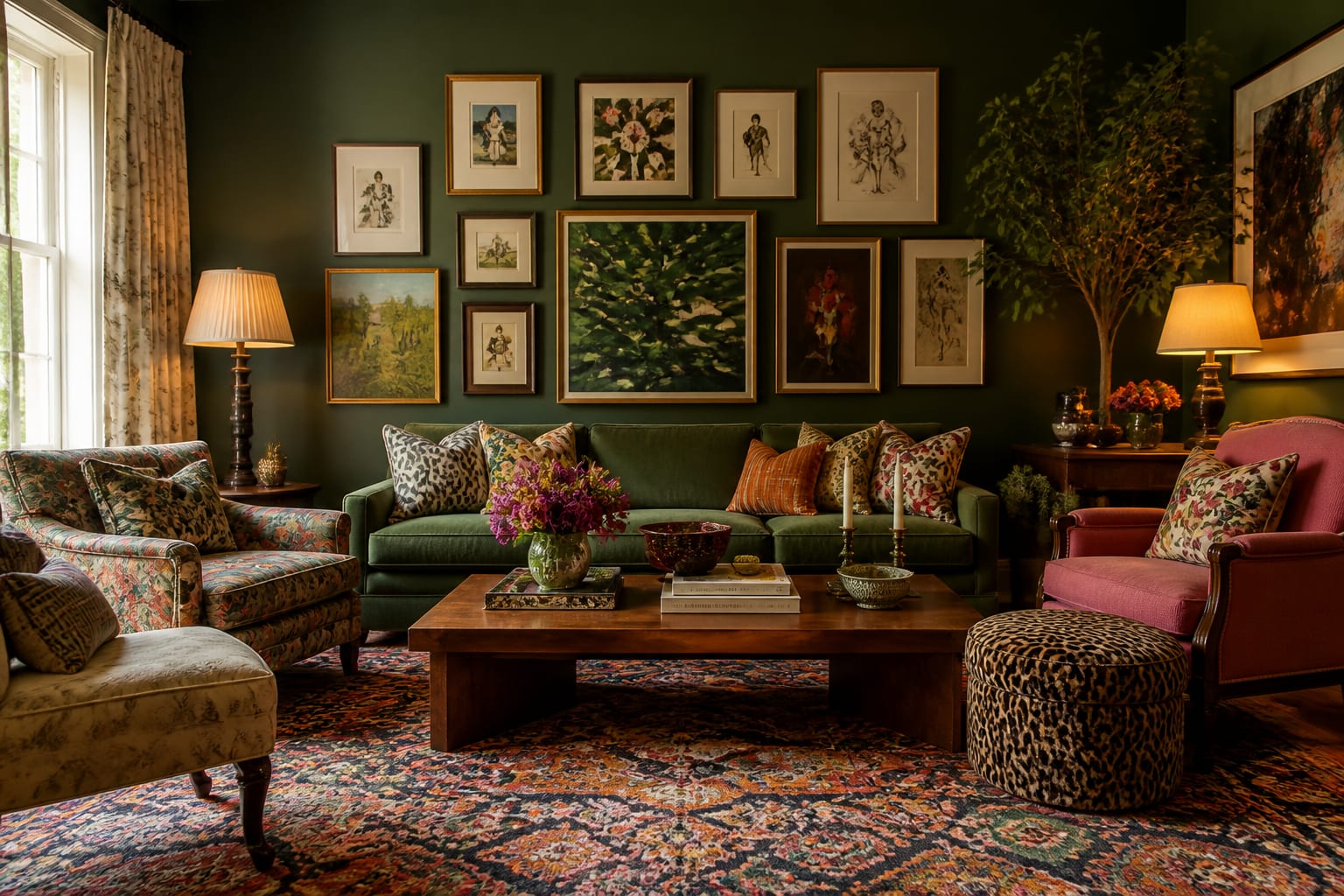
Start with the room's fixed facts: floor color, ceiling height, window size, sofa shape, or rental restrictions. A gray rental floor may need warmer rugs and brass; a low ceiling may prefer dramatic walls with a lighter ceiling instead of a fully painted box.
Pick a three-to-five color palette before shopping — for example emerald, oxblood, mustard, walnut, and cream — as a recurring language, then add texture so it doesn't go flat. Work in this order: anchor, color repetition, lighting, storage, then small objects. Hang standalone art around 57–60 in on center, or space gallery-wall frames 2–3 in apart; choose lamps around 24–30 in tall for substantial side tables; and keep roughly a third of shelf space visually open even when layered with books and ceramics.
The final test is simple: the room should feel more like you, not merely more decorated. If bold pieces have a job, colors repeat in smart places, and daily life still has surfaces and light, maximalism becomes generous rather than chaotic.
Frequently Asked Questions
What is the simplest definition of maximalism in interior design?
Maximalism is an intentional more-is-more style that layers color, pattern, art, and personal objects around one clear anchor. It differs from clutter because nearly every item has a purpose — color repetition, contrast, memory, or function — rather than being randomly accumulated.
How is maximalism different from eclectic design?
Maximalism leans into bold, saturated abundance with a strong unifying anchor, while eclectic design mixes eras and styles more calmly with restraint. See maximalist versus eclectic design for a full comparison of the two approaches.
How many colors should a maximalist room have?
Aim for a palette of three to five colors that repeat throughout the space, such as emerald, oxblood, mustard, walnut, and cream. Repetition is what lets bold, varied pieces feel connected instead of randomly collected.
What is the biggest mistake people make with maximalism?
The biggest mistake is buying only small colorful accessories instead of committing to one large anchor move, like a saturated wall, a big rug, or a statement sofa. Without an anchor, the room lacks the hierarchy that makes abundance look intentional.
Can I test a maximalist look before buying furniture?
Yes. Upload a photo of your room to an AI design tool like Re-Design and preview full directions — bold walls, pattern-heavy textiles, or art-and-lighting-driven layouts — using the same camera angle each time to compare fairly before spending on expensive pieces.