Maximalist vs eclectic design comes down to intent: maximalism layers abundant color, pattern, art, and objects around a strong point of view, while eclectic design mixes pieces from different periods and styles into a curated composition. Most "mixed style" rooms fail because they're undecided, not eclectic. This guide shows which rule your room actually needs.
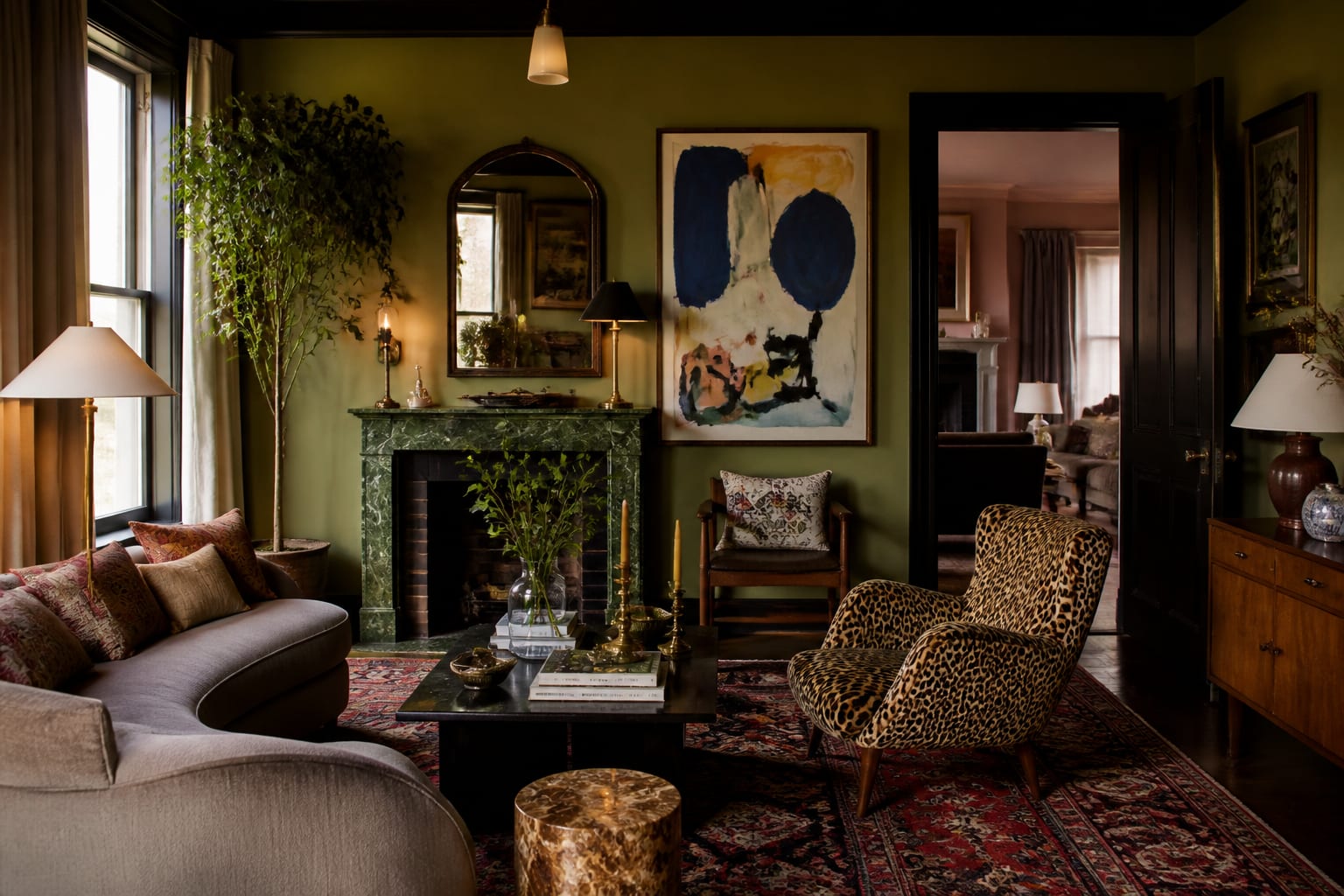
What is the real difference between maximalist and eclectic design?
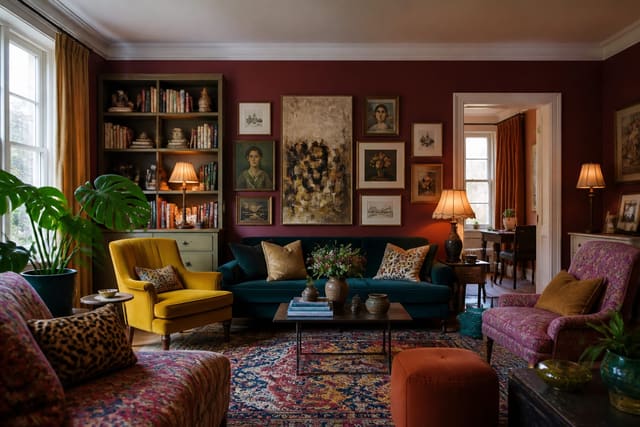
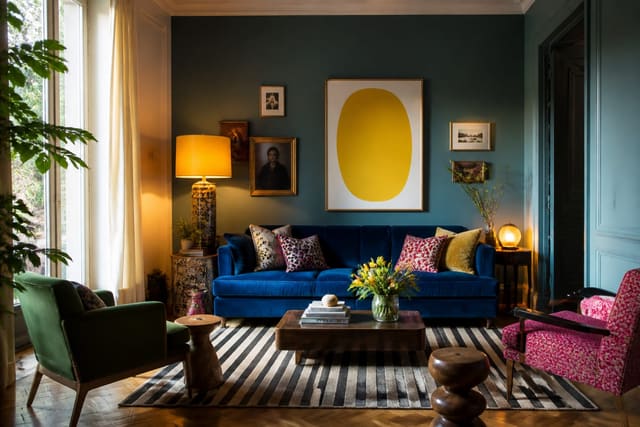
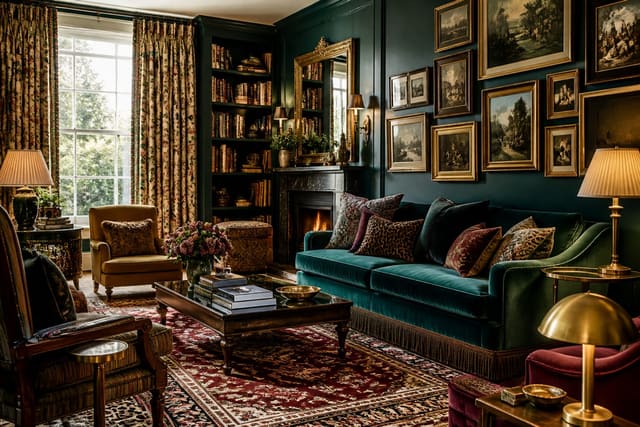
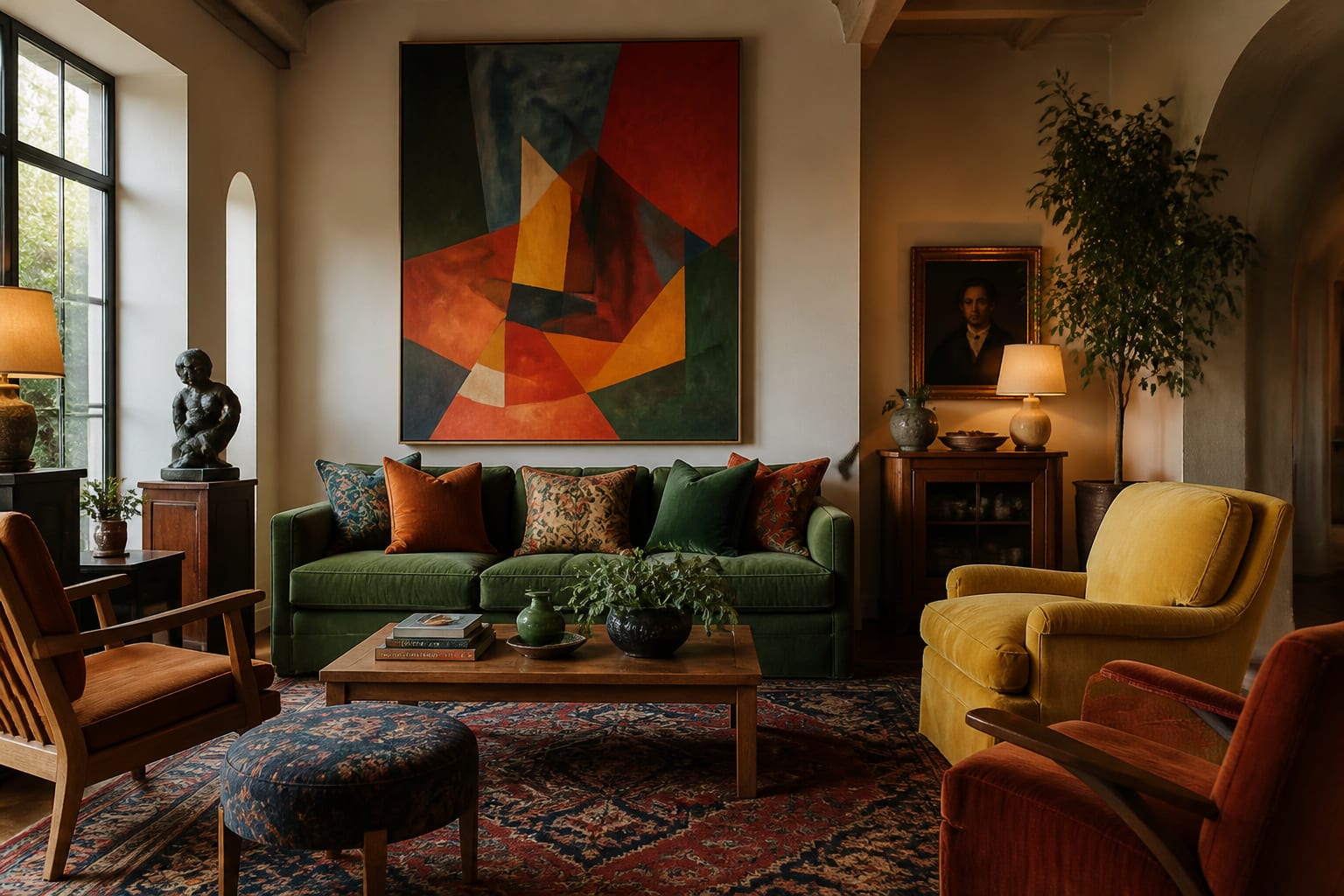
Maximalist design is an intentional "more is more" approach; eclectic design is a deliberate mix of periods and influences that may or may not be abundant. A maximalist room might use deep green walls, a floral sofa, striped pillows, a wall of books, brass lamps, and layered art in pursuit of richness. An eclectic room might pair a mid-century chair with a Victorian table, a Moroccan rug, a contemporary print, and a simple linen sofa in pursuit of contrast across time and origin.
The two can overlap, but they aren't twins. A plaster-white dining room with one antique farm table, black wishbone chairs, a Noguchi-style pendant, and a Persian runner is mixed, not loud.
For the more-is-more side, start with what maximalism means in interior design before shopping for patterned lampshades. Maximalism needs a spine: color, collection, theme, material, or mood. Eclectic design needs a bridge: proportion, undertone, finish, or repetition.
Maximalist vs eclectic design at a glance
Use this table as a fast diagnostic before buying another chair, rug, or paint sample.
| Decision | Maximalist design | Eclectic design |
|---|---|---|
| Main goal | Richness through layered color, pattern, art, books, and objects. | Interest through mixed eras, styles, regions, or movements. |
| Best anchor | Saturated walls, a dramatic sofa, a large rug, a gallery wall, or a collection. | A strong old-vs-new conversation held together by one material or palette. |
| Color logic | Bolder and repeated; three to five hues often run through the room. | Can be neutral or colorful; the mix matters more than the volume. |
| Pattern logic | One large, one medium, one small pattern keeps rhythm from turning busy. | Optional; contrast may come from shape, age, or wood tone instead. |
| Risk | Clutter and visual fatigue from too many small objects with no lead role. | Randomness and pieces that never speak to one another. |
| Best test | Can you name the room's dominant move from the doorway? | Can you explain why the styles belong together? |
A maximalist living room might pair oxblood walls, a tiger rug, blue velvet chairs, gilt frames, and shaded lamps. An eclectic living room might have white walls, a Danish sideboard, a rolled-arm sofa, a Turkish kilim, and modern black-framed art. Both can be beautiful; only one is necessarily abundant.
How do you choose the right approach for your home?
Choose maximalism if your home feels too thin, too beige, or too cautious. Choose eclectic design if you already own pieces from different eras and need them to look intentional rather than accidental. The wrong choice usually shows up as weak drama or unedited variety.
Start with the room's largest facts: floor color, ceiling height, window placement, sofa size, cabinet finish, and any rental limits. A low-ceiling room can still handle maximalism if the drama lives on walls, rugs, and art rather than the ceiling. A room with orange oak floors can look eclectic and polished if you repeat warm wood elsewhere instead of pretending the floor is gray.
For maximalism, make one big move before styling surfaces: paint the bookcases, choose the larger rug, commit to full-length curtains, or hang art with confidence. Curtains that reach the floor (or stop within 1/2 in of it) read as deliberate; panels floating 4 in above the baseboard don't. A seating area needs an 8 ft x 10 ft rug at minimum, and 9 ft x 12 ft is better when sofa and chairs need to feel like one composition.
For eclectic design, limit the number of competing stories. Mix farmhouse, mid-century, French, and contemporary pieces, but give them a shared language: repeat one black metal note in a lamp, frame, and chair leg, or keep wood tones within a warm family. Hang standalone art around 57 in–60 in on center so the mix feels designed, not casually pinned up.
Color drenching can push either style further: a room painted in one deep family can feel maximalist when layered with pattern and art, or eclectic when it becomes a quiet backdrop for mixed furniture. See colour drenching as a design strategy before painting walls, trim, shelves, and doors the same shade.
What mistakes make both styles look accidental?
The biggest failures aren't caused by owning too much. They're caused by giving every object the same volume.
- No true anchor. Buying only small "interesting" pieces weakens maximalism; lead with one large-scale move, like a 36 in x 48 in artwork or a rug reaching under the seating's front legs.
- No bridge. Mixing styles without a repeated finish, color, or curve leaves eclectic rooms disconnected; repeat one element at least three times.
- Flat lighting. Both looks fall apart after sunset without warm bulbs (around 2700K) and layered table, floor, and sconce lighting.
- Overflowing shelves. Keep daily clutter behind doors; style open shelves with books, ceramics, and enough negative space for shapes to register.
- Copying without matching architecture. A 10 ft ceiling and plaster fireplace carry drama differently than a rental with mini blinds and beige carpet.
A mixed style home still needs circulation: keep roughly 30 in–36 in for main walkways and about 14 in–18 in between sofa and coffee table.
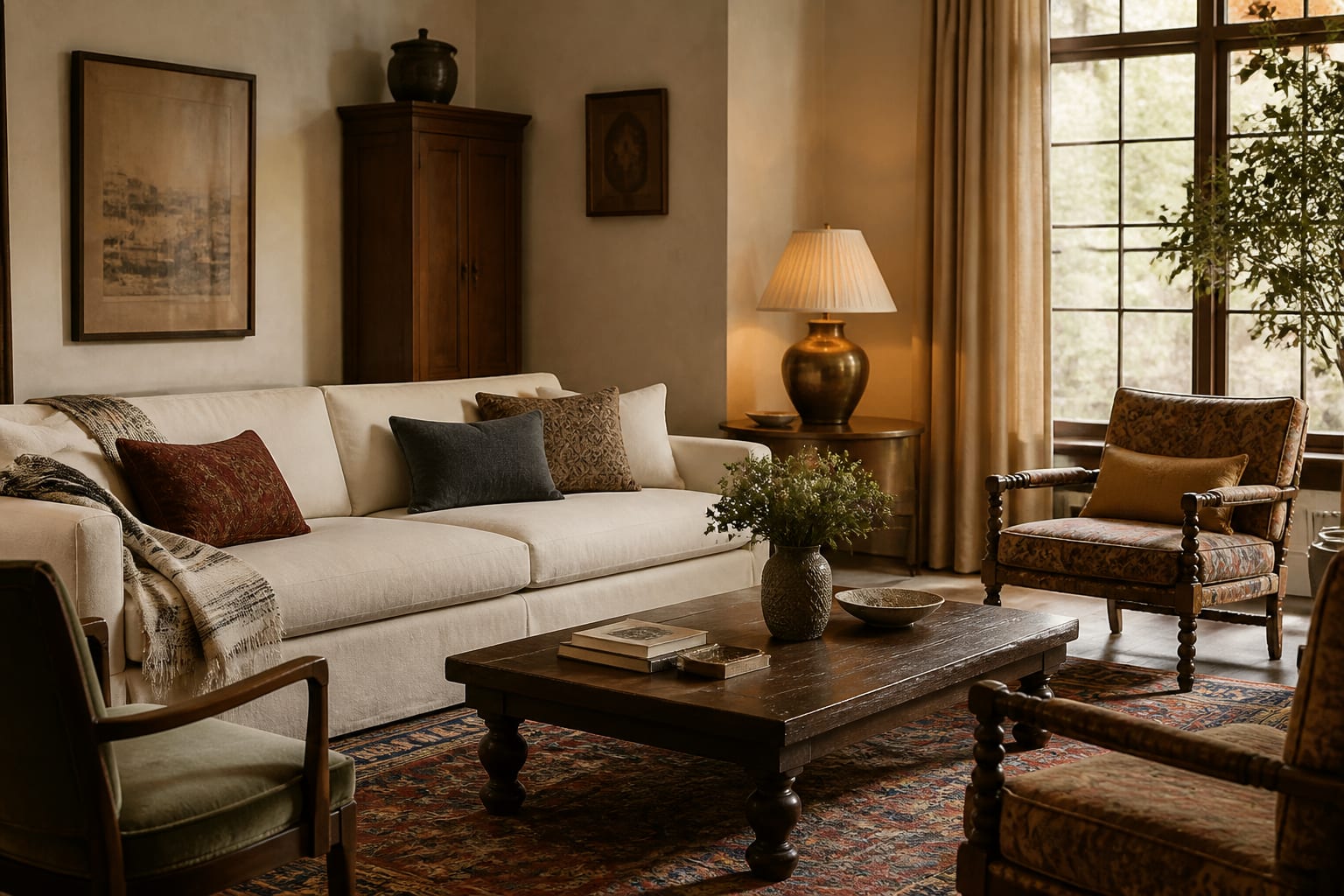
Can you test the mix before committing to it?
A patterned rug may look brilliant alone and frantic beside your art. A vintage cabinet may feel soulful in a shop and heavy next to your existing sofa, so testing full room combinations matters more than judging pieces in isolation.
Upload a photo of the actual room to Re-Design and test complete directions before spending on risky pieces. Try one version leaning maximalist with saturated color, large art, and layered pattern, and another leaning eclectic with quieter walls, mixed-era furniture, and a repeated finish. Keep the same camera angle so you compare design choices, not photography.
AI can help you see combinations quickly, but it shouldn't replace judgment. If you're wondering whether AI can replace an interior designer, the practical answer is that AI speeds up previewing while a trained eye still edits for scale, comfort, and what your home can realistically absorb.
What final edit makes a room feel intentional?
Name the room's rule, then remove the piece that breaks it without adding anything better. A maximalist rule might be "deep blue, old portraits, brass, and patterned textiles." An eclectic rule might be "warm wood, sculptural black lines, cream upholstery, and handmade ceramics."
Once the rule is clear, decisions get less emotional. A red plastic side table may be fun, but if it speaks none of the room's languages, it reads as a dare. A carved antique mirror may be beautiful, but three existing ornate focal points mean it steals attention instead of deepening the mix.
Finish with useful beauty: a lamp where someone reads, a tray for remotes, a chair that doesn't punish your back, and art you'd keep after the trend passes. Maximalist design should feel generous; eclectic design should feel intelligent. The best mixed style homes earn both through hierarchy, repetition, and editing.
Frequently Asked Questions
Can a room be both maximalist and eclectic?
Yes. Maximalism measures abundance; eclecticism measures the range of styles mixed together. A room can be heavily layered with color, pattern, and objects while also mixing furniture from different eras, scoring high or low on each trait independently.
Is eclectic design more affordable than maximalist design?
Not inherently. Eclectic design can be cheap if you repurpose pieces you already own, but a maximalist room can also be built gradually around statement paint, one large rug, and layered art. Cost depends on how many new anchor pieces each style needs, not the label itself.
What's the easiest way to start if I already own mismatched furniture?
Find one bridge element already present, such as a wood tone, metal finish, or color, and repeat it in at least three places using pillows, frames, or small hardware swaps. This turns existing mismatched pieces into an intentional eclectic mix without buying new furniture.
How do I know if my maximalist room has too much going on?
Stand in the doorway and try to name the room's dominant move in a few seconds. If you can't identify one leading color, pattern scale, or anchor piece, the room needs hierarchy, not fewer objects; add one dominant anchor and simplify the smaller layers around it.
Does eclectic design require neutral walls?
No. The mix of furniture styles and eras defines the look, not the wall color, so eclectic rooms can use bold or neutral walls. A saturated wall can even serve as the bridge that ties mismatched pieces together.