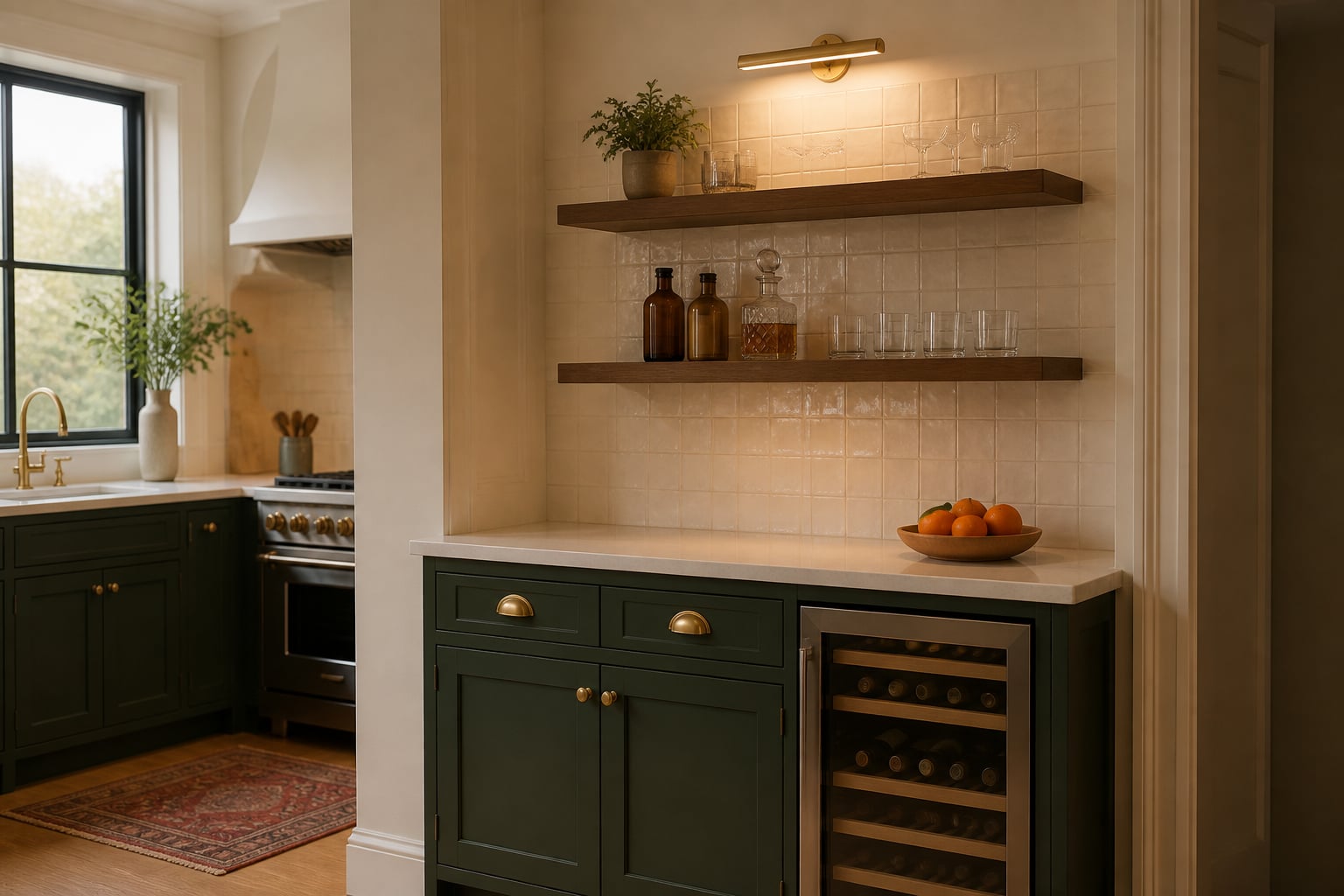
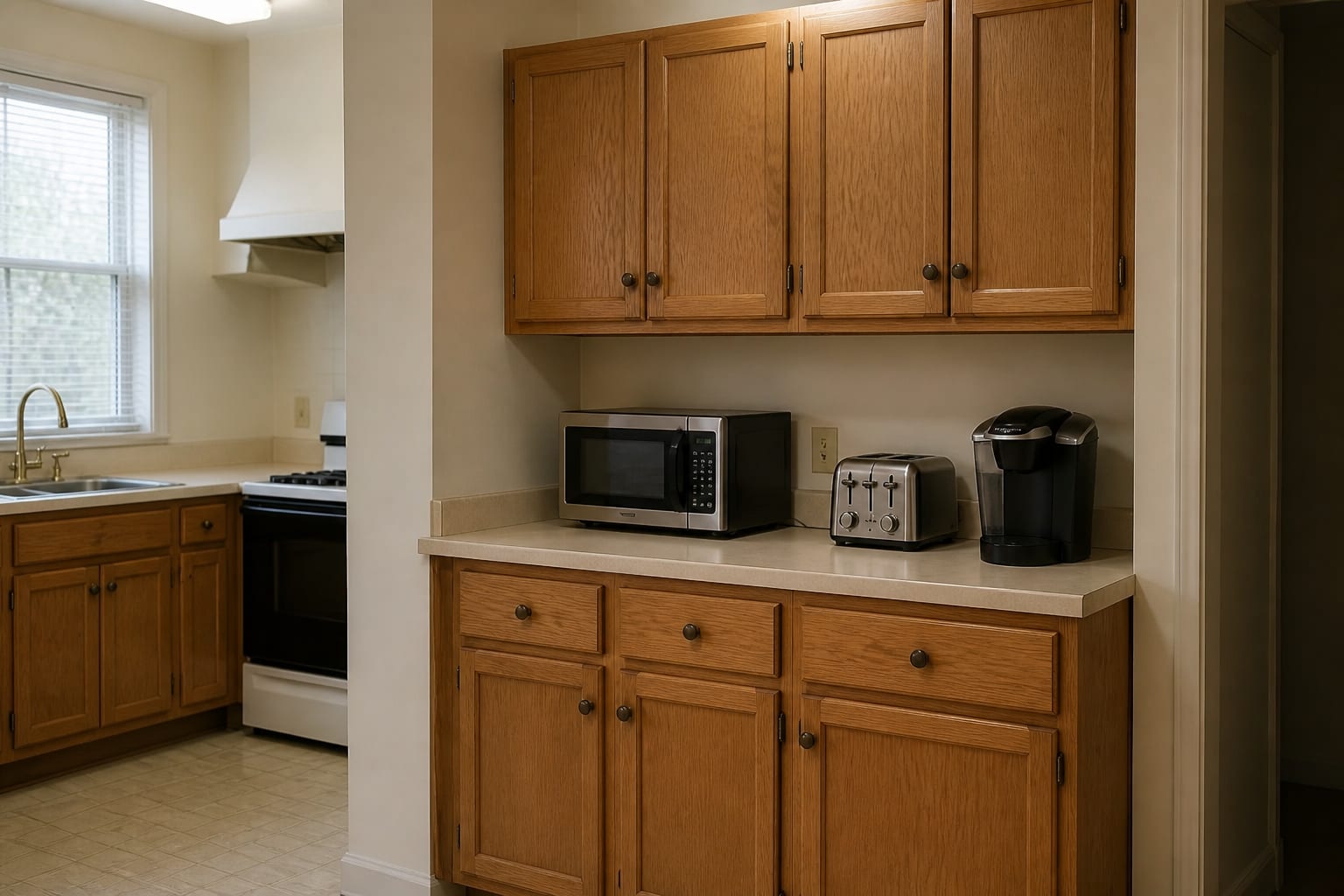
Kitchen bar area design works by carving out a 24 to 36 inch counter zone with its own glassware storage, ice or wine refrigeration, and warm undercabinet lighting, so guests can pour a drink without crossing your cooking triangle. The goal is a self-contained service station, not a tray of bottles parked beside the toaster.
"A home bar belongs in the kitchen when one small zone gets a clear job and the rest of the counter is protected."
What Makes a Kitchen Bar Work Without a Separate Room?
A kitchen bar works when it has a clear zone: at least 24 inches of usable counter, nearby glass storage, and enough separation from the cooktop, sink, and refrigerator path that a guest can pour a drink without blocking traffic. Think of it as a small hospitality machine - a landing spot for bottles, a mixing surface, room for two or three glasses, and easy cleanup after.
The best location sits at the edge of the kitchen, not the center of prep: the end of a cabinet run, a wall near the dining table, the side of a pantry, or an unused desk niche. A 30- to 36-inch cabinet bay can hold a full drinks station if shelves, tray, and lighting are planned together.
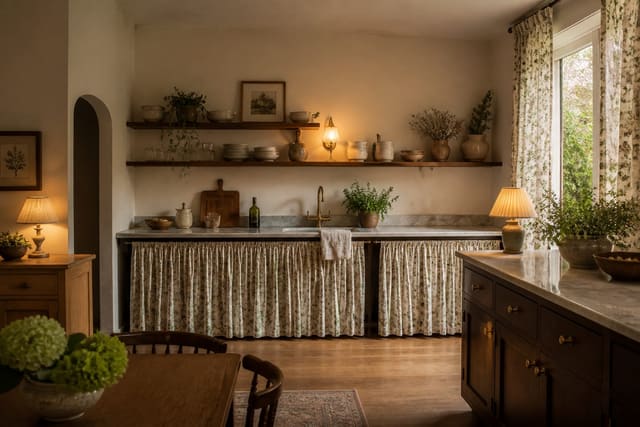
Match the bar's mood to the kitchen you already have. A soft, collected kitchen can borrow restraint from cottagecore kitchen ideas - a skirted shelf, unlacquered brass, warm wood. The goal isn't a themed pub; it's making the drinks moment feel native to the room.
Dry Bar, Wet Bar, or Appliance-Led: Which Should You Build?
The first real choice is whether your bar is dry, wet, or appliance-led.
| Bar Type | Best For | Space Needed | Key Requirement |
|---|---|---|---|
| Dry bar | Most kitchens, renters | 24-36 in counter | No plumbing changes |
| Wet bar | Bar far from main sink | +15-18 in sink | Nearby water line |
| Appliance-led | Frequent entertaining | 15-24 in fridge/ice maker | Ventilation clearance, door swing |
For most homes, a dry bar is the smarter default - it costs less, works in rentals, and needs no plumbing changes. Give it 24 to 36 inches of counter, a tray for bottles, a small cutting board, and a drawer for openers, stirrers, and coasters.
A wet bar only earns its keep when the sink is genuinely convenient - within 6 to 8 feet of the zone. If it's farther, spend the money on storage and lighting instead. A small 15- to 18-inch sink works for rinsing tools and dumping ice.
Appliances need ruthless planning. A beverage fridge runs 24 inches wide, or 15 inches for compact models; leave the manufacturer's clearance, check the door swing, and confirm the handle won't hit an island stool.
Lighting is functional, not decorative: undercabinet LED at 2700-3000K keeps labels and glass rims visible without turning the bar into a lab.
Test this on your own room photo with ReDesign before finalizing the layout - keep the room structure, daylight, and main path visible so the preview solves the space you actually have.
Where Should Bottles, Glassware, and Tools Live?
Stage storage by frequency. Daily glasses and mugs get the easiest shelf; special glassware and entertaining pieces go higher, deeper, or behind doors. Treat everything as display and the kitchen looks cluttered even when clean.
Use closed lower storage for visual clutter - bottles, mixers, napkins, extra tonic. A cabinet with pullout trays keeps the bar efficient. Tall spirits typically need 12 to 14 inches of clear height.
Open shelves work best for glassware and a few standout bottles, not the whole inventory. Keep shelf depth around 8 to 10 inches, with the lowest shelf 16 to 18 inches above the counter - lower crowds the mixing surface, higher makes daily glasses annoying to reach.
If your taste leans theatrical, borrow hierarchy from maximalist kitchen ideas: patterned tile or jewel-toned cabinets can star while most tools stay hidden. Fluted glass doors offer display without weekly dusting, and renters can get the same effect from a freestanding cabinet or bar cart.
What Mistakes Ruin a Kitchen Bar Area?
- Placing the bar in the busiest counter stretch. Between the range and sink, guests collide with hot pans and prep bowls - shift the bar toward the perimeter.
- Displaying every bottle. Keep three to six favorites out; store the rest behind doors or on a pullout shelf.
- Skipping a landing surface. A fridge with no counter beside it sends glasses to the floor - even an 18-inch remnant or tray solves this.
- Fighting the kitchen's finishes. Black metal and exposed shelving suit industrial kitchen design but look out of place in a delicate white kitchen; repeat one existing finish such as hardware tone, wood species, or tile shape.
- Ignoring routines. Lock or raise storage if kids can reach it, and separate coffee tools from cocktail tools if the same counter runs both.
How Can You Preview a Kitchen Bar Before You Commit?
Upload a clear photo from a corner or doorway so the cabinet run, island, and dining connection are visible - leave real appliances and clutter in frame for an accurate preview.
Test three versions with the wall color and cabinet style held steady: a dry bar with shelves and a tray, a beverage-fridge version with closed storage above, and a wet bar only if plumbing is realistic.
Prompt for constraints, not just prettier looks: 30 inches of service counter, warm undercabinet lighting, reachable glass storage, closed lower storage, and a fridge door that clears the walkway. Then judge it by ordinary use - can someone pour wine while another drains pasta? Does it still look calm with the coffee maker out?
For the broader workflow, use the AI design complete guide as the parent checklist, then return to this pass for scale, light, and layout.
Frequently Asked Questions
How much counter space does a home bar need?
Plan for 24 to 36 inches of clear counter plus 15 inches for refrigeration or ice. A 60-inch run with a sink, a glass-door cabinet, and undercounter ice is the size that feels fully finished.
Do I need a separate sink at a home bar?
Not if the main kitchen sink sits within 6 to 8 feet in an open-plan layout. In a closed-off butler's pantry or basement bar, a small 12-by-15-inch sink keeps cocktail work out of the cooking zone.
What is the right fridge for a kitchen home bar?
A 15-inch undercounter beverage center holds wine and cans; an ice maker handles about 25 pounds a day for entertaining; a 24-inch dual-zone unit covers both for households that host monthly or more.
Where should I store spirits and glassware?
Keep spirits at adult-eye level in a closed upper cabinet, glassware in a glass-door cabinet directly above the bar counter, and bar tools in the top drawer. Mixers and bitters belong on a pullout shelf below.
Does a home bar add resale value?
A built-in bar adds modest value in higher-end markets and little in starter-home markets. The lift is largest when the bar uses cabinetry that matches the kitchen rather than "man-cave" finishes buyers tend to remove.
> Try this: Ready to see this on your own room? Open ReDesign and run the preview before you buy, paint, drill, or move furniture.
Three transformations to try
1. Built-in 60-inch bar run with ice maker and glass uppers 2. Butler's pantry bar tucked behind a doorway 3. Bar cart and wall cabinet hybrid for small kitchens