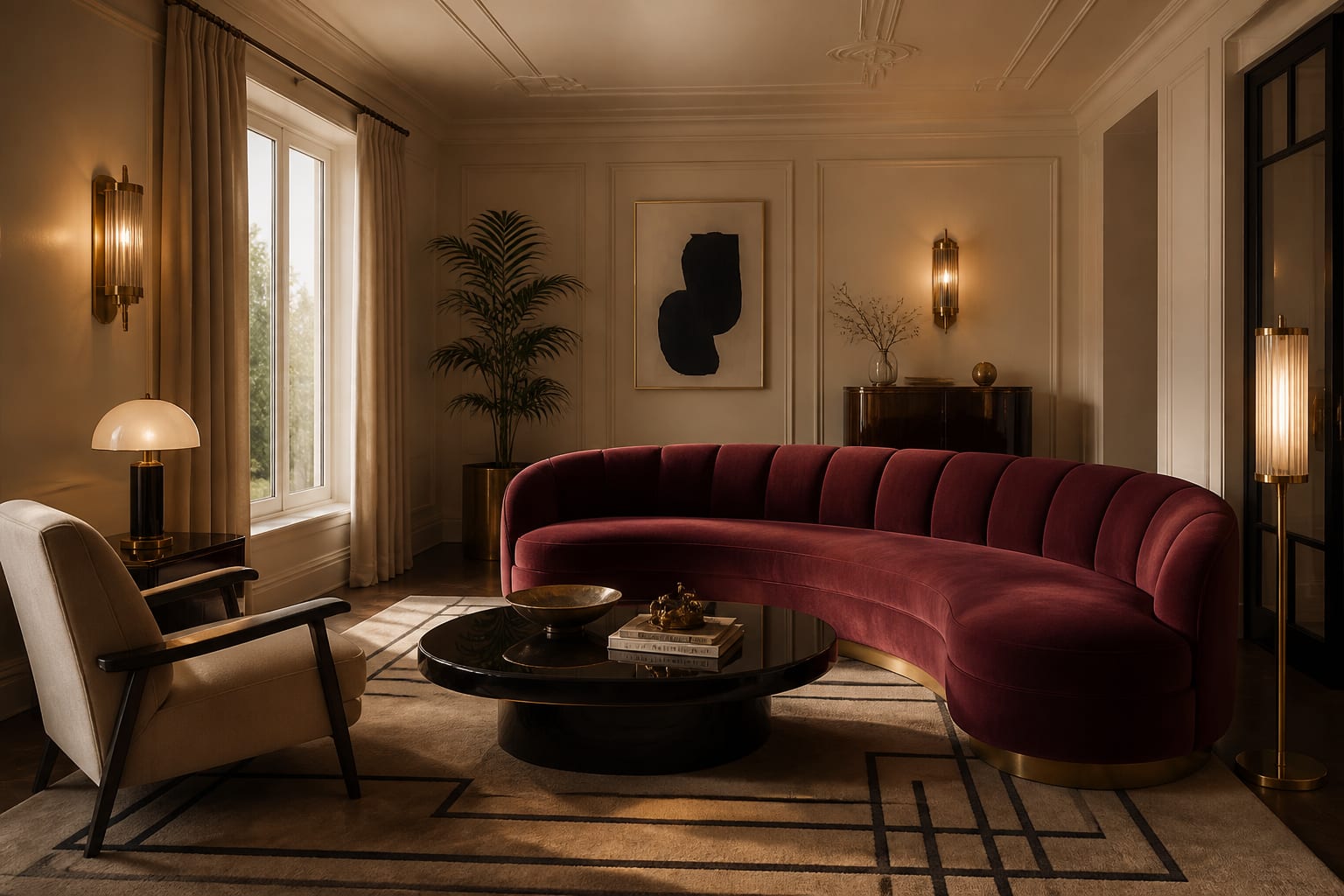
Art Deco living room ideas work by pairing bold geometry with warm metallic accents and rich materials, and it starts with shape, not shine. Get a strong silhouette first, from curved seating to a geometric rug and fluted details, then layer brass, lacquer, velvet, and marble as accents. Skip straight to sparkle and the room reads themed rather than glamorous.
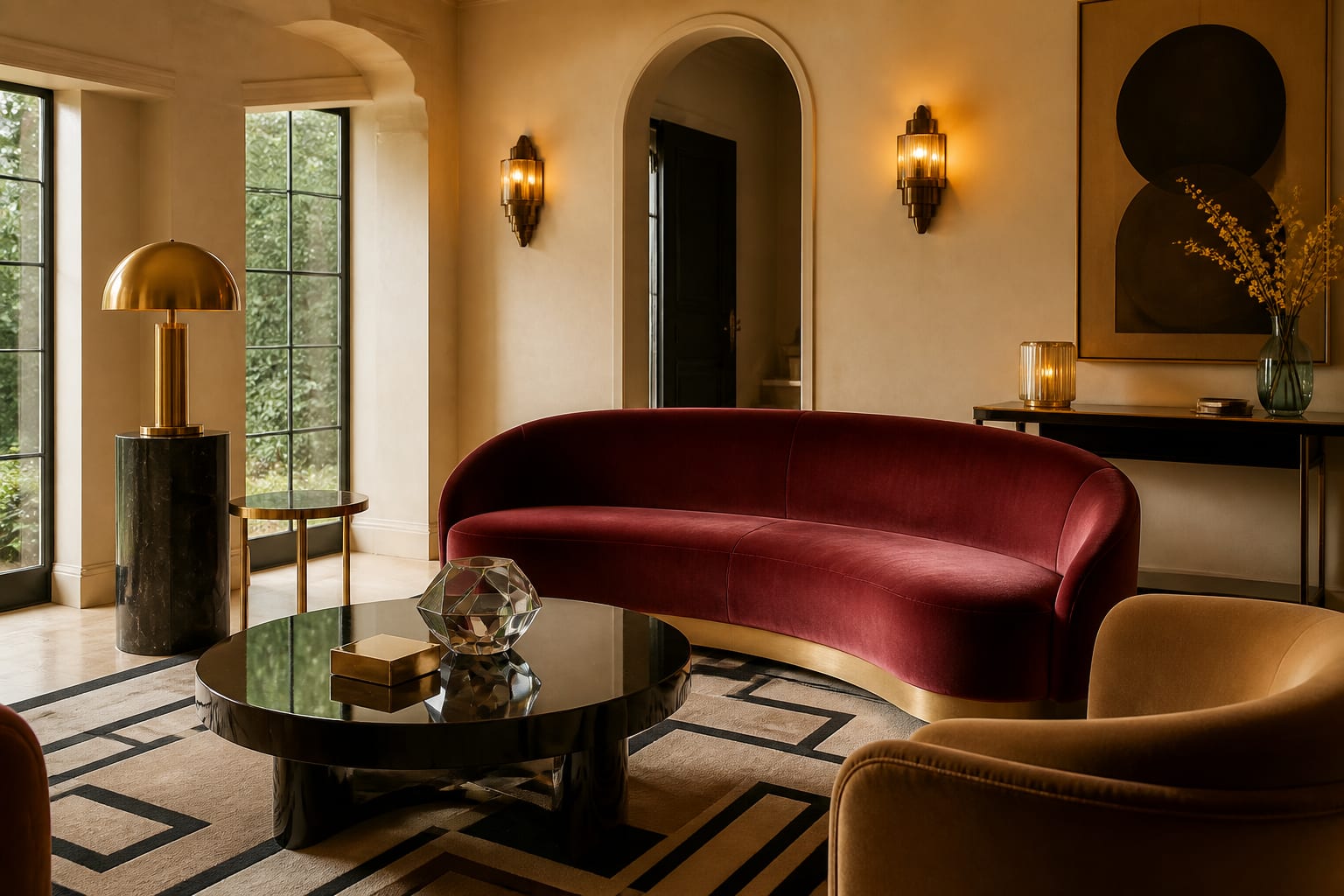
What makes a living room feel Art Deco instead of merely shiny?
An Art Deco living room feels glamorous when symmetry, geometry, material contrast, and dramatic lighting work together. The style grew out of machine-age speed and polish, so it wants confidence, not clutter: fluted glass, fan shapes, stepped edges, sunburst mirrors, channel tufting, lacquer, marble, burl wood, velvet, brass, chrome, and strong black lines.
The room needs a readable center, usually the sofa wall, fireplace wall, or main seating group. If the sofa is shapeless, the rug is timid, and the lighting is ordinary, gold hardware looks pasted on. A curved sofa, a pair of barrel chairs, a geometric rug, and a sculptural lamp can transform even a plain rental box.
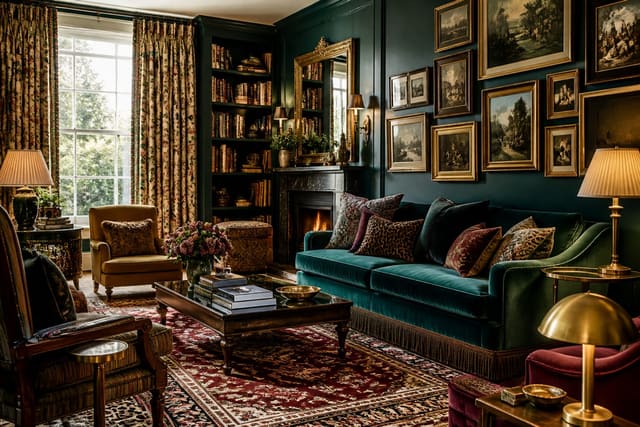
Color should feel saturated but controlled. Black and cream form the cleanest base; emerald, peacock blue, oxblood, plum, cognac, dusty rose, walnut, and aged brass add the glamour. For a comparison in pattern discipline, see maximalist living room ideas; Deco can be bold, but it needs sharper symmetry and fewer competing stories.
Which Art Deco living room ideas actually carry the glamour?
Choose five or six of these that suit your architecture and budget:
- Curved sofa or two rounded lounge chairs. A sofa around 84 in-96 in wide with a tight back or channel detail reads more architectural than shiny pillows.
- Geometric rug under the whole conversation area. An 8 ft x 10 ft rug is the minimum; a 9 ft x 12 ft rug usually lets furniture legs sit on the design.
- Black lacquer, burl wood, marble, or glass coffee table. Keep 14 in-18 in between sofa and table so the glamour doesn't block knees or snacks.
- Brass or chrome in repeated touch points. Try curtain rods, sconces, table legs, and cabinet pulls, then stop before every surface reflects.
- One large sunburst mirror or stepped-frame artwork. A 30 in-40 in wide piece above a console reads cleaner than six tiny metallic frames.
- Fluting, channeling, or ribbed texture. Fluted cabinet doors, ribbed glass lamps, or pleated shades add architecture without renovation.
- Precisely mounted curtains. Place rods 6 in-10 in above the casing and 8 in-12 in past each side, then let fabric skim the floor.
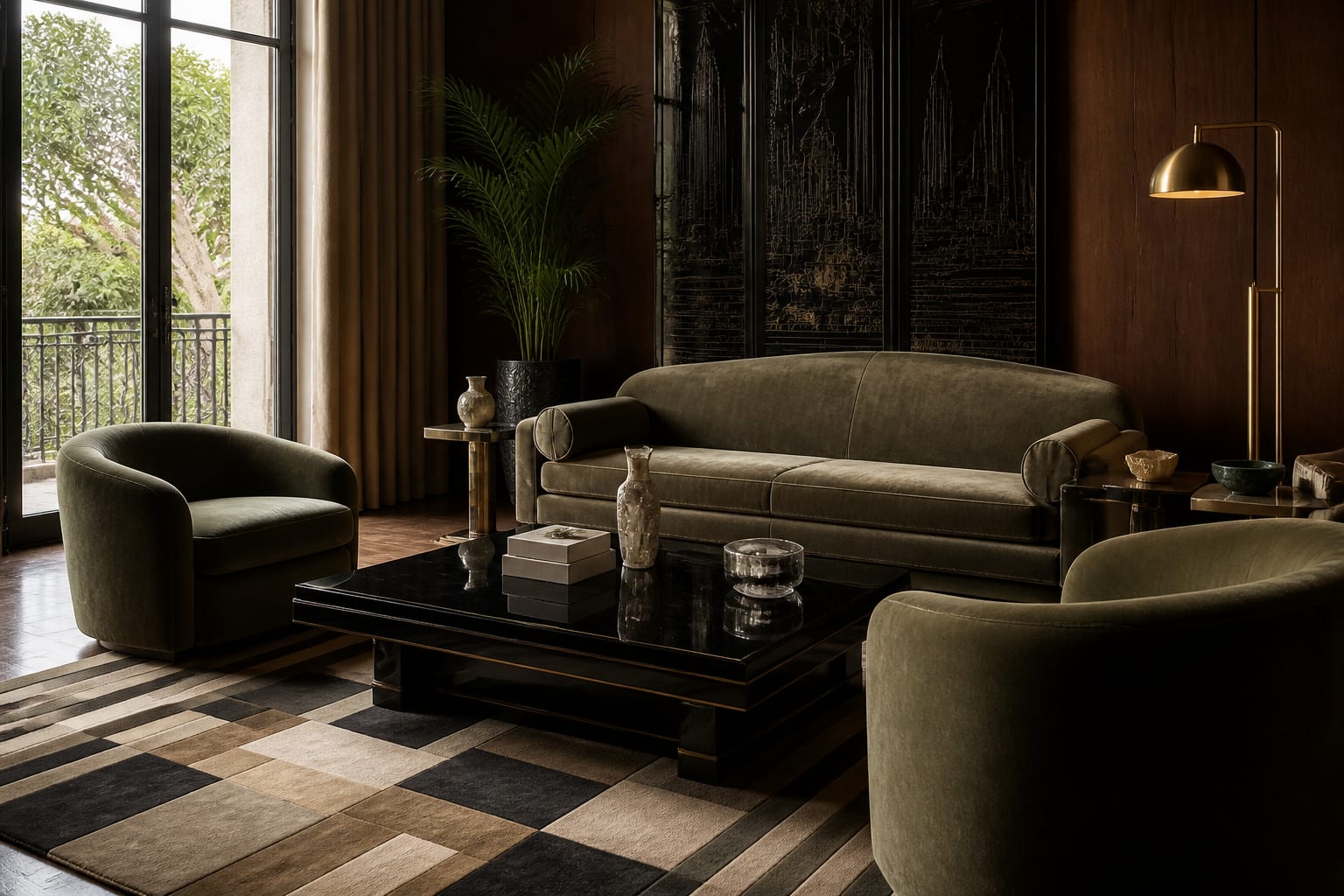
How should geometry, gold, and velvet work together?
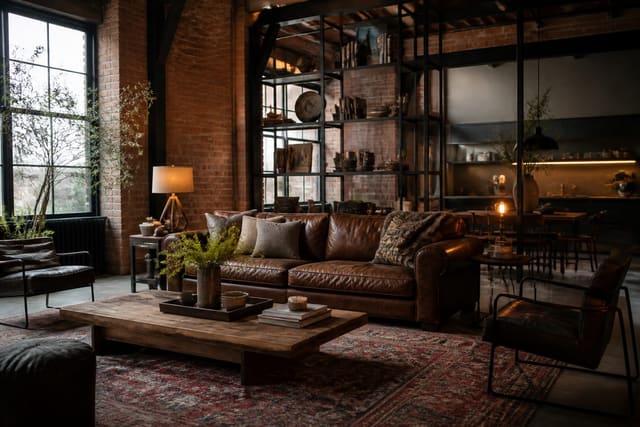
Let one geometric decision lead the room, whether that's a rug, a wallpapered alcove, or a fireplace tile, then support it with quieter curves and repeated metal. Gold reads richest in a slightly warm finish: antique brass, champagne brass, unlacquered brass, or soft gold, not bright mirror-gold. If your home already has black frames or steel shelves, borrow restraint from industrial living room ideas and let brass appear only in small accents.
Velvet can be a sofa, a chair, or just a pillow pair; it doesn't need to cover every surface. Mix it with bouclé, wool, leather, lacquer, marble, glass, and wood for depth in daylight and after dark. Warm bulbs around 2700k in a 24 in-30 in table lamp and a 58 in-64 in floor lamp give brass and lacquer the glow that makes them read expensive instead of cheap.
What are the most common Art Deco living room mistakes?
- Buying tiny gold accessories first. Start with a rug, sofa, chair pair, or lighting before styling trays and candleholders.
- Using every Deco motif at once. Pick one lead motif, such as fans, arches, or fluting, and let the rest support it.
- Choosing cool white bulbs. Cool light makes metallics glare and velvet look flat; use warm light around 2700k near seating.
- Ignoring comfort. Keep 30 in-36 in of walkway, choose seat depths around 20 in-23 in, and leave a side table within reach.
- Sticking to only black and gold. Add cream, walnut, oxblood, tobacco leather, deep green, navy, or marble so the contrast has somewhere to land.
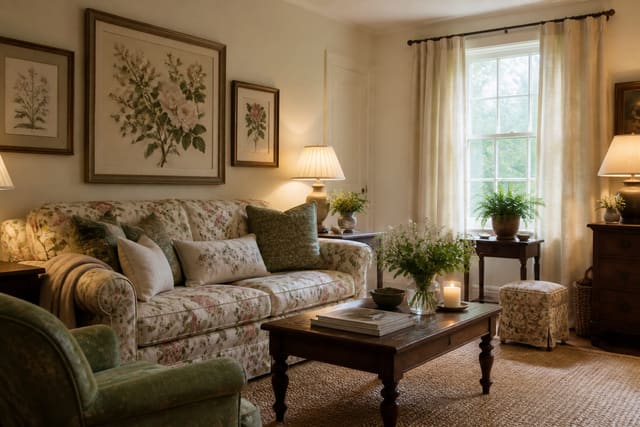
If your taste drifts softer and more botanical, cottagecore living room ideas show the opposite kind of romance: Deco wants polish and symmetry, cottagecore wants patina and looseness.
How can you preview an Art Deco living room before you commit?
An Art Deco room is risky to assemble one purchase at a time, since sofa shape, rug pattern, metal finish, and lighting are all highly visible. A brass floor lamp that looks perfect online can turn brassy beside existing oak floors; a black lacquer table can look sharp in a bright room and heavy in a north-facing one.
Upload a straight-on photo of your living room to Re-Design and test complete directions instead of isolated products. Try a curved velvet sofa with a geometric rug, a cream-and-lacquer version, and a version where the drama sits in lighting and mirrors alone. Keep windows, floor color, ceiling height, and doorways visible so the preview answers the room you actually have.
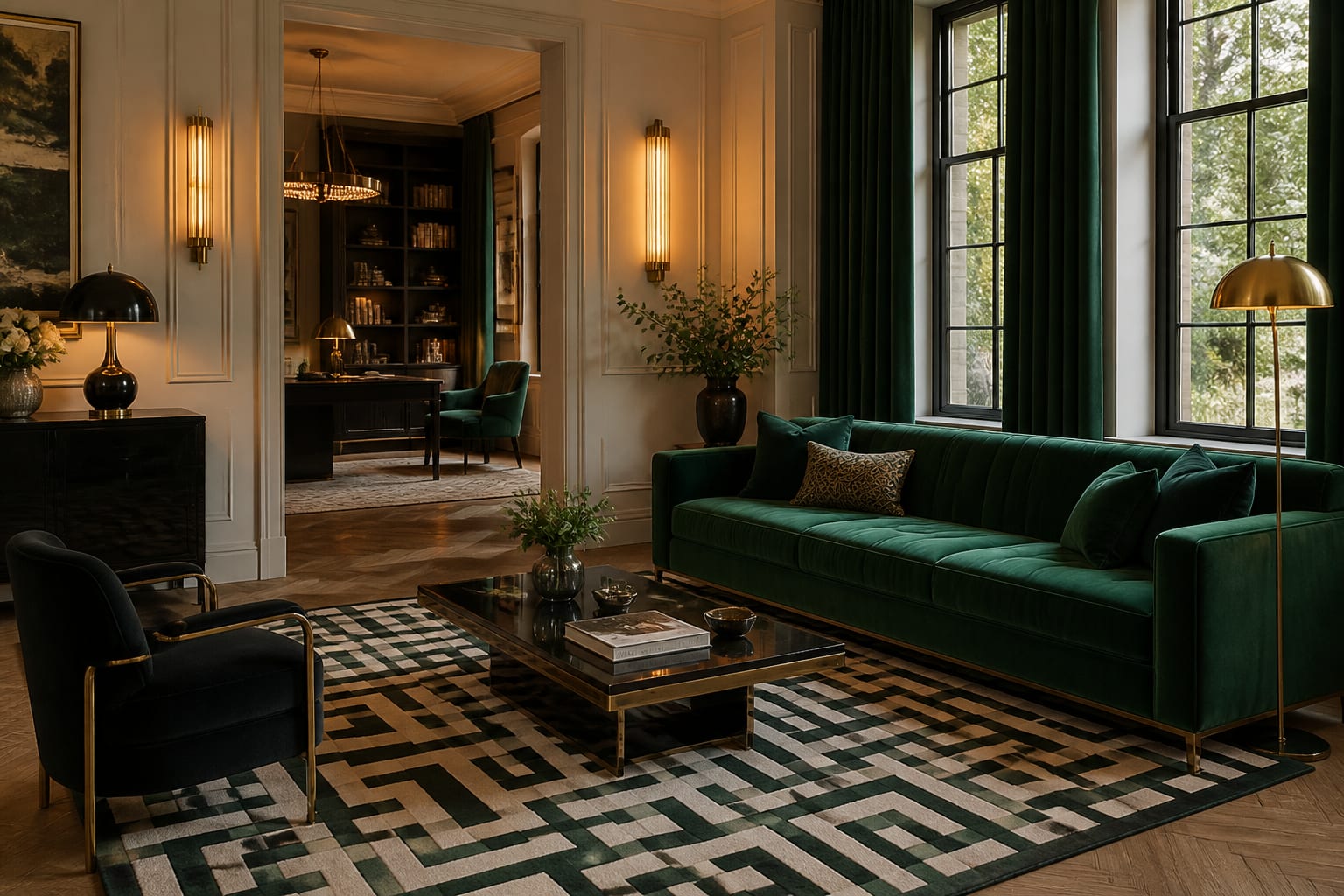
What finishing details make the room feel glamorous and livable?
Add objects with real weight: a marble bowl, ribbed glass vase, lacquer tray, sculptural lamp, or brass picture frame, and skip flimsy metallic decor that only looks good in close-ups. Hang a standalone art piece around 57 in-60 in on center, or 6 in-8 in above a sofa back when it belongs to the furniture grouping. Style the coffee table for use: a tray, two books, one sculptural object, and space for drinks is enough, with a lidded box nearby for remotes and chargers.
Stand at the entrance and name the strongest Deco move within three seconds. If the answer is the curved sofa, geometric rug, or brass lighting, the room has a point of view. If the answer is simply "gold things," edit back and let the architecture and light do the glamour.
Frequently Asked Questions
What colors work best in an Art Deco living room?
Black and cream form the cleanest base, with emerald, peacock blue, oxblood, plum, cognac, dusty rose, walnut, and aged brass added for glamour. Keep contrast high but limit the palette to three or four core colors so the room stays controlled rather than busy.
How much brass or gold is too much?
Repeat brass or gold in 3-5 touch points, such as curtain rods, sconces, table legs, and frames. Beyond that, the finish starts competing with itself, and the room can look sprayed with metallic accents instead of styled with them.
Does Art Deco work in a small living room?
Yes, if you scale down rather than skip the moves: a smaller curved chair pair instead of a sofa, a tighter geometric rug at 8 ft x 10 ft, and one statement mirror instead of a gallery wall. Fluting and channel details add pattern without needing floor space.
What lighting temperature suits Art Deco best?
Use warm bulbs around 2700k in shaded lamps, sconces, and pendants. Cool white light makes brass, chrome, and glass look harsh and flattens velvet, while warm light lets metallic and glossy surfaces glow instead of glare.
Can Art Deco mix with other styles?
It blends well with industrial finishes like black steel and exposed brick, where brass becomes an accent rather than the whole story. It contrasts more sharply with cottagecore's soft patina, so mixing those two directly usually looks unresolved.