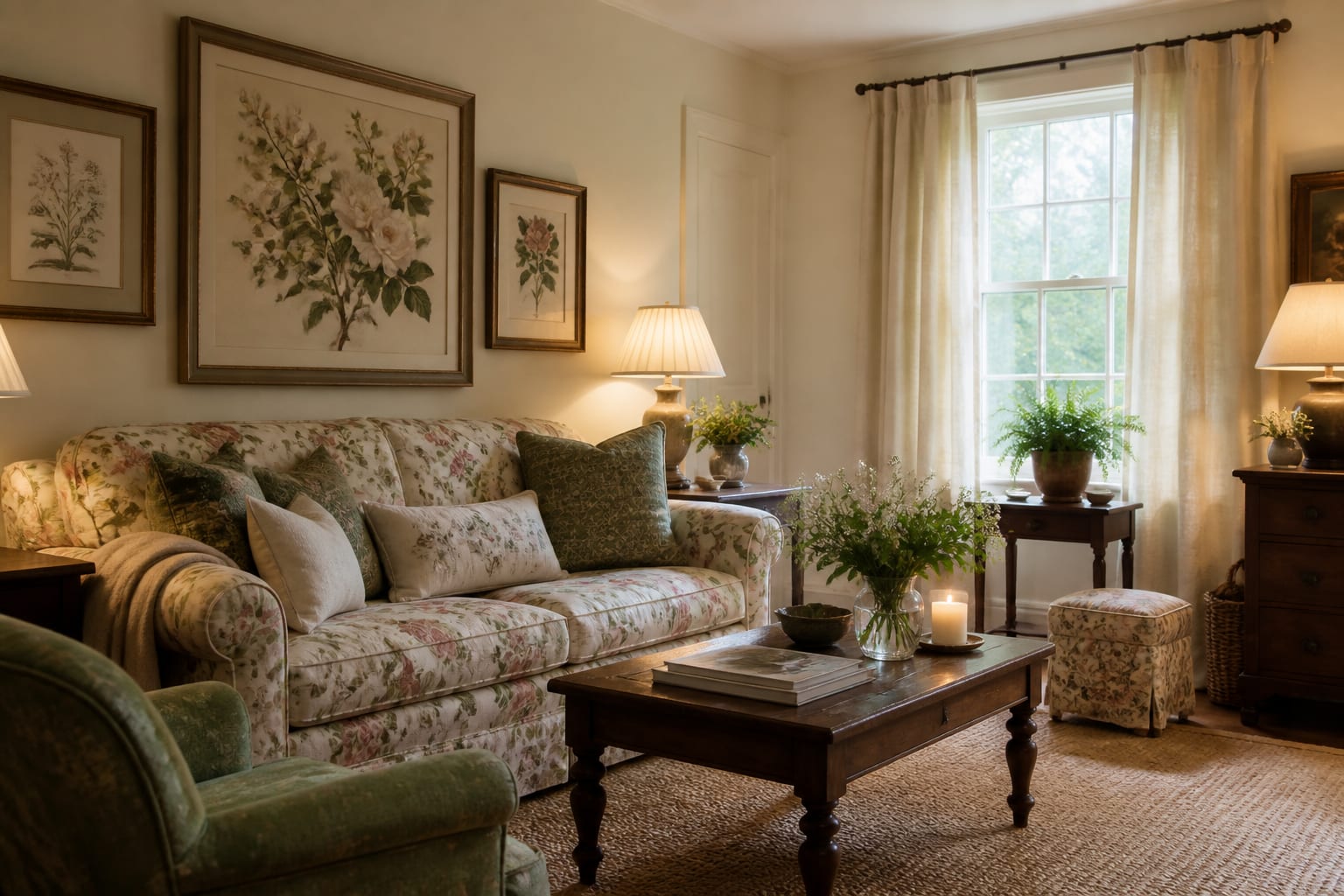
Cottagecore living room ideas combine florals, worn wood, soft color, and layered textiles to create a romantic, lived-in space rather than a staged one. The strongest results balance comfort and imperfection: one hero floral, an aged wood anchor, warm lamplight, and vintage pieces that feel collected, not cluttered, all within practical clearances.
What Makes a Cottagecore Living Room Feel Romantic, Not Messy?
Softness needs structure. The room can hold florals, books, baskets, lace, and old frames, but the eye still needs a place to rest. Start with one calm base: warm white, mushroom, faded sage, pale butter, or dusty blue walls, then add pattern in layers rather than all at once.
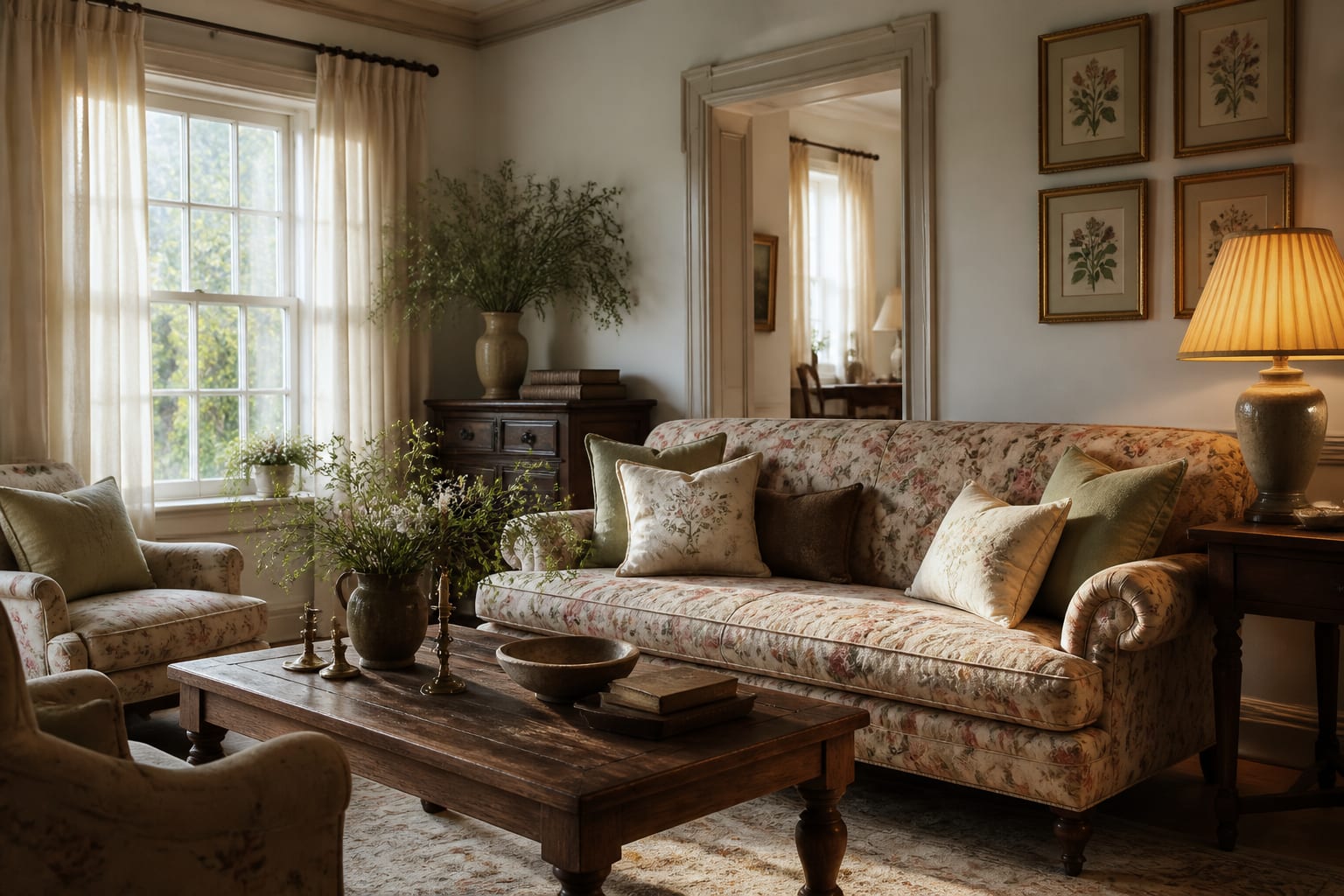
The largest seat should earn its style. A slipcovered sofa, rolled-arm loveseat, or deep English-style armchair fits a room built for lingering; a stiff showpiece sofa fights the story. Keep the coffee table usable at 16"–18" from the sofa so tea and books stay within reach without pinching the walkway.
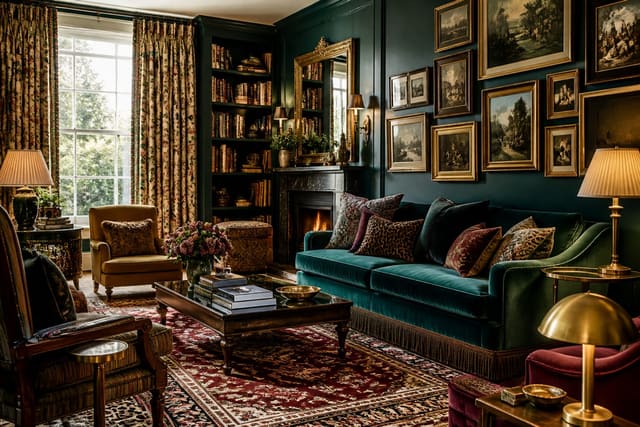
Age should feel gentle, not worn out. Scrubbed pine, painted wood, cane, old brass, and slightly faded rugs soften a room more than glossy new pieces. For a fuller, more layered comparison, see maximalist living room ideas; cottagecore can be abundant, but it needs a softer hand.
Which Cottagecore Ideas Actually Carry the Look?
Treat these as a menu. Pick five or six that fit your room and leave room to breathe.
- One hero floral at real scale — a 20" pillow pair, one armchair, or curtains with a repeat readable from 8' away.
- A faded, muted rug — an 8' x 10' rug ties mixed furniture together better than a 5' x 7' floating under the table.
- Curtains hung high — mount the rod 6"–10" above the casing and let panels stack outside the glass so light isn't blocked.
- One worn wood anchor — a scrubbed pine coffee table or vintage cabinet, 14"–18" deep, keeps ruffles from feeling sugary.
- A botanical art grouping — three to five framed pieces with related frames read as gathered, not scattered.
- Layered lamps — 2700k bulbs in table and floor lamps near reading chairs make the room usable after dark.
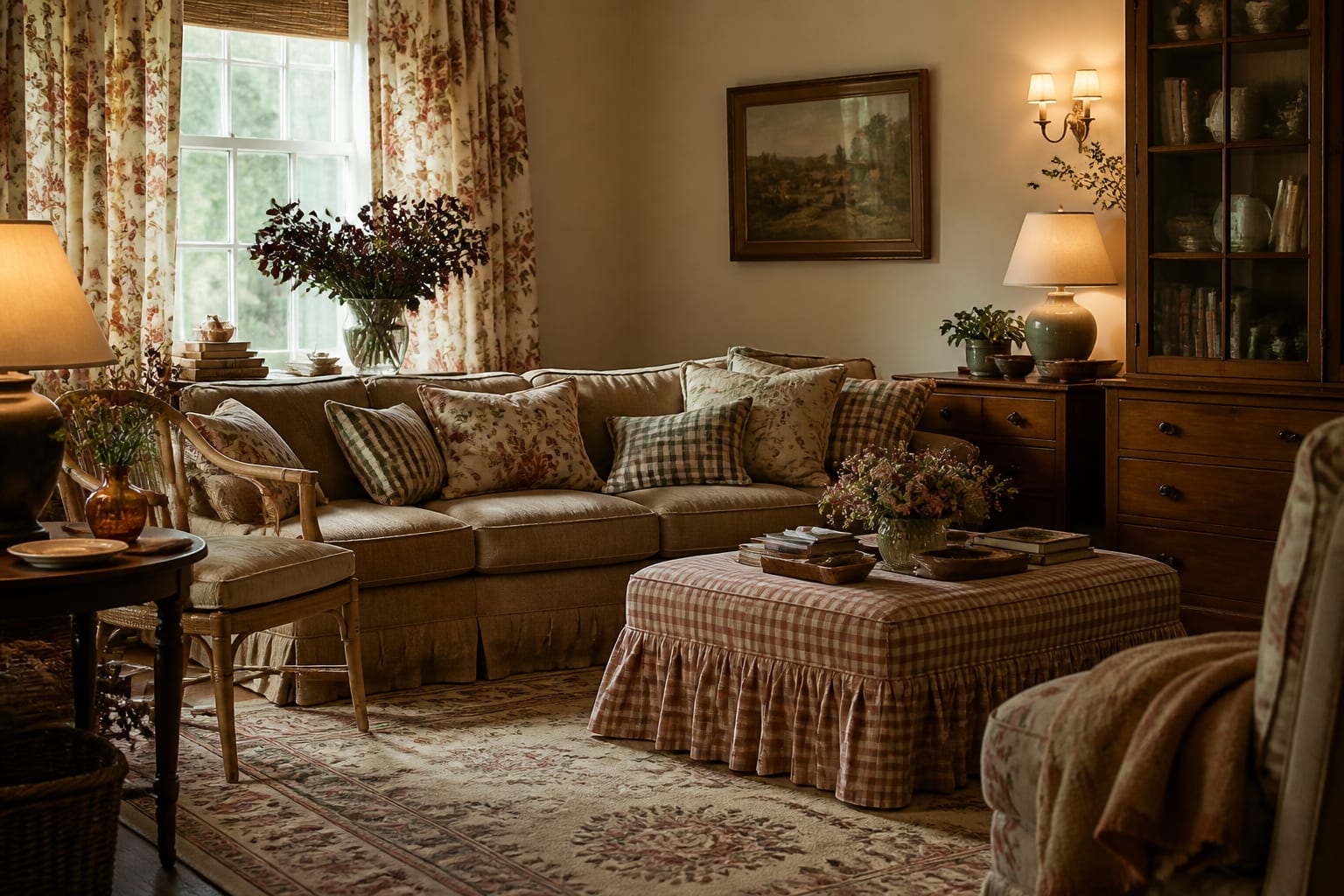
- One skirted or slipcovered piece — an ottoman, chair, or small table softens the room without a full floral commitment.
- Checks or stripes mixed with florals — a gingham pillow or ticking stripe shade steadies a busy botanical print.
- Baskets with jobs — a lidded basket for throws or a narrow one for magazines beats decorative baskets with no purpose.
How Should Color, Pattern, and Scale Work Together?
The cottagecore palette should read sun-washed, not faded away. Try cream walls, sage curtains, rose pillows, honey wood, and aged brass, or mushroom paint with dusty blue upholstery and brown wicker. Cap the palette at roughly five visible families, including wood and metal, or the room starts looking like a sorted thrift store.
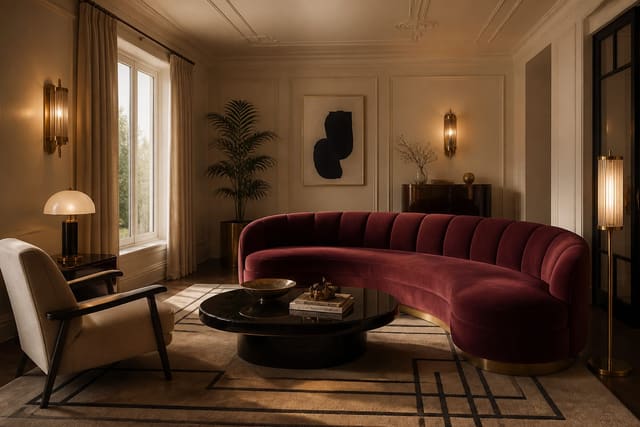
Give pattern a hierarchy: let the biggest print live on the biggest soft surface only. A floral sofa wants linen curtains; floral curtains want a plain sofa with smaller pattern on pillows. This is where cottagecore differs from the crisper structure of art deco living room ideas — gentler mood, same need for proportion.
Scale is easy to skip and costly to ignore. A tiny table beside a deep sofa looks apologetic; a dainty lamp on a chunky chest looks wrong. Aim for lamps around 24"–30" total height beside seating and keep main paths near 30", especially where a plant stand or footstool could become a daily obstacle.
What Mistakes Ruin a Cottagecore Living Room?
Most cottagecore mistakes come from chasing sweetness before solving the room. A few habits cause most of the trouble:
- Too many florals — pick one lead floral, one small-scale supporting pattern, and quiet textures like linen, wool, cane, and matte ceramic.
- Only vintage pieces — let one or two new items handle comfort, like a lamp by the reading chair or storage for blankets.
- Going too pale — washable slipcovers, patterned rugs, and medium wood hold up better than an all-white fantasy in busy homes.
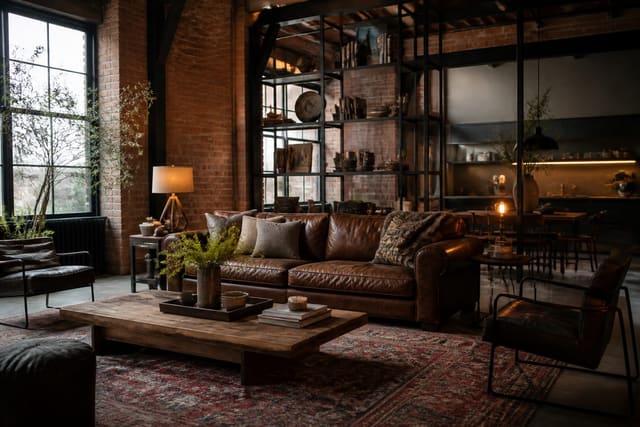
- Ignoring the architecture — concrete floors want heavier wood and fabric; builder-grade rooms want taller curtains and characterful lamps. For sharper-material spaces, compare with industrial living room ideas.
- Overdecorating every surface — leave the mantel or coffee table partly empty; one vase and two stacked books read as more inviting than a crowded tray.
How Can You Preview a Cottagecore Redesign With AI?
Upload a straight daylight photo showing the sofa wall, windows, floor, ceiling line, and traffic paths, including anything imperfect the redesign needs to work around. A grounded prompt might read: redesign this living room in a soft cottagecore style while keeping the beige sofa, oak floor, and existing fireplace. Add cream walls, floral curtains hung 8" above the casing, an 8' x 10' faded rug, a worn wood coffee table, aged brass lamps at 2700k, botanical art, wicker storage, and a 30" clear path from entry to sofa.
Run three versions: one more floral, one more rustic, one quieter with mostly solids. The best preview isn't the one with the most flowers — it's the one where the sofa still fits, the rug connects the seating, and the vintage pieces look like they belong.
What Finishing Touches Make the Room Wildly Cozy?
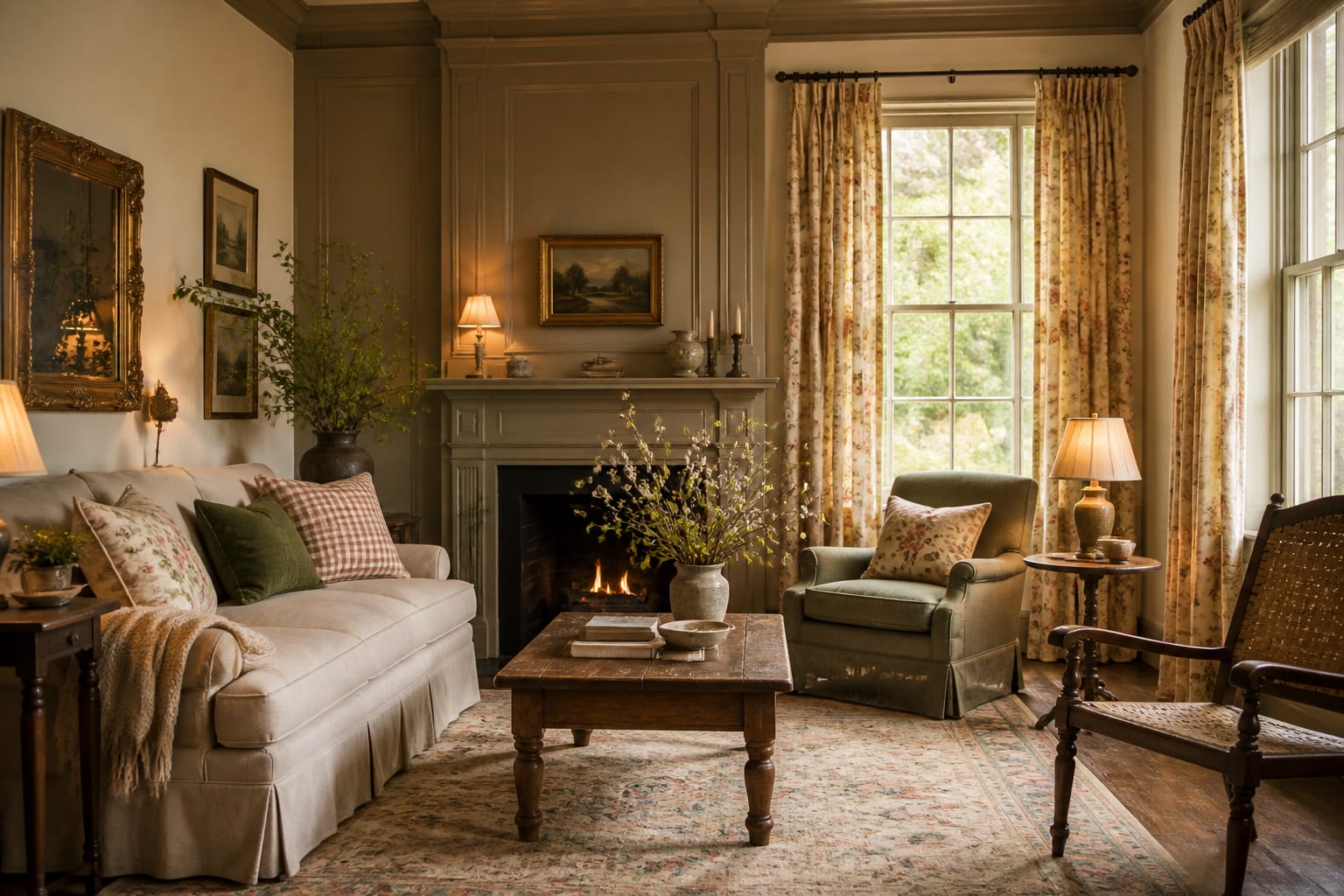
Choose a few objects with texture and memory: a quilt over the sofa arm, old garden books, a ceramic lamp, or a small landscape painting. Keep surfaces edited so those pieces get noticed.
Lighting is the coziest finishing move. Use at least two lamps in a small living room and three or more in a larger one, with warm shades instead of glare. A floor lamp around 58"–64" tall gives a reading corner height and presence.
Keep plants and textiles believable: one healthy fern or trailing pothos beats a fake conservatory. Vary pillow sizes — a 22" square, a 20" floral, and a small lumbar — so the sofa doesn't look flat. The room is finished when it's easy to enter, easy to sit in, and easy to keep slightly imperfect.
Frequently Asked Questions
What colors work best for a cottagecore living room?
Sun-washed, muted tones work best: cream, mushroom, faded sage, pale butter, dusty blue, or soft clay walls paired with honey wood and aged brass. Keep the full palette to roughly five visible families, including wood and metal finishes, so the room reads calm rather than scattered.
How do I keep cottagecore from looking cluttered?
Give pattern a hierarchy: one hero floral on the largest soft surface, one smaller supporting pattern, and quiet textures like linen and cane elsewhere. Leave some surfaces, like the mantel or coffee table, partly empty so the collected pieces stand out instead of competing.
What furniture defines cottagecore style?
A slipcovered sofa, rolled-arm loveseat, or deep English-style armchair sets the tone, paired with a worn wood coffee table or vintage cabinet 14"–18" deep. Skirted ottomans, cane chairs, and painted wood pieces add the collected, lived-in feel the style depends on.
What size rug should I use in a cottagecore living room?
An 8' x 10' faded, muted rug works better than a 5' x 7' in most living rooms because it ties mixed furniture together and grounds the seating area. Choose warm brown, olive, or rose tones, which hide wear better than a flat ivory rug.
Can cottagecore work in a modern or industrial space?
Yes, but the mix needs adjustment. Concrete floors and exposed materials call for heavier wood and fabric to soften the room, while builder-grade rooms benefit from taller curtains and characterful lamps to add warmth without losing the architecture's honesty.