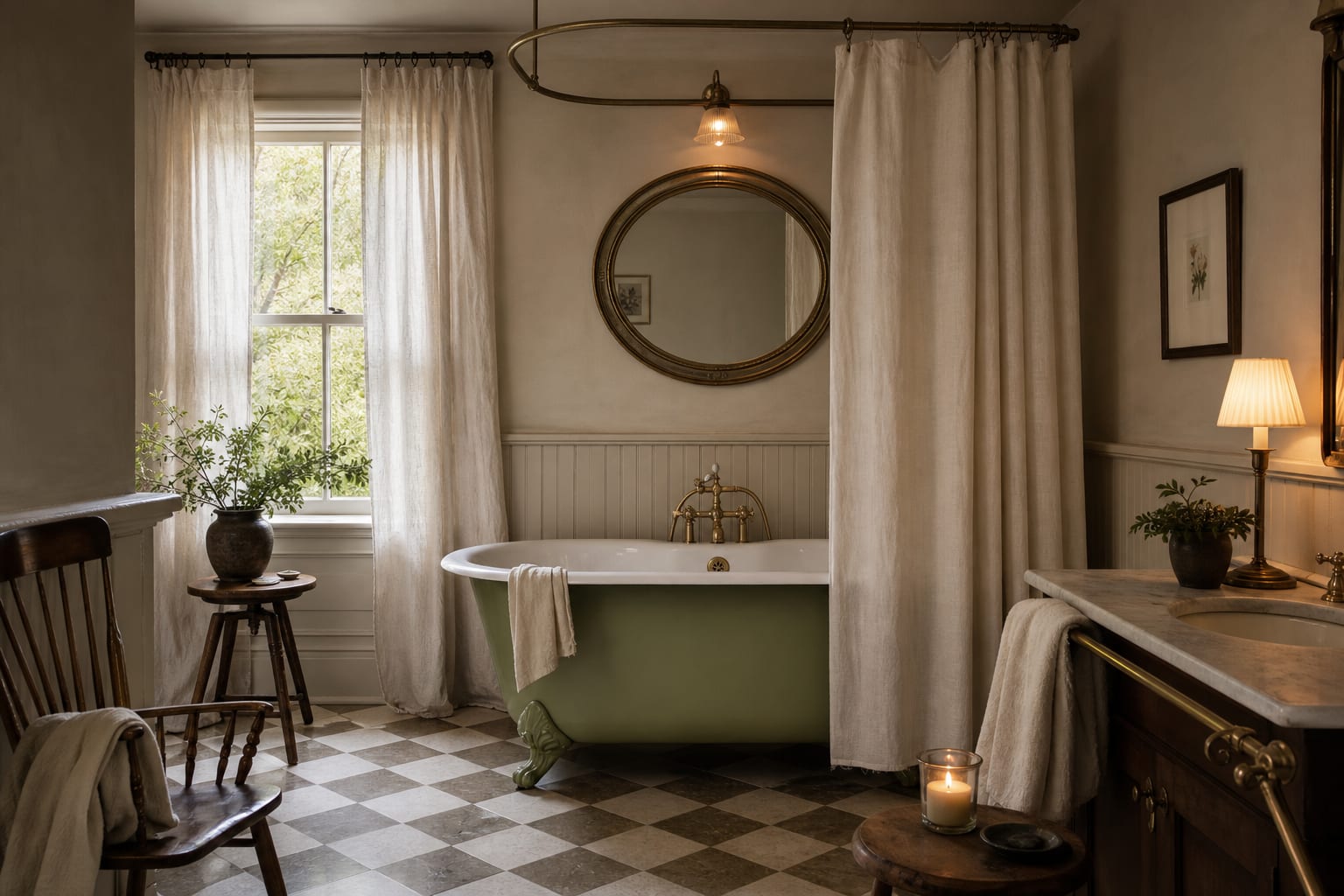
An avocado green bathroom updates without demolition by shifting wall paint from cool tones to warm cream or clay, keeping period floor tile as a feature, repainting the vanity in a complementary mid-tone, and swapping hardware to brushed brass or matte black. Preserve, soften, disguise, or replace the color based on fixture condition, budget, and how long you'll own the home — not on the assumption that green is automatically a mistake.
What do you do with an avocado green bathroom?
Judge fixture condition before judging color. A glossy cast-iron tub, solid porcelain sink, and working toilet are worth designing around; chipped enamel, slow leaks, or cracked seams put replacement back on the table. A professional reglaze can buy time on a stained-but-sound tub, but treat it as a finish with maintenance limits, not a new tub.
The palette that saves avocado green is warmer and dirtier than expected: cream, bone, tobacco, walnut, aged brass, black, terracotta, or muted pink-beige. Skip icy gray and blue-white — cold finishes make green read like a leftover instead of a choice.
Lighting changes how vintage green reads. Use bulbs in the 2700K–3000K range at 90 CRI or higher so tile, porcelain, and paint show their true color. In a windowless bath, pair this with the strategies in brightening a windowless bathroom rather than treating light as a separate issue from color.
Which budget level fits your bathroom?
| Budget | Focus | Key moves |
|---|---|---|
| $150–$500 | Surfaces around the suite | White/cream waffle curtain, warm bulbs, new toilet seat, hardware, art, one grounding accent (matte black hooks, walnut frame) |
| $500–$2,500 | Eye-level pieces | Mirror 2–4 in. narrower than vanity (or a larger mirror for wall-hung sinks), vanity light, faucet, wall paint, floor refresh |
| $2,500–$8,000 | Tile decisions | Keep sound period tile and spend on lighting/plumbing trim; replace only cracked or clashing tile (see dated tile fix logic) |
| $10,000+ | Layout and function | Full renovation when waterproofing, ventilation, clearance, or accessibility — not color — is the real problem |
At the low end, avoid a plastic shower liner printed with more green; a plain waffle curtain reads cleaner. For mirrors, a 24–30 inch size often works above a compact vintage basin, while a 36-inch vanity wants a 28–34 inch mirror.
Paint does heavy lifting at the mid tier: cream walls soften green fixtures, and a deep olive or warm black door makes them look intentional. In a small bath, paint the ceiling the same softened white as the walls if the room feels chopped up, and use bathroom-rated satin or eggshell.
At full renovation scale, replace the suite because the room needs to function — a blocked shower path, under 15 inches of toilet clearance, or unsafe vanity wiring — not because avocado embarrassed you.
Test directions on your own room photo with ReDesign before committing; keep the doorway, walls, windows, and fixed features visible so the preview solves the actual room.
How should tile, paint, and lighting support the green?
Let surrounding finishes speak quietly. Cream subway tile, zellige-style off-white, honed black, terrazzo with green flecks, or small checkerboard flooring all work; fake marble with icy gray veining makes the suite look yellow-green.
If the floor stays, clean the grout before judging it ugly — dirty grout is what turns vintage charm into neglect. A refresh in warm gray, soft white, or charcoal sharpens a floor for far less than replacement, and consistent joints keep the room from looking accidental.
For lighting, side sconces at 60–66 inches flatter better than a single bar, but if only an over-mirror fixture fits, choose a shade that diffuses light forward and down. See bathroom mirror and lighting placement if the current setup makes everyone look tired.
Limit hardware to one dominant finish and one supporting finish — aged brass, dark bronze, matte black, or polished nickel — repeated at least twice (faucet plus towel bar, or mirror plus light). Mixing five metals will make the green fixture look chaotic by comparison. Keep storage visually light: a wall shelf 8–10 inches deep or a slim medicine cabinet adds function without turning the room into a cave.
Common mistakes to avoid with vintage green fixtures
- Cold gray everywhere. Gray sounds safe but makes avocado look yellower, especially under blue-white bulbs; use mushroom, cream, clay, or black with one clear contrast instead.
- Full novelty theme. A green tub can carry one vintage wink, not avocado towels, avocado art, and atomic wallpaper simultaneously — keep nostalgia in the fixture only.
- Replacing one fixture in isolation. A white toilet beside a green tub and sink looks patched unless white repeats through tile, trim, and curtain.
- Ignoring scale. Tiny art over a green toilet looks timid; use a bath rug around 20x30 or 24x36 inches that fills the standing zone without blocking the door.
- Renovating before checking constraints. Cast-iron drain lines, thick plaster, or mortar-set tile can make a cosmetic plan smarter than opening walls just to escape a color.
Use AI to preview your avocado green bathroom before you commit
Upload a straight photo of the actual bathroom and test versions that keep the green fixtures in place first — this answers whether the suite can anchor the room or is dragging it down. Shoot from the doorway or farthest corner so the floor, ceiling line, mirror, and tub or shower edge are visible, and clean the counter so clutter doesn't distort the preview.
Run focused comparisons: cream walls with aged brass and black accents; a checker floor with warm white paint and a linen curtain; or a version that replaces only the sink while keeping the tub green. If every workable preview removes the tub, tile, mirror, lighting, and floor at once, you're looking at a renovation, not an update.
Sequence purchases from the winning preview, starting with reversible items — bulbs, curtain, towel color, hardware, mirror, paint samples. Tape a 12x18 inch paint sample near the fixture and check it morning, afternoon, and night before buying gallons.
The test in the doorway is simple: the green should look like the reason for the room, not something everyone is politely ignoring. Give a sound fixture warmth, contrast, and better light before paying for demolition; renovate only when layout or plumbing, not color, is the real problem.
Frequently Asked Questions
Can I keep avocado green tile and still look modern?
Yes. Vintage avocado tile reads collected and intentional when paired with warm wall paint (cream, clay, ochre), brass or matte black hardware, and an oak or walnut vanity. The dated look comes from cool gray walls and chrome, not the tile itself.
What wall paint works with avocado green tile?
Warm whites, soft creams, terracotta, and muted ochre turn avocado into a designed color story. Cool grays, stark white, or any blue-based paint push the tile back into a dated 1970s look instead of a vintage one.
Should I replace the avocado tub?
Re-glaze before replacing. A professional refinish costs $400–$700 and lasts 10–15 years, while full demolition and replacement runs $3,000–$6,000 plus tile rework around the new tub flange.
What hardware finish updates a vintage green bathroom?
Brushed brass, unlacquered brass, and matte black all bridge vintage and modern styling. Polished chrome and brushed nickel keep the room reading 1990s and erase the vintage character the fixtures could otherwise lend.
Is it worth keeping vintage avocado fixtures?
Keep them if they still function. Original avocado toilets, sinks, and tubs are increasingly valued and matching replacements no longer exist, so replace only when a fixture is cracked, leaking, or non-functional.
> Try this: Ready to see this on your own room? Open ReDesign and run the preview.
Three transformations to try 1. Warm cream walls with brass hardware and oak vanity 2. Terracotta accent wall with matte black fixtures 3. Refinished tub with refreshed grout and warm paint