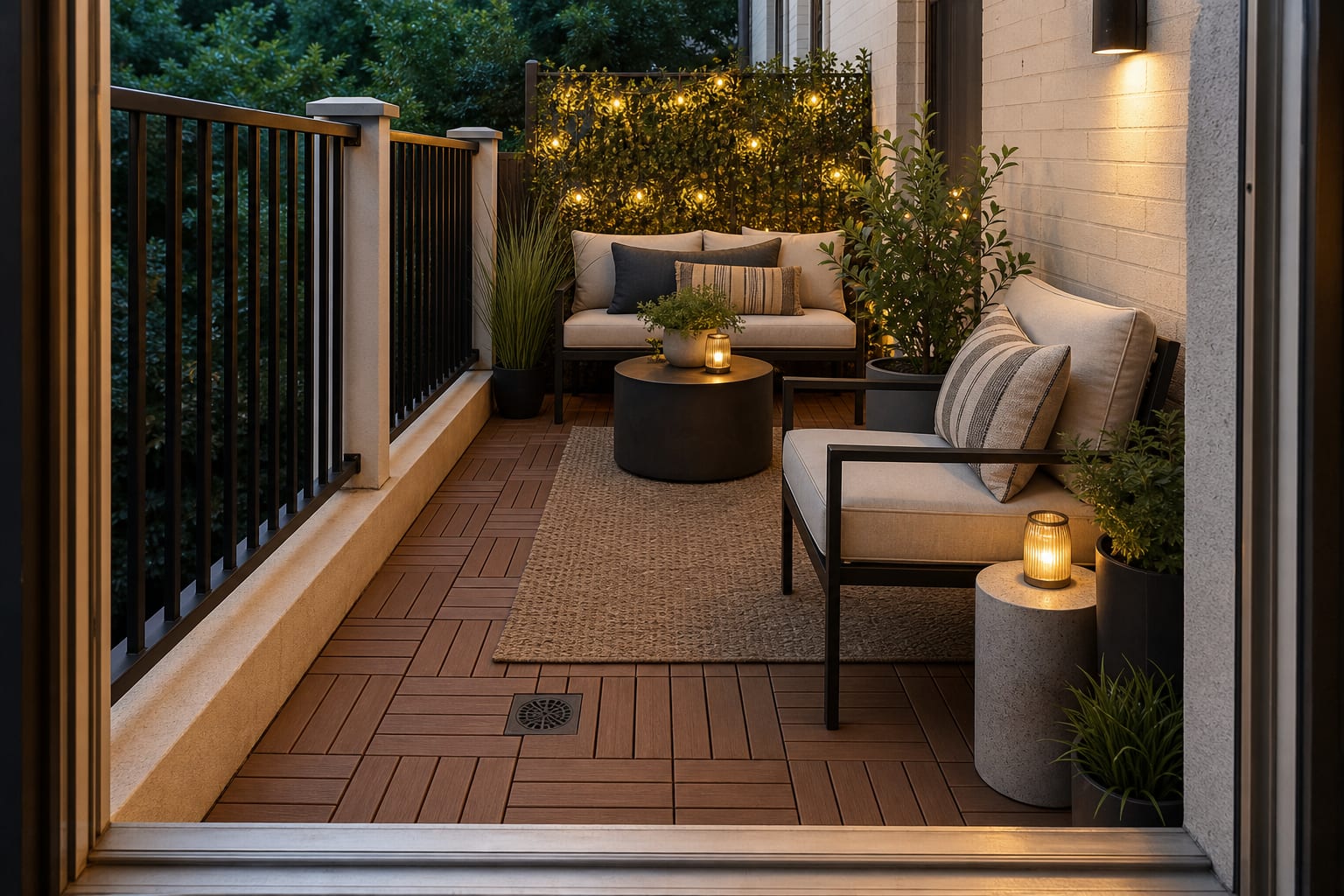
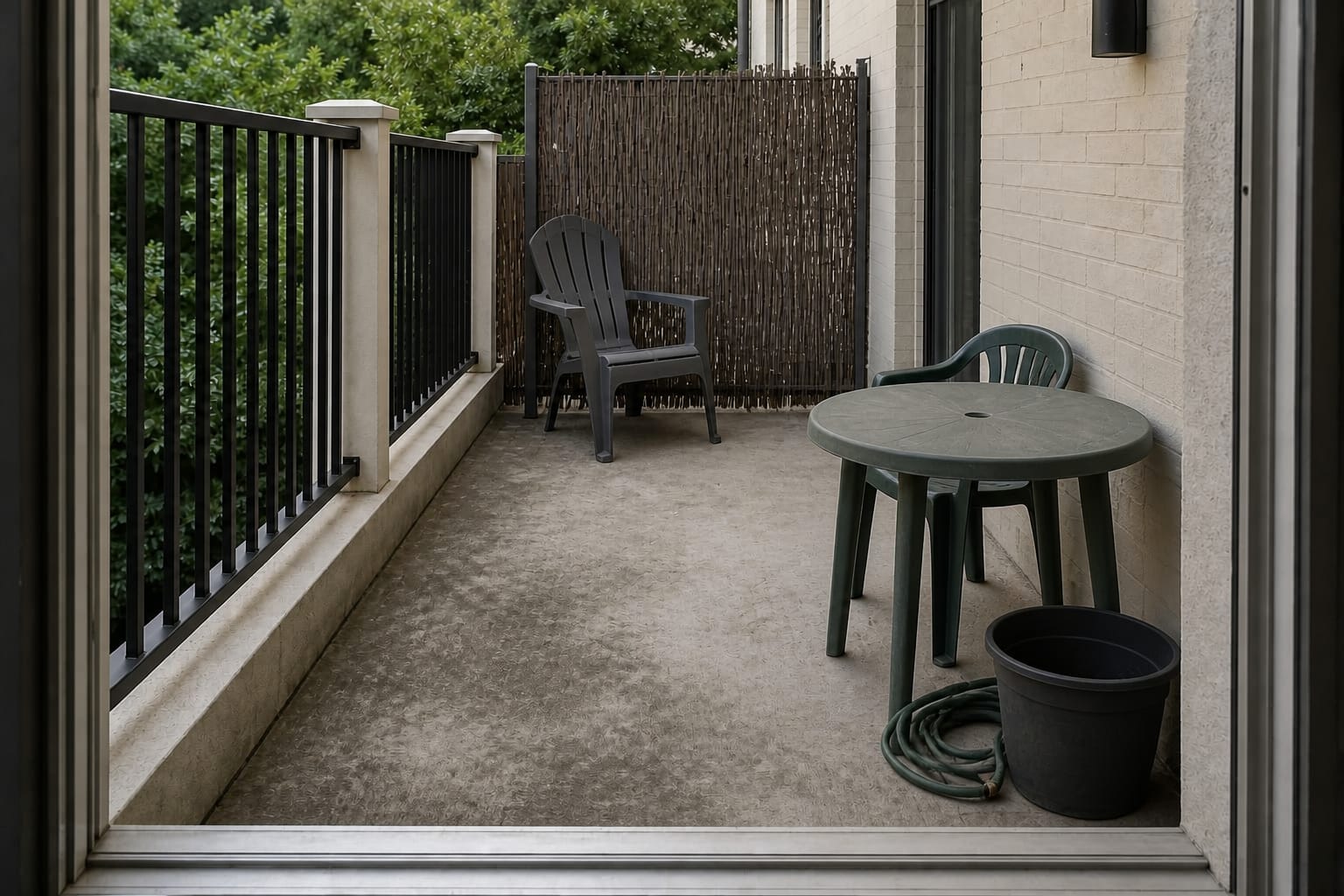
Balcony flooring ideas come down to one choice: removable deck tile with a drainage grid underneath. It hides tired concrete, lifts the surface slightly, and lets rain reach the drain instead of pooling. Add a thin outdoor rug for softness, but pick drainage, weight limits, and lease rules before color; the wrong choice traps water or blocks the door.
What is the best flooring for a balcony?
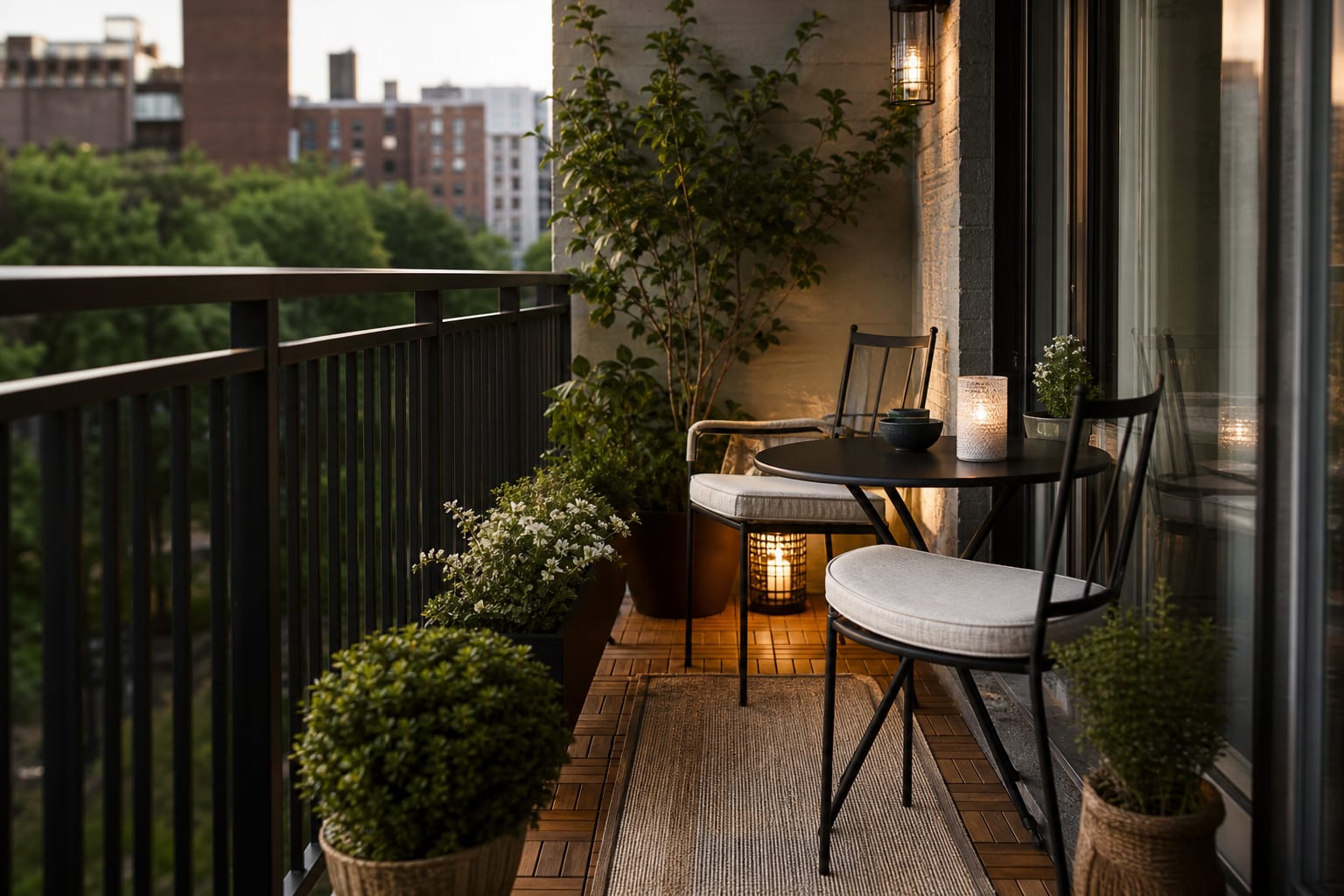
Removable deck tiles in the 12" x 12" or 24" x 24" range, with a total profile under 1 inch, are the safest starting point. Pick a backer that leaves open channels rather than sitting flat on the slab, so rain can still reach the drain. Mock up one tile plus any rug pad before ordering a full set; a floor that blocks the door is a design failure, not a small inconvenience.
A balcony is a small outdoor room with weight limits, shared drainage, and neighbors below, so lightweight modular surfaces beat thick pavers, heavy planters, and permanent adhesive. Choose the floor first, then size furniture around the remaining clear path; see small balcony furniture ideas once the walking surface is settled.
How tiles, decking, and rugs compare at height
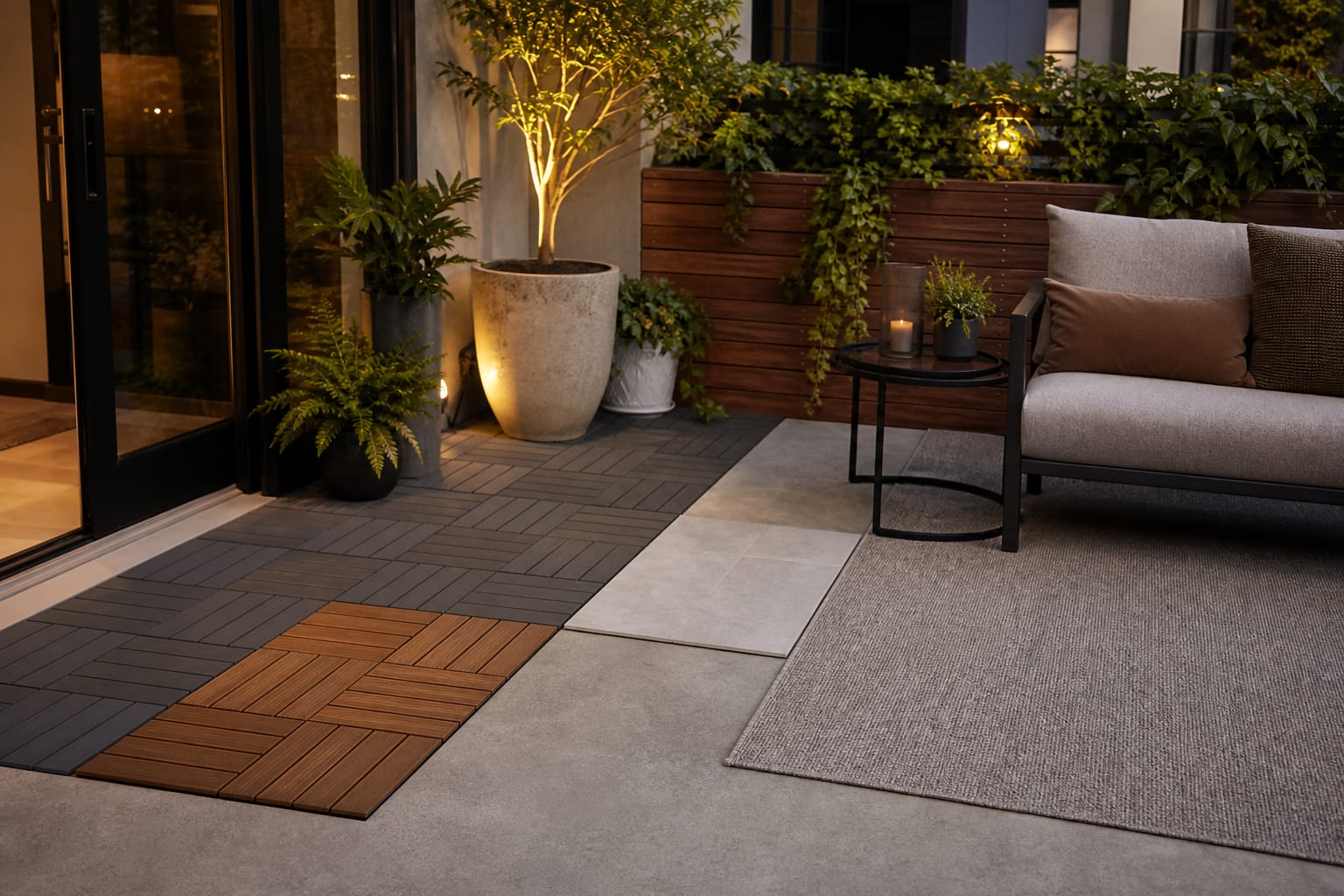
Balcony flooring choices come down to drainage, weight, maintenance, and removal, not just finish. Skip anything that behaves like a sponge if your balcony holds standing water after storms.
| Flooring option | Best use | Watch point | Practical spec |
|---|---|---|---|
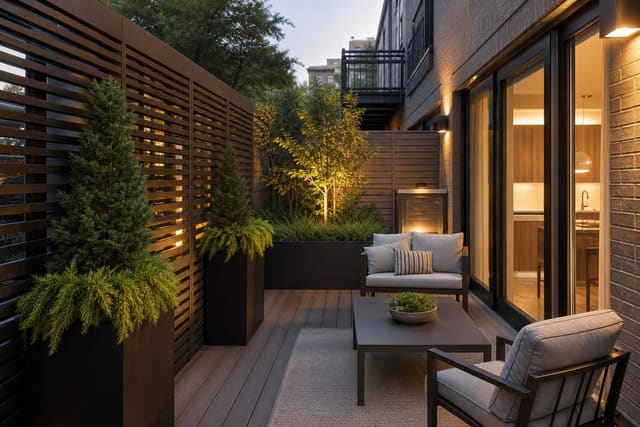
| Interlocking composite deck tiles | Wet, exposed balconies where drainage matters | Plastic grids can click or flex on uneven slabs | Choose 12" x 12" tiles with open backs and edge trim at the door |
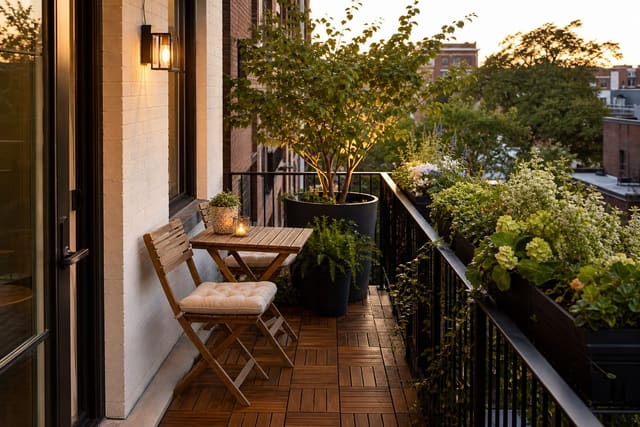
| Balcony wood deck tile | Covered balconies where warmth matters most | Real wood needs oiling and can silver in sun | Leave 1/4" expansion space at walls and railing posts |
| Porcelain outdoor tiles on pedestals | Owner-controlled balconies with professional install | Too heavy or tall for many apartments | Confirm load and waterproofing rules before ordering |
| Outdoor rug for balcony | Seating zones, bare feet, and color | Thick pile holds water and grit | Use flatweave polypropylene with a pile under 1/4" |
| Rubber tiles | Play corners or pet-friendly surfaces | Can smell hot in direct sun and look utilitarian | Use only where grip matters more than appearance |
Composite deck tiles are the safest upgrade for most renters: clean-looking and no glue needed. Real wood is warmer underfoot but needs regular oiling, seasonal lifting, and color variation is normal. Porcelain suits owner-led projects where an installer protects the waterproofing membrane. A rug finishes the space rather than replacing the floor, unless the balcony is well protected and you're willing to dry it after rain.
Five balcony flooring ideas that work at height
- Lay deck tiles perpendicular to the longest sightline; on a 4' x 10' balcony, a 12" grid keeps cuts simple and avoids a hallway look.
- Rug only the seating zone: 4' x 6' for a bistro set, 5' x 7' for a loveseat, with the front legs on the rug.
- Add a tapered transition strip under 1/2" high where tiles meet the door so the edge doesn't catch bare feet.
- Keep one tile near the drain or scupper easy to lift for cleaning; skip planters there and use the rail instead, borrowing scale cues from railing planter ideas.
- Pair pale flooring with shade, not just light color, on west-facing balconies; a balcony privacy screen cuts glare without boxing in the space.
Stop tiles 1/4" short of walls, posts, and thresholds so the surface can move and water isn't trapped against vertical edges. If the slab perimeter is chipped, a darker tile hides that shadow line better than a pale one.
Common balcony flooring mistakes
- Full turf coverage traps dust, pet hair, and moisture against concrete; use a small washable mat as a pet station instead.
- Cheapest deck tiles often snap, fade unevenly, or rock under chair legs; order one box first and test it with your actual furniture.
- Ignoring railing posts forces awkward cuts; measure wall-to-post, post-to-corner, and threshold-to-railing before ordering.
- Plush indoor-style rugs stay damp for days; use bound-edge, low-pile, outdoor-rated polypropylene instead.
- Gluing anything to a rental slab can damage waterproofing and violate lease terms; treat adhesive or fastened systems as owner-only projects.
Use AI to preview your balcony floor before you commit
Upload a straight-on photo from the doorway and test a few versions, such as warm wood-look tile, pale composite with a striped rug, and dark tile with no rug, using the same camera angle each time. The preview should answer practical questions: does a dark floor narrow the space? Does a patterned rug fight the railing? Does the wood tone clash with brick or stucco?
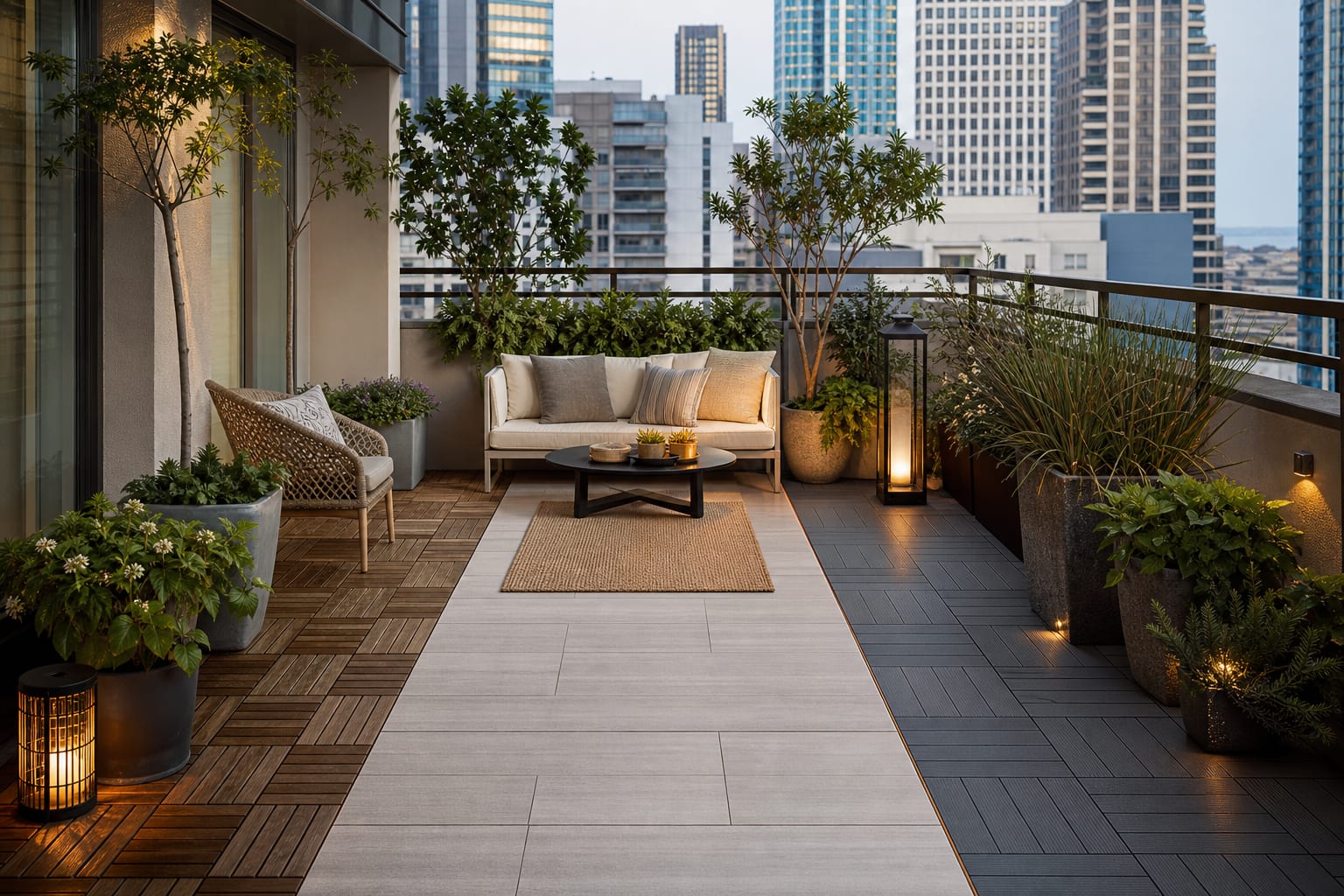
A realistic preview won't confirm how durable a tile clip is, but it will show whether color, rug size, and furniture footprint work together before you order samples. Buy physical samples afterward, leave them outside for a few days, step on them barefoot, and pour water nearby to check how the grid drains.
Frequently Asked Questions
Can I install balcony flooring in a rental?
Yes. Interlocking deck tiles in IPE, composite, or PVC require no fasteners, sit directly on the concrete slab, and lift out in under an hour at move-out, making them the lowest-risk option for renters.
Which balcony flooring drains best?
Perforated PVC tiles and pedestal-mounted porcelain pavers drain straight through to the slab. Solid composite tiles hold a thin water film for 10 to 20 minutes after rain, which is fine for most climates but worth knowing before you buy.
Does balcony flooring get too hot in summer?
Yes, dark composite and PVC tiles can reach 130°F or more in full sun. Light gray, sand, or natural wood tones stay comfortable on bare feet through most summer afternoons, so color choice matters as much as material.
How thick is balcony deck tile?
Standard interlocking tiles run about 1 inch thick, which raises the floor by that amount. Check that your sliding door clears at least 1.25 inches above the slab before ordering a full set.
Can I put an outdoor rug instead of tile?
Yes, for partial coverage of a small balcony. A 4' x 6' flat-weave outdoor rug solves comfort and looks but doesn't protect the slab from staining, sun damage, or efflorescence the way tile does.