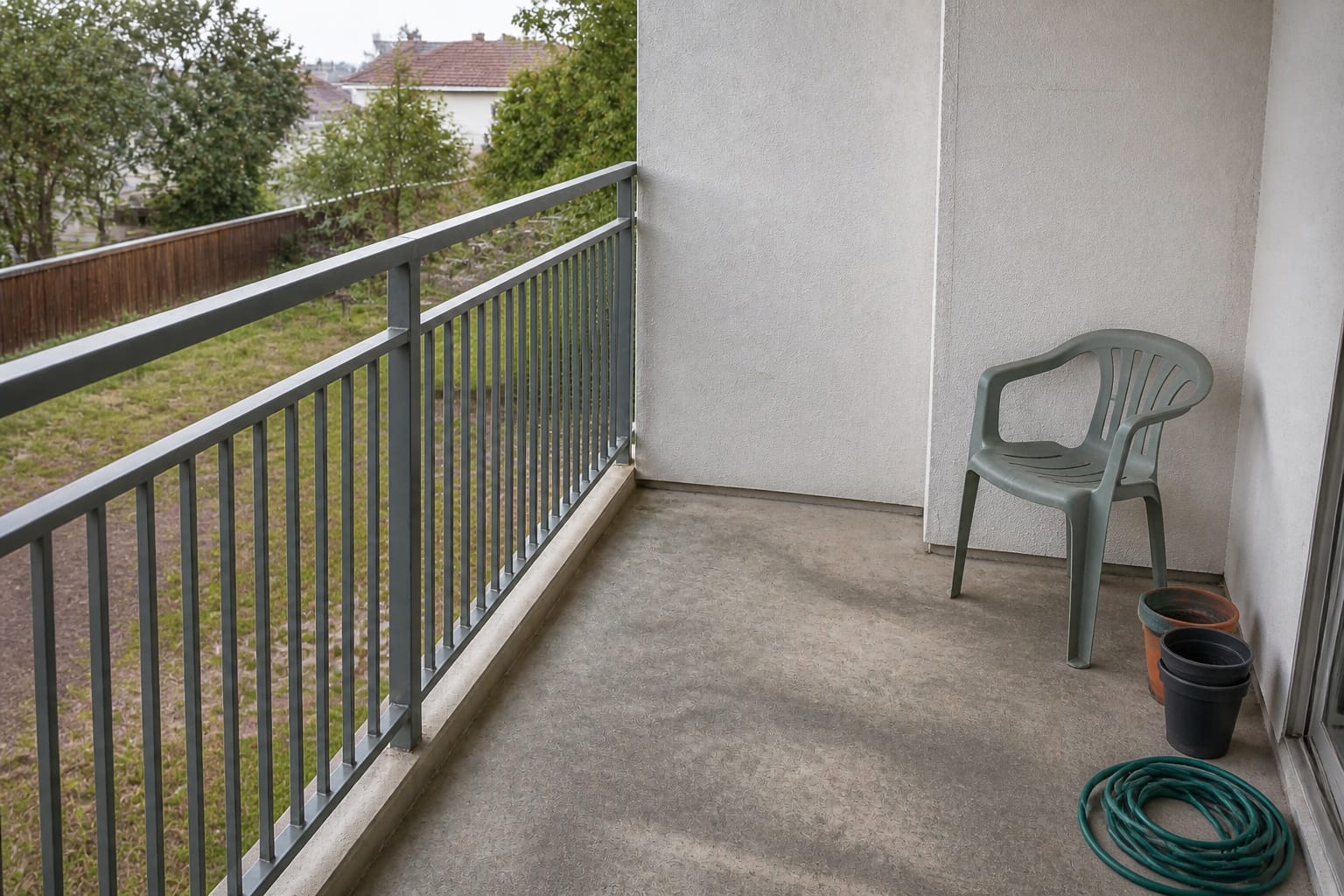
A small balcony can grow real food and flowers if you garden upward instead of outward and match plants to your actual light. Use the railing, a blank wall, and a tiered stand to multiply planting area, choose deep self-watering containers, and read your sun hours honestly before picking what to grow. The floor stays clear; the harvest doesn't shrink.
How do you grow more on a small balcony?
Go vertical. Floor pots eat your standing room, but walls and railings are free growing space that most balconies waste.
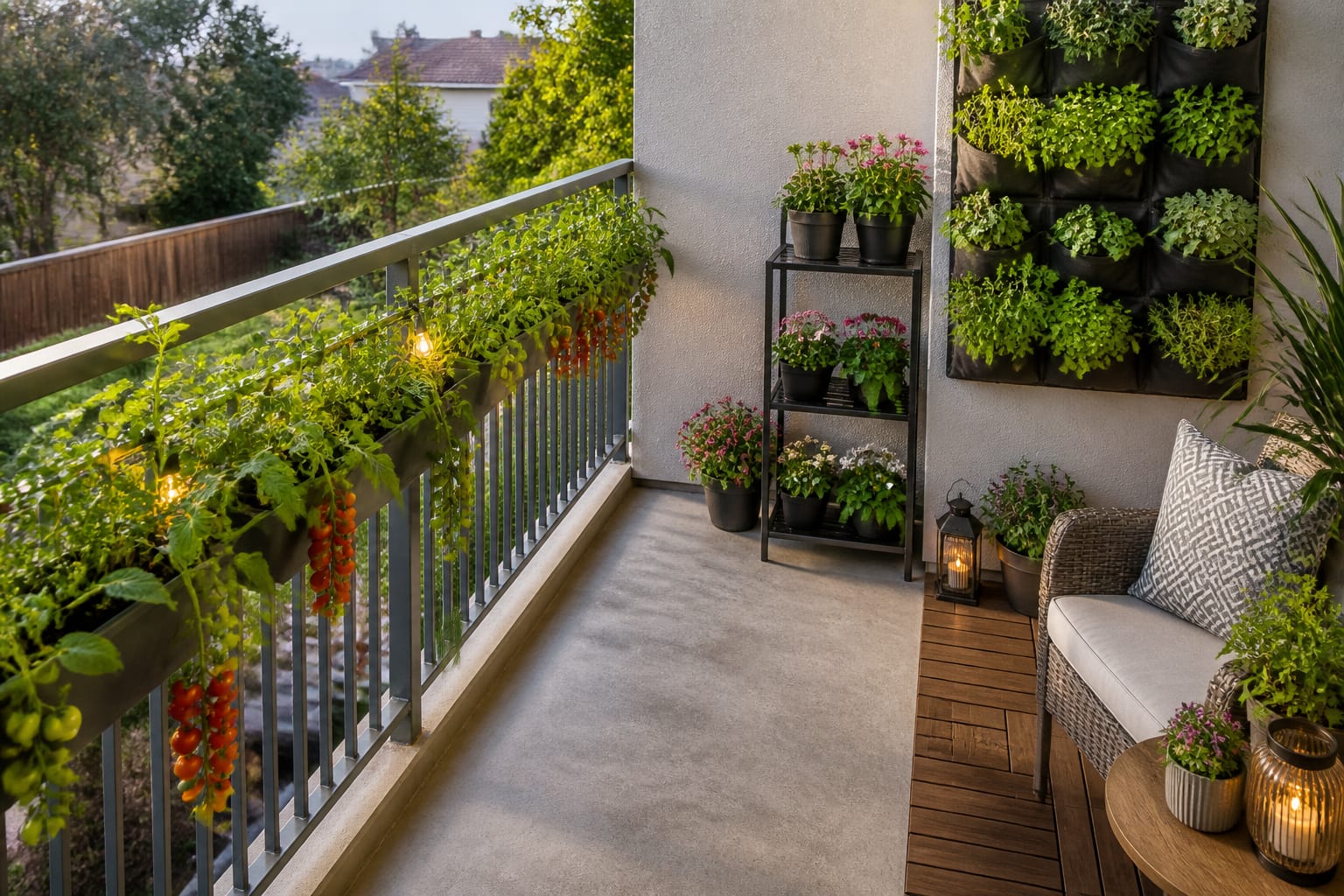
- Hang railing planters along the top rail for trailing cherry tomatoes, strawberries, or cascading petunias.
- Mount a vertical pocket planter or pallet garden on a blank wall for lettuce, herbs, and compact greens.
- Add a 3-tier plant stand in a corner to hold a dozen pots in the space of two.
- Train pole beans, cucumbers, or a climbing rose up a 6-foot trellis lashed to the railing for privacy plus food.
- Hang baskets from a ceiling hook for trailing herbs like thyme and oregano, keeping the floor clear.
- Line a narrow 10-inch-deep console against the wall for a row of herbs without blocking the walkway.
Mix edibles and flowers in the same vertical scheme, such as basil under tomatoes or nasturtiums spilling from a rail box. These container gardening ideas go deeper on matching pot size to plant.
How much sun does your balcony actually get?
Every balcony has its own microclimate, and guessing kills more plants than anything else. Spend a sunny day counting direct-sun hours: 6+ hours opens the door to tomatoes, peppers, and most herbs; 3-6 hours favors lettuce, chard, kale, and parsley; under 3 hours calls for ferns, begonias, coleus, and impatiens.
Wind matters just as much. A high balcony can act like a wind tunnel that shreds leaves and dries pots in hours, so screen the worst of it with a trellis and place tougher plants like rosemary, sedum, or ornamental grasses on the windward side. Reflected heat off glass or masonry can also bake nearby pots, so pull tender greens a few inches off a south-facing wall. These apartment balcony design ideas show how to place seating and planters so neither fights the other.
What containers and soil work best on a balcony?
Containers make or break a balcony garden, so size up rather than down. A 12-inch-deep pot is the floor for most vegetables; tomatoes or dwarf citrus want 18-24 inches, since small pots dry out and cook roots fast.
Weight and water are the real constraints. Use lightweight potting mix instead of garden soil, and choose fabric grow bags or fiberglass pots to stay under a posted weight limit. Self-watering containers with a built-in reservoir are close to essential up high, where wind and sun can empty a pot in one hot afternoon.
Every pot needs drainage and a saucer, or runoff will sheet onto the balcony below. Raise pots on 1-inch feet so saucers drain and the deck stays dry underneath. If you can't drill into rails or walls, freestanding rail brackets and tension-pole towers add vertical growing space with zero anchors. These balcony design ideas show how to keep a seating corner for yourself, not just the plants.
How do you keep a small garden productive all season?
Check soil moisture daily in summer; a finger an inch deep tells you more than any schedule. Feed container plants every 2-3 weeks with diluted liquid fertilizer, since frequent watering flushes nutrients out faster than in-ground soil does.
Harvest herbs and greens often to keep plants producing, and swap cool-season crops like lettuce and peas for heat lovers like basil and peppers as summer arrives. That rotation can earn the same containers two or three harvests a year. Keep a watering can and snips by the door so tending takes two minutes, not a project.
How can AI design help plan a balcony garden?
It's hard to picture a bare slab full of green from an empty photo. Re-Design lets you upload a picture of your balcony and render it with railing planters of trailing tomatoes, a vertical herb wall, and a tiered flower stand, so you see the layout and remaining floor space before buying a single pot.
Try two versions on your real space: an edible-focused layout with climbing beans and herb walls, then a flower-and-lounge version. Comparing both against your actual railing and wall shows how much you can grow without losing the spot where you sit.
Frequently Asked Questions
What is the minimum pot depth for a balcony vegetable garden?
Most vegetables need at least 12 inches of soil depth to develop healthy roots. Tomatoes, peppers, and dwarf fruit trees need 18-24 inches. Shallow pots dry out fast and stunt root growth, so bigger containers are more forgiving of missed waterings.
How many hours of sun does a balcony need for tomatoes?
Tomatoes need 6 or more hours of direct sun daily to fruit well. With less light, they'll grow leafy but produce little. If your balcony gets 3-6 hours, shift to lettuce, chard, kale, or herbs instead.
What can I grow on a shady balcony?
A balcony with under 3 hours of direct sun still supports ferns, begonias, coleus, and impatiens, plus leafy herbs like mint in bright indirect light. Focus on foliage and shade-tolerant flowers rather than fruiting vegetables, which need more direct sun to produce.
How do I stop balcony pots from drying out?
Use self-watering containers with a built-in reservoir, or group pots together so they shade each other's roots. Wind and sun on an elevated balcony can empty a pot in a single hot afternoon, so check moisture daily during summer.
How much weight can a balcony hold for container gardening?
Wet potting soil weighs roughly 100 pounds per cubic foot, so check your building's posted load limit before filling a balcony with pots. Spread weight near the wall rather than the rail edge, and use lightweight mix or fabric grow bags to cut down on total load.