Bamboo flooring fails most often from delamination, edge chipping, or moisture cupping, and the best replacement options are engineered oak, luxury vinyl plank, cork, or porcelain wood-look tile — matched to how the old floor actually failed and tested against your trim before you buy. Refinishing only makes sense if the bamboo is thick, flat, and firmly bonded; otherwise, replace it with a more predictable material rather than a hopeful finish coat.
What do you replace bamboo flooring with when it has aged badly?
Start by checking the bamboo itself. If it's solid or thick engineered bamboo with real wear layer left, a refinish may work, but many bamboo floors have thin veneers or factory coatings that sand unevenly. If you can't confirm a usable wear layer and stable installation, treat the call like whether an old wood floor deserves sanding or replacement — structure and thickness matter more than sentiment.
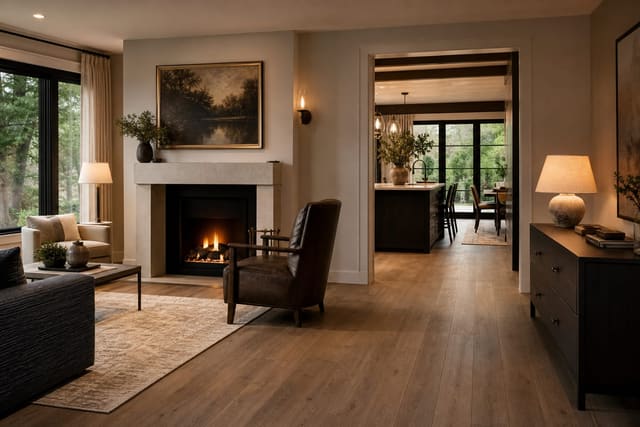
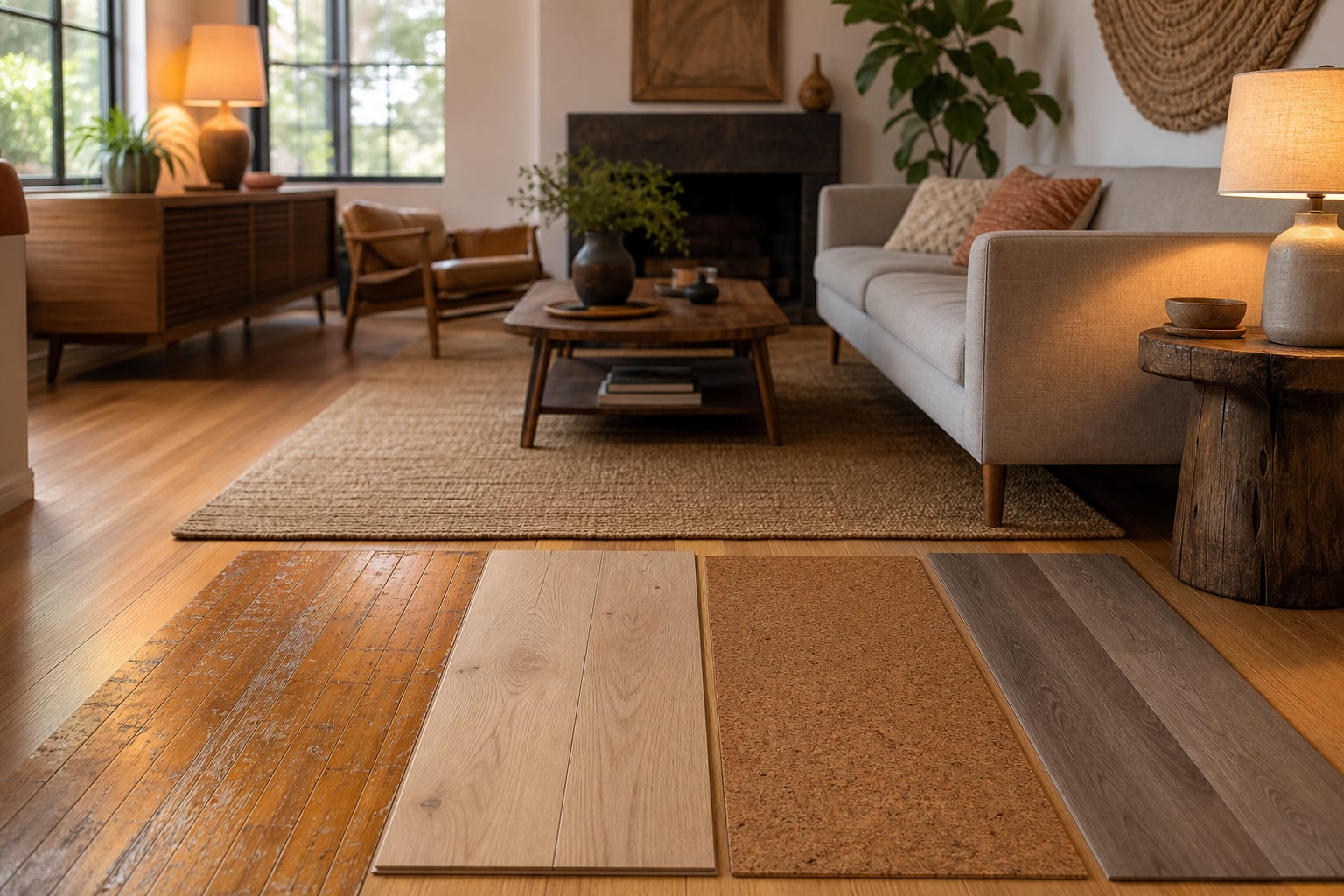
Engineered hardwood is the best natural-floor alternative. Look for a wood wear layer around 3mm or thicker for future sanding, and pick matte or satin finishes since gloss shows scratches faster. White oak, hickory, maple, and ash all read cleaner than orange bamboo in most homes.
Luxury vinyl plank is the workhorse for pets, kids, rentals, and slab floors. Good LVP runs 5–8mm thick with a rigid core and a 12–20 mil wear layer, and handles water and chair traffic better than cheap bamboo, though it won't feel like real wood underfoot.
Cork suits bedrooms, offices, and playrooms where comfort matters — it's warmer and quieter than bamboo but needs a protective finish and steady humidity. Porcelain tile belongs in baths, entries, laundry rooms, and sunrooms where moisture or grit punishes wood-look flooring.
Which alternative fits how your bamboo failed?
A dented bedroom floor, a faded sunroom, and a cupped kitchen floor are three different problems even with the same original material.
Dents and traffic wear: Prioritize surface toughness. Engineered hardwood with a harder species and matte finish works in living and dining rooms. Use felt pads under chairs and dense rug pads — cheap rubber can stain some finishes. In dining rooms, extend the rug at least 24 inches past the table on all sides.
Fading near windows: Avoid another color-sensitive floor without checking the light. Medium natural oak, low-contrast vinyl, UV-resistant cork, or matte porcelain age more gracefully than dark espresso planks. Dim rooms benefit from a floor that returns light — pair samples with ways to fake natural light in any room before choosing charcoal or black-brown.
Cupping or swelling: Treat moisture as the villain. Kitchens, baths, entries, basements, and laundry rooms need a water-tolerant system — LVP, porcelain, or sealed concrete-look tile — unless the underlying leak or humidity swing is fixed first.
Measure old flooring thickness, underlayment, door clearance, dishwasher panel clearance, stair nosing, and every threshold before ordering. A 7mm LVP may solve a height problem that a wider engineered plank with underlayment would worsen. Leave the required expansion gap (commonly about 1/4 inch at walls) and cover it with base or shoe molding, not hard caulk.
Test this on your own room photo with ReDesign — keep the doorway, walls, windows, main furniture, and fixed features visible so the preview solves the actual room.
What mistakes make a replacement look worse than the bamboo?
The costliest mistake is replacing the visible floor without fixing why the bamboo aged badly. If the subfloor is damp, uneven, or moving, the new floor inherits the problem. Check for soft spots, dark baseboards, musty edges, hollow sounds, or seasonal gaps.
Another mistake: judging samples only against the old bamboo. Bamboo's yellow, orange, or gray-green undertones make almost anything look better by comparison. Hold samples next to cabinets, trim, rugs, and upholstery instead.
Don't assume wider planks are automatically better — a 7-inch plank suits a broad room but creates awkward short cuts in narrow hallways or chopped-up condos. Planks in the 5–6 inch range work across more room types.
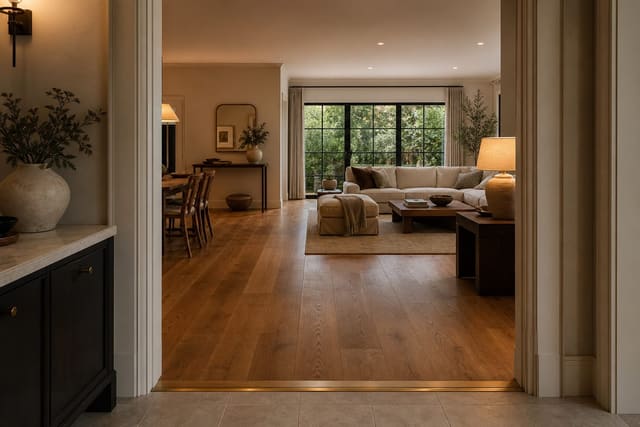
Don't skip transitions. Decide in advance whether the new floor meets tile, carpet, or stairs with a reducer, T-molding, saddle, or flush edge; a bulky strip at every doorway signals a cover-up. Finally, avoid going too dark just to escape a cheap-looking bamboo — dark floors show dust, hair, and scratches more. Get mood from rugs, lamps, and wall color instead.
How can AI previews help before you commit?
Flooring is hard to judge from a small sample since it covers the whole room. Upload a photo of your space and test the replacement with your furniture, daylight, trim, and wall color before ordering material.
Request a version with medium natural engineered oak, 5-inch planks, satin finish, and your existing furniture in place. Run a second version with warm greige LVP, a third with cork, and a fourth with matte porcelain where moisture is the issue. Be specific: name the plank width, undertone, sheen, rug size, and whether the floor runs through the doorway.
If a lighter floor washes the room out, add warmer 2700K–3000K bulbs and test a bigger rug. If a darker floor shrinks the room, try a mid-tone option and use mirror placement that amplifies light instead of relying on the floor alone. Renters can preview floating LVP or large rugs; owners should follow up any visual choice with installer notes and subfloor checks.
What final checks prevent the new floor from aging badly too?
Before buying, measure room length, width, doorway widths, finished floor height at transitions, and clearance under doors and appliances. Add waste realistically — angled halls and closets need more material than square rooms.
Check the subfloor against the installer's standard, not optimism. Many plank systems want flatness within about 3/16 inch over 10 feet; tile often needs a stricter surface, especially with large-format pieces and tight grout joints.
Order samples large enough to judge pattern repeat, and view them in daylight and at night. Then match the material to the room:
| Priority | Best choice |
|---|---|
| Real wood look, dry room | Engineered hardwood |
| Pets, water, budget | Luxury vinyl plank |
| Comfort and quiet | Cork |
| Heavy abuse, moisture | Porcelain tile |
Frequently Asked Questions
Why does bamboo flooring fail early?
Strand-woven bamboo expands and contracts more than wood, so edges chip and seams open in dry winters and humid summers; pet urine and standing water also delaminate the top layer faster than oak does.
Is engineered oak a good replacement for bamboo?
Yes — engineered oak with a 3-4mm wear layer matches typical bamboo plank height, takes the same thresholds, and holds up to family wear; expect $4-8 per square foot installed depending on plank width.
Is luxury vinyl plank better than bamboo for pets and water?
LVP is the best replacement for households with pets, kids, and moisture risk. It is fully waterproof, scratch-resistant, and runs $3-6 per square foot installed.
Can I install replacement flooring over the bamboo?
Only if the bamboo is flat, dry, and tightly fastened. LVP click-lock and floating engineered wood can go over it, but cupped or chipped bamboo must be pulled first — that prep call saves grief two years later.
Should I match the previous bamboo color in the replacement?
Not necessarily. Use the replacement as a chance to shift to a more current tone, such as warm white oak or grey-brown, that pairs better with your existing wall colors; an AI preview lets you test the swap before committing.
> Try this: Ready to see this on your own room? Open ReDesign and run the preview.
Three transformations to try
1. Engineered oak swap against existing trim 2. Luxury vinyl plank in living room 3. Porcelain wood-look tile in kitchen