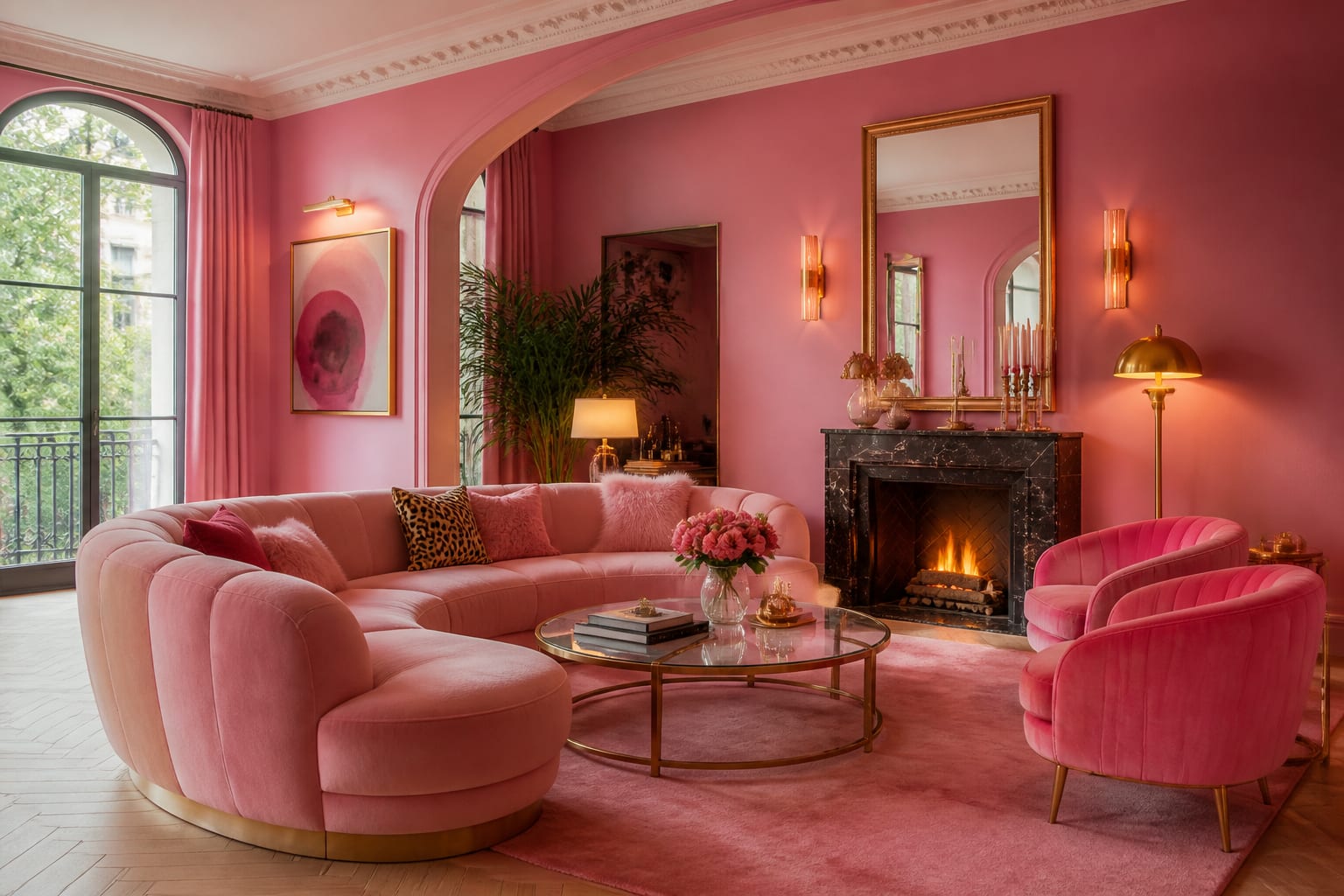
Barbiecore interior design is not a trend for the timid, and that is precisely what makes it worth doing well. When executed with intention, a hot-pink room reads as confident rather than cartoonish, and the difference almost always comes down to proportion and material quality.
Most failed attempts stack too many competing pinks, ignore contrast, and skip the grounding elements that keep the palette legible. This guide lays out the mechanics behind rooms that work — the color splits, furniture silhouettes, lighting temperatures, and the four mistakes that consistently derail the look.
The Right Color Ratio for Barbiecore Rooms
Barbiecore interior design lives or dies on proportion. A 60/30/10 ratio is the most reliable framework: 60 percent of the room in a near-neutral — warm white, blush, or soft ivory — 30 percent in your chosen pink, and 10 percent in a sharp accent like chrome, black, or deep magenta. Trying to push pink beyond 40 percent of the visual field almost always produces a room that feels more overwhelming than exuberant.
Paint is usually the wrong place to put your full pink investment. A single pink feature wall at roughly 120 square feet in a standard 10-by-12-foot bedroom delivers impact without saturation. The ceiling in the same warm white as your 60-percent base then acts as a visual exhale, pulling the eye upward and relieving tension.
For spaces smaller than 150 square feet, consider reversing the play: blush walls with hot-pink upholstery keeps the shell light while concentrating color where it reads most boldly — on the furniture you actually touch and use.
See also our guide to Dopamine Decor Ideas for more on barbiecore interior design.
Furniture Silhouettes That Carry the Look
The furniture shapes associated with barbiecore interior design are deliberately retro-forward: curved low-profile sofas, tulip-base tables, and shell chairs reference the mid-century glamour that underpins the aesthetic. Pieces with legs at least 6 inches off the floor open the visual field at ground level and prevent the room from reading as heavy, which is a real risk when every surface is saturated with color.
Material quality is non-negotiable here. Cheap velvet pills quickly under wear and shifts from lush to shabby in a matter of months. Look for velvet with at least 300 grams per square meter pile density — it holds its pile and resists crushing. Acrylic and polished chrome accents punch above their weight: even a single lucite side table beside a pink sofa introduces enough visual air to keep the palette breathing.
Avoid oversized upholstered sectionals in full pink. They consume too much of the 30-percent budget and leave no room for the contrast that makes the look coherent. A love seat at 60 inches wide plus two accent chairs is the smarter configuration for most living rooms under 200 square feet.
For a related angle on barbiecore interior design, read Soft Industrial Style Ideas.
Lighting Temperatures That Flatter Pink Palettes
Lighting is where many barbiecore rooms quietly fail. Cool-white LED bulbs in the 5000K to 6500K range make vivid pinks look feverish and plastic. Warm bulbs between 2700K and 3000K are the correct choice — they shift the undertone of hot pink toward a richer coral-magenta and make the room feel glamorous rather than clinical.
Directional accent lighting at 15-degree beam angles focuses attention on textured surfaces — a fluted plaster wall or a velvet headboard — and creates the kind of depth that flat overhead lighting destroys. For a barbiecore bedroom or living space, aim for at least three independently switchable circuits: ambient, task, and accent. This lets you dial from full daytime brightness down to a moody 20 to 30 percent output for evenings without sacrificing the palette's warmth.
Neon signs in complementary colors — hot pink neon against a blush wall reads redundantly; try red or warm amber — add the kitsch energy the aesthetic invites while functioning as functional accent lights. Keep the transformer box concealed to avoid breaking the illusion.
Mistakes That Undermine Barbiecore Interior Design
The most common error is mixing too many pink undertones simultaneously. Hot pink (blue-leaning), coral pink (orange-leaning), and dusty rose (grey-leaning) fight each other when placed on adjacent surfaces. Commit to one dominant undertone family and use the others only in small accessories that are at least 6 feet from each other visually.
Overloading the room with pattern is the second mistake. One pattern — typically on a rug or a single upholstered piece — anchors the room without producing visual chaos. Two competing patterns, say, a floral wallpaper and a graphic throw pillow at scale, split attention and make the space feel restless rather than playful.
The third error is skipping contrast entirely. Rooms that are all-pink with no dark or neutral break lose the graphic punch that makes barbiecore images compelling. Even a single black lacquered coffee table or a set of ebonized picture frames provides the contrast that keeps the pink reading as bold. The fourth mistake is underinvesting in window treatments — sheer panels let in light that washes the palette; lined curtains in ivory or white maintain color saturation throughout the day.
Here are the common mistakes to avoid: - Skip mixing warm, cool, and muted pink undertones on surfaces within the same sightline. - Never use cool-white bulbs above 4000K kelvin — they drain warmth from every pink in the room. - Avoid all-upholstered pink sectionals larger than 80 inches in rooms under 200 square feet. - Do not layer more than one large-scale pattern or you risk visual chaos that overwhelms the palette.
Bring the look home with Re-Design
Re-Design lets you upload a photo of your actual room and instantly preview a barbiecore makeover before you commit to a single can of paint. Swap wall colors, test velvet sofa options, and compare lighting scenarios side by side using AI — all from the room you already have. It removes the guesswork and the expensive regret that comes from going all-in on a bold palette without seeing it first.
Frequently Asked Questions
Can barbiecore interior design work in small rooms?
Yes, but proportion matters even more in compact spaces. Use blush or warm white on walls and concentrate hot pink on one large furniture piece rather than multiple surfaces. Keeping the ceiling and floor light maintains a sense of openness while still delivering the full barbiecore impact.
What flooring works best with a barbiecore palette?
Light natural wood, white-stained oak, or cream carpet all work well because they stay within the neutral 60-percent share without competing with the pink accents. Avoid dark walnut or black tile, which absorbs too much light and makes vibrant pinks appear muddy rather than luminous.
How do I introduce barbiecore without repainting walls?
Start with a large-scale velvet sofa or statement headboard in hot pink — upholstery is the highest-impact, lowest-permanence move. Layer in chrome side tables, a pink area rug, and warm-toned bulbs at 2700K. These four changes alone shift the room's personality without touching a single wall.