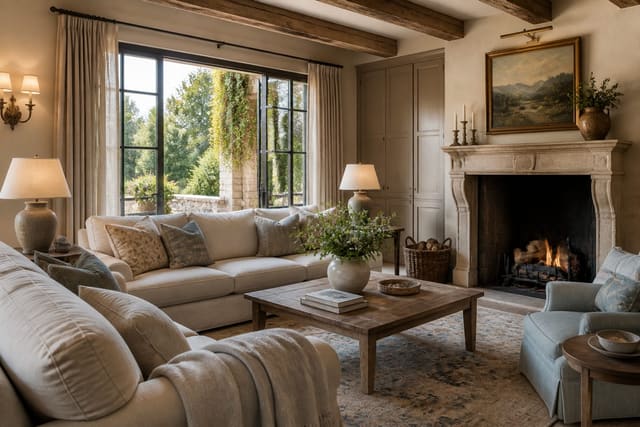
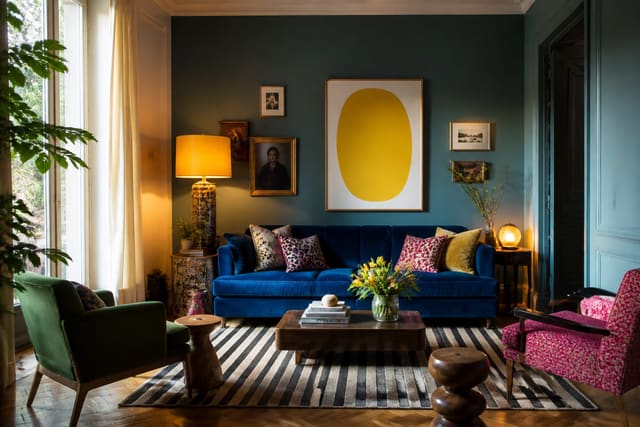
Modern French country style keeps rustic warmth—aged wood, curves, linen—while lightening the palette, simplifying lines, and using pattern sparingly instead of layering it everywhere. The biggest mistakes are overcorrecting into cold minimalism or clinging to dark, ornate traditional details. Balance is the goal: about 70% timeless material and form, 30% edited modern restraint.
How Do You Lighten the Palette Without Losing Warmth?
Push warm neutrals across roughly 70% of surfaces—creamy off-whites or soft greige on walls—and limit accent color to one or two muted tones, like dusty blue or faded sage, rather than a full Provençal spectrum. Keep undertones warm; cool greys drift toward sterile. A matte limewash wall keeps aged depth while crisper trim sharpens the edge, and natural wood and stone supply the rest of the color so the room stays grounded, airy, and sun-filled.
See also French Country Color Palette.
How Do You Balance Clean Lines With Rustic Curves?
Pair a few classic curved antiques—like a carved fruitwood armoire—against simpler, tailored forms such as a low-profile upholstered sofa or a turned-leg table with clean rush chairs. Aim for roughly a 50/50 split between traditional and contemporary silhouettes so neither dominates. Choose honest proportions over heavily distressed or ornate pieces, use crisp linen slipcovers instead of skirted, tufted upholstery, and leave open, uncluttered space that traditional rooms often filled completely. Simplify hardware and legs too, trading ornate brass for cleaner aged finishes. For lighting, hang slim pendants about 30 inches above the island at close to 2700K to keep the palette soft rather than sterile.
For more, see Dopamine Decor Ideas.
How Much Pattern and Texture Should You Use?
Choose one moment for pattern—a pair of toile cushions on a plain linen sofa, or a single floral chair—rather than layering it across walls, curtains, and upholstery at once. Keep pattern to about 20% of the room's visual weight and let texture carry the rest: nubby linen, woven rush, limewashed plaster, aged wood, and natural stone all add depth without color. Avoid matching sets, since a slightly mismatched mix reads current, and favor one large-scale pattern over several small, busy ones.
What Mistakes Should You Avoid When Modernizing?
Most missteps come from overcorrecting in one direction or the other.
- Editing so hard the room turns cold and generic — keep a few curved, aged, or characterful pieces
- Keeping too much dark wood and heavy drapery, which reads dated rather than updated
- Choosing cool grey paint that drains warmth instead of a creamy or greige tone
- Layering pattern on every surface at once rather than choosing one moment
- Matching everything into a coordinated showroom set instead of a collected mix
- Spending on trendy accessories over quality materials, such as one limewashed wall or real stone surface (around $3,000) instead of many small pieces that will date quickly
Aim for roughly 70% timeless pieces and 30% personal finds so the room feels collected rather than staged.
Bring the Look Home with Re-Design
Upload a photo to Re-Design to preview a lighter palette, cleaner-lined furniture, and restrained pattern before changing anything physical. Test how a single toile accent reads against limewashed walls, balance curved antiques with tailored modern pieces, and confirm the warmth survives the edit in seconds.
Frequently Asked Questions
What makes a space modern French Country rather than traditional?
Modern French Country strips back fussiness while keeping warmth and romance intact. Expect cleaner-lined upholstery, a tighter neutral palette, and fewer patterns layered at once. Antiques still appear, but as edited single statements in airy, uncluttered rooms. Hardware and lighting lean slightly more contemporary, often matte black or brushed brass, balancing rustic French soul with modern calm.
How do I modernize a French Country room I already have?
Edit ruthlessly first: remove surplus knickknacks and busy patterns so a few good pieces can breathe. Repaint heavy wood tones in soft white or greige, swap ornate drapery for simple linen panels, and add a clean-lined sofa beside an antique armoire. Introduce one contemporary light fixture while keeping the architecture and a couple of carved heirlooms for character.
What materials suit modern French Country?
Pair natural linen and washed cotton with honed limestone, oak, and matte plaster. Cane and rattan add lightness, while a single marble surface lends quiet luxury, and unlacquered or matte black metals replace heavy gilding. Reclaimed wood beams keep the rustic anchor. Texture matters more than ornament, so layer nubby weaves, stoneware, and aged leather within a restrained, neutral scheme.
What colors work for a modern French Country look?
Center the palette on warm whites, soft taupe, and pale greige for a serene backdrop. Add muted sage, dusty blue, or a touch of clay through textiles or a feature wall. Black accents in lighting and hardware sharpen the softness while reading contemporary. Keep saturated color minimal so natural materials supply most of the interest.
Is modern French Country the same as farmhouse style?
No. Farmhouse leans more casual and often cooler, with shiplap and industrial accents, while modern French Country keeps ornate curves, warm plaster tones, and European antiques, just edited for a lighter, less cluttered result. The two share a rustic, neutral base but modern French Country retains more romance and refined detail than typical farmhouse decor.