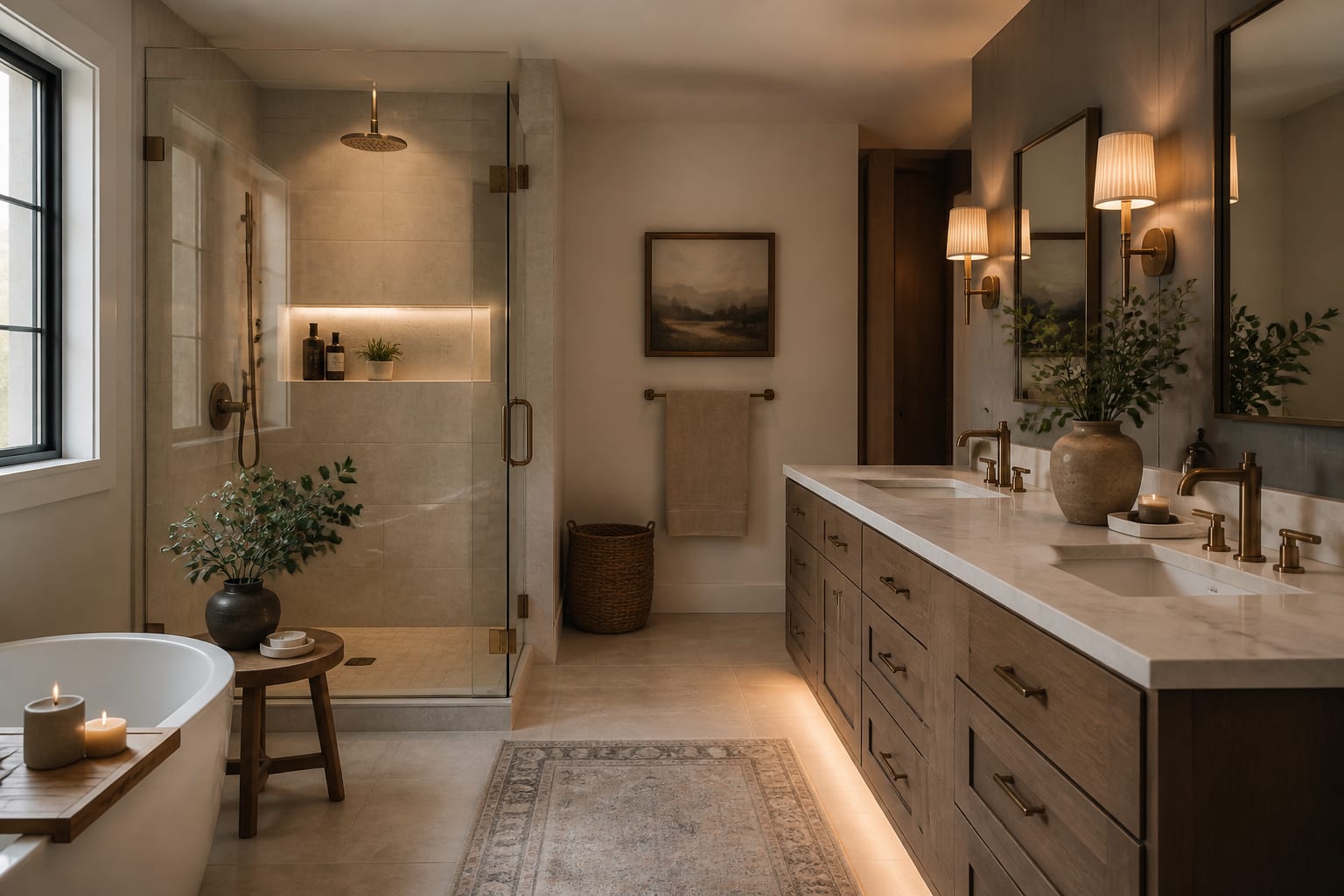
The thing that makes bathrooms cost more per square foot than any other room is also the thing people underestimate: behind every tile is plumbing, waterproofing, and ventilation that has to be done right or the whole thing fails. A bathroom is small but trade-dense. A cosmetic refresh runs $3,000 to $7,000, a mid-range renovation runs $10,000 to $20,000, and a full gut of a primary bath with relocated fixtures runs $25,000 to $45,000. Labor, not materials, is usually the bigger half.
What drives bathroom renovation cost
Bathrooms are the most expensive room per square foot in the house because three trades—plumbing, tile, and electrical—all work in roughly 40 square feet, and the waterproofing under the tile has zero tolerance for shortcuts. That trade density is why labor runs 40 to 60 percent of the total.
The tiers track how much you disturb. A cosmetic refresh at $3,000 to $7,000 keeps the layout and replaces the vanity, toilet, faucet, lighting, and paint while leaving the tub and tile. A mid-range renovation at $10,000 to $20,000 replaces the shower or tub surround, the flooring, and all fixtures within the existing footprint. A full gut at $25,000 to $45,000 moves plumbing, expands the footprint, or adds a custom tiled shower with a glass enclosure.
Tile is where small rooms hide big numbers. Standard ceramic runs $5 to $15 per square foot installed, porcelain $10 to $25, and natural stone $15 to $40, and a tiled shower surround alone is 80 to 100 square feet. The choices in the bathroom tile ideas guide affect both the material cost and the labor, since intricate patterns and small mosaics take far longer to set. For a larger suite, the layout decisions in primary bathroom ideas determine whether you can keep the fixtures where they are.
The fixtures themselves carry a deceptively wide range. A builder-grade toilet is $150 while a wall-mounted model with a concealed tank approaches $1,000; a stock 36-inch vanity is $400 while a custom one with a stone top passes $2,500; a basic shower valve is $200 while a thermostatic system with a rain head and body sprays runs $1,200 or more. None of these change the footprint or the labor much, which means they are the easiest place to control the budget after the layout is set. Choosing mid-grade fixtures and spending the savings on better waterproofing is almost always the right trade.
The two systems you cannot see are the ones that decide whether the renovation lasts. Waterproofing behind the tile and adequate ventilation are what prevent the mold, rot, and failed grout that force a second renovation within a few years. A proper waterproof membrane and a correctly sized exhaust fan add only a few hundred dollars to the job, but skipping them is the most common reason a bathroom that looked finished has to be torn out again. Treat them as non-negotiable line items, not places to economize.
A line-item renovation budget
Here is a realistic mid-range renovation for a 40-square-foot full bath that keeps the existing layout:
- Tiled shower surround and pan, 90 square feet of porcelain: $3,800.
- Vanity, 36-inch with quartz top: $1,400.
- Toilet, mid-range: $400.
- Flooring, porcelain tile, 40 square feet installed: $800.
- Faucet, shower valve, and trim: $700.
- Lighting, exhaust fan, and electrical: $900.
- Paint, accessories, and mirror: $500.
- Labor across plumbing, tile, and electrical trades: $7,500.
That totals about $16,000, with labor at nearly half. Keep the existing shower and only swap the vanity, toilet, lighting, and paint, and the same bath drops to a $4,500 cosmetic refresh. Before committing to fixtures, mapping the room with AI bathroom design ideas helps you confirm the vanity size and tile pattern fit a tight 40-square-foot floor.
Sequence is unforgiving in a bathroom because the trades have to follow a fixed order. Demolition first, then rough plumbing and electrical while the walls are open, then waterproofing, then tile, then fixtures and finish. Each step gates the next, which is why a bathroom often takes two to three weeks even though it is the smallest room in the renovation, and why a single mid-project change—deciding to move the vanity after the plumbing is roughed in—cascades into expensive rework across every trade that follows.
A primary bath is a different budget conversation than a hall bath. At 100 square feet or more, a primary suite typically adds a separate tub and shower, a double vanity, and often a tiled niche or bench, each of which multiplies the tile area and the fixture count. The same per-square-foot logic applies, but the totals scale quickly: a primary renovation that would be a $16,000 job in a 40-square-foot bath commonly runs $30,000 to $45,000 once the footprint and fixture list grow. Decide which kind of bathroom you are renovating before you price anything.
Common mistakes to avoid
The most expensive mistake is moving the toilet, tub, or shower drain. Relocating plumbing in a bathroom adds $3,000 to $8,000 and often requires opening the floor below, so keep fixtures in their existing positions unless the layout truly does not work.
A second mistake is skimping on waterproofing and ventilation—the two invisible systems that, when done cheaply, cause the mold and rot that force a second renovation. The third is choosing intricate mosaic tile without budgeting for the labor, which can double the per-square-foot install cost. The fourth is forgetting that a small bathroom still needs a 15 to 20 percent contingency, because surprises behind old tile are the rule, not the exception.
Preview your bathroom renovation in Re-Design
Frequently Asked Questions
How much does a bathroom renovation cost? A cosmetic refresh runs $3,000 to $7,000, a mid-range renovation runs $10,000 to $20,000, and a full gut with relocated fixtures runs $25,000 to $45,000. Labor is typically 40 to 60 percent of the total because three trades work in a small space.
Why are bathrooms so expensive to renovate? Trade density. Plumbing, tile, and electrical all work in about 40 square feet, and the waterproofing under the tile has no margin for error. That concentration of skilled labor, not the materials, drives the cost per square foot above any other room.
What is the cheapest way to renovate a bathroom? Keep the layout and refresh the surfaces. Replacing the vanity, toilet, faucet, lighting, and paint while leaving the tub and tile in place keeps a full bath in the $3,000 to $7,000 range. The savings come entirely from not moving plumbing.