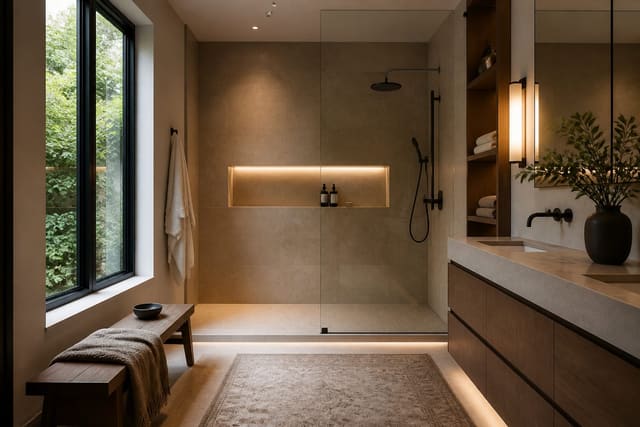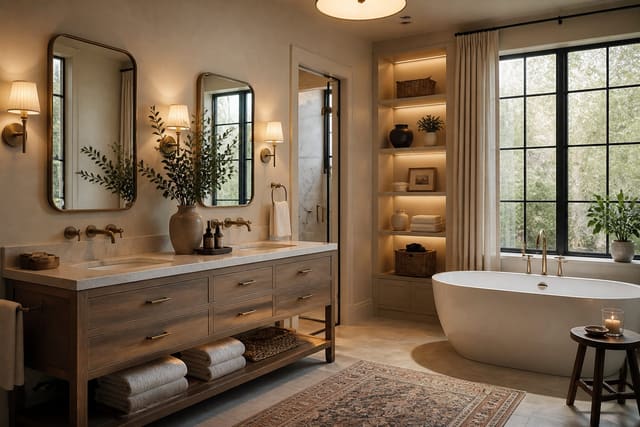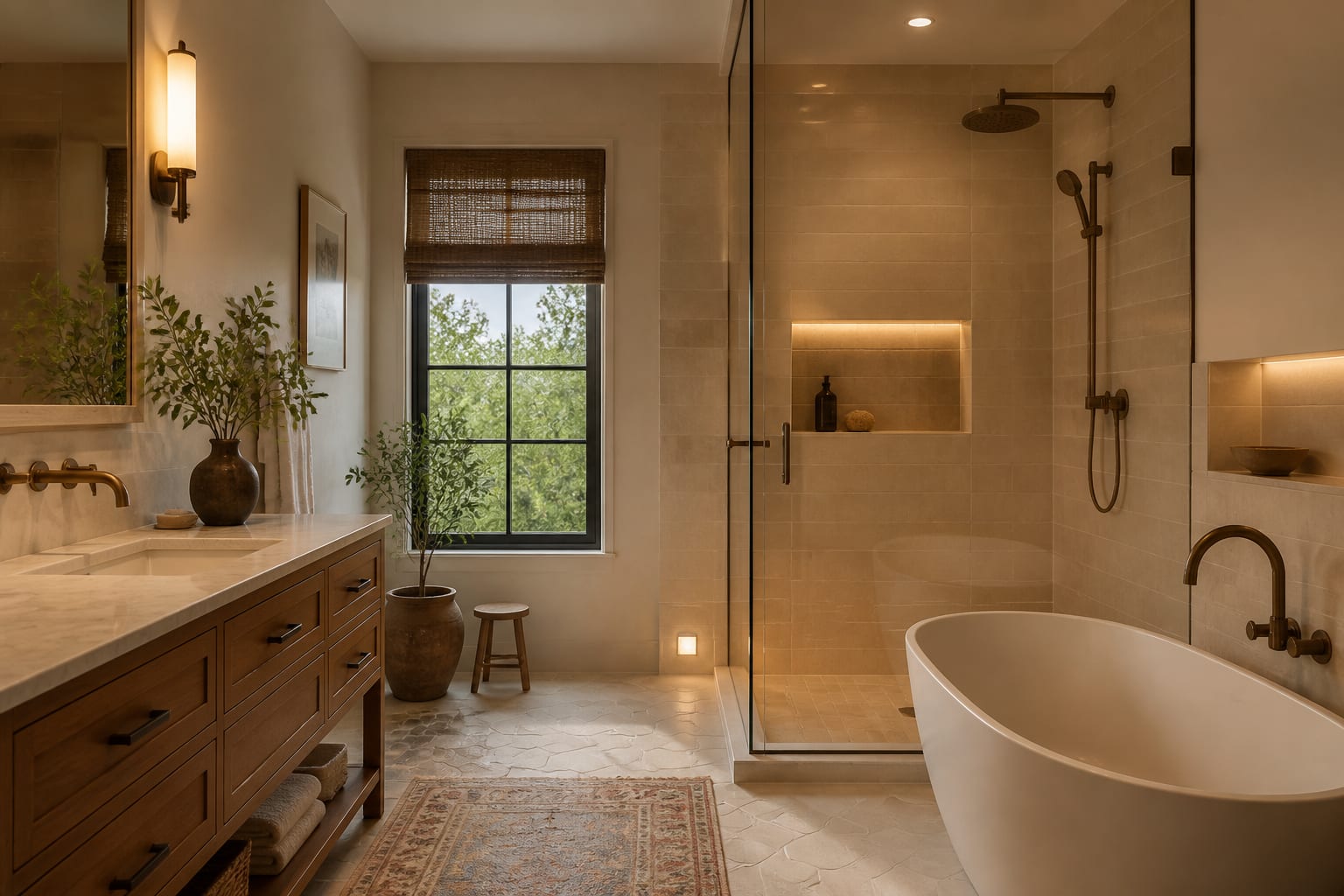
The best bathroom tile ideas separate floor and wall by function: textured, slip-rated tile underfoot and smoother finishes on walls, with grout color and pattern chosen deliberately rather than by trend. Get those calls right and the room stays safe, easy to clean, and stylistically durable well past whatever look is popular this year.
Floor Tile Versus Wall Tile
Floor and wall tile do different jobs, so treating them the same risks a slippery or oddly proportioned room. Floors need a porcelain with a textured surface and a coefficient of friction of 0.42 or higher wet, since they take traffic and standing water. Walls carry no traffic, so smoother, glossier, or more delicate finishes work fine there.
Scale should shift too: large-format tile on the floor for fewer seams, paired with smaller or more decorative tile on walls or in the shower. Running one tile across both can work in a tiny powder room, but it flattens a full bath. As a rule, go smoother and shinier up the wall, more textured and matte down to the floor, so the room stays layered while staying safe where it matters.
Shower walls take constant spray, so low-porosity porcelain or sealed stone outperforms chalky ceramic. A darker or mid-tone floor also hides hair and water spots better than pale tile between cleanings, which is why many white bathrooms ground themselves with a deeper floor.
See our guide to Walk In Shower Ideas for more.
Patterns, Layouts, and Large-Format Tile
Pattern gives a bathroom personality, but works best in one dose. Use one patterned tile, cement-look or zellige, in a single zone, balanced by plain field tile elsewhere so the eye has a place to rest. Pattern on every surface reads like an unfinished showroom.
Layout changes the read as much as the tile itself:
- Offset or running bond hides minor imperfections and suits long subway tiles; a 30% offset reads classic on 3-by-6-inch subway, while a half-offset can sag on long walls.
- Vertical stack stretches a low ceiling upward.
- Herringbone or chevron adds motion to an otherwise quiet field.
Large-format tile (12 by 24 inches up to slab panels) is the quiet workhorse: fewer grout lines mean less scrubbing and a room that looks bigger. It demands a flat substrate and a skilled installer to avoid lippage, so it costs more, but pays back in looks and maintenance for years. Let one patterned tile lead and keep the layout simple everywhere else; restraint reads as confidence.
For more, see Bathroom Vanity Ideas.
Grout, Niches, and Mosaic Accents
Grout color is strategic. Match it to the tile for a seamless plane, ideal on large-format walls; contrast it to make the grid itself the pattern, which suits geometric or subway layouts. Go a shade or two darker than instinct in wet zones, since bright white grout on a shower floor looks dingy within a year.
Use epoxy or high-performance grout in showers and on floors; it resists staining and mold far better than standard cement grout. Tight 1/16-inch joints suit rectified large-format tile, while handmade tile needs wider 1/8-inch joints to absorb irregularity.
The niche shows off tiling skill. Line it in a contrasting mosaic, or in the same slab as the surround for a monolithic look, and slope the base slightly so water drains instead of pooling. Mosaic earns its place at the shower floor, where dense grout lines add grip, and at the niche, where small tiles add close-range detail; spread across whole walls, its grout maintenance multiplies fast.
Slip Resistance and Safety
Slip resistance has real consequences, so choose with your feet, not just your eyes. Aim for a dynamic coefficient of friction of 0.42 or higher on wet floors and shower pans; manufacturers publish this rating, so check it before committing to a finish.
Texture and size both help. A matte or lightly textured surface grips better than polished, and smaller tiles mean more grout lines, which is exactly why a 2-inch mosaic works so well on a shower floor, with joints that channel water and give bare feet traction. A large glossy tile in the same spot turns hazardous once soaped up.
Carry the textured floor tile through the entire wet path, including the landing zone outside the shower and tub, rather than switching to something slick there. Heated floors help by drying the surface faster between uses. Save polished marble looks for walls or the vanity backsplash, where no one stands wet and barefoot.
Bring the Look Home with Re-Design
Tile is hard to picture from a small sample. Upload a photo of your bathroom to Re-Design and preview floor and wall tiles, grout colors, and patterns directly in your room. Testing a large-format porcelain against a patterned niche, or dark grout against light, in your actual space helps you commit before ordering tile that may look completely different at full scale.
Frequently Asked Questions
Can I use the same tile on floors and walls?
You can in a small powder room, but in a full bath it usually flattens the space and risks a slippery floor. A better approach pairs textured, slip-rated tile on the floor with smoother or more decorative tile on the walls, adding layering while keeping the wet zone safe underfoot.
What grout color should I choose?
Match grout to the tile for a seamless, calm surface, especially on large-format walls. Contrast it when you want the layout itself to be the pattern, like a subway grid. In showers and on floors, go a shade darker than instinct so grout doesn't look dingy within a year.
Is large-format or mosaic tile better for a bathroom?
Use both for different jobs. Large-format tile suits floors and main walls because fewer grout lines mean easier cleaning and a calmer look. Reserve mosaic for shower floors, where dense joints add grip, and niches, where small tiles add detail without multiplying maintenance across the whole room.
What coefficient of friction should bathroom floor tile have?
Look for a dynamic coefficient of friction of 0.42 or higher on any tile used on wet floors or shower pans. This rating is published by manufacturers and indicates enough traction to reduce slipping when the surface is wet and bare feet are involved.
How wide should grout lines be?
Rectified large-format tile suits tight joints around 1/16 inch, since the edges are precisely cut and align cleanly. Handmade tiles, like zellige, need wider joints around 1/8 inch to absorb their natural irregularity and prevent cracking at the edges.