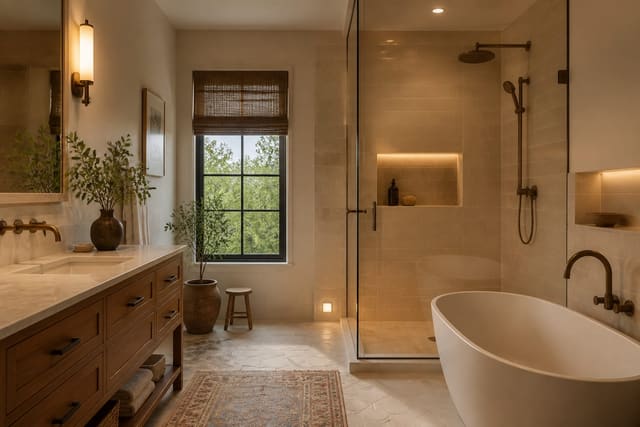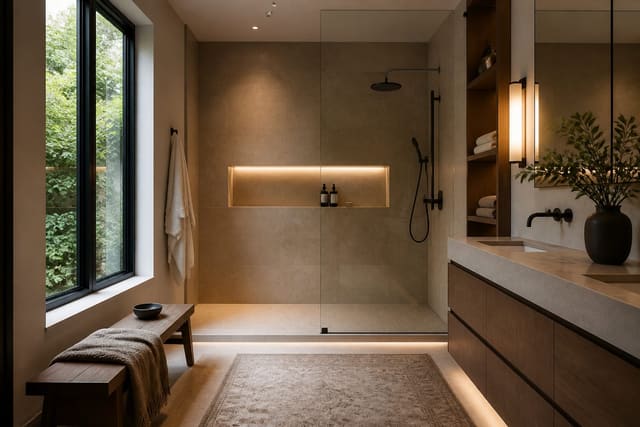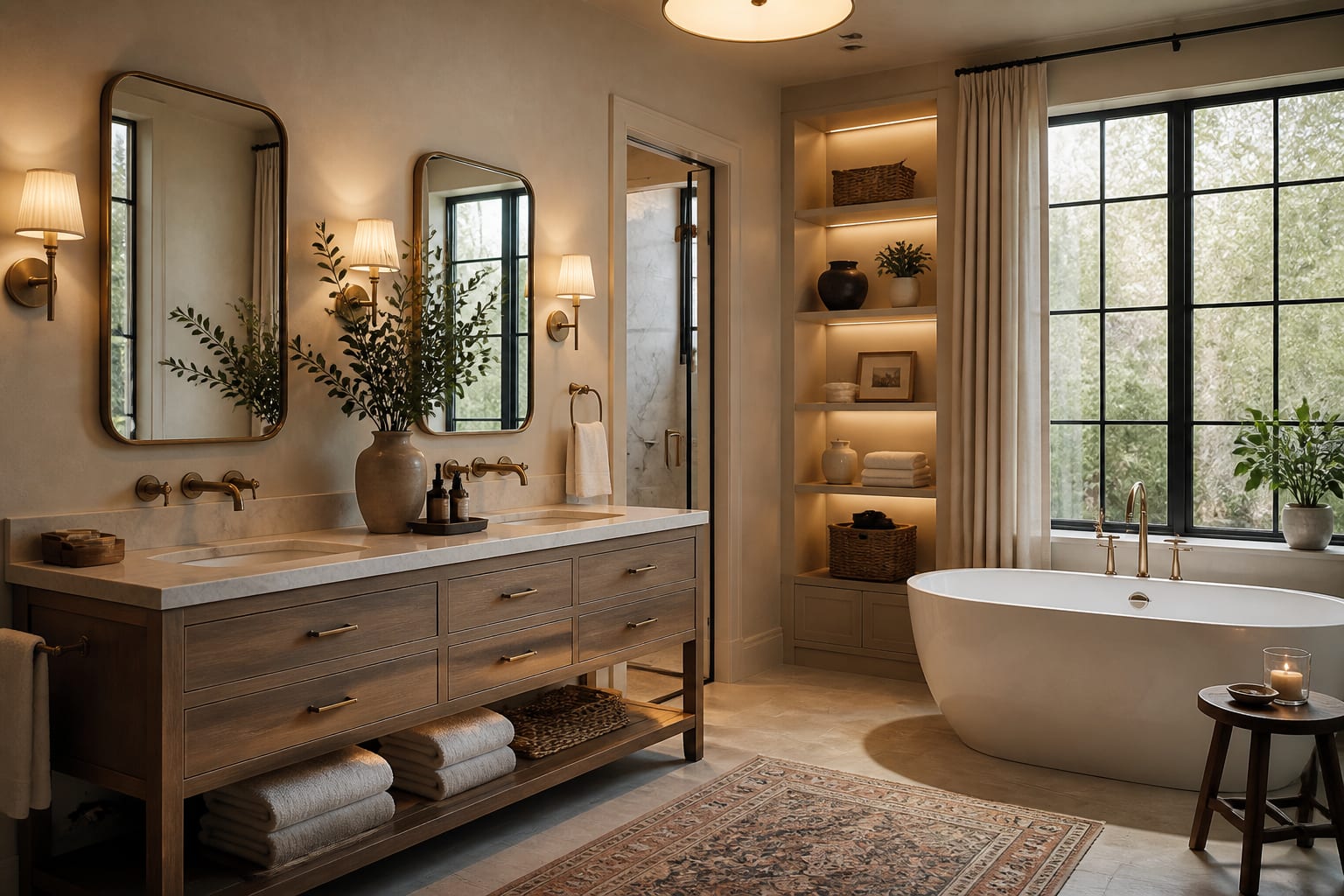
A vanity is the hardest-working piece in any bathroom, so choosing it deserves more thought than picking the first cabinet that fits. The right one settles three questions at once: where you store toiletries, how the sink drains, and how the whole room reads when you walk in. Floating units make a small room feel airier, while a freestanding double answers a busy morning routine. Counter material and sink style then set the tone. Before you commit, match the vanity width to your wall, your plumbing, and the way two people actually share the space each day.
Should you choose a floating or freestanding vanity?
Floating vanities mount to the wall and leave a gap of open floor underneath, which is the single fastest way to make a cramped bathroom feel roomier. That visible flooring stretches the visual footprint of the room, and the lack of legs makes mopping along the baseboard effortless. The tradeoff is structural: a wall-hung cabinet needs solid blocking inside the wall to carry its weight plus a loaded counter, so it suits a renovation more than a quick swap.
Freestanding vanities sit on the floor and bring deeper storage and a more grounded, furniture-like presence. They are simpler to install because the floor carries the load, and the toe-kick conceals plumbing without any framing work. A freestanding piece also tends to offer taller drawer banks, which families with stacks of towels and grooming gear appreciate.
Think about who uses the room. A guest powder room rewards the clean lines of a floating cabinet, while a shared family bathroom usually benefits from the raw capacity of a freestanding unit. Whichever you pick, confirm the finished counter height lands near 36 inches for adults, since the older 32-inch standard now feels low to most people.
See also our guide to Bathroom Tile Ideas for more on bathroom vanity ideas.
Single or double vanity, and what width fits?
Width drives this decision more than taste does. Single vanities come in standard widths of 24, 30, 36, and 48 inches, and a 30 or 36-inch cabinet handles one user with room to set down a toothbrush and a cup. If your wall runs shorter than 48 inches, a single sink is almost always the smarter call.
A double vanity only makes sense when you have 60 to 72 inches of clear wall. Below 60 inches the two basins crowd each other and you lose the counter buffer that makes sharing pleasant. At 72 inches each person gets a real station with elbow room and a drawer stack of their own.
Measure the wall, then subtract for door swings and any side clearance the cabinet needs. Remember that the listed size refers to the cabinet box, not the counter, which usually overhangs by about an inch on exposed sides. If you are torn between a tight double and a generous single with a long counter, the single often wins on daily comfort because uninterrupted counter space beats a second cramped sink.
For a related angle on bathroom vanity ideas, read Walk In Shower Ideas.
Which counter and sink combination works best?
Counter material sets both the look and the upkeep. Quartz resists stains and never needs sealing, which makes it the low-maintenance favorite for a humid bathroom. Natural stone like marble looks luxurious but wants resealing and shows etching from acidic products, so it rewards careful owners. A solid-surface counter with an integrated sink eliminates the seam where grime collects, giving you one continuous wipe-down surface.
Sink style changes the daily experience. An undermount basin sits below the counter, so crumbs and water sweep straight into the bowl with no rim to catch them. A vessel sink perches on top like a bowl and adds sculptural drama, but it raises the effective rim height and needs a shorter faucet, plus the exposed base demands more wiping around it.
For a busy household I lean undermount with quartz every time. For a statement powder room where looks outrank scrubbing, a vessel on a wood-tone counter earns its keep. Match the faucet hole configuration to the sink before ordering, since a vessel typically pairs with a tall single-hole faucet while an undermount accepts a standard widespread set.
How do storage and lighting finish the vanity?
Storage is where a vanity earns its place. Drawers beat doors for most items because you pull the contents out into the light instead of crouching to dig through a deep cabinet. A mix works best: one or two wide drawers for daily grooming gear, plus a door section sized to hide tall bottles and the bulky plumbing under the sink. U-shaped drawers that wrap around the P-trap reclaim space most cabinets waste.
Drawer organizers turn that capacity into order. Shallow trays corral makeup, dividers keep hair tools from tangling, and a single deep drawer swallows a hair dryer without a fight. Adding an outlet inside a drawer lets you charge a toothbrush or trimmer out of sight.
Lighting completes the picture. An overhead fixture alone throws shadows down your face, so flank the mirror with sconces mounted around 65 to 70 inches from the floor, at roughly eye level. Choose bulbs near 2700K to 3000K for a warm, flattering tone, and aim for enough total output that the mirror zone reads bright without glare. Good vanity light makes shaving and makeup genuinely easier.
- Mount a floating 48-inch vanity to expose the floor and open up a tight bathroom.
- Run a 72-inch freestanding double vanity so two people get separate sinks and drawer stacks.
- Pair a quartz counter with an undermount sink for a seamless, wipe-clean surface.
- Add a vessel sink on a wood-tone counter for a sculptural powder-room statement.
- Choose a 30-inch single vanity with a long counter when the wall is under 48 inches.
- Specify U-shaped drawers that wrap the P-trap to reclaim wasted under-sink space.
- Flank the mirror with eye-level sconces near 2700K instead of relying on one overhead light.
- Build an outlet into a top drawer to charge a toothbrush or trimmer out of sight.
Bring the look home with Re-Design
Picking a vanity from a showroom is hard because you cannot see it against your own tile and wall color. With Re-design you upload a photo of your bathroom and preview a floating cabinet, a 72-inch double, or a vessel sink in seconds, all sitting in your real space. Swap counter materials and finishes to see how quartz reads against your floor before you order anything. Trying several widths and styles in the room you actually have makes the final choice far less of a gamble.
Frequently Asked Questions
What is the standard height for a bathroom vanity?
Most modern vanities finish around 36 inches to the top of the counter, matching kitchen-counter height and easing strain on adult backs. Older builds used a 32-inch standard that now feels low. In a kids' bathroom a shorter 30 to 32-inch cabinet keeps the sink within easy reach for younger users.
How much space do I need for a double vanity?
Plan on 60 to 72 inches of clear wall for a comfortable double. Below 60 inches the two basins crowd together and you sacrifice the counter buffer between them. At 72 inches each person gets a genuine station with elbow room, drawer space, and a setting-down surface that makes sharing the bathroom painless.
Are vessel sinks practical for daily use?
Vessel sinks look striking but ask for more upkeep. Because the bowl sits on top of the counter, water and toothpaste collect around its exposed base and need regular wiping. They also raise the effective rim height, so confirm the finished sink edge lands at a comfortable level before committing in a busy family bathroom.
Should I pick drawers or doors for vanity storage?
Drawers win for most everyday items because you pull the contents into the light instead of crouching into a dark cabinet. A blend works best: wide drawers for grooming gear plus one door section to hide tall bottles and the under-sink plumbing. Drawer organizers then turn raw capacity into genuinely usable order.