A walk-in shower is the easiest way to make a bathroom feel modern, open, and effortless to use — but only if the unglamorous parts are handled. The look everyone wants is a curbless, glass-walled space you step into without a door; the part that makes it work is the slope, the drain, and the waterproofing underneath.
Get the substrate and drainage right and the rest is styling: where the bench goes, how the glass is set, which tile lands where. These walk in shower ideas cover both halves — the design moves that make the space feel generous and the practical decisions that keep water where it belongs and the whole thing easy to clean for years.
Curbless Entries and Drainage
A curbless shower is the upgrade that makes the biggest visual difference and the one most dependent on getting the floor right. With no curb to dam the water, the entire shower floor must slope toward the drain and the waterproofing must extend well past the opening into the bathroom floor. Skip that and the room floods; nail it and the shower flows seamlessly into the rest of the bath.
Drain choice drives the floor design. A traditional center drain needs the floor to pitch from all four sides, which on a large pan means a slightly dished, faceted surface that suits mosaic. A linear drain set along the back or entry wall lets the whole floor tilt in one clean plane toward a single line, which is what makes large-format floor tile possible in a curbless shower. Standard slope is about a quarter inch per foot toward the drain.
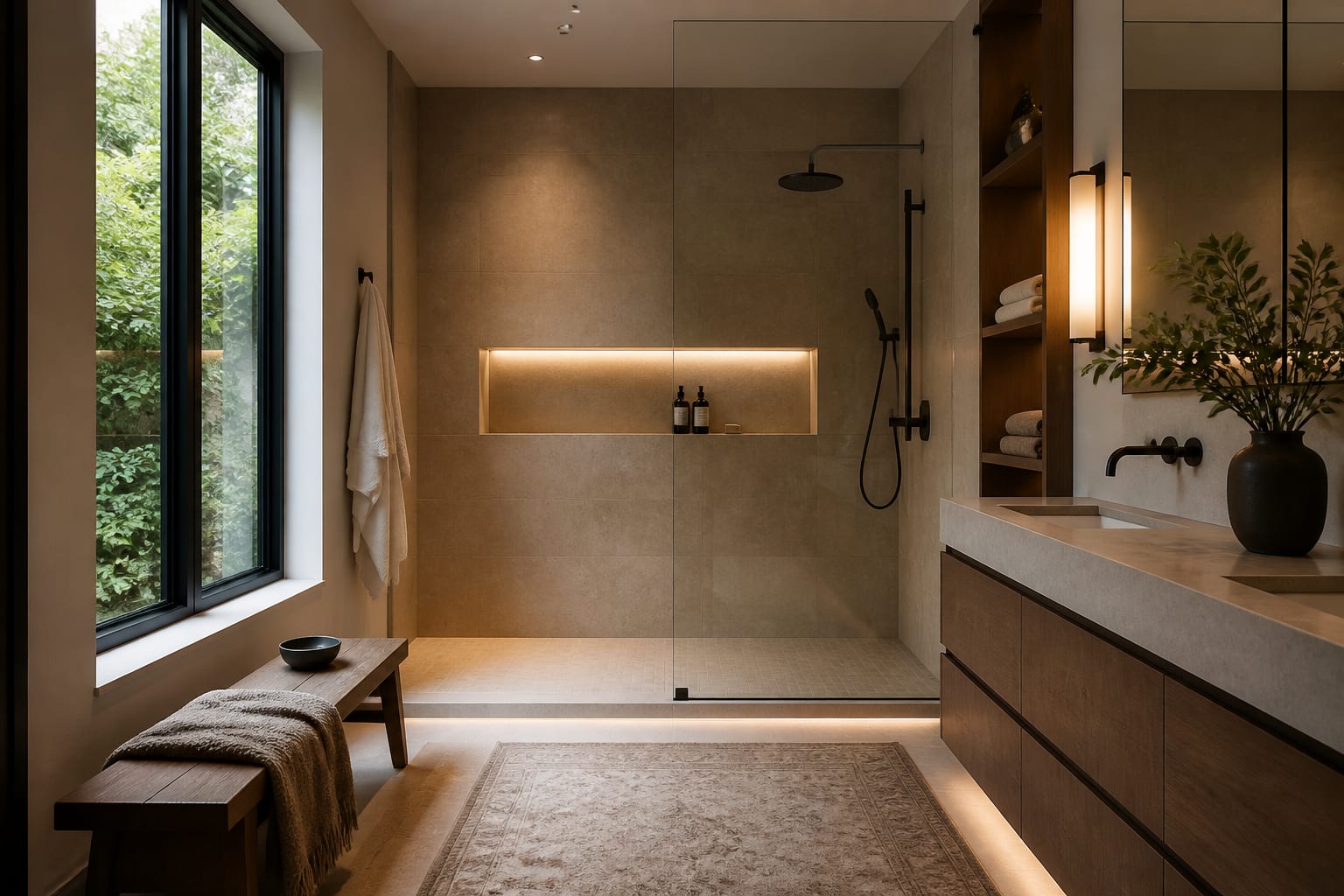
For a true curbless transition, the shower floor sits flush with the bathroom floor, so the subfloor often has to be recessed during framing — a decision that must happen before anything is tiled. A linear drain at the entry, sometimes called a threshold drain, catches water right at the opening and keeps it from migrating out. None of this shows in the finished room, which is exactly the point: the magic of a curbless shower is that the engineering disappears and you are left with an open, step-free floor that looks like it was always meant to be there.
See also our guide to Bathroom Tile Ideas for more on walk in shower ideas.
Glass Panels and Open Layouts
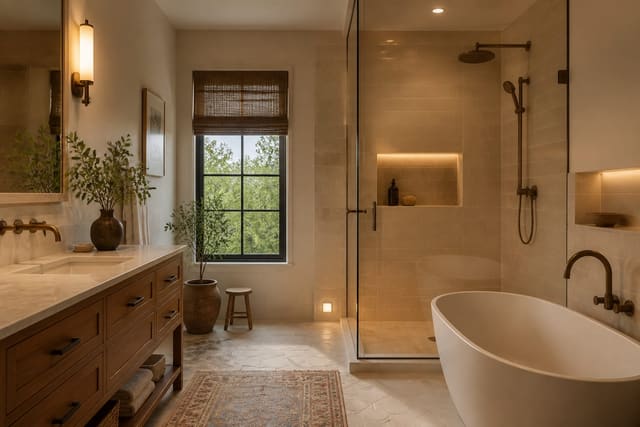
The glass is what makes a walk-in shower read open rather than boxed in, and the trend has moved decisively toward less of it. A single fixed panel — a half-wall or a full-height fixed pane with no door — blocks the bulk of the splash while keeping sightlines long and the room feeling larger. With a wide enough entry, roughly 30 inches or more, a doorless walk-in works without water escaping, provided the showerhead points away from the opening.
Frameless or minimal-framed glass keeps the look clean; heavy framing chops up the space and collects grime in every channel. Low-iron glass avoids the green tint of standard glass and shows tile truthfully, which matters if you spent on a feature wall. Where privacy or splash demands more enclosure, a return panel set at an angle still feels far airier than a full door-and-hinge box.
Layout decisions make the open feeling pay off. Aim the showerhead at the back or side wall, never at the glass or the entry, so spray stays contained without a door. Keep the controls reachable from just outside the spray so you can turn the water on and let it warm up while staying dry. If two people share it, a second showerhead or a handheld on the opposite wall makes a doorless layout genuinely comfortable. The whole strategy is to enclose as little as the splash physics actually require, which is almost always less glass than people assume.
For a related angle on walk in shower ideas, read Bathroom Vanity Ideas.
Benches, Niches, and Storage
A bench turns a shower from a stand-and-rinse box into a place you can linger, shave a leg, or sit out a long soak under hot water. Build it into the wall rather than dropping in a freestanding seat: a tiled, waterproofed bench at 17 to 19 inches high reads as part of the architecture and gives you no awkward gap to clean around. A floating bench cantilevered from the wall keeps the floor open and easy to mop, which makes a small shower feel larger.
If floor space is tight, a corner bench or a fold-down teak seat delivers the function without eating the footprint. Slope the bench top slightly, around a quarter inch, so water sheets off instead of pooling on the seat.
Storage should be recessed, not bolted on. A niche set into the wall keeps bottles off the floor and out of the way; size it generously, roughly 12 by 24 inches, and place it at chest height near the showerhead but out of the direct spray. Two smaller niches — one for each user, or one at standing height and one lower by the bench — beat a single cramped cubby. Line the niche in a contrasting tile or the same slab as the wall, and slope its base so it drains. The goal across bench and niche alike is built-in, wipe-clean surfaces with no suction caddies, no rusting wire racks, and nothing perched precariously on the bench edge.
Tile and Fixtures
Tile choice in a walk-in shower has to answer to water first and looks second. The floor needs traction: a small-format tile or mosaic at 2 inches gives plenty of grout lines for grip and lets the surface follow the slope to the drain. Walls can go large-format for fewer seams and easier cleaning, or carry a feature tile on the back wall as the room's focal point while the side walls stay plain. Use a low-porosity porcelain or properly sealed stone so the constant spray does not stain or etch.
Grout matters more here than anywhere in the bathroom. Epoxy grout in the shower resists mold and staining and keeps the joints crisp under daily soaking. A mid-tone grout hides the inevitable soap film better than a stark white that grays within a season.
Fixtures finish the design and decide how the shower feels to use. A rain head mounted overhead delivers a drenching, gentle flow but does not rinse shampoo quickly, so pair it with a handheld or a standard wall head for practical use. Mount the main head around 80 inches high so it clears a tall user, and set a separate handheld on a slide bar reachable from the bench. A thermostatic valve holds the temperature steady when a faucet elsewhere runs, which is the difference between a comfortable shower and a startling one. Match the metal finish across head, valve, and handheld so the wet wall reads intentional rather than assembled from leftovers.
- Go curbless so the shower floor runs flush into the room and removes the step entirely.
- Set a single fixed glass panel instead of a door to keep the space open and easy to clean.
- Build a waterproofed bench at 17 to 19 inches so it reads as architecture, not an add-on.
- Recess a 12-by-24-inch niche at chest height, out of the direct spray, for bottles.
- Run a linear drain along one wall so the floor slopes in a single clean plane.
- Aim the showerhead at the back wall, never the entry, so a doorless layout stays dry.
- Tile a 2-inch mosaic floor for grip and large-format walls for fewer grout lines.
- Pair an overhead rain head with a handheld on a slide bar for quick, practical rinsing.
Bring the look home with Re-Design
A walk-in shower lives or dies on how open it feels, which is hard to judge from a floor plan, so upload a photo of your bathroom to Re-Design and preview the curbless layout, glass panel, and tile in place. Seeing whether a doorless entry reads generous or exposed, and how a feature wall plays against plain side tile, helps you settle the layout before any waterproofing or framing decisions get locked in.
Frequently Asked Questions
Does a curbless shower need a special drain?
A linear drain along one wall makes a curbless shower far easier, because the whole floor can slope in a single plane toward one line, which also allows large-format floor tile. A center drain works too but requires the floor to pitch from all four sides. Either way, the waterproofing must extend past the opening into the room.
Can a walk-in shower work without a door?
Yes, with the right geometry. Give the entry at least 30 inches of width, point the showerhead at the back or side wall away from the opening, and use a fixed glass panel to catch the main splash. Done correctly, a doorless walk-in stays dry outside the shower while feeling far more open than an enclosed box.
How high should a shower bench be?
Build a fixed shower bench at 17 to 19 inches high, the same range as a comfortable chair seat. Make it about 15 inches deep, waterproof it as part of the wall, and slope the top a quarter inch so water sheets off. A floating or corner bench keeps the floor open and easier to clean in a smaller shower.