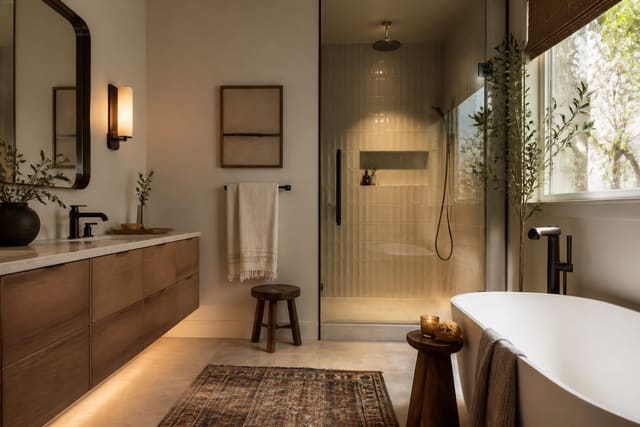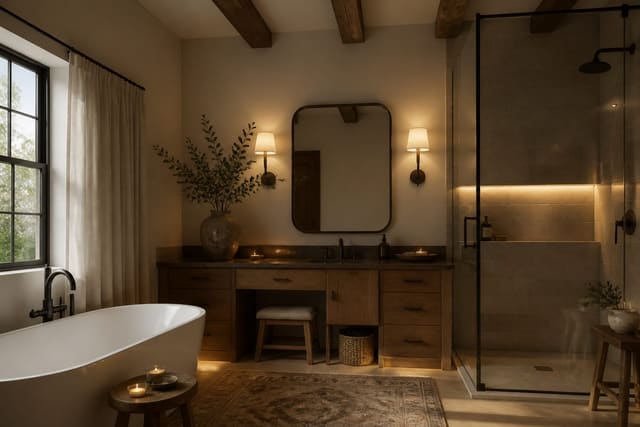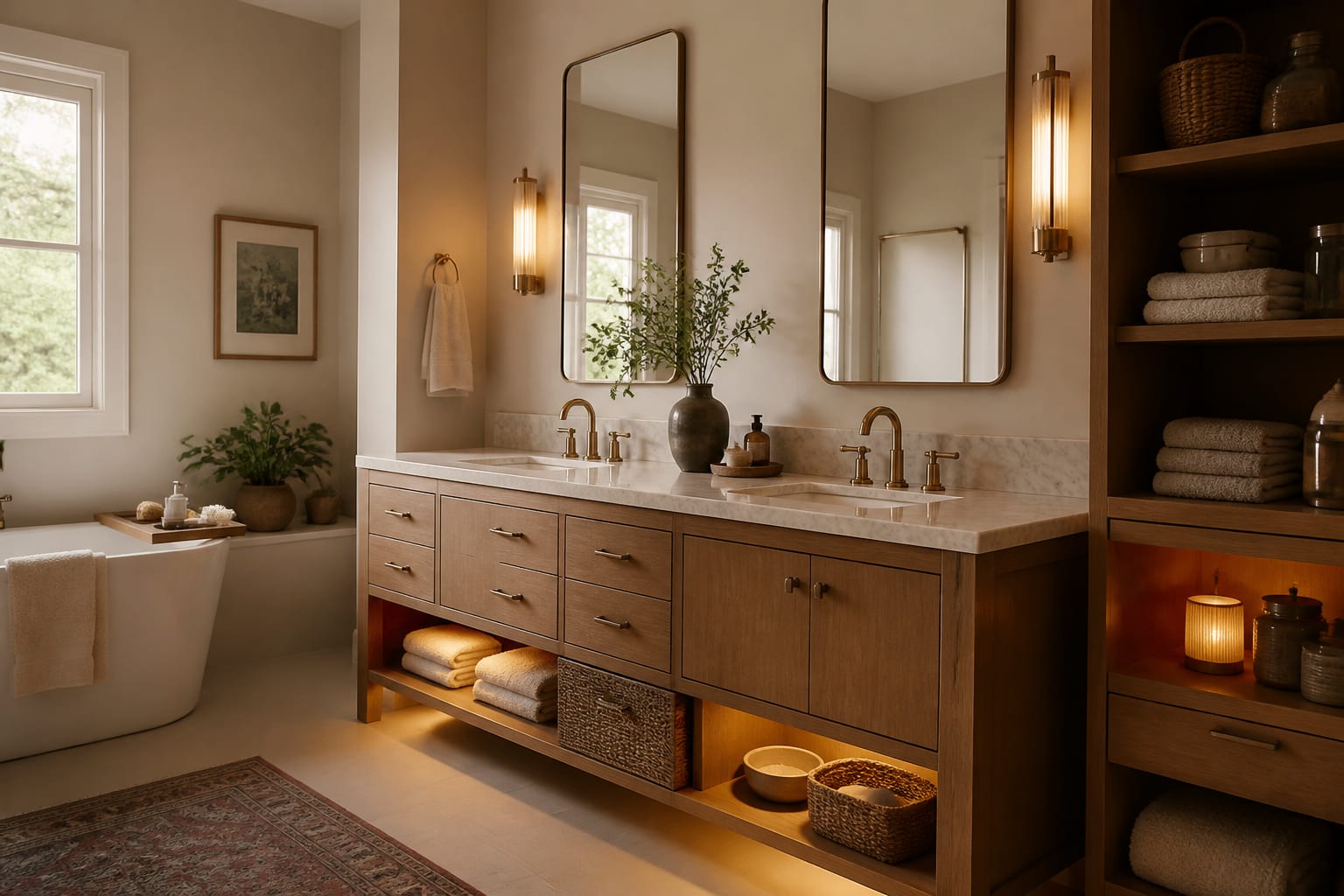
Bathrooms run out of storage faster than any room because every product is small, wet, and homeless. The fix is not one big cabinet but a layered plan that uses the walls, the space above the toilet, and the dead inches inside drawers. The best storage works with the room's bones: a recessed niche between studs steals zero floor space, while a tall linen tower stacks capacity into a narrow footprint. Done well, storage stays invisible and your counters stay clear. Below are the moves that add real capacity, plus the mistakes that quietly waste the space you already have.
How do recessed niches add storage without taking space?
A recessed niche is the most space-efficient storage a bathroom can have because it lives inside the wall rather than projecting into the room. By cutting into the cavity between two studs, you gain a shelf that adds zero footprint to the floor. Standard framing places studs 16 inches on center, which leaves a usable opening of about 14 inches wide once you account for the framing on each side.
Niches shine in the shower, where a recessed shampoo shelf beats a rattling corner caddy, and beside the vanity for everyday bottles. Depth is limited to the wall thickness, typically about 3.5 inches in a standard interior wall, so plan for slim items rather than bulky ones.
The catch is that niches are a renovation move, not a weekend swap, since they require opening the wall and confirming no plumbing or wiring runs through the bay. On an exterior wall, insulation usually rules a niche out. When you can build one, tile it to match the surrounding wall so it reads as part of the design rather than a hole. Even one well-placed niche removes a surprising amount of clutter from the counter and the tub ledge.
See also our guide to Save Money Bathroom Remodel for more on bathroom storage ideas.
What goes above the toilet and in tall cabinets?
The wall above the toilet is the most wasted real estate in the average bathroom. An over-toilet shelf unit or a wall-mounted cabinet reclaims that vertical strip for towels, baskets, and backup supplies without stealing any floor space. Leave about 24 inches of clearance from the top of the tank to the lowest shelf so the lid lifts freely and the space does not feel cramped.
When you have a sliver of floor to spare, a tall linen cabinet is the capacity champion. A tower just 12 to 18 inches wide stacks five or six shelves of folded towels, paper goods, and cleaning supplies into a footprint that barely registers in the room. Adjustable shelves let you size each bay to what it holds.
Between these two, most bathrooms close their storage gap without any demolition. Mount the over-toilet unit into studs or use heavy-duty anchors, since loaded shelves get surprisingly heavy. Reserve the highest shelves for things you rarely reach for, like spare bath sheets, and keep daily items at eye level. Baskets on these shelves corral loose small items so the open shelving stays tidy instead of becoming a cluttered ledge.
For a related angle on bathroom storage ideas, read Bathroom Lighting Design Guide.
How do drawer organizers and baskets reclaim hidden space?
An empty vanity drawer wastes most of its volume the moment you drop loose items into it, because everything slides to the back in a tangle. Drawer organizers fix that by dividing the space into purposeful zones. Shallow trays hold makeup and razors, narrow dividers stand hair tools upright, and a single deep slot keeps a hair dryer from rolling around. Spring-loaded dividers adjust to whatever you store and stop bottles from tipping every time the drawer opens.
Baskets do the same job on open shelves and inside cabinets. A row of matching bins turns a chaotic shelf into labeled, pull-out storage, so grabbing the first-aid kit means sliding out one basket instead of excavating a pile. Use them under the sink to corral cleaning sprays around the P-trap, where loose bottles otherwise topple.
The goal with both is to give every item a fixed home so the space stays usable over time. Measure the interior of your drawer or shelf before buying organizers, since a tray an inch too wide will not drop in. Clear or labeled bins beat opaque ones because you can see what is inside without pulling everything out, which keeps the system honest months after you set it up.
Where do hooks, rails, and the door come in?
Hooks are the cheapest storage upgrade in any bathroom and the most underused. A single row of robe hooks mounted around 60 to 70 inches from the floor holds towels and robes flat against the wall, freeing the counter and stopping the damp pile that breeds on a chair. Hooks dry towels faster than bars because air circulates around the folded fabric.
A leaning ladder rail brings the same idea with style, propping against the wall to hold several towels on its rungs without any heavy mounting. It suits a room with a few free inches of floor and adds a warm, furniture-like note. The back of the door is another forgotten surface: an over-the-door rack or a set of hooks turns it into storage for robes, hand towels, or a hanging organizer of small bottles.
The principle tying these together is moving storage off the counter and onto vertical surfaces that were doing nothing. Walls, doors, and the air above fixtures all hold weight you are not using. Combine a niche, an over-toilet shelf, a linen tower, organized drawers, and a few well-placed hooks, and even a tiny bathroom stops feeling like it is drowning in bottles and damp towels.
Here are the common mistakes to avoid: - Skipping the wall above the toilet and leaving that prime vertical strip completely empty. - Buying drawer organizers before measuring the drawer's interior, so the trays will not drop in. - Cramming bulky bottles into a 3.5-inch-deep niche meant for slim shower items. - Mounting an over-toilet shelf with light anchors that loaded shelves quickly pull from the wall. - Hanging towels on a single bar where they stay damp instead of spreading them across hooks. - Cutting a recessed niche into an exterior wall, ignoring the insulation and framing that block it.
Bring the look home with Re-Design
Storage additions are easy to misjudge, since a tall linen tower or an over-toilet shelf can either fit beautifully or crowd a small bathroom. With Re-design you upload a photo of your room and preview a recessed niche, a 16-inch linen cabinet, a ladder rail, or a row of hooks placed exactly where you would build them. See how a linen tower reads against your tile and whether the over-toilet unit clears the tank before you buy or cut into a wall. Testing each storage idea in your real space keeps a clutter fix from becoming a new mistake.
Frequently Asked Questions
How wide can a recessed bathroom niche be?
With studs framed 16 inches on center, a niche fits a usable opening of about 14 inches wide once you allow for framing on each side. Depth is limited to the wall thickness, usually around 3.5 inches in a standard interior wall, so it suits slim bottles and shampoo. A wider niche means reframing, which adds cost and complexity.
How much clearance does over-toilet shelving need?
Leave roughly 24 inches of clearance from the top of the tank to the lowest shelf so the lid lifts freely and the area does not feel cramped. Mount the unit into studs or with heavy-duty anchors, since loaded shelves get heavy fast. Reserve the highest shelves for rarely used items and keep daily supplies within easy reach.
What is the best way to organize a vanity drawer?
Divide the drawer into zones with trays and dividers so each item has a fixed home and nothing slides into a tangle. Shallow trays hold makeup and razors, narrow dividers stand hair tools upright, and a deep slot keeps a hair dryer contained. Measure the drawer interior first, because an organizer an inch too wide simply will not fit inside.
Are hooks better than towel bars for storage?
Hooks usually win for drying because air circulates around the folded towel instead of trapping moisture against a flat bar. They also hold more in less space and free up the counter. Mount a row around 60 to 70 inches from the floor for robes and towels, and add hooks to the back of the door for extra hanging room.