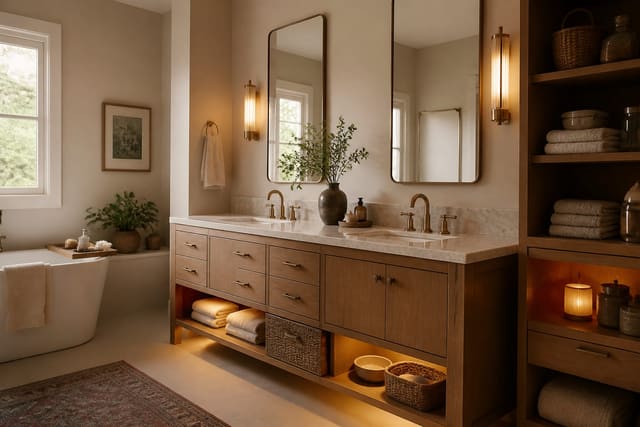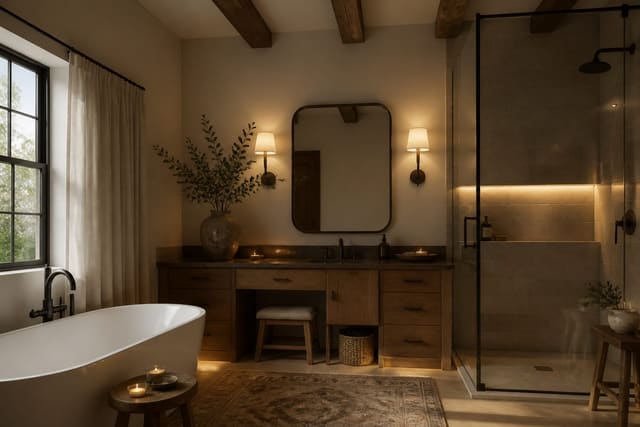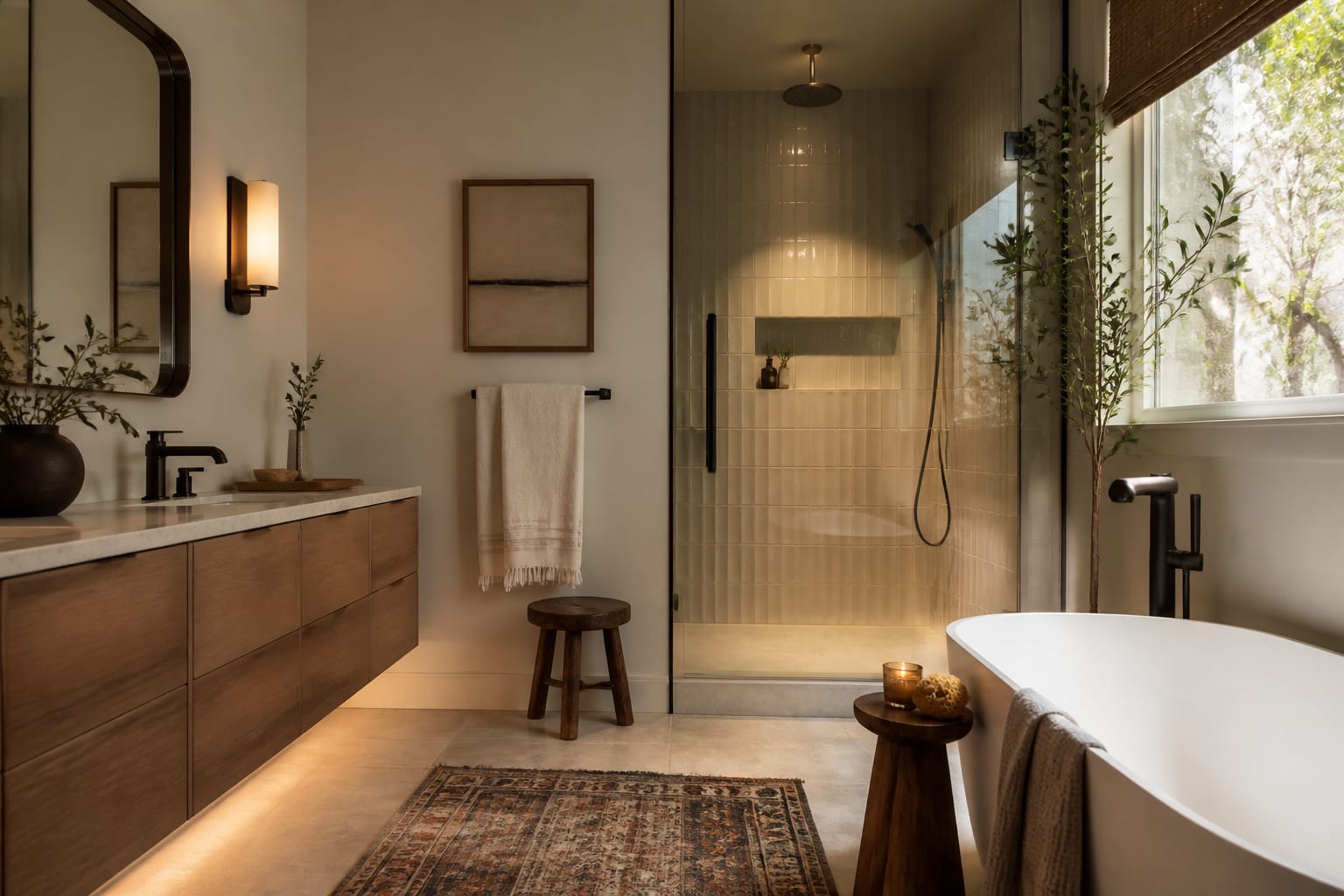
A bathroom remodel does not have to cost $25,000 to look like it did. The single biggest lever is leaving the plumbing where it is, because moving a toilet or shower drain three feet can add $1,500 to $3,000 for no visible payoff. My honest opinion: most people overspend by demolishing things that only needed cleaning, refinishing, or a smarter swap. Spend on the surfaces your hands and eyes hit every day, and leave the bones alone.
Where the money actually goes in a bathroom
Before you cut anything, you need to know what a bathroom remodel is made of. Labor is usually 40% to 60% of the total, which means every demolition decision you avoid is the cheapest savings available. A standard 40-square-foot hall bathroom carries about 80 square feet of tile once you wrap the walls of a tub surround, and tile installation alone runs $7 to $14 per square foot in labor on top of materials. Understanding that split changes how you shop, because it tells you that a cheaper tile rarely moves the total much when the labor to set it stays the same either way.
Fixtures are where sticker shock hides. A serviceable toilet is $150 to $350, but a designer model can run $700 without flushing any better. The same gap shows up in faucets, where a solid brass unit at $120 costs a fraction of a $400 boutique piece that performs identically. The trap is assuming price equals quality at the consumer tier; past about $200 on a faucet, you are mostly paying for the name and the finish, not the valve inside. I would rather put that saved $280 toward a quartz vanity top that survives a decade of toothpaste and hairspray.
The one category I never recommend trimming is waterproofing. A proper shower pan and backer board cost a few hundred dollars and prevent a $5,000 rot-and-mold repair two years later. Cut the cosmetic budget all you want, but the membrane behind the tile is not the place to save. Think of waterproofing as the insurance policy that lets the rest of your budget take risks.
A line-item budget that keeps the total under $9,000
Here is how I would split a realistic mid-budget remodel that still looks intentional. These are 2026 US national midpoints for a 40-square-foot bathroom, and you can shift dollars between lines as long as the waterproofing stays funded.
- Vanity and countertop: $1,400 for a 36-inch unit with a quartz top
- Faucet, showerhead, and valve trim: $450 for matched solid-brass fixtures
- Toilet: $300 for a comfort-height two-piece with a quality flush
- Tile and waterproofing materials: $1,100 for the floor plus a tub surround
- Tile and fixture labor: $3,200 if you hire it out, near $0 if you DIY the demo
- Paint, mirror, lighting, and hardware: $650 for the finishing layer
- Contingency: $900 held back for the surprise behind the wall
That lands around $8,000 installed, or closer to $4,800 if you handle demolition and paint yourself. The savings is concentrated in two places: doing your own teardown and refusing to relocate any drain. Notice that the contingency line is not optional padding; older homes almost always reveal something, whether it is a soft subfloor or a galvanized supply line that should be swapped while the wall is open. Funding that surprise on purpose is far cheaper than financing it as a panicked midproject change order.
Common mistakes to avoid
The costliest error is gut-renovating a layout that already worked. If the toilet, sink, and shower are roughly where you want them, moving them buys you nothing but plumbing invoices. I have watched people spend $2,500 shifting a vanity 18 inches for a result no guest will ever notice. A fresh finish on the existing footprint reads as a brand-new room for a fraction of that.
The second mistake is buying every fixture before measuring the rough-in. A standard toilet rough-in is 12 inches from the wall to the drain center, but older homes hide 10-inch and 14-inch setups that will leave your new toilet unusable. Measure first, then order, or budget a 20% restocking fee into your fantasy. The same caution applies to vanities, where a 30-inch cabinet and a 36-inch cabinet look nearly identical online but fit very differently against your real wall.
The third is chasing trendy materials that age badly. Glossy white subway tile and a simple quartz top will read as clean in ten years, while a bold patterned floor you loved this season often looks dated by the time you sell. Save your boldness for the towels and the paint, both of which cost under $100 to change. The cheaper a thing is to swap, the more aggressive your color choices can safely be.
The last trap is skipping the exhaust fan upgrade. A weak fan turns your fresh remodel into a mildew farm, and a 110 CFM unit costs about $90 installed alongside work you are already doing. Skipping it to save that small sum is how a $9,000 project ends up needing repainting in eighteen months.
Preview your bathroom remodel in Re-Design
Frequently Asked Questions
How much can I realistically save by doing my own demolition?
Demolition and haul-away typically run $800 to $1,500 when contracted, and most of it is unskilled labor you can handle in a weekend. Doing it yourself also lets you inspect for hidden damage before the trades arrive, which prevents change-order surprises. Just confirm you are not cutting into anything load-bearing or live.
Is refinishing a tub worth it, or should I replace it?
Refinishing a sound cast-iron or steel tub costs $400 to $600 and lasts 8 to 12 years with care, while replacement runs $3,000-plus once you factor in tile and plumbing. If the tub is structurally fine and only looks tired, refinishing is the obvious win. Replace only if it leaks, is cracked, or you are changing the footprint anyway.
Where should I spend a little more for storage?
A vanity with real drawers instead of a single cabinet door is worth the $150 premium because daily organization is what makes a small bathroom feel finished. For deeper ideas on squeezing storage out of tight square footage, see our guide on smart bathroom storage. Good storage is the difference between a remodel that stays clean-looking and one that drowns in clutter by month two.
Does lighting really change how a remodel feels?
Yes, and it is one of the cheapest upgrades available. Swapping a single overhead fixture for layered vanity lighting changes how the whole room reads, and our bathroom lighting guide breaks down placement and color temperature. Aim for 2700K to 3000K bulbs near the mirror so skin tones look natural.