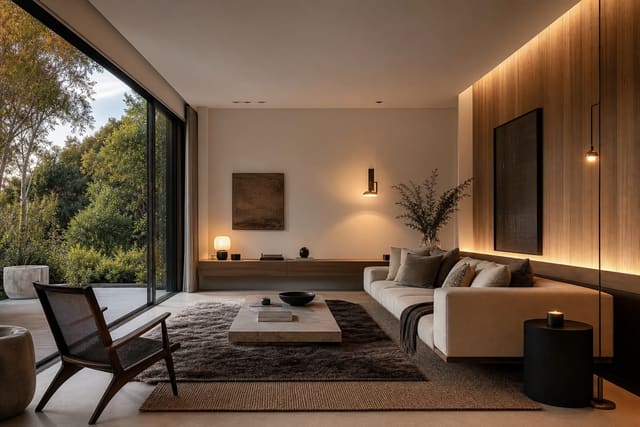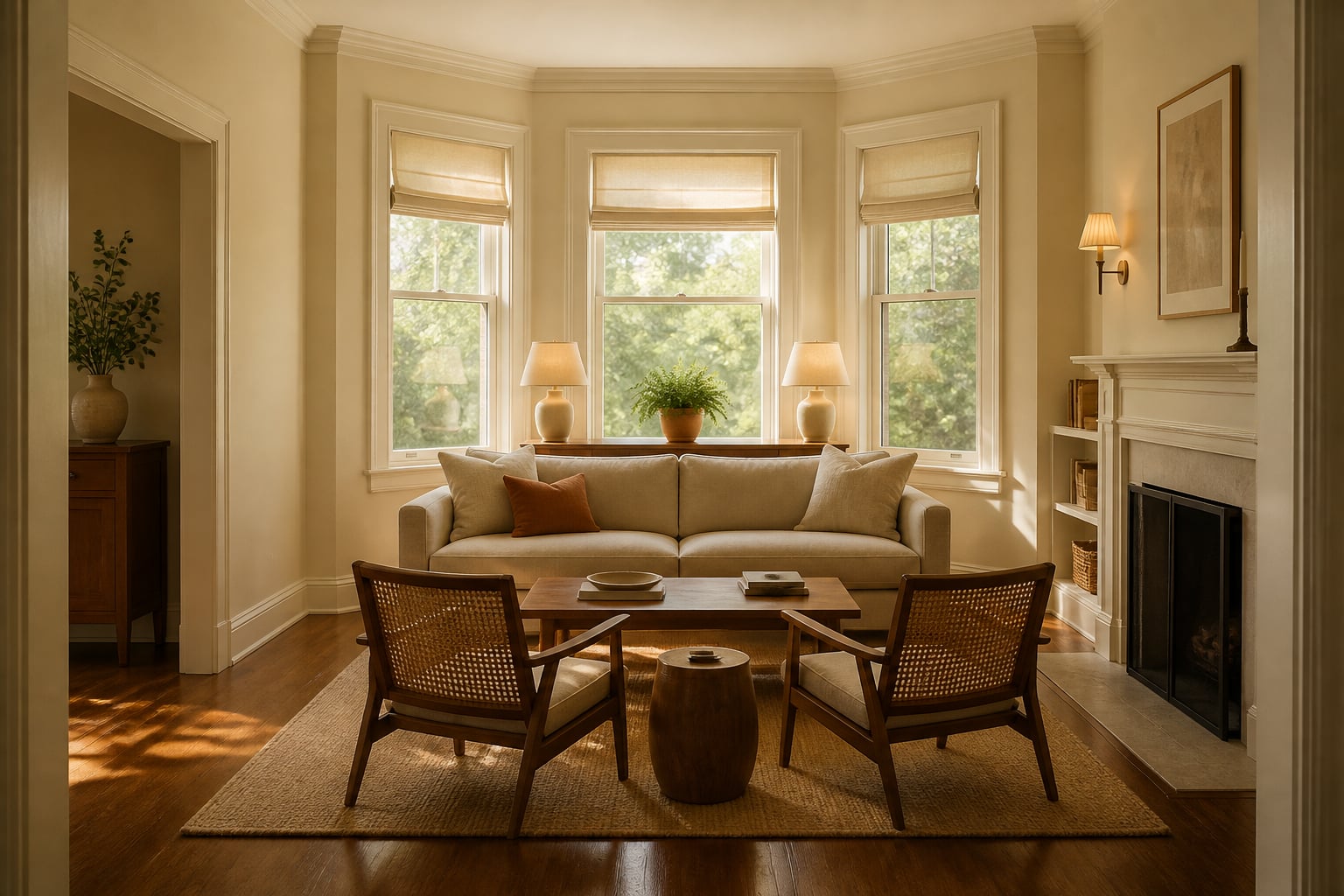
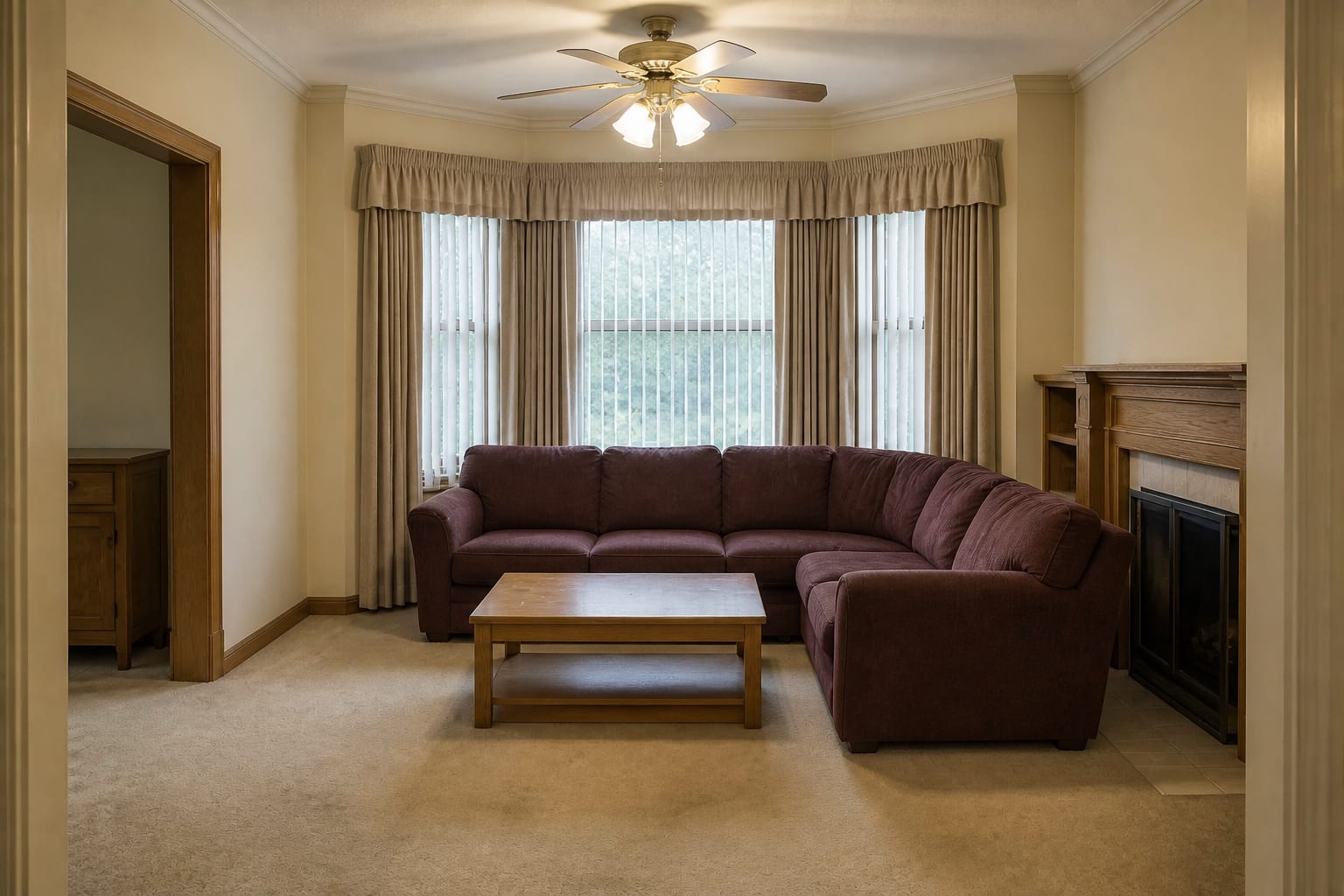
The best bay window furniture arrangement uses low-profile pieces below 32 inches — a reading chair, two small club chairs, a cushioned bench, or a round pedestal table — pulled 12+ inches off the glass with curved curtain hardware fitted to each angled pane. This keeps the window doing its main job: delivering light and framing a view, not disappearing behind furniture.
"A bay window works hardest when the furniture lets it stay a window, not a blocked corner."
What do you put in front of a bay window?
Give the bay one clear job: reading, conversation, plants, storage, or a breakfast perch. Best choices: a pair of small-scale chairs, a single lounge chair with a table, a bench, a round pedestal table, or a layered plant stand covering no more than the lower third of the view.
Keep chair backs under 32 inches and tables under 18 inches — a tall wing chair turns the bay into a shadowy barricade from across the room. If the bay projects only 18-24 inches, use a cushion-topped bench or 12-15 inch plant ledge instead of a full chair. A 36-inch-deep bay can hold a real reading chair as long as its front legs stay clear of the room's main path.
Hang drapery outside the bay opening, or use inside-mount shades on tricky angles. The same logic behind corner window treatment choices applies: the covering should solve privacy and glare without tangling the architecture.
Which bay window living room layout fits your room?
The right layout depends on whether the bay is the focal point, a side feature, or the room's main light source. Stand at the entry and check what the window does to the first view before choosing.
| Layout | Best bay condition | Key spec |
|---|---|---|
| Two chairs + round table | Wide, symmetrical bay | 26-30" chairs, 16-20" table, 3" clearance from trim |
| One chair + ottoman | Bay near fireplace/TV/sofa | Angle chair 15-30° toward room |
| Bench seating | Shallow bay, high foot traffic | Seat height 17-19", 24" drawer clearance |
| Round pedestal table | Generous, deep bay | 30-36" diameter, pedestal base for legroom |
Test this on your own room photo with ReDesign before committing — keep the doorway, walls, windows, and main furniture visible so the preview solves the room you actually have.
How do you arrange the sofa around a bay window?
The sofa should face the room's main purpose while the bay supports it, not competes with it. A bay can be the prettiest wall and still be the wrong place to aim every seat.
If the bay centers the longest wall, float the sofa opposite it so the bay becomes the view. Keep the coffee table 14-18 inches from the sofa edge, then add a low bench or two small chairs inside the bay for layered depth. This works best when there's no fireplace competing for anchor status.
If the bay sits off to one side, place the sofa where conversation or the TV works best, then treat the bay as secondary. An angled side chair can bridge the two zones. In narrow rooms, keep the bay visually light with glass-top tables or open-leg chairs; if clutter keeps landing there, fix living room storage that avoids visual chaos instead of asking the bay to hide everything.
Leave 3-6 inches around radiators or vents so air can move — skip closed storage that traps heat. Use an 8x10 rug to connect the bay to the main seating group, or match fabric, wood, or metal finishes across both zones so the bay doesn't read as a separate waiting area.
Common bay window furniture arrangement mistakes
- Filling the bay just because it's empty. Sometimes daylight is the object; one low table or chair beats a full vignette.
- Blocking curtain movement. Open and close every window covering with furniture in place before buying — dragging fabric will annoy you daily.
- Choosing furniture with an unfinished back. A bay chair is seen from the room and often the street, so pick a finished back or open frame.
- Ignoring pets. If a crate or bed must sit near the window, make it intentional — see integrating dog crate furniture into a room.
- Crowding all the good light into the bay. Add a floor lamp near the main sofa with warm 2700-3000K bulbs so the room doesn't go lopsided at night.
Use AI to preview your bay window before you commit
Bay windows are an angle, depth, light, and traffic problem, not just a taste problem. Upload a photo from the living room entry, one facing the bay head-on, and one from the sofa or TV wall — those views reveal whether an arrangement improves the room or just decorates an awkward corner.
Run specific comparisons: two low linen chairs with a 16-inch round table and Roman shades; a curved cushion bench with drawers and full-length curtains outside the bay; or a single reading chair with a floor lamp and low plants. Check whether the curtains still clear, the bench reads heavy from the doorway, and a 30-inch walking path remains.
AI can't confirm radiator clearance, hardware, custom cushion sizes, or doorway fit, but it can show whether the bay wants to be a nook, a plant wall, storage, or open negative space before you spend money. Once you pick a direction, tape the footprint on the floor and walk the room to confirm it still feels open.
Frequently Asked Questions
Should furniture face into the bay window or away?
Angle the main seating so one sightline includes the bay — it becomes part of the view. Backs to the bay erase the architectural feature you paid for.
What furniture works inside a bay window?
A built-in bench with storage and cushions, two angled club chairs with a small table, or a single anchor chair plus floor lamp all work. Avoid a sofa across the bay since it blocks the angled walls.
How do I treat windows in a bay?
Fit each pane individually with shades or curtain rods bent to follow the angles. Spanning the entire bay with one straight rod creates a boxed-in look that hides the architecture.
Can a bed go in front of a bay window?
Yes — center the bed to the middle pane with tall lamps or sconces flanking it. This works especially well in primary bedrooms, where the bay floods the bed with morning light.
Do bay windows need a radiator cover?
Older homes often have a radiator under the bay. A custom bench cover with a metal grille and tipped cushion turns it into a reading nook while preserving heat flow.
> Try this: Ready to see this on your own room? Open ReDesign and run the preview.
Three transformations to try
1. Living room with sofa angled into bay and reading nook bench 2. Bedroom with bed centered to bay window with flanking sconces 3. Bay window with two club chairs and side table