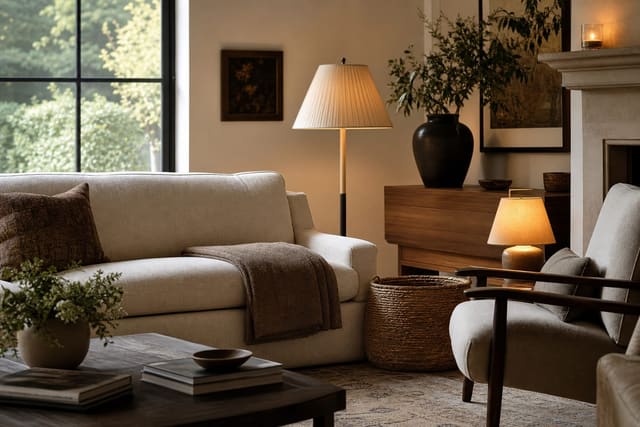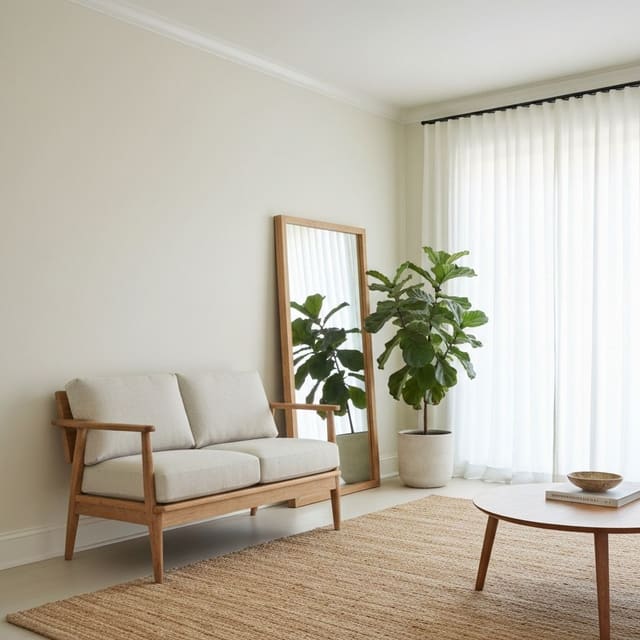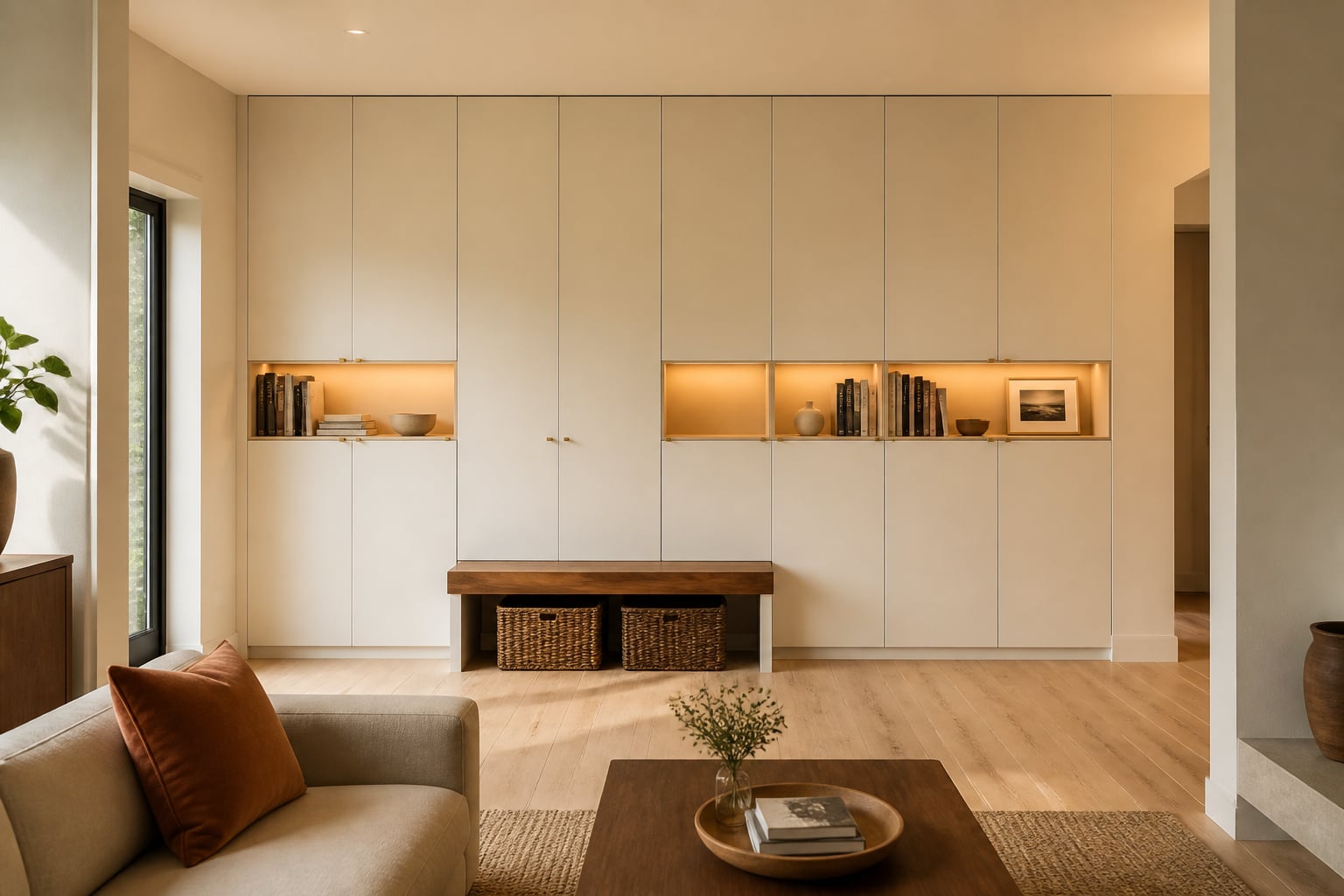
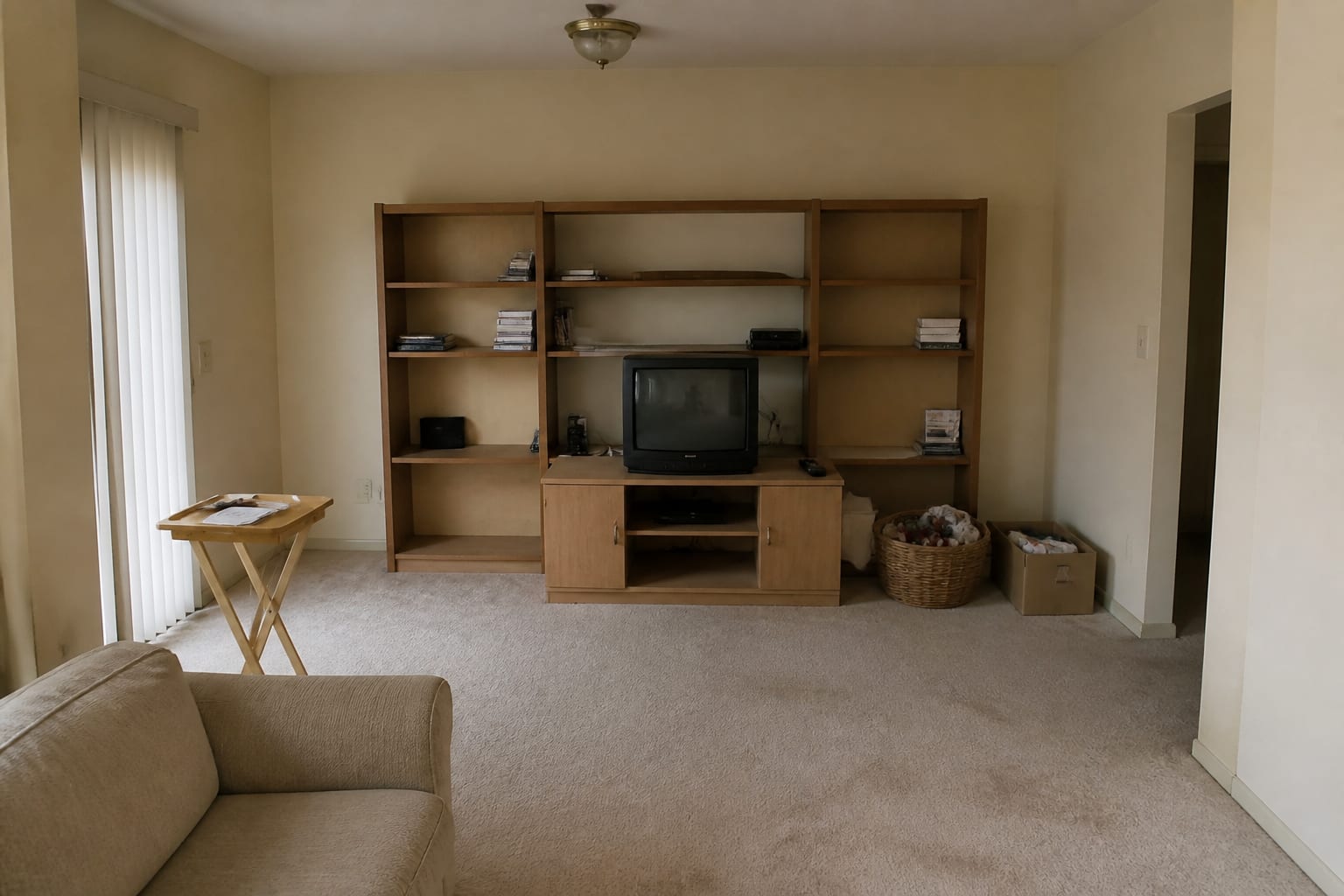
A living room hides its storage when the media wall, sofa flanks, and coffee table each do double duty: a closed media credenza for cables and remotes, drawer-front side tables for blankets and chargers, and a coffee table with a drawer or under-shelf basket for current books. If every basket, shelf, and console shows its contents, that's organized clutter, not storage.
"Living-room storage looks calm when most of the mess has a door and the open shelves have a point of view."
What makes hidden storage feel calm instead of crammed?
Sort living room stuff into three groups: daily use, weekly use, and things that don't belong in the room. Daily items — remotes, chargers, coasters, reading glasses — need a home within 16" of the seat where they're used, since storage fails when the lid is across the room.
Closed doors and drawers should handle the ugly categories: toy pieces, gaming gear, pet supplies, paperwork, cables, backup throws. Reserve open shelves for books, ceramics, one framed photo, and a small plant. If an open surface needs labels to stay understandable, it should have been closed.
Visual weight matters too. A solid 72" media cabinet reads calmer than three mismatched baskets because it forms one long horizontal line. A pair of 30" closed cabinets flanking a fireplace can feel quieter than a tall tower blocking the wall.
Which living room pieces should do the hiding?
A storage coffee table is the easiest first move. Lift-top tables suit laptops and snacks but can look bulky in small rooms; a drawer coffee table with a 16"-18" deep top often stays cleaner from the sofa view.
Ottomans work best with kids, pets, or hard corners nearby. Pick one 24"-36" wide for a small seating area, or two 18"-20" cubes for flexible layouts. The lid should lift fully clear of the sofa, and the interior should be shallow enough that toys don't disappear forever.
Media storage should stay mostly closed — a TV wall already has a black rectangle, cords, and a console, so open cubbies just add noise. If the television overwhelms the room, the same restraint used in taming a dominant living room TV wall applies: stretch the cabinet wider than the screen, hide the equipment, and let one or two objects soften the edges.
Side tables can work harder than a delicate C-table that stores nothing. A 14"-18" wide drawer table beside the main seat, with a lamp on top and chargers inside, beats loose cords around a pedestal table.
Pet gear should be treated as furniture, not an apology. A crate, litter cabinet, or feeding station should match the room's wood tone and sit clear of traffic paths — the approach in integrating a dog crate into furniture keeps the crate from becoming the room's visual center.
Test storage moves on your own room photo with ReDesign before buying anything; keep the doorway, windows, main furniture, and awkward fixed features visible so the preview solves the room you actually have.
How do you use dead zones without making the room feel packed?
The safest dead zones are behind a sofa, under a window, beside a fireplace, below a wall-mounted TV, and along the short wall near an entry.
Behind a floating sofa, a 10"-14" deep console holds baskets, drawers, and a landing tray without blocking the walkway — keep at least 30" of clear path if people pass through daily. With only 24", skip the console and use end tables with drawers instead.
Under a window, a bench 16"-19" high holds blankets or toys while still reading as seating. In a bay window, don't fill every angled corner with bins; the layout logic in arranging furniture around a bay window keeps storage supporting the view instead of turning the bay into a closet.
Corners can take tall storage only when the room already has breathing room. A 72" cabinet in a tight corner can make the ceiling feel lower; a 34"-42" high cabinet often looks more deliberate, with art or a sconce above it to keep the wall alive.
Entry-adjacent living rooms need a boundary — a closed shoe cabinet, lidded bench, or narrow cabinet no deeper than 12" keeps coats and mail from drifting into the seating area.
Common living room storage mistakes
- Buying baskets instead of doors. Five visible woven bins still read as five containers of stuff; put noisy categories behind flat fronts and use one basket for texture.
- Choosing storage too shallow to be useful. Aim for 12"-18" interior depth for games and media, 18"-24" for bulky throws or toys.
- Mixing too many finishes. A different finish on every piece makes the room feel assembled from leftovers; repeat one wood tone and one painted or metal finish.
- Hiding storage away from where it's used. A toy chest behind an armchair won't get used; put storage at the point of use.
- Treating open shelving as decluttering. Leave 30% of each shelf visually empty and stack books in 8"-12" runs; only display boxes good enough to be seen daily.
Use AI to preview your living room storage before you buy
Upload a straight-on photo from the main doorway or seating position, with the sofa, TV wall, windows, walkways, and existing clutter visible — don't crop it out, since the preview needs to test the real room.
Try one storage move at a time: a long closed media cabinet, then a storage ottoman, then a console behind the sofa, then low cabinets under the window. Keep wall color, floor, sofa, and window placement constant so you're judging storage, not a fantasy renovation.
Note where the preview gets calmer. If an ottoman blocks the center of the room, test two smaller cubes; if a tall cabinet darkens a corner, lower it and add art above. Record the cabinet width, height, door style, and finish that works — that becomes your buying brief for turning everyday clutter into a room that stays usable on a normal Wednesday night.
Frequently Asked Questions
How do I add storage to a living room without it looking like an office?
Use furniture that already belongs in the room — closed media credenza, drawer-front side tables, lift-top coffee table — instead of standalone cabinets that read as office storage.
What should hide in a living-room media credenza?
Power strip, console, controllers, remotes, paperback overflow, and cable clutter behind the TV; anything that visually competes with the screen belongs behind a closed door.
How do I store blankets and throws so they look intentional?
Use a closed ottoman, a side-table cabinet, or a basket under the console. Draped over the sofa back looks intentional only with exactly one throw, not three.
Where do magazines, books, and remotes go?
A coffee-table tray holds current reads and remotes, an under-shelf basket holds overflow, and a side-table rack holds at most two magazines; archives belong on a bookshelf or out of the room.
How big does a living-room storage piece need to be?
A 60-72 inch credenza or media console, plus two side tables with drawers and one storage coffee table, covers most small or medium living rooms — a full wall of cabinets is rarely necessary.
> Try this: Ready to see this on your own room? Open ReDesign and run the preview.
Three transformations to try 1. Closed media credenza with drawer-front side tables 2. Lift-top coffee table with throw and book storage 3. Sofa-flank storage ottomans for blanket overflow