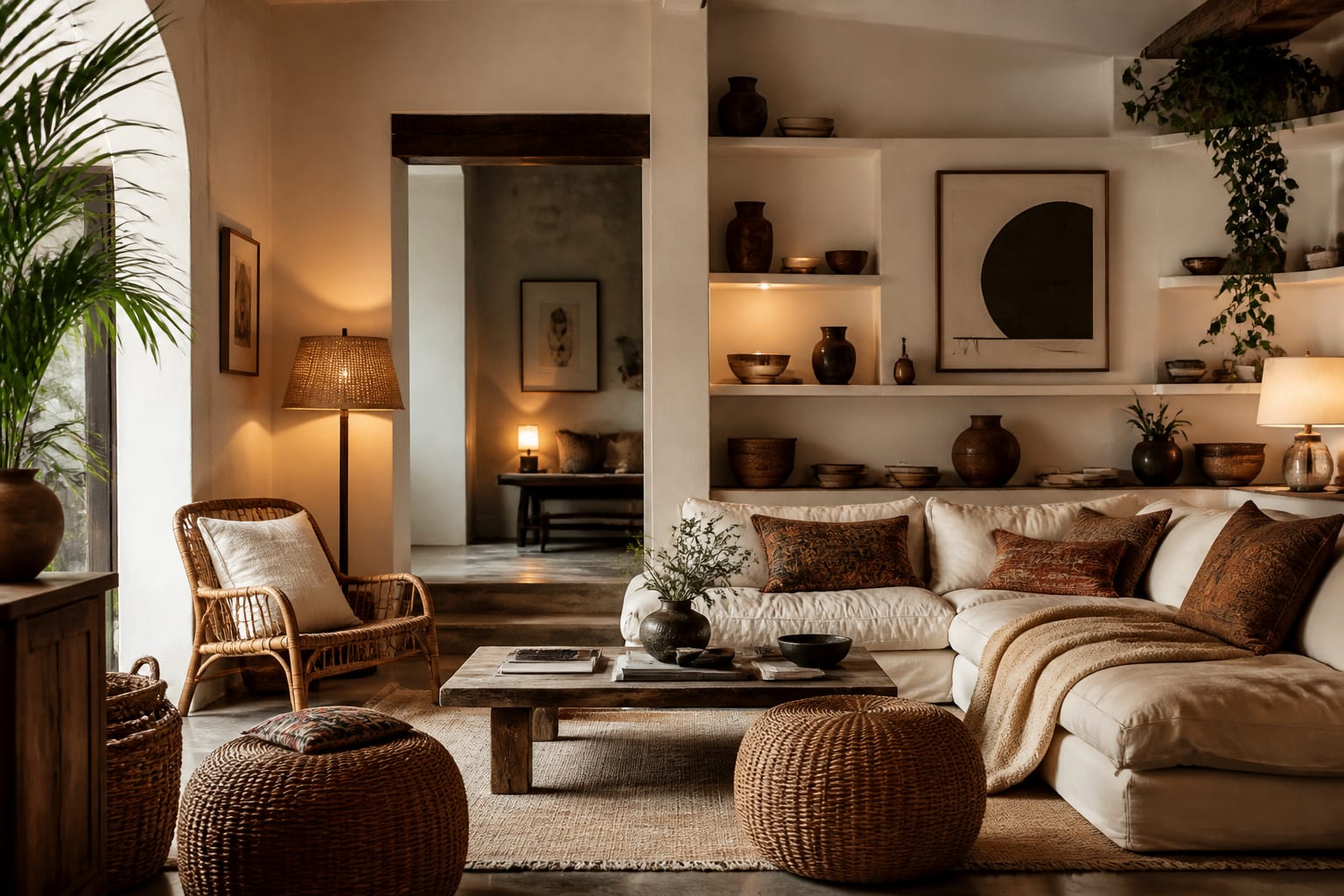
Boho fails when people treat it as an excuse to pile on every macrame and tassel they own. The strongest bohemian living rooms feel restrained, not crowded, with a clear earthy base that lets a few textured pieces breathe. Think terracotta, warm cream, and olive grounding the room, then rattan, vintage rugs, and trailing pottos plants layered on top. The goal is a space that reads relaxed and personal, like it grew over years of travel and thrifting rather than one online order. Below are concrete ways to build that lived-in warmth, choose materials that age well, and arrange low seating so the room invites people to actually sink in and stay a while.
Start With an Earthy, Restrained Palette
Color is what separates a calming boho room from a visually noisy one, so settle the palette before buying a single throw pillow. Choose a warm neutral for the largest surfaces, usually walls and the sofa, then pull in two earthy accents that repeat across rugs, cushions, and ceramics. Terracotta, mustard ochre, rust, sage, and clay all share an undertone that feels sun-baked and grounded, which is why they sit together without clashing. Avoid cool grays and stark whites here, since they fight the warmth that makes bohemian rooms feel inviting rather than sterile. Limiting yourself to roughly three earthy hues plus one neutral keeps the room cohesive instead of scattered.
Texture carries weight that a flat color cannot, so let materials add depth instead of adding more hues. A nubby oatmeal sofa, a slubby linen curtain, and a hand-knotted wool rug can all live in the same beige family yet read rich because the surfaces differ. This restraint also makes the bolder vintage pieces, like a faded Turkish rug or a patterned kilim cushion, stand out as focal points rather than competing noise. The layered neutrals quietly do the heavy lifting while the eye-catching accents earn their attention.
Paint is the cheapest lever you have, so test warm whites with yellow or pink undertones against your light before committing. South-facing rooms can handle deeper clay or olive walls because daylight keeps them from feeling heavy, while darker rooms usually do better with a creamy backdrop that bounces light. Pull your accent colors from one piece you already love, such as a rug or a piece of art, and the whole scheme will feel intentional instead of assembled from a trend list.
See also our guide to Cottagecore Living Room Ideas for more on boho living room ideas.
Layer Textiles for Lived-In Warmth
Textiles are the heart of boho, and layering them is what gives the style its soft, collected quality. Begin with a large neutral foundation rug, jute or sisal works beautifully, sized so the front legs of your seating sit on it at minimum. Then float a smaller vintage or patterned rug on top at a slight angle to suggest the room evolved over time. This two-rug move instantly adds depth and warmth that a single rug rarely achieves on its own. A hand-knotted wool or vintage cotton topper also brings a worn softness that brand-new flooring cannot fake.
On the sofa, mix pillow covers in three or four coordinating textures rather than matching sets: a mudcloth print, a woven stripe, a velvet solid, and a tasseled lumbar work together because they share the palette but differ in feel. Throw in a chunky knit or a fringed wool blanket draped casually over one arm. Vary pillow sizes too, leaning larger 20-inch squares against the back and smaller accents in front so the arrangement looks gathered, not staged. An odd number of cushions, five or seven across a sofa, almost always looks more relaxed than a tidy even pair.
Windows and walls deserve soft layers as well. Floor-length linen or cotton curtains hung high and wide make the room feel taller and frame the light, while a woven wall hanging or a textile draped over a ladder adds vertical softness without clutter. The trick is repetition with variation: echo the same fringe, weave, or earthy tone in several spots so the eye travels around the room and reads everything as one calm, cohesive story rather than a series of disconnected accessories competing for attention.
For a related angle on boho living room ideas, read Maximalist Living Room Ideas.
Mix Natural Materials and Vintage Finds
Bohemian rooms feel authentic because they blend natural materials and pieces with history, so resist the urge to buy everything new and matching. Rattan, cane, jute, and unfinished or lightly oiled wood form the material backbone, bringing organic texture and a handmade quality that mass-produced furniture lacks. A cane-back chair, a rattan pendant, a low wooden coffee table with visible grain, and a woven storage basket can carry a whole room. These materials also age gracefully, gaining patina rather than looking worn out. Their natural variation in grain and weave means no two pieces feel identical, which is exactly the unforced quality boho relies on.
Vintage and secondhand finds are where personality enters. A spindle chair from a flea market, a brass tray repurposed as a table top, or a stack of well-traveled books adds the kind of character you cannot order in a single click. Hunt thrift stores, estate sales, and online marketplaces for one-of-a-kind pieces, and do not worry about everything matching. Slight mismatches in wood tone and finish are exactly what makes the look feel personal and unforced. Carrying a piece home with a story behind it always beats a flawless set that anyone could buy in an afternoon.
Balance is the safeguard against clutter. For every ornate or patterned piece, pair something plain and quiet so the eye has somewhere to rest. Group smaller objects in odd-numbered clusters on shelves and trays rather than scattering them, and edit ruthlessly: a few meaningful objects with breathing room always look more intentional than a surface crammed with trinkets. Let the natural materials repeat across the room so even your most eclectic vintage scores feel like they belong to the same relaxed family.
Low Seating, Plants, and a Gallery Wall
The way you arrange seating sets the entire mood of a boho living room, and lower, more relaxed pieces signal that this is a space for lounging rather than formal sitting. Floor cushions, a low-slung sofa, poufs, and a daybed encourage people to spread out and settle in. Cluster seating around a central rug and a low coffee table so conversation flows, and leave generous floor space rather than pushing everything against the walls. A reading nook with a sheepskin-draped chair and a floor lamp gives the room a quiet corner that feels like a retreat. Keeping the coffee table low, around 16 to 18 inches tall, reinforces that grounded, unhurried posture the whole room is reaching for.
Plants are non-negotiable in bohemian spaces because they bring life, movement, and that connection to nature the style is built on. Vary the heights: a tall fiddle-leaf fig or palm in a woven basket, trailing pothos or string-of-hearts on a high shelf, and small succulents grouped on a side table. Place the thirstiest plants near your brightest window and choose hardy varieties if you tend to forget watering. The mix of leaf shapes adds organic texture that no fabric can replicate. Grouping a few pots together in one corner also reads more lush than spacing single plants evenly around the room.
A gallery wall ties the personality together. Combine framed prints, woven discs, a small mirror, and a textile or basket so the arrangement has dimension beyond flat art. Lay everything on the floor first to test the composition, keep tighter, even gaps between frames, and mix frame finishes within your warm palette. The result feels curated and personal, anchoring the seating area and giving the eye a rich focal point that rewards a second look.
- Float a worn Turkish rug over a larger jute base for instant depth.
- Mix four pillow textures like mudcloth, velvet, woven stripe, and fringe.
- Hang a woven wall hanging above a low cane-back sofa.
- Cluster pothos, a fiddle-leaf fig, and succulents at three heights.
- Add floor cushions and a pouf around a low wooden coffee table.
- Build a gallery wall mixing prints, a mirror, and a woven disc.
- Drape a fringed wool throw casually over one arm of the sofa.
- Style shelves with vintage books, brass objects, and trailing greenery.
Bring the look home with Re-Design
Before you commit to a new rug layout or a wall of plants, it helps to see the look in your actual room. Upload a photo of your living room to Re-Design, choose a bohemian style, and preview how earthy walls, layered textiles, rattan furniture, and a gallery wall come together in your exact space. Trying several palettes and seating arrangements side by side takes seconds, so you can spot what feels warm versus what reads cluttered. Preview the full transformation first, then shop with confidence knowing the rug, pillows, and plants will work together.
Frequently Asked Questions
What colors work best for a boho living room?
Warm, earthy tones carry the look best. Build on a cream or oatmeal base, then layer terracotta, mustard, rust, sage, or clay accents. These share a sun-baked undertone, so they blend without clashing. Skip cool grays and stark whites, which fight the cozy warmth that defines bohemian style and make the room feel flat.
How do I make a boho room feel cozy without looking cluttered?
Restraint is the secret. Keep your palette to two or three earthy accents, repeat textures rather than adding new colors, and pair every patterned piece with a plain one. Group small objects in odd-numbered clusters with breathing room, and edit surfaces ruthlessly. A few meaningful pieces always read warmer and more intentional than crowded shelves.
Are plants essential to boho style?
Plants are central to bohemian rooms because the style celebrates a connection to nature. They add life, movement, and organic texture no fabric can match. Vary heights with a tall floor plant, trailing greenery on shelves, and small succulents on tables. Choose hardy varieties and place thirsty plants near bright windows for the easiest upkeep.