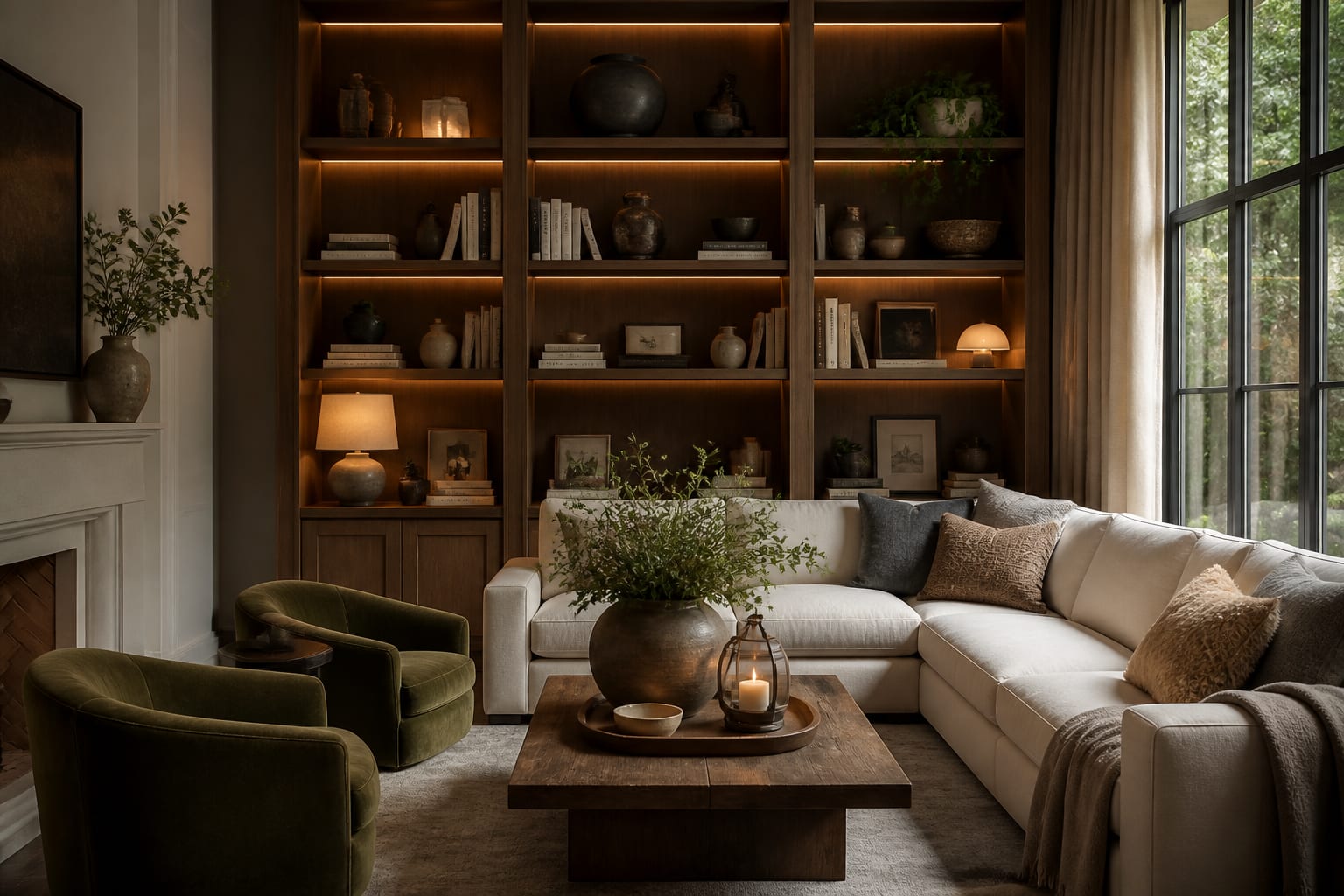
A bookshelf packed wall-to-wall with spines reads as storage, not styling, and that is the mistake nearly everyone makes. The shelves that look professionally done are not the fullest; they are the ones with breathing room, where books share space with a few objects and deliberate empty gaps. The goal is a collected, lived-in look rather than a library inventory or a staged showroom. Get the ratio of books to objects right, vary how the books sit, and leave negative space, and even a basic builder-grade bookcase starts to look like it belongs in a magazine. None of it requires buying anything new.
What is the right ratio of books to objects?
The fastest fix for a cluttered shelf is restraint. A good working target is about 70 percent books and 30 percent decorative objects across the bookcase as a whole, which keeps the shelves feeling full and purposeful without tipping into knickknack chaos. Too many tchotchkes and the case looks like a yard sale; too few and it feels cold and unstyled. The books carry the visual weight, and the objects punctuate.
Choose objects that vary in form: a small stack of bowls, a piece of pottery, a framed photo, a sculptural object, a plant or two. Sentimental and personal pieces are what make a shelf feel like yours rather than a catalog spread. Resist the urge to fill every inch, because the empty space is part of the design. If your bookcase sits in a dim corner, the styling can do double duty by reflecting and catching what light there is; our guide to solving dark-room design problems covers how light objects and mirrors brighten a shadowed nook. Keep heavier, larger objects toward the bottom shelves and lighter pieces up high so the case feels grounded.
How do you mix horizontal and vertical stacks?
Uniform rows of upright books are what make a shelf look rigid and dull. The trick designers lean on is mixing orientations: stand most books vertically, then lay a short stack of three or four horizontally beside them. Those horizontal stacks do two jobs at once. They break the visual rhythm so the eye does not glaze over, and they create a flat platform to set a small object on top, like a candle, a bowl, or a tiny sculpture.
Vary the heights within each shelf so the silhouette rises and falls rather than marching in a straight line. A tall vertical run, then a horizontal stack at maybe 8 inches, then a single object creates pleasing movement. Use the horizontal stacks as bookends too, anchoring a row of upright books so they do not lean. Aim for one or two horizontal stacks per shelf, not every shelf identical, so the case feels composed rather than formulaic. If your space pulls double duty as an office or guest area, shelf styling can help zone it; our notes on dual-purpose room ideas get into using shelving as a soft divider.
Should you organize books by color or subject?
Color organization is divisive, and the honest answer is that it depends on how you use your books. Arranging by color, a full rainbow gradient or simple tonal blocks, creates a striking, cohesive look that reads as a designed object from across the room. It is gorgeous on a feature wall. The downside is practical: if you actually pull books to read often, color order makes finding a specific title slower.
A middle path works for most people. Group books loosely by subject or size so they stay findable, then within those groups nudge the colors so jarring spines do not clash. Turning a few books spine-in to show the cream page edges is a popular trick for softening a busy, multicolored collection, though purists hate it, so use it sparingly. You can also wrap a handful of favorites in neutral paper or linen covers to calm a riot of color. Whatever system you choose, apply it consistently across the whole case so the result looks deliberate. Mixing color zones with random shelves usually just looks like an unfinished project.
How do you finish with objects and negative space?
The most common mistakes to avoid at this stage are overfilling every shelf and lining objects up in a stiff, evenly spaced row. The finishing layer is where a shelf goes from tidy to styled. Work objects in odd-numbered groupings, clusters of three or five rather than pairs, because odd numbers feel more natural and dynamic to the eye. Vary the heights within each grouping: a tall vase, a medium book stack, and a low bowl form a little triangle that reads as composed. Repeat a material or color, like brass or a single accent shade, a few times across the case to tie the whole thing together.
Negative space is the most underrated tool here. Leave at least one clear gap on most shelves, a stretch of empty space where nothing competes for attention, so the styled vignettes have room to breathe. A shelf that is 60 percent full often looks better than one that is 95 percent full. Pull all the books and objects forward to a clean line at the front edge of each shelf, which makes the whole case look crisp even when the contents vary. A few small objects to keep on hand and rotate help the styling evolve:
- A pair of sculptural bookends around 6 to 8 inches tall to anchor upright rows.
- One or two trailing or compact plants to add life and an organic, irregular shape.
- A few framed photos or small art pieces leaned rather than hung.
- Decorative boxes or baskets to hide remotes, cables, and clutter on lower shelves.
- A single oversized statement object, like a 12-inch vase, to give one shelf a clear focal point.
See it first in Re-Design
Styling a bookcase is fiddly, and it is easy to spend an afternoon rearranging only to step back and find it still looks off. Upload a photo of your shelves to Re-Design and preview different arrangements, more open space, a color-blocked scheme, objects layered against the books, before you start pulling everything off the shelf. You can re-design the same bookcase several ways to compare a minimal, gap-heavy look against a fuller, collected one and see which suits the room and the wall around it. Testing the styling on screen first means you commit to the arrangement that actually works rather than learning the hard way after an hour of trial and error.
Frequently Asked Questions
What is the ideal ratio of books to objects on a shelf?
Aim for roughly 70 percent books to 30 percent decorative objects across the whole bookcase. That balance keeps the shelves looking full and purposeful without tipping into clutter. Too many objects and the case looks like a yard sale; too few and it feels cold. The books carry the visual weight while the objects punctuate and add personality.
Should I organize books by color or by subject?
It depends on use. Color organization looks striking from across the room but makes finding a specific title slower. If you read often, group books loosely by subject or size so they stay findable, then nudge colors within those groups so nothing clashes. Apply whichever system you choose consistently across the whole case so it looks deliberate.
How do I make my bookshelf look less cluttered?
Leave deliberate negative space. Keep at least one clear gap on most shelves so the styled areas can breathe, and aim for shelves that are 60 to 70 percent full rather than packed. Mix in horizontal stacks, work objects in groups of three or five, and pull everything forward to a clean line at the front edge for a crisp, intentional look.
Why do designers lay some books horizontally?
Horizontal stacks break the rigid rhythm of all-upright spines and create a flat platform to set a small object on top, like a candle or a bowl. They also act as bookends, anchoring a row of vertical books so they do not lean. Use one or two horizontal stacks per shelf rather than on every shelf so the case feels composed, not formulaic.