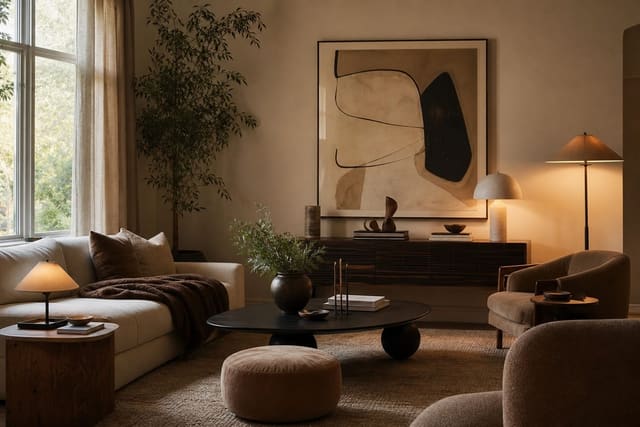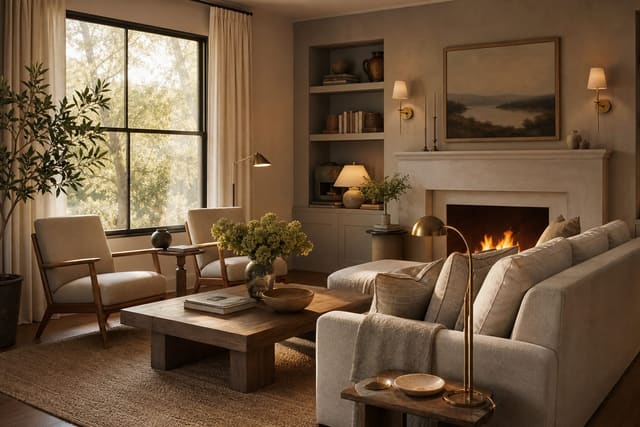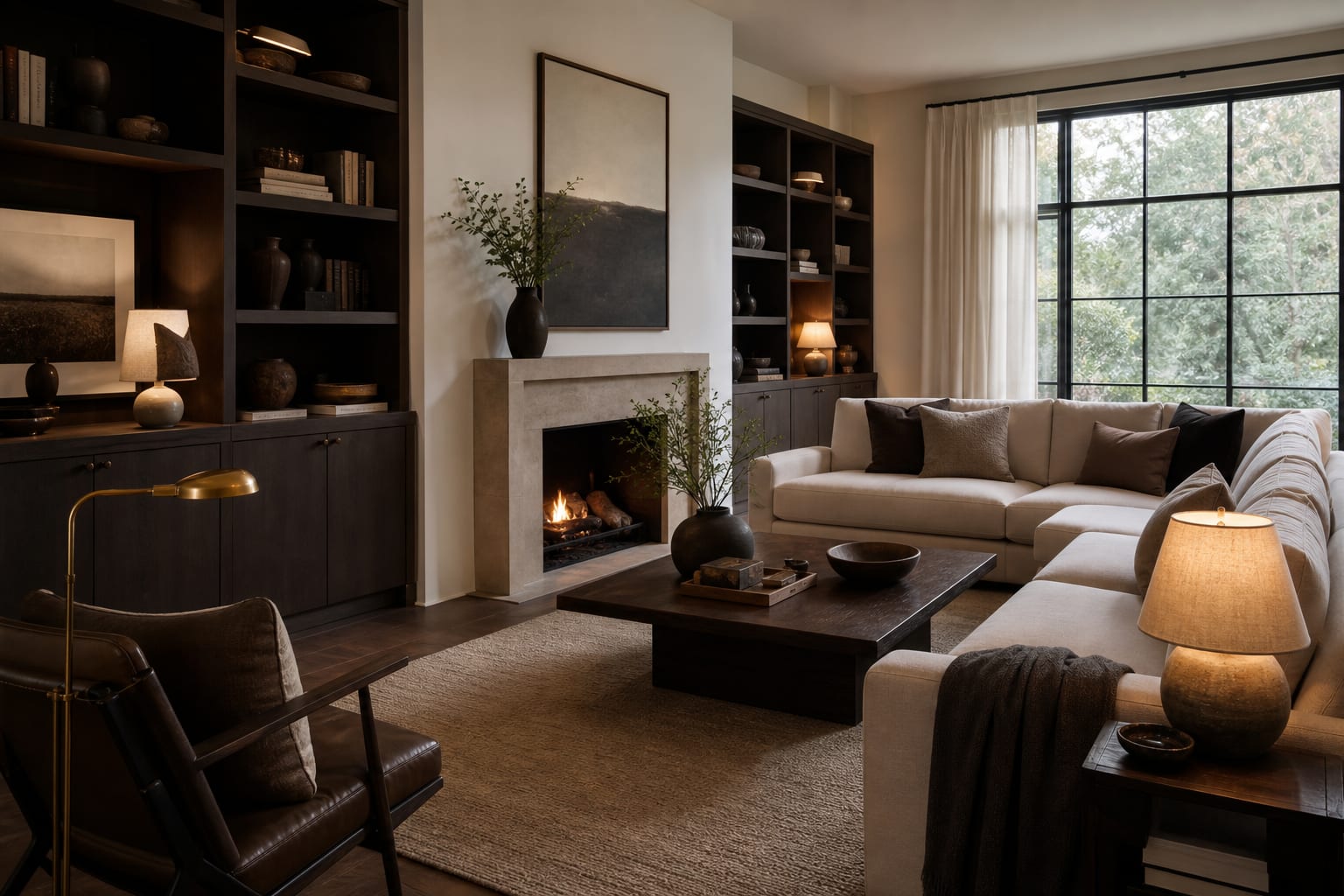
To update a room full of brown furniture, change what surrounds it rather than the furniture itself: cooler wall color, a high-contrast rug, swapped hardware, and modern textiles. The brown pieces are rarely the real problem — everything around them is usually too heavy, too yellow, or too matched. Lighter edges and sharper contrast make inherited brown furniture look chosen instead of stuck.
What makes a brown furniture room feel current?
You update the room by lightening the edges, adding contrast, repeating wood tones on purpose, and changing textiles, art, lighting, and hardware before you touch the furniture itself. Brown needs to become an anchor, not a visual accident.
Start by naming the brown you have. Espresso, walnut, cherry, mahogany, and honey oak behave differently — espresso reads nearly black and needs relief, while cherry and mahogany have red undertones that get loud against beige. Honey oak and medium brown wood pair better with cream, olive, muted blue, or mushroom than with cold gray.
Give the room one clear background color. Aim for 60% to 70% of the visible envelope — walls, curtains, rug, bedding — lighter than the furniture. Cream, plaster, bone, flax, warm taupe, and soft mushroom all calm dark wood without forcing a Scandinavian-blond look.
Add contrast that isn't more brown. Matte black frames, a dark bronze lamp, or a deep green pillow separates furniture from floor and walls. If every supporting piece is tan and caramel, the room becomes one wood-grain block.
Lighting finishes the job. Use 2700K to 3000K bulbs at 90+ CRI so wood and leather keep their true undertone. If the room still feels dim, the moves in creating fake natural light in any room help, since dark furniture exaggerates weak corners.
Which surfaces should you change before replacing furniture?
Change the largest soft surfaces first — rugs, curtains, bedding, lampshades, art — since they cover more visual territory than small decor and cost far less than a new dining set.
- Rug: In a living room, an 8x10 rug is usually the minimum for front legs to sit on. Choose ivory, oatmeal, faded blue, or charcoal-on-beige — a flat chocolate rug under chocolate furniture just doubles the dark block.
- Curtains: Hang the rod 6-10 inches above the casing, 8-12 inches past the trim, with panels finishing about 1/2 inch off the floor. Linen or cotton in cream, flax, or warm white adds height that short brown curtains can't.
- Lampshades: A 14-18 inch fabric shade in linen or oatmeal creates a glow that makes dark wood feel rich instead of gloomy; tiny dark shades on dark tables rarely flatter.
- Mirrors: Place mirrors to reflect a pale curtain or clean wall, not another brown cabinet — the same logic behind using mirrors to amplify light applies double here.
- Art: Over a sofa, size the piece to roughly two-thirds of the sofa width and pick a palette that pairs brown with something fresher — walnut with cream, chestnut with olive, mahogany with black and chalk white.
Test this on your own room photo with ReDesign, keeping the doorway, walls, windows, and main furniture visible so the preview solves your actual room.
Common mistakes that keep brown furniture looking dated
- Buying more brown to match. A brown sofa, table, media unit, and floor gives the eye no pause. Swap one supporting piece for cream, black, stone, or pale oak.
- Choosing cold gray paint. Blue-gray walls can turn reddish wood orange and make dark leather look harsh. Use muted blue, green-gray, mushroom, or charcoal in small doses instead.
- Leaving original hardware. Simple pulls in black, dark bronze, or aged brass modernize a dresser fast. Measure existing screw spacing first — common centers are 3 inches, 96mm, and 128mm — to avoid drilling new holes.
- Fighting massive furniture with tiny accessories. A small white vase won't balance a dark wall unit. Use a 24x36 inch artwork, a pale rug, or bedding covering the full mattress instead.
- Ignoring sightlines. Dark furniture visible from several openings at once reads as even more dominant. The layout discipline for a room with too many doorways helps: keep neighboring spaces quieter and let one zone carry the contrast.
How can AI design preview the update before you buy?
AI design works well here because the fix is relational — the same walnut dresser looks expensive beside cream curtains and dated beside yellow-beige carpet. Upload a straight photo of the actual room and keep the brown furniture in place across previews; if every version replaces the sofa and dresser, it isn't solving your real room.
Shoot from the doorway or a back corner so the frame includes floor, ceiling line, windows, and the largest brown pieces. Capture a daylight version and a lamp-lit night version, since leather and glossy wood change dramatically after sunset.
Run a few focused versions with the layout held constant: cream walls with a pale rug and black accents, olive with warm white and aged brass, or muted blue textiles with repeated walnut tones. Use whichever wins to make smaller decisions first — pillow covers, a lighter rug, new lampshades, or slipcovered dining seats — rather than letting software redecorate the whole room.
What should you change first this weekend?
Stand at the doorway and name the three heaviest brown areas. If they're sofa, floor, and media cabinet, skip another wood table; if they're table, hutch, and chairs, skip brown woven shades. The first purchase should interrupt the pattern, not repeat it.
- Living room: Start with the rug or curtains — a pale patterned rug separates dark legs from dark floors, and full-height curtains lift the walls. Add one black or dark bronze accent for a crisp companion.
- Bedroom: Change bedding before case goods. Try ivory, oatmeal, or olive instead of stark white against reddish wood, and layer a throw across the lower third of the bed.
- Dining room: Lighten chair seats, the rug, or the wall art. Keep at least 30 inches behind pulled-out chairs, since a dark set feels heavier in a tight room.
Finish by editing shine — mix in matte ceramic, linen, wool, or honed stone so glossy brown wood and reflective leather have texture around them. The furniture can stay; the room just needs enough contrast to stop orbiting around it.
Frequently Asked Questions
Why does brown wood furniture look dated even when it's well-made?
The pieces themselves are fine. The dated read usually comes from the orange-tinted wall colors, brass-toned hardware, and floral textiles surrounding them, not from the wood.
What wall color makes brown wood furniture look modern?
Cool whites with a green or blue undertone (Benjamin Moore Chantilly Lace, White Dove, or a warm greige) make brown wood read as walnut rather than oak-orange; warm beige walls reinforce the dated look.
Should I update the hardware on brown wood furniture?
Yes. Swapping brassy knobs for matte black, brushed brass, or aged bronze modernizes a dresser or buffet without touching the wood, and a $40-80 hardware swap can read like a full refinish.
What rug works under brown wood furniture?
High-contrast rugs work best — cream, charcoal, or a graphic black-and-white pattern reads modern against brown wood, while matching tan or beige rugs make the room look dated.
Can AI preview brown wood furniture against new wall colors?
Yes. Upload the room photo and preview cool-white, greige, and deep-green walls behind the existing furniture before buying any paint.
> Try this: Ready to see this on your own room? Open ReDesign and run the preview.
Three transformations to try
1. Brown wood pieces with cool white walls 2. Brown buffet with matte black hardware swap 3. Brown dresser with graphic black-white rug