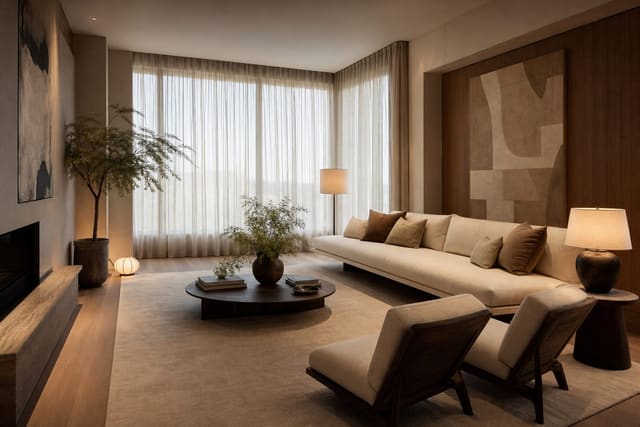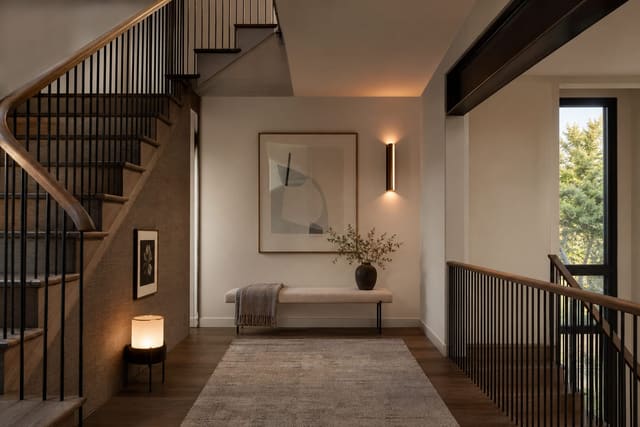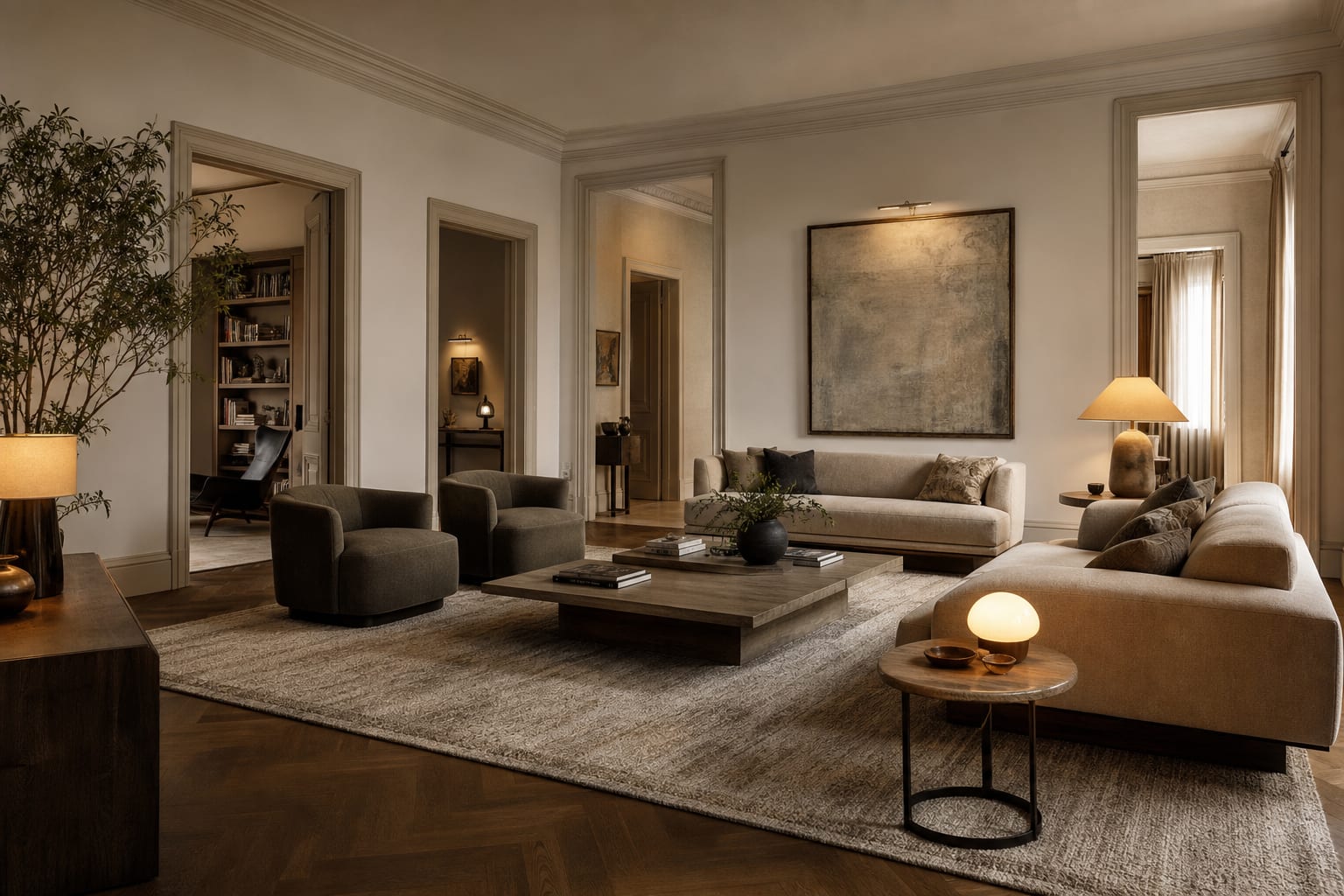
Room with too many doors furniture works when you stop hunting for a missing perfect wall and float the main pieces into the center instead. A rug anchors the seating group, a 36-inch path skirts rather than cuts through it, and one strong furniture back or low console substitutes for the wall the room never had. Traffic protection comes first; decoration follows.
What makes a room with too many doors work?
Float the main pieces away from the walls, keep 30 to 36 inches clear for traffic, and use rugs, lighting, and low storage to build a substitute focal wall. You are not trying to fill every broken wall scrap — you're making the room feel intentional even when no single wall can hold the whole plan.
Draw the door swings before moving furniture. A hinged door claims a 30-inch arc, and a closet, bathroom, or patio door may need that arc several times a day. With three or more active openings, the safest layout usually places the largest piece parallel to the longest uninterrupted path, not against the longest partial wall.
Protect the main route like architecture. Leave 36 inches where people carry laundry or groceries; 30 inches works for a secondary path beside a chair or console. A 24-inch squeeze should be rare and never the only route between two doors.
Once traffic is clean, let a rug tell the furniture where it belongs. An 8x10 rug holds a modest sofa and two chairs; a 9x12 works better when the room is broad but chopped by openings. At least the front legs of every main seat should touch the rug, or the room reads like everyone is waiting in separate doorways.
The furniture decision that fixes the no-wall problem
Decide whether the room needs a floating seating group, a diagonal arrangement, or one strong furniture back that acts like a wall. Most awkward multi-doorway layouts get worse when every piece is forced to touch drywall.
A floating sofa is usually cleanest. Place it 12 to 18 inches off a wall for breathing room, or fully float it with 30 to 36 inches behind the back if that path gets used. Add a narrow console, 10 to 14 inches deep, behind it for lamps and a landing spot for keys — this stops bags from landing on the cushions.
A pair of chairs can solve what a sectional ruins. Sectionals love corners, and door-heavy rooms rarely have honest corners. Two chairs, 28 to 34 inches wide, can angle toward a sofa, fireplace, or media cabinet without blocking the door beside them; swivel chairs respect multiple openings without looking restless.
Keep media walls quiet. If the television can't sit on a full wall, use a low 60-inch console under a 55-inch TV rather than a tall bookcase wedged beside a door, which reads like it's guarding the exit. If glare or dimness makes the layout feel worse, the ideas behind adding fake natural light to any room can help.
Diagonal layouts should be deliberate, not a panic move. A diagonally placed rug can soften mismatched door angles, but keep the nearest chair arm at least 30 inches from the busiest path and don't let a coffee table corner become a collision point.
Test this on your own room photo with ReDesign before committing — keep doorways, walls, windows, and main furniture visible so the preview solves the room you actually have.
How do you create zones when every wall is interrupted?
Assign each doorway a traffic job and each furniture cluster a room job. A kitchen door needs a clean path; a closet door needs occasional access; a patio door needs clearance plus a visual pause. They aren't equal, so they shouldn't control the layout equally.
Place the conversation zone in the largest uninterrupted floor area, even if the sofa ends up facing a window instead of a wall. Use a coffee table 14 to 18 inches from the sofa edge; round or oval shapes are kinder near door traffic since the room already has enough hard interruptions.
In a bedroom, the bed should claim the calmest wall fragment, not necessarily the longest wall. A queen needs 60 inches of mattress width plus at least 24 inches on the main side for movement. Surrounded by closet, bath, and hallway doors, use wall sconces and 14- to 18-inch floating nightstands instead of forcing bulky tables into leftover gaps.
In a dining or multipurpose room, a round table is the peacekeeper. A 36- to 42-inch round pedestal lets chairs shift around door paths more easily than sharp rectangle corners. If a door opens directly into the dining zone, use armless chairs there and keep any buffet shallow, around 12 to 15 inches deep.
Mirrors help chopped, dark rooms, but need discipline — placed opposite a window or beside a doorway, they extend light without pretending the doorway isn't there. See using mirrors to amplify light for a narrow-room approach.
Lighting finishes the zoning. A single ceiling fixture lights the paths but not the seats. Add a floor lamp near the main chair, a table lamp on the console, or plug-in sconces flanking the bed, using warm 2700K to 3000K bulbs.
Common awkward layout mistakes
- Treating every doorway equally. Rank the openings; let the busiest two or three control clearances while quiet ones get just enough access.
- Buying smaller furniture with the same bad placement. A tiny sofa jammed against a broken wall still looks stranded if it faces nothing. Choose pieces built to float: finished-back sofas, light-armed chairs, pedestal tables.
- Overbuilding storage in wall scraps. A 16-inch-deep cabinet between two doors tightens both openings; a 10- to 12-inch ledge or slim console holds the same items with less visual pressure. Never block trim, outlets, or a door's full swing.
- Ignoring the ceiling. Tall or sloped ceilings fragment the walls further. Drapery hung 6 to 10 inches above the casing or a centered pendant over the furniture group gives vertical anchor; see decorating a vaulted ceiling room.
- Forgetting where bodies pause. People stop near doorways to drop bags or wait. Leave a small landing surface within 6 feet of the busiest entry — even a 30-inch console or stool.
How AI design helps you see the fix
Upload one photo from each doorway plus a wider shot of the largest open floor area, keeping doors open in at least one image so the tool previews the real interruptions. A single flattering corner angle hides the problem you need to solve.
Ask for layout tests with the door count included: "living room with four doorways, floating sofa, two swivel chairs, 8x10 rug, low console between doors, warm lamps, clear 36 inch traffic path." Run a second version with the sofa rotated and the media console on the shortest wall so the circulation comparison is obvious, not just a color change.
Check furniture backs in every preview: does the sofa create a believable boundary, does the rug connect the seats, does lighting land where people sit rather than only where they walk? After the preview points a direction, tape the plan on the floor — sofa depth, rug edge, console depth, and door swings — and walk it with a laundry basket before ordering anything large.
Frequently Asked Questions
Why does my room feel like a hallway?
Furniture pushed to the walls leaves the center as open floor, which reads as a passthrough. Floating the seating into the middle defines the room as a destination rather than a route between doors.
Where should furniture go in a room with three or four doorways?
Float the seating group around a rug in the middle of the room, leaving 36-inch traffic paths between doorways. Perimeter-only furniture placement amplifies the hallway feel instead of fixing it.
What rug size works in a multi-doorway room?
Size the rug to the seating group only, typically 8x10 or 9x12, not wall-to-wall. A floor-spanning rug blurs the seating boundary and undoes the zoning work.
Should I block any doorways permanently?
Sometimes. If one doorway opens to underused space and the room feels too chopped up, closing it with drywall or built-in storage is a worthwhile structural fix to cost out.
Does AI help me plan the furniture float?
Yes. Upload the room photo and AI previews floating furniture arrangements against the existing doorway pattern before you commit to buying or moving anything.
> Try this: Ready to see this on your own room? Open ReDesign and run the preview.
Three transformations to try
1. Floating sofa + chairs around rug 2. Defined traffic path between doorways 3. Sectional anchor in multi-doorway room