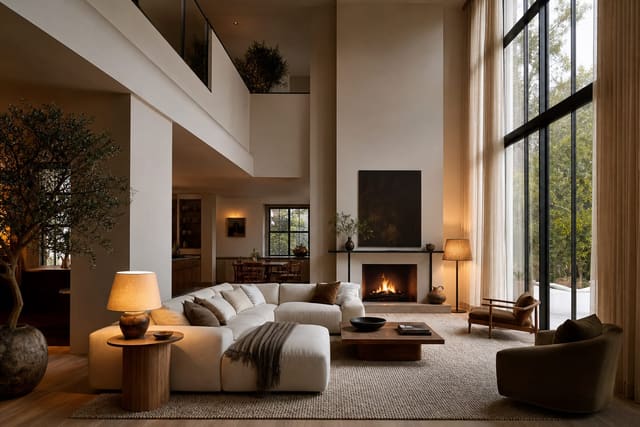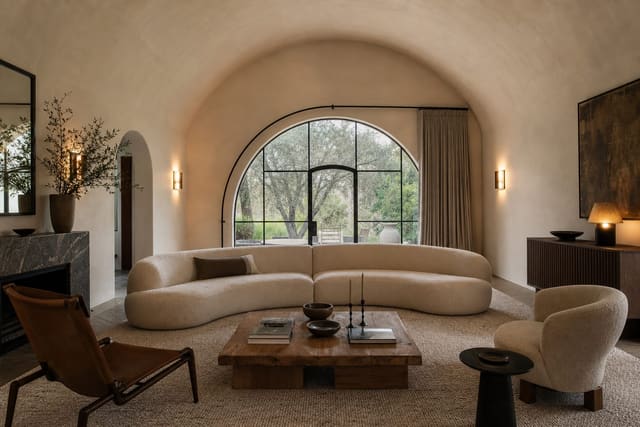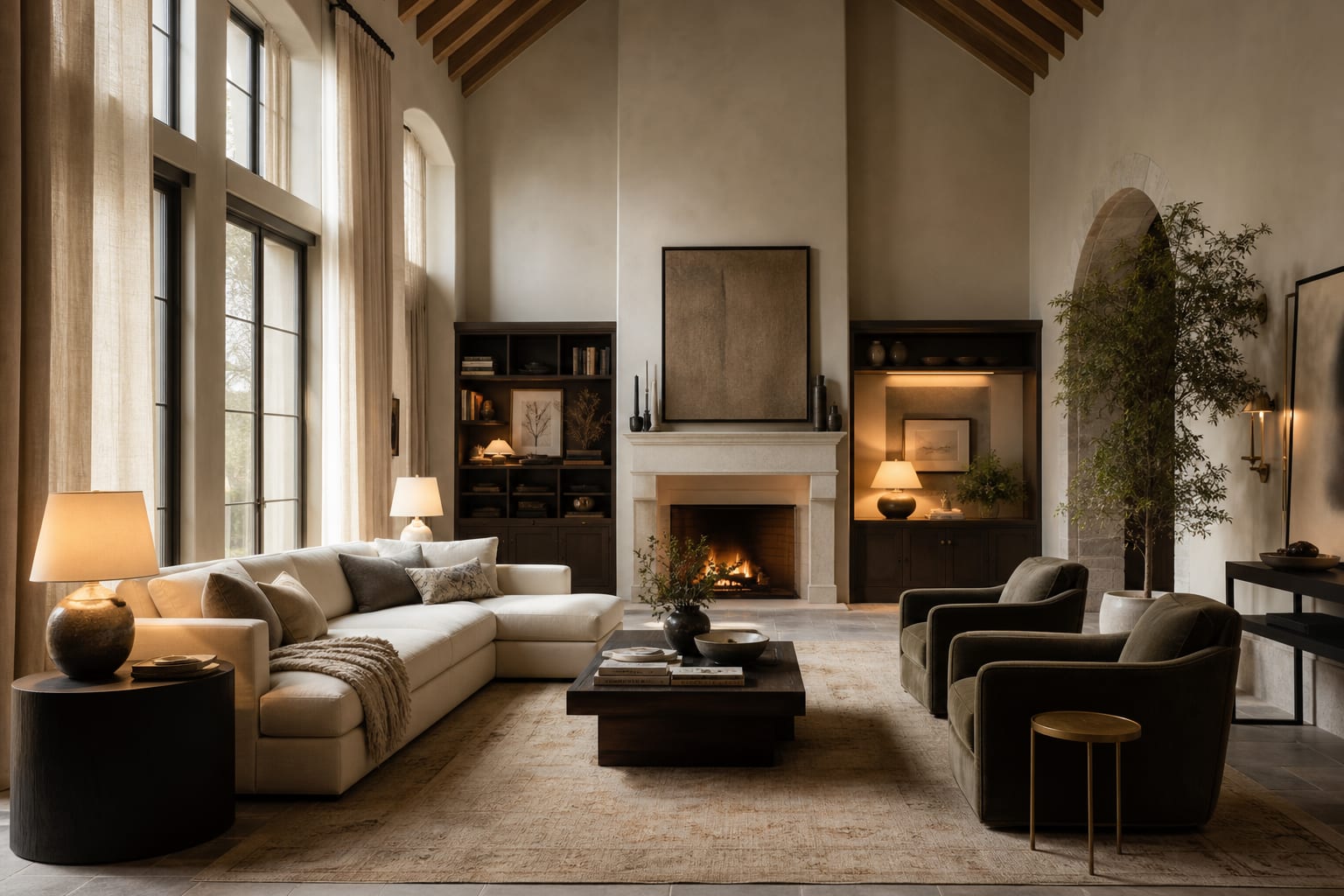
Vaulted ceiling rooms decorate best when furniture scales up, pendants drop to seating height instead of the apex, art climbs the focal wall above the seating, and one statement piece anchors the ridge line. The vault stays dramatic while the room reads grounded rather than hollow.
What makes a vaulted room feel finished instead of hollow?
Decide where the eye should stop, usually 7 to 10 feet up, even if the peak hits 16 or 20 feet. A tall ceiling feels uncomfortable when every design detail sits below door height and the upper half stays blank drywall.
Anchor the strongest wall: the fireplace wall, bed wall, or window wall with the most light. Oversized art, vertical panels, a tall bookcase, or drapery rising near the spring line makes the architecture feel held. If the room already feels weightless, pair this plan with grounding a high-ceiling room without clutter.
Don't decorate only the peak. Cathedral ceilings look strange when the top triangle gets all the attention and the furniture below looks timid. Build a middle layer of sconces, lamps, curtains, art, and plants that connects the human zone to the roof.
What scale decisions ground a vaulted ceiling?
The relationship that matters is between the ceiling, the largest furniture, and the main fixture, not ceiling height alone. A 92-inch sofa can still look small on a tiny rug under one distant ceiling fan.
- Rug: 8x10 feet minimum for a modest seating area; 9x12 usually reads better under a vault. At least the front legs should sit on it.
- Lighting drop: Leave 7+ feet of clearance below pendants in open seating areas. Over a dining table, hang the fixture 30 to 36 inches above the tabletop.
- Sofa back height: 32 to 36 inches gives better structure than a 28-inch low back; pair with taller lamps or art.
- Coffee table: Keep it 14 to 18 inches from the sofa edge regardless of ceiling height.
If the ceiling has exposed beams, use them to organize the room instead of treating them as rustic decoration. Match beam tone to the flooring or furniture wood, and compare options with modern beamed ceiling design before adding dark faux beams everywhere.
Test this on your own room photo with ReDesign before committing, keeping the doorway, windows, and main furniture visible so the preview solves the room you actually have.
How do you decorate vertical space without it looking theatrical?
One dramatic item at the peak looks like a stage prop; three or four repeated vertical cues make the height feel natural.
- Drapery: Mount rods 8 to 12 inches above the casing, or just below where the slope begins, and let fabric reach the floor with a clean break.
- Art: Choose a piece roughly two-thirds the sofa width, with 8 to 12 inches between the sofa back and the art's bottom edge. The same rule applies over a headboard, taller if the wall rises into a gable.
- Lighting layers: Use warm 2700K-3000K bulbs and place light where the ceiling can't help: table lamps, sconces on blank walls, picture lights, floor lamps in dark corners. If the room still feels dim, borrow fake natural light strategies.
- Plants: A 6 to 8 foot olive tree, ficus, or dracaena fills a corner under a slope better than several small plants. Use a substantial 14 to 18 inch pot so it reads as stable.
What mistakes ruin vaulted ceiling decorating?
- Making the fan the only feature. Support it with wall lighting, tall curtains, or art so it doesn't float alone in a drywall sky.
- Using tiny accessories for a huge volume. A 36-inch mirror, 60-inch console, or pair of substantial lamps works harder than a dozen small objects.
- Painting the peak a contrast color too early. Test contrast on the furniture-anchoring wall first so the ceiling reinforces the room instead of competing with it.
- Ignoring acoustics. High hard surfaces bounce sound; add a thick rug, lined curtains, upholstered chairs, and a rug pad to soften the room.
- Copying lodge-style decor in a non-lodge house. Heavy beams and antler chandeliers can overwhelm a suburban room; a warm neutral palette, one wood tone, and strong textiles respect the height without forcing a theme.
How can AI preview a vaulted ceiling room before you commit?
The risk in vaulted rooms is scale: a sofa, pendant, or curtain height that looks fine in your head can look miniature in the actual volume. Upload a photo from the room entry, one facing the tallest wall, and one showing the slope, windows, and furniture together.
Run specific tests: a 9x12 rug with a large sectional, floor-length linen curtains, warm sconces, oversized art, and a level pendant in one version; exposed light oak beams, a lower chandelier, taller plants, and a darker fireplace wall in another. Keep window positions and floor color consistent so the comparison is about scale, not fantasy architecture.
Check whether the middle third of the room has enough visual weight, whether the pendant hangs low enough to relate to the furniture while staying safely clear, and whether curtains make windows look taller instead of exaggerating blank wall above. AI can't verify electrical boxes, fan ratings, or beam structure, but it can show whether you need stronger furniture, taller textiles, or a calmer ceiling before you buy. Tape the rug size on the floor and mark curtain height on the wall before ordering anything.
A vaulted ceiling room works when the architecture feels grand and the furniture still feels close enough to use. Bring the visual focus down, repeat vertical cues with restraint, and let lighting connect the roofline to the life happening underneath.
Frequently Asked Questions
Why does my furniture look small in a vaulted room?
Standard 30-inch sofas and 18-inch coffee tables look small under a 12-foot vault apex. Scale up to oversized seating and tall case goods to match the ceiling volume.
How low should pendants hang under a vault?
At seating height, 60 to 72 inches off the floor, never at the apex. Bringing light down to the seating zone keeps the room intimate while the vault stays architecture overhead.
What rug size works under a vault?
One tier larger than a flat-ceiling room: 10x14 or 12x15 instead of 9x12. Oversized rugs anchor the seating group against the tall ceiling volume.
Should art climb the vault wall?
Yes. Gallery walls or oversized single pieces 60 to 84 inches tall on the focal wall fill the vertical void, while small art just floats in the space.
Does AI preview vault decorating?
Yes. Upload the vault room photo and AI previews oversized furniture, dropped pendants, and tall art against your room's existing vault geometry before you buy anything.
> Try this: Ready to see this on your own room? Open ReDesign and run the preview.
Three transformations to try
1. Oversized sofa + 12x15 rug under vault 2. Pendant dropped to seating under vault 3. Climbing gallery wall up vault focal wall