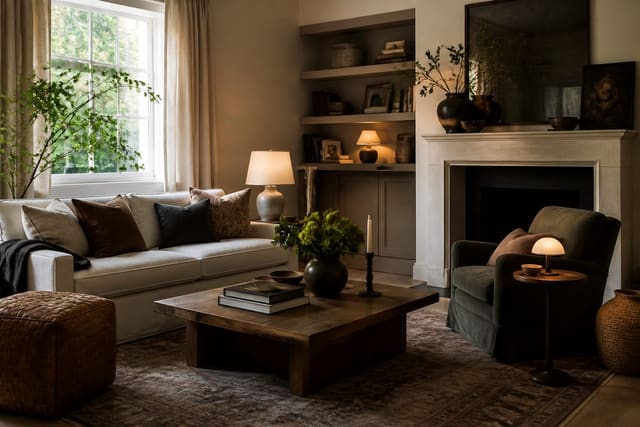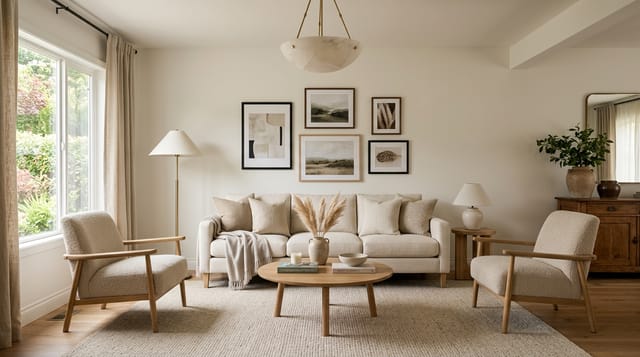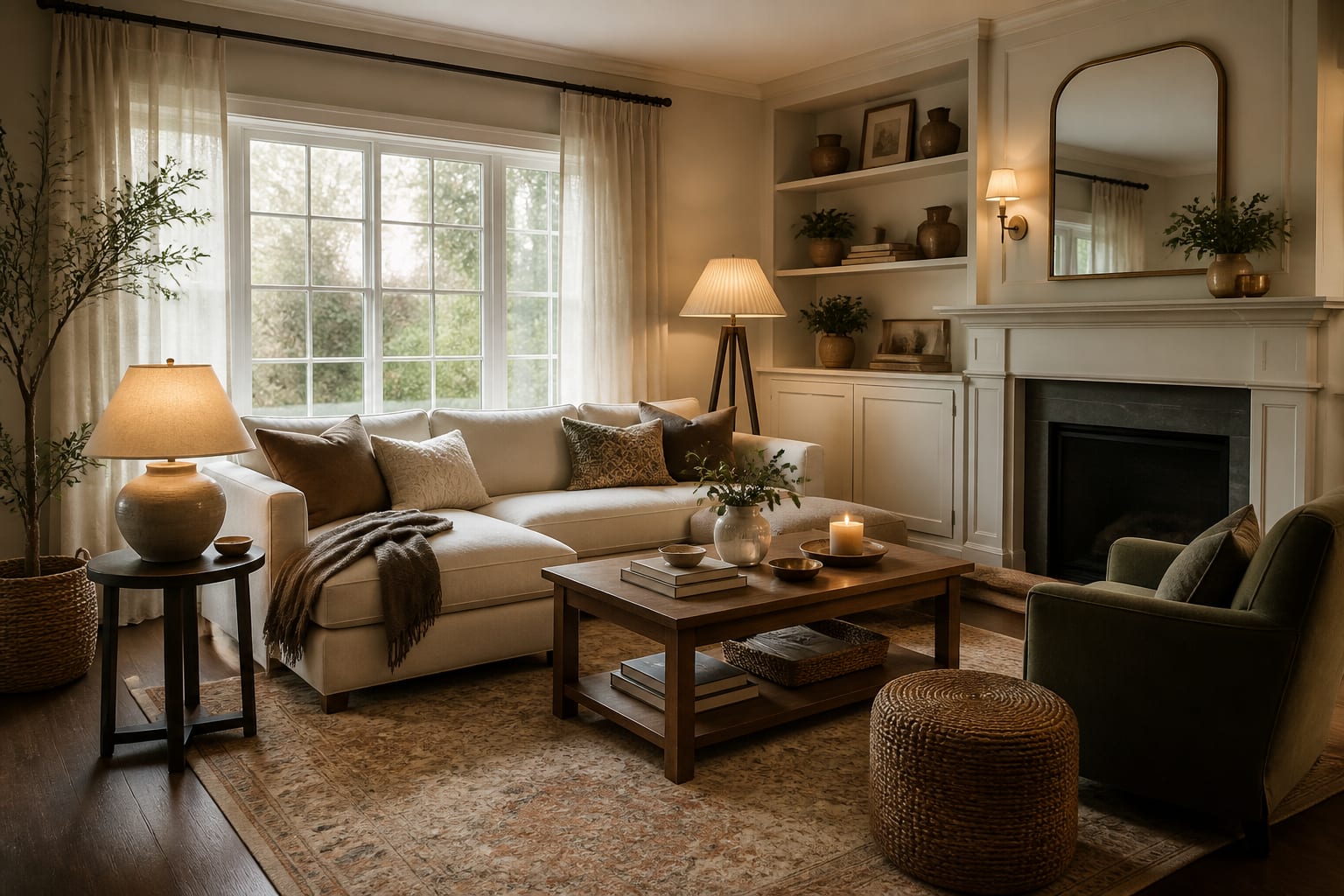
Most living rooms do not need new furniture. They need six small corrections, each under $200, that fix scale, light, and clutter. Spend your money on paint, warmer bulbs, a rug that is actually big enough, and curtains hung near the ceiling, and the room reads finished in a single weekend. The sofa you already own is almost never the problem; the problem is the harsh light above it, the undersized rug beneath it, and the bare wall behind it.
Where your first $200 actually goes
Start with the single change that touches the most square footage: the walls. A gallon of paint covers roughly 350 to 400 square feet, so most living rooms need two gallons for one coat and three for full coverage. At $55 a gallon, you repaint an entire room for under $170 including a roller kit, painter's tape, and a drop cloth. A warm white or a soft greige hides scuffs and reflects lamp light better than a flat builder beige. The return on that single afternoon of rolling is larger than anything you could buy at the same price, because color sets the mood of every other object in the room.
Lighting is the second lever and the cheapest. Builder homes ship with one harsh overhead fixture, and a single 4000K source makes everything look like a waiting room. Swap to 2700K bulbs at around $4 apiece, then add two table lamps so light comes from three points instead of one. A pair of thrifted lamps plus shades can cost as little as $40 total, and three-point lighting is the trick interior photographers use to make any room look layered. Put one lamp on each side of the seating and a third across the room, and the shadows soften in a way no overhead bulb can match.
The third early dollar goes to subtraction rather than addition. Walk the room with an empty box and pull out every object that does not earn its spot, because bare, edited surfaces are the cheapest luxury signal there is. A coffee table holding one stack of books and a single bowl reads richer than the same table buried under remotes and mail. If you want a structured starting point before you shop, these living room refresh ideas sequence the work so you never buy the same thing twice.
The under-$200 shopping list
Here is how I would spend a $600 total budget across six line items, each capped near $200 so no single purchase dominates:
- Paint and supplies for one room: $150 to $170
- Two table lamps with 2700K bulbs: $40 to $90
- An 8x10 rug to anchor the seating: $120 to $200
- Two curtain panels plus an extra-wide rod: $60 to $130
- A pair of large framed prints, 24x36 each: $50 to $110
- Storage baskets and a tray to corral clutter: $30 to $60
That list lands between $450 and $660 depending on how far you stretch each category. The rug is where most people underspend, then wonder why the room feels off. A 5x7 floating in the middle of a 13-foot wall looks like a bath mat; an 8x10 that tucks under the front sofa legs ties the furniture into one group. A washable polypropylene rug in that size holds up to traffic and pets while staying inside the $200 cap, so you are not paying wool prices for a high-use floor.
Curtains do quiet structural work. Hang the rod 4 to 6 inches below the ceiling and let the panels nearly brush the floor, leaving a half-inch gap. Standard 84-inch panels rarely reach when hung high, so buy 96-inch or 108-inch lengths even if the window is shorter. The eye reads the full vertical sweep as ceiling height, and the room feels taller for about $25 more per panel. Extend the rod 8 to 12 inches past each side of the window frame too, so the open panels frame the glass instead of covering it, which makes the window itself look larger.
Art is the last line, and scale matters more than subject. Two 24x36 prints at $50 to $110 for the pair fill a wall the way a single small frame never will, and a simple black or natural-wood frame keeps the cost down without looking cheap. If you already own art that is too small, group three pieces tightly so they read as one larger block rather than scattered dots.
Common mistakes to avoid
The most common error is buying small. Undersized rugs, art hung too high, and a single lamp in a corner all signal a room assembled by accident. Art should sit so its center is roughly 57 to 60 inches from the floor, and a grouping should span about two-thirds of the furniture beneath it.
The second mistake is leaving cords and clutter visible. A $30 cord cover and two lidded baskets remove the low-grade visual noise that makes a space feel cheap no matter how nice the furniture is. Declutter before you buy anything, because empty surfaces read as expensive on their own.
The third is chasing a trend color on the walls. A bold accent wall dates fast and shrinks resale appeal; a neutral envelope with color in the pillows and art is cheaper to change and reads more deliberate. Swapping two $20 pillow covers each season costs less than repainting and lets you follow color trends without commitment. If you want the room to feel richer without louder color, these moves to make a living room feel expensive lean on contrast and texture instead.
A fourth quiet error is spreading the budget too thin across many tiny purchases. Six small decorative objects at $15 apiece add up to $90 and leave the room looking busy, while one larger piece at the same total reads as a deliberate choice. When in doubt, buy fewer and bigger, and let negative space do the work that clutter cannot.
The last mistake is buying before you can picture the result. A rug or a paint color that looked right in the store can land flat in your actual light, and returns eat into a tight budget fast. Sketching the room first, or testing colors against your own walls, prevents the $180 purchase you end up dragging back to the store. These AI living room design ideas show how to test a layout and a palette before any money is spent, which is the cheapest insurance a budget project can buy.
Preview Your Budget Living Room in Re-Design
Frequently Asked Questions
What single change gives a living room the biggest visual upgrade for the least money? Paint, every time. A $55 gallon resurfaces every wall in the room, and warm 2700K bulbs at $4 each fix the lighting that paint cannot. Together they cost under $80 and change the room more than any furniture piece.
How big should a living room rug be on a budget? Go as large as you can afford, ideally 8x10 so the front legs of every seat rest on it. An 8x10 budget rug runs $120 to $200, while a too-small 5x7 wastes money by making the room feel disconnected.
Can I update a living room for under $200 total? Yes, if you focus. Two gallons of paint, a set of 2700K bulbs, and a pair of taller curtain panels land near $190 and cover the three changes with the highest payoff per dollar.