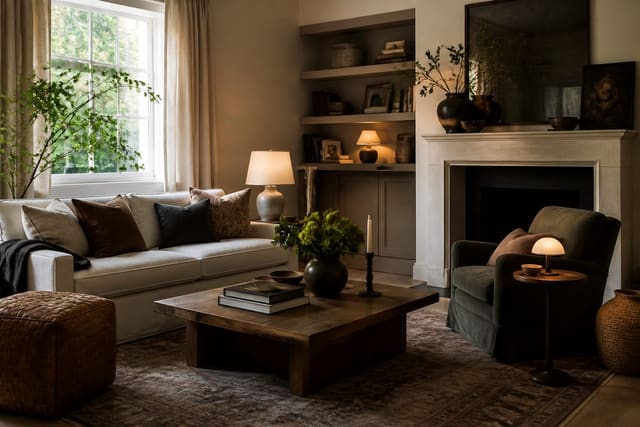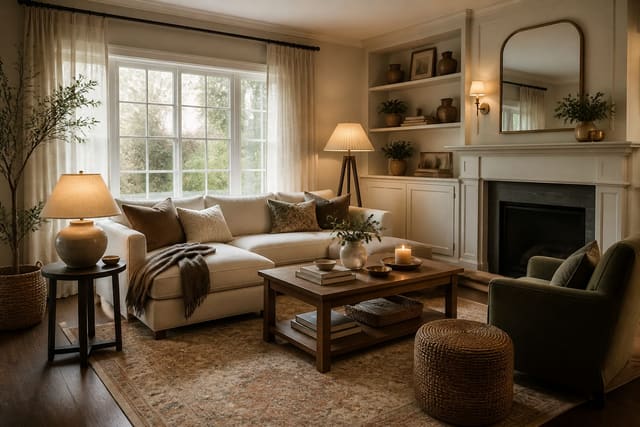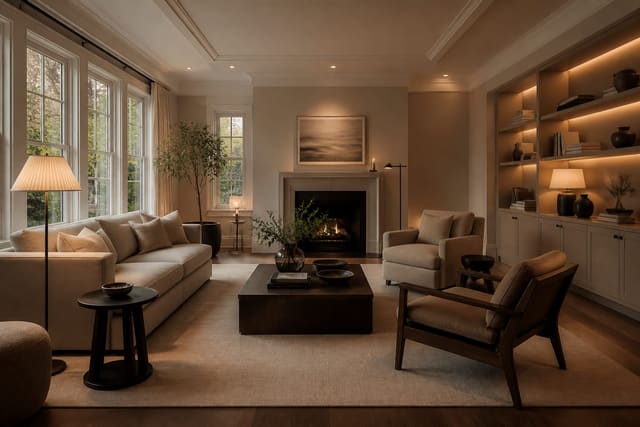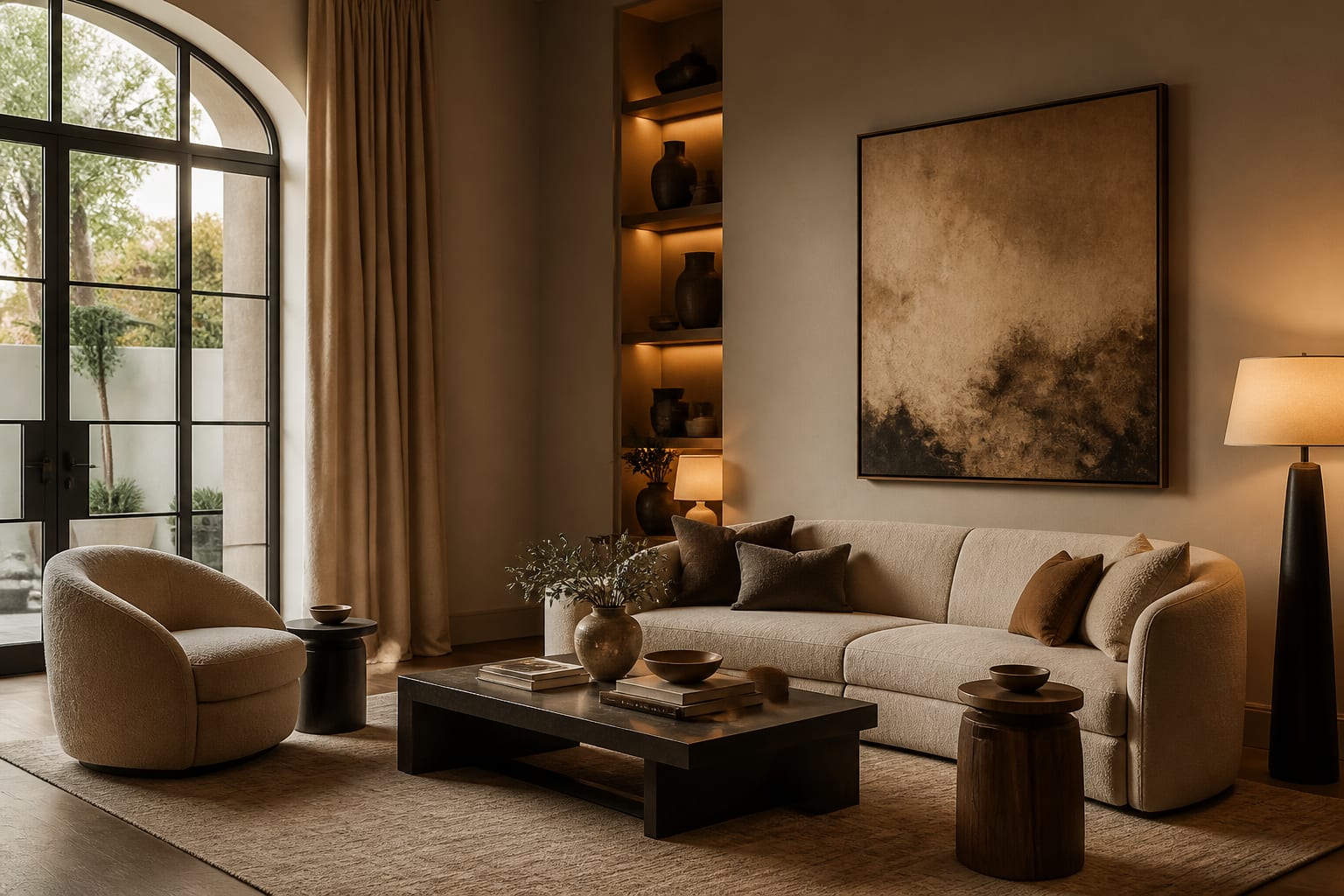
A living room that looks cheap despite decent furniture is almost always failing on the details around the furniture, not the furniture itself. My read is that expensive-looking rooms share a short list of traits that have little to do with budget: layered light instead of one overhead fixture, drapery hung high and full, a few materials that catch the eye, and a ruthless edit. You can own an affordable sofa and still read as high-end if those things are right.
The inverse is also true, which is why you see expensive furniture sitting in a room that looks flat and builder-grade. The honest answer is that the wallet shows up in the finishing, not the price tags. Below is the checklist I work through, ordered from the changes that move the needle most to the smaller touches that polish it off. Almost none of it requires replacing the big pieces you already own.
Light it like a hotel, not an office
Lighting is the fastest, cheapest upgrade from cheap to expensive. The single ceiling fixture that came with the room is the enemy; it flattens everything and casts the same hard light a parking garage uses. Replace it with layers. You want at least three sources at different heights: a couple of table or floor lamps, a sconce or two if you can manage it, and dimmable overheads kept low. Put everything on dimmers and standardize the bulbs around 2700K to 3000K so the whole room glows warm rather than going clinical.
The expensive feeling comes from pools of light and shadow, not from a uniformly bright room. A few simple swaps in fixtures and bulbs is genuinely one of the cheapest ways to reset the whole mood, and it pairs naturally with the other no-cost moves in the living room refresh ideas playbook. Skip cool-white and daylight bulbs entirely in a living room; nothing reads as cheap faster than blue-tinted light bouncing off the ceiling.
Dress the windows and the floor properly
Window treatments are where a lot of rooms quietly announce their budget. Curtain rods hung at the top of the window frame, with panels that stop at the sill, are the most common high-end-killer. Mount the rod close to the ceiling, 4 to 12 inches above the frame, and extend it 8 to 12 inches past each side so the panels stack off the glass. The curtains should reach the floor and either just kiss it or break slightly. Floor-length panels in a heavier fabric immediately read as tailored.
The floor is the other big surface. A rug that is too small is the single most common scale mistake, and it shrinks a room visually. A few rules keep it looking intentional:
- Get a rug big enough that at least the front legs of every seat rest on it.
- Leave a consistent 10 to 20 inches of bare floor framing the rug.
- Choose a low, dense pile or natural fiber over a thin printed rug that telegraphs cheap.
- Layer a smaller textured rug over a large jute base if you want depth without buying one huge wool piece.
These spend-light fixes overlap heavily with the budget living room ideas I lean on when the goal is maximum impact per dollar.
Edit, finish, and add a few real materials
The least expensive move of all is removing things. Cheap-looking rooms are usually cluttered with many small objects, mismatched frames, and surfaces covered edge to edge. Expensive rooms breathe. Clear at least a third of the small stuff, group what remains in odd numbers, and give each object some room. Negative space reads as confidence and costs nothing.
Then add a handful of materials that look and feel real, because the eye clocks them instantly. One stone or marble surface, a brass or aged-metal accent, a linen or velvet pillow, a piece of actual wood instead of laminate; you do not need many, just a few hits of authentic texture among the affordable pieces. Finish details matter too: upgrade plastic cabinet and door hardware to solid metal, replace flimsy throw pillows with down-filled inserts that hold a karate chop, and frame art in real frames with proper mats. How you lay everything out also affects how considered it looks, so a layout that creates a clear conversation grouping rather than a row of furniture against the walls, like the arrangements in the living room layout ideas guide, makes even modest pieces feel deliberate.
Common mistakes to avoid
The most common mistake is buying a matching furniture set, which screams showroom and reads as cheap precisely because it looks like it was bought all at once. Mix your woods, metals, and eras instead. A second frequent mistake is keeping that single bright overhead light on; no amount of nice furniture survives flat, cool top-light.
People also tend to under-size everything, from the rug to the art to the curtains, and small accessories scattered across a big room always look budget. Go bigger and fewer. Another mistake to avoid is leaving cords, remotes, and visible clutter everywhere, since the high-end look depends on surfaces being clear and tidy. Finally, do not over-theme the room with too many trendy accents at once; restraint is what makes a space feel collected and expensive, while a pile of fast-fashion decor pieces makes it feel disposable no matter what they cost.
Use AI design to preview how to make a living room feel expensive before you commit
The frustrating thing about chasing a high-end look is that the changes are subtle and interact, so it is hard to know whether new curtains or a bigger rug will actually move the needle. With Re-Design you upload a photo of your current living room and preview the high-mounted drapery, the larger rug, the warmer layered lighting, and a cleared-off, edited version, so you can see which combination reads as expensive before you spend on any of it. Comparing your room with and without floor-length panels in one render is genuinely clarifying.
The AI design tool also helps you test the material swaps that are easy to overdo, like adding a stone surface or switching hardware to brass. Upload the space, generate a few options, and judge them against your actual sofa and walls rather than guessing from a store sample. Because the existing furniture stays in the shot, you find out whether the affordable pieces you already own can carry a richer look, which is exactly the question worth answering before you upgrade anything.