A butler's pantry is the most underused room in a lot of new houses, treated as a pass-through closet when it should be the hardest-working square footage in the home. The mistake is decorating it like a hallway. The better move is to plan it as a genuine second kitchen: a place to stage food, hide the coffee maker and dirty dishes, and store what the main kitchen cannot. Done right, this little room between the kitchen and dining room lets the main kitchen stay clean and the party stay on the far side of a closed door.
What makes a butler's pantry actually useful?
The whole value of a butler's pantry is that it absorbs the mess and the overflow the main kitchen cannot. That means it needs real work surface, not a token shelf. Plan a run of counter at the standard 36-inch height with at least 24 inches of clear landing space so you can stage serving platters, plate desserts, or park the coffee station. A second sink, even a compact 15-inch bar sink, turns the room into a true prep and cleanup annex, letting you rinse glassware and fill water carafes without crowding the cook at the main sink.
Storage is the other half. This is the place for the things that clutter a kitchen: the stand mixer, the punch bowl, the holiday china, the second set of everyday glasses. Use a mix of closed cabinets to hide the unglamorous and open shelves to display the pretty stemware and serving pieces. Full-extension drawers in the base keep heavy small appliances accessible without crouching into a dark cabinet. The room earns its footprint when it takes pressure off the kitchen, so plan storage for the specific overflow your kitchen actually generates.
How should you lay out the space?
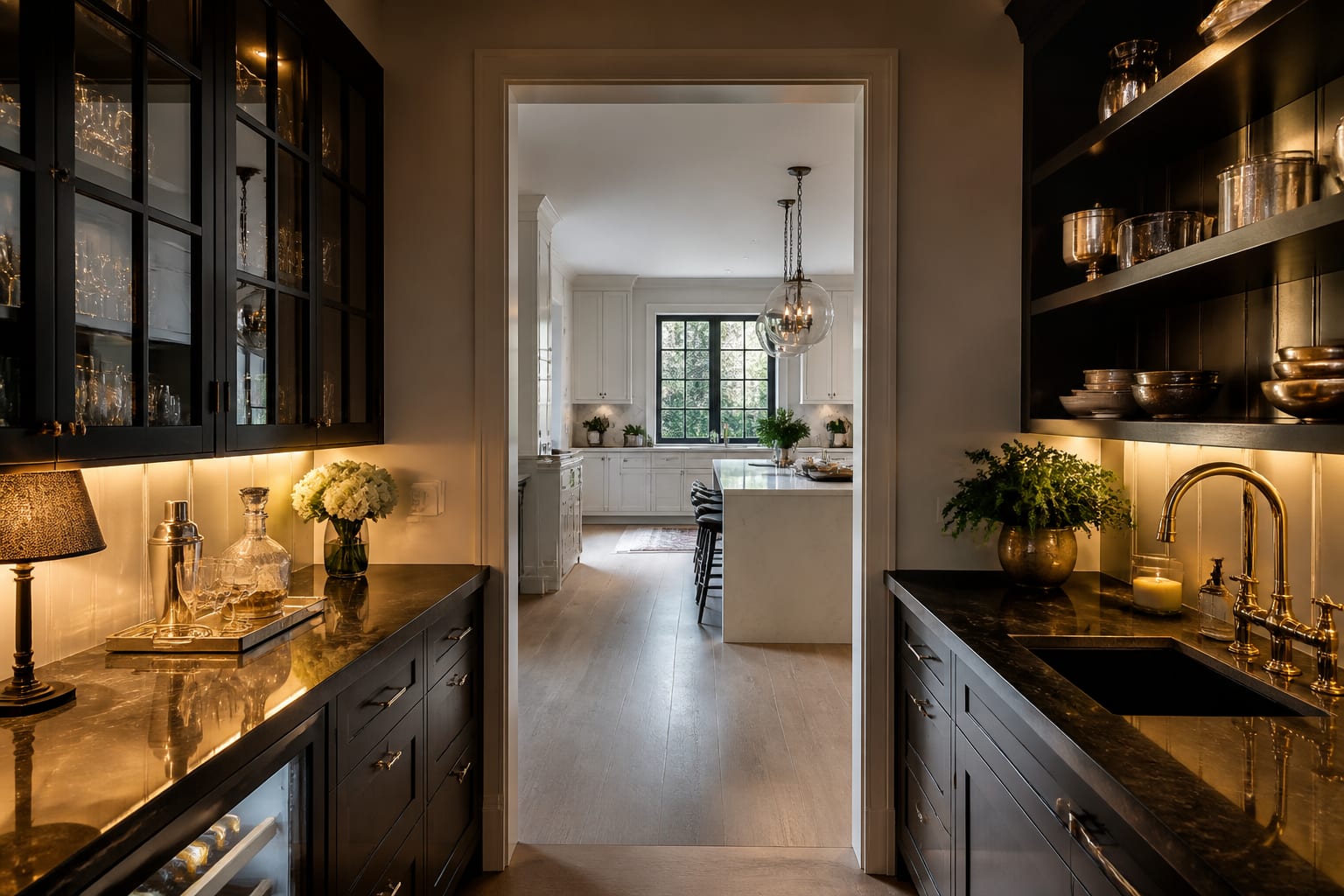
Layout depends on whether the pantry is a walk-through or a dead-end room. In a walk-through connecting kitchen and dining, keep the traffic lane clear: a single counter run along one wall with at least 42 inches of passage beside it lets people move through while one person works. A galley layout with cabinets on both walls needs a wider 48-inch aisle so two people can pass back to back during a party. A dead-end pantry can go deeper, wrapping counter and storage around three walls in a U for maximum capacity.
Height and zones matter in such a small footprint. Reserve the counter and the band just above it for daily working items and the coffee or bar station, push display pieces to upper open shelves, and keep heavy backstock and appliances in the base. Tie the finishes to your kitchen so the two rooms read as related; if your kitchen is bright and pale, our white kitchen ideas show how to carry that palette through a connected pantry without it feeling like a separate, mismatched room. A clear plan for who does what in the space keeps a small room from feeling cramped.
Butler's pantry ideas to try
- Build a coffee and tea station with a 24-inch counter, an outlet strip, and an upper shelf for mugs so the morning rush leaves the main kitchen.
- Add an appliance garage with a roll-up or lift door to hide the toaster, blender, and coffee maker behind a clean cabinet face.
- Wrap the room in a moody cabinet color like deep green or charcoal so the small space reads as a deliberate jewel box.
- Install glass-front uppers lit with warm 2700K LED strips to display crystal and china like a small bar.
- Run a bold patterned backsplash, a zellige tile or a graphic mosaic, since the small wall area makes a splurge affordable.
- Fit a 15-inch bar sink with a tall gooseneck faucet for filling pitchers, rinsing stemware, and arranging flowers.
- Tuck a small 15-inch beverage fridge or wine cooler under the counter to free shelf space in the main refrigerator.
- Hang a single small pendant or a pair of sconces at 66 to 72 inches so the room feels finished rather than utilitarian.
How do you make it feel finished, not utilitarian?
A butler's pantry is small enough that you can afford the finishes you would never spread across a whole kitchen, and that is exactly where to spend. The compact footprint means a luxe stone counter, a dramatic backsplash, or custom cabinet color costs a fraction of doing the same in the main room. A confident color choice is the fastest upgrade; our kitchen cabinet paint ideas cover saturated tones that turn a plain closet into a room with intent. Paint the back wall and cabinets a deep shade and the little space suddenly feels designed.
Lighting and hardware finish the effect. Skip the lone overhead and add under-cabinet lighting so the counter actually works after dark, plus a small pendant or sconces for warmth. Swap builder-grade knobs for unlacquered brass or matte black pulls that match or intentionally contrast the kitchen. Treat the backsplash as jewelry: because the wall is small, a handmade tile that would blow the budget across a full kitchen is suddenly within reach, and our kitchen backsplash ideas walk through patterns that punch above their square footage. The point is that the small scale lets you be bold cheaply, so do not default to plain.
See it first in Re-Design
A butler's pantry is hard to picture because it is usually a blank box of a room with a lot of options crammed into a few feet. Take a photo of the space, even an empty closet or a builder-grade pass-through, and upload it to Re-Design to preview the finished room before you commit. You can re-design the same walls with a deep green cabinet color against a bright kitchen, swap a plain subway backsplash for a bold zellige, or test glass-front uppers versus solid doors to see which makes the small room feel right. Seeing it rendered in your actual space tells you whether the bold color reads as a jewel box or simply makes a tight room feel darker, long before any tile or paint is ordered.
Frequently Asked Questions
What is the difference between a butler's pantry and a regular pantry?
A regular pantry is mostly shelving for food storage. A butler's pantry adds counter space, often a sink, and sometimes small appliances, functioning as a transition and staging area between the kitchen and dining room. It is meant for prepping, serving, and hiding mess during entertaining, not just holding cans and boxes, which makes it closer to a small second kitchen.
How wide should a butler's pantry walkway be?
Keep at least 42 inches of clear passage in a single-counter walk-through so one person can work while another passes. If cabinets line both walls in a galley layout, widen the aisle to 48 inches so two people can move past each other during a party. Anything narrower turns the room into a bottleneck exactly when you need it most.
Do I need a sink in a butler's pantry?
You do not strictly need one, but even a compact 15-inch bar sink greatly increases the room's usefulness. It lets you rinse glassware, fill carafes, and arrange flowers without crowding the main kitchen sink during cooking or cleanup. If plumbing is already nearby, the small added cost usually pays off the first time you host a dinner.
Can a small butler's pantry still look high-end?
Yes, and the small size is an advantage. Because the counter, backsplash, and cabinet area are tiny, you can afford premium stone, handmade tile, and a bold cabinet color that would be expensive across a full kitchen. Add warm under-cabinet lighting and good hardware, and a former closet reads as a deliberate, jewel-box room.