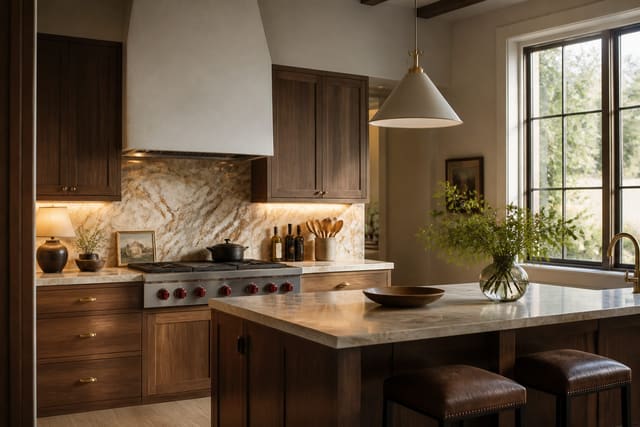
Repainting the cabinets is the single highest-return change you can make to a kitchen, and it costs a fraction of replacing them. A full cabinet refinish runs roughly $1,000 to $3,000 in materials and labor, against $15,000 or more for new boxes, which is why the color you choose carries so much weight. The error people regret most is defaulting to the same builder white, or chasing a saturated color that thrills for a season and tires fast. The better path is to match the color to your light and counters, then commit to a finish that holds up to daily wear.
Choosing a cabinet color that lasts
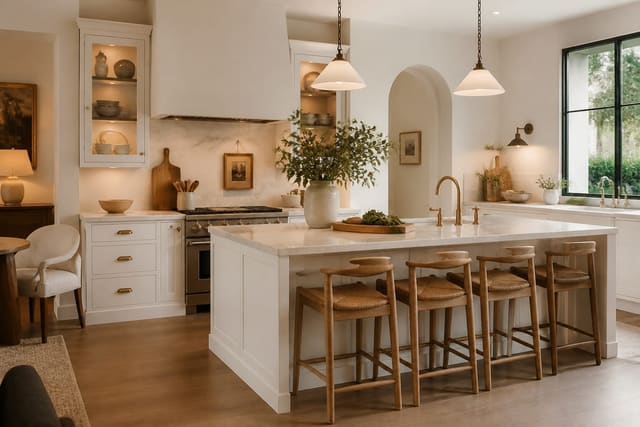
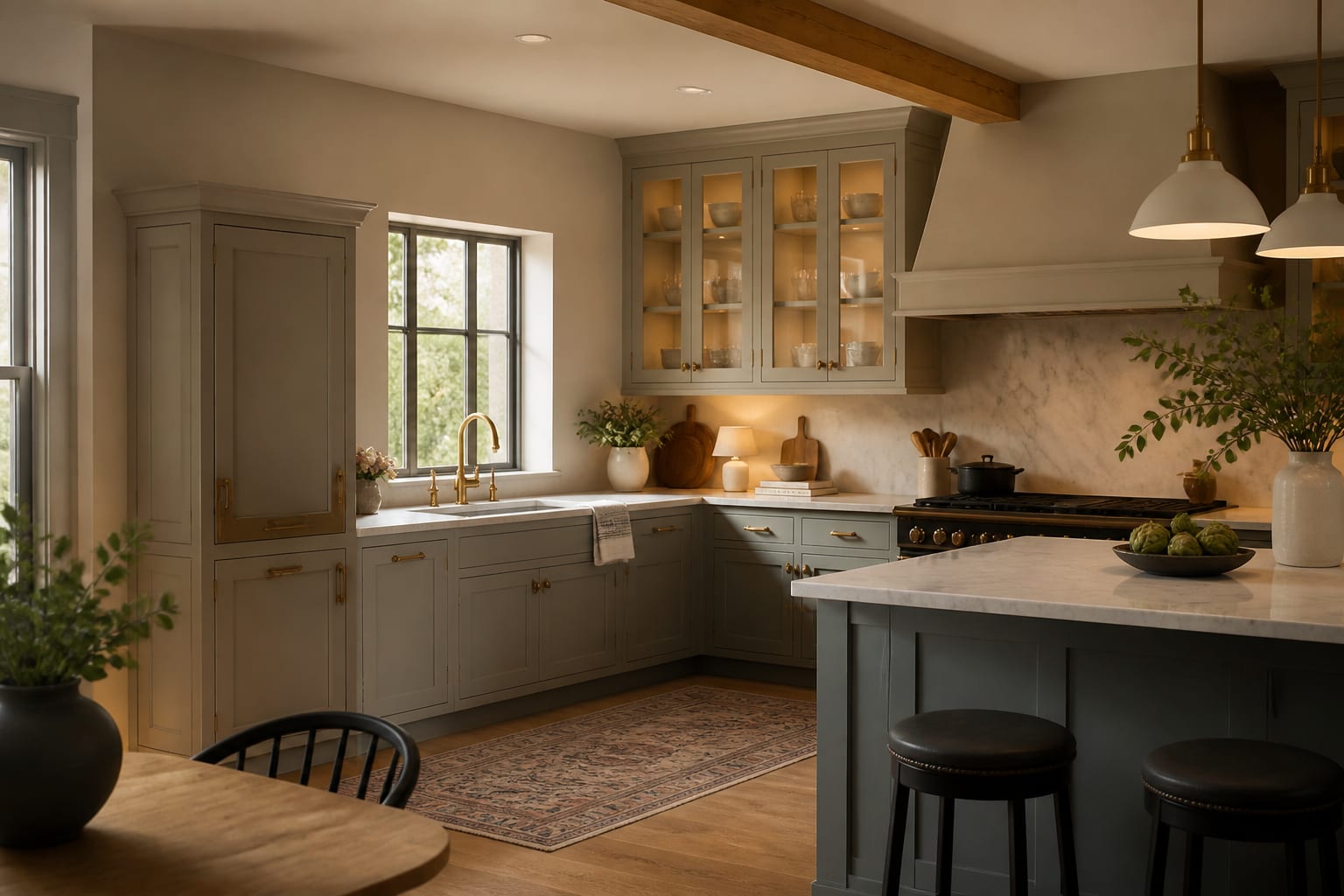
The colors worth your time fall into three camps, and which one fits depends on how much risk you want to carry. Warm and creamy whites are the durable backbone: they brighten a dim kitchen, suit almost any counter, and never look wrong, though they ask for a warm white rather than a stark blue-white so the room does not feel clinical. Soft, grayed greens and muted blues are the middle ground, adding character while still behaving like near-neutrals, which is why sage and slate have become so common. The boldest camp, deep charcoal, navy, and forest, makes the strongest statement and hides wear best, but wants good light to carry it.
Whatever camp you choose, test it against your fixed surfaces before you buy. Paint a 24-inch by 24-inch swatch board, hold it against the counter and floor, and view it at morning, midday, and night, since cabinet color shifts hard with light. If your backsplash is staying put, let it lead; our guide to kitchen backsplash ideas covers which tile tones pair with which paint families. A warm-white cabinet against a zellige backsplash and a butcher-block counter reads completely differently than the same white against a stark quartz, so judge the combination, never the chip alone.
Two-tone and accent strategies
You are not limited to one color, and the most interesting kitchens rarely use just one. A two-tone scheme, a deeper color on the base cabinets and a lighter shade on the uppers, is the most popular approach for good reason: it grounds the room at counter level while keeping the top half airy, which suits kitchens with average ceiling height and limited daylight. Pairing a charcoal or navy lower with a warm-white upper gives you drama without darkening the whole space.
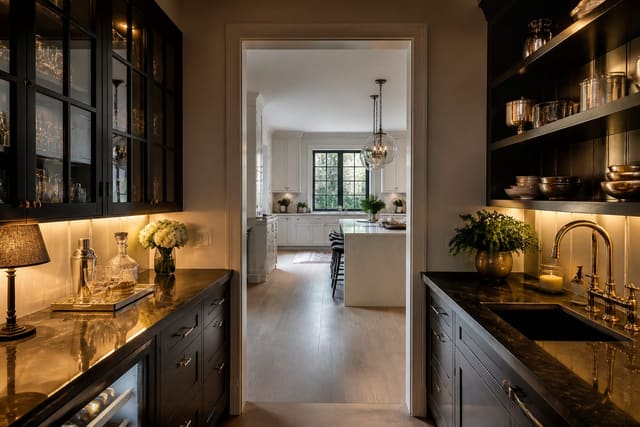
The island is the other natural place to break from the main palette. Painting the island a contrasting color, deep green against white perimeter cabinets, or black against pale wood, turns it into a deliberate centerpiece and lets you test a bolder shade in a contained dose. You can also reserve color for a single run, a pantry wall, or the cabinetry flanking a range, and keep the rest neutral. A scullery or butler's pantry is a low-stakes spot to try a saturated color you are not ready to commit to in the main kitchen, since it is a back-of-house space few guests judge harshly.
Getting the finish and prep right
Color choice is only half the job; the finish determines whether the paint still looks good in three years. Cabinets take constant contact, grease, and cleaning, so sheen matters. A flat finish stains and scuffs too easily here, while a full high-gloss shows every imperfection in the door. The reliable middle is a satin to semi-gloss in the 30 to 40 percent sheen range, which wipes down without broadcasting brushstrokes. Use a dedicated cabinet or trim enamel, a waterborne alkyd, rather than ordinary wall paint, because it cures harder and stands up to repeated washing.
Prep is where most home jobs fail. Clean every door with a degreaser, sand to dull the existing finish, and apply a bonding primer before two thin topcoats, sanding lightly between coats for a factory-smooth surface. Skipping the primer is the single most common reason painted cabinets peel within a year. Open-grain woods like oak need an extra step, a grain filler or a slick of primer worked into the texture, or the open pores telegraph straight through the paint and undercut the smooth look you paid for. Spray gives the smoothest result, but a quality foam roller and a fine brush get close. Remove the doors, label them, and paint them flat so the enamel levels without sags. If you want a clean visual reference for the brightest version of this work, white kitchen ideas shows what disciplined prep and the right warm white can do to a tired set of boxes.
Kitchen cabinet paint ideas to try
- Paint tired oak cabinets a warm creamy white with a 35 percent sheen enamel to brighten a dim kitchen.
- Use a deep charcoal on the base cabinets and a warm white on the uppers for a grounded two-tone look.
- Color-block the island in forest green against white perimeter cabinets to create a deliberate centerpiece.
- Try a muted slate-blue on a full set of shaker doors for character that still behaves like a neutral.
- Paint the inside of glass-front uppers a contrasting color so the displayed dishes pop against it.
- Refinish a butler's pantry in a saturated color you are not ready to use in the main kitchen.
- Match cabinet color to a warm 2700K under-cabinet light strip so the paint glows rather than dulls at night.
- Pair a soft sage on the lowers with a butcher-block counter and brass pulls for a warm, organic kitchen.
See it first in Re-Design
Cabinet paint is a weekend of labor and a long commitment, so seeing the color in your own kitchen first is worth far more than a fan deck. Upload a photo of your kitchen into Re-Design and re-design the cabinets in a warm white, a charcoal two-tone, and a saturated green to judge each against your real counters, floor, and light. You can preview a single accent island, a full repaint, or a bold pantry, and switch hardware and counters alongside the color, so you walk into the project knowing the exact shade and scheme before you sand a single door.
Frequently Asked Questions
What sheen is best for kitchen cabinets?
A satin to semi-gloss in the 30 to 40 percent sheen range is the standard recommendation. It wipes clean and resists grease and moisture without the glassy look or imperfection-revealing shine of a full high-gloss. Flat and eggshell finishes scuff and stain too readily on surfaces that get touched and cleaned as often as cabinets do.
Do I need to prime cabinets before painting?
Yes, almost always. A bonding primer is what lets the topcoat grip a previously finished or glossy surface, and skipping it is the leading cause of peeling within the first year. Clean with a degreaser, sand to dull the old finish, then prime before applying two thin coats of a cabinet-grade enamel for a durable result.
What color cabinets are timeless?
Warm, creamy whites are the most enduring, since they suit nearly any counter and never look dated. Soft grayed greens, muted blues, and deep navy also age well because they behave like near-neutrals rather than trend colors. The shades most likely to date quickly are bright, saturated colors and cool, blue-leaning whites that read clinical.
How much does it cost to paint kitchen cabinets?
Professionally, refinishing a typical set of cabinets runs roughly $1,000 to $3,000 in materials and labor, far below the $15,000 or more for new cabinetry. A do-it-yourself job costs mostly your time plus $50 to $80 per gallon of cabinet enamel and a bonding primer, making paint the highest-return update in most kitchens.