The backsplash is the smallest surface in a kitchen with the biggest stylistic payoff, and it is where I tell homeowners to take a chance. It protects the wall behind the counter and range, but its real job is to set the room's personality, and the same cabinets read completely differently behind glossy subway tile versus a full marble slab. These ideas run from the safe classics to the bolder moves, with the details that actually decide whether a backsplash looks custom or builder-grade: grout color, where you stop the tile, the material, and how it talks to your countertop.
Subway, zellige, and tile choices
Tile is the default backsplash for good reason, but the choices within it create wildly different results. Classic 3-by-6-inch subway tile is the safe, timeless pick, and it never truly goes out of style, but laid in a plain offset brick pattern with white grout it can read cheap and expected. Lift it by changing one variable: stack it vertically, run it in a herringbone, choose an oversized or skinny format, or pick a soft color instead of stark white. Handmade zellige is the tile having a deserved moment, prized for its uneven surface, slight color variation, and glossy glaze that catches and scatters light across the wall, giving a depth that machine-made tile cannot fake. Zellige rewards a tight, matching grout so the irregular tile edges stay the star. Picket, fish-scale, and hexagon shapes add personality for those wanting more pattern, while a textured or fluted ceramic adds shadow and movement in a single color. Glass tile bounces light and suits a brightening backsplash, though it shows adhesive behind it and demands careful installation. Consider scale relative to your kitchen: large-format tile means fewer grout lines and a calmer, more modern wall, while small mosaic adds intricate texture but more grout to clean. Whatever tile you choose, order extra for cuts and future repairs, and look at a full mocked-up section on the wall, since a single tile in hand never predicts how a whole field will read.
See also our guide to Kitchen Cabinet Paint Ideas for more on kitchen backsplash ideas.
Slab backsplashes and the seamless look
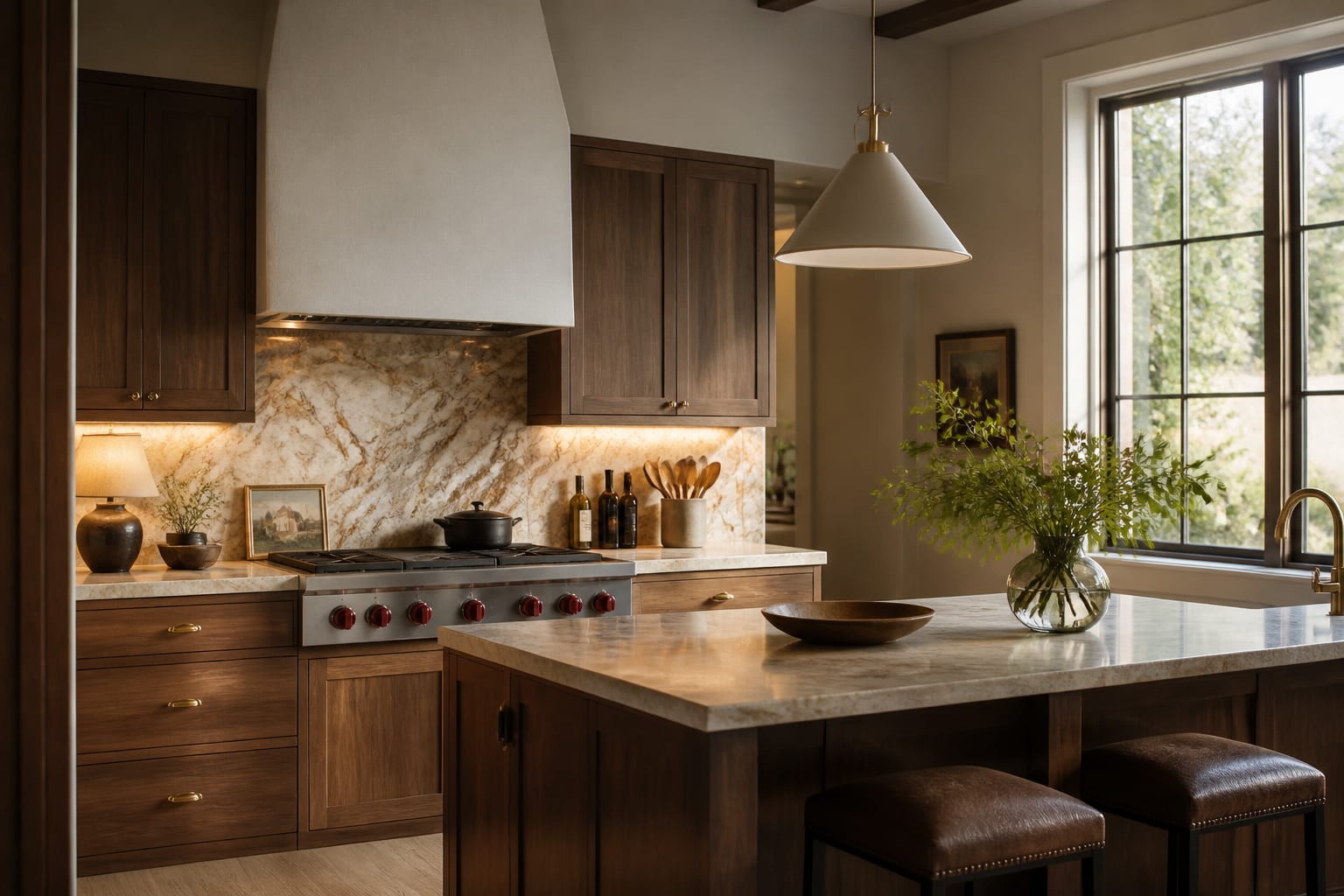
For a more luxurious, contemporary result, skip tile entirely and run a solid slab up the wall. A slab backsplash uses the same stone or quartz as the countertop, or a complementary one, carried vertically behind the counter and often all the way up behind the range, creating an uninterrupted sweep with no grout lines at all. The effect is calm, seamless, and undeniably high-end, and it is having a strong moment in modern kitchens precisely because it reads as one continuous material rather than a busy patchwork. The biggest advantage beyond looks is practical: with no grout lines, there is nothing to scrub or seal, so a slab splash wipes clean in one pass and never traps grease or grime the way tile grout does, which makes it especially smart directly behind a cooktop. Dramatic stone shines here, since a marble or quartzite with bold veining becomes the room's focal point when run full height behind the range, and matching the slab to a waterfall island ties the whole kitchen together. The trade-off is cost, because stone slabs are pricier than most tile and the labor to template and install a large vertical piece adds up. A middle path is a slab only behind the range as a feature panel, with simpler tile or paint elsewhere, concentrating the splurge where it shows. If your counter already has gorgeous movement, continuing it up the wall is the most cohesive backsplash you can choose.
For a related angle on kitchen backsplash ideas, read Butlers Pantry Ideas.
Where to stop: counter height versus full ceiling
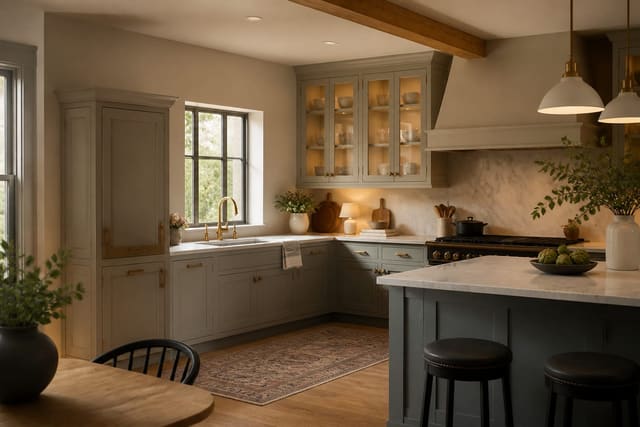
How far up the backsplash goes changes the room as much as the material does. The standard stops the tile at the bottom of the upper cabinets, roughly 18 inches above the counter, which is economical and perfectly fine, but it is also the most expected. Running tile all the way to the ceiling is the move that makes a kitchen feel custom and taller, drawing the eye up and treating the wall as a deliberate feature rather than a strip of protection. Tile-to-ceiling looks especially strong behind a range with no uppers above it, where a full-height field of zellige or slab becomes a dramatic backdrop, and in a galley or a wall with open shelving, where running the tile up behind the shelves unifies the whole surface. If full height feels like too much tile or budget, a good compromise is to take the tile to the ceiling only on the range wall as a feature and keep it at standard height elsewhere. Watch the practical details: tile-to-ceiling means more material and labor, and around windows you will need to plan the tile cuts so partial tiles do not land awkwardly. Where there are no upper cabinets, ending the tile cleanly at the ceiling or against a shelf reads far more finished than stopping it at an arbitrary line partway up. Decide the stopping point early, because it affects how much tile you order and how the whole wall is composed.
Grout and pairing the backsplash with your counters
Two finishing decisions make or break a backsplash, and homeowners routinely underestimate both. The first is grout color, which is a genuine design choice, not an afterthought. Matching the grout to the tile makes the wall read as a seamless field of color, calm and modern, which flatters zellige and large-format tile. Contrasting grout, like a dark line against white subway tile, emphasizes the pattern and the geometry, leaning industrial or vintage, but it shows every imperfect line, so it demands a skilled installer. A soft mid-gray grout is the forgiving middle ground against white tile, since it hides cooking stains far better than bright white grout, which yellows and grays with use anyway. The second decision is how the backsplash relates to the countertop, because these two surfaces sit inches apart and must agree. If your counter is busy with bold veining, choose a quiet backsplash, a simple subway or a solid slab, so the two surfaces do not compete. If your counter is plain, the backsplash can carry the pattern and personality. Match undertones above all: a warm counter wants a warm-toned tile, while a cool gray quartz pairs with cooler whites and grays, or the pairing looks slightly off without anyone knowing why. Pulling a vein color from the counter into the backsplash tile, or continuing the counter material up as a slab, are the two most reliable ways to make the surfaces feel designed together rather than separately chosen.
- Lift plain subway tile by stacking it vertically, running herringbone, or swapping stark white for a soft color.
- Choose handmade zellige for an irregular, glossy surface that scatters light the way printed tile never can.
- Run a solid stone slab up the wall behind the range for a seamless, grout-free splash that wipes clean instantly.
- Take tile all the way to the ceiling on the range wall to make the kitchen feel taller and more custom.
- Match grout to the tile for a calm seamless field, or contrast it to emphasize the pattern and geometry.
- Use a soft mid-gray grout against white tile so cooking stains and grime stay far less visible over time.
- Pair a busy veined counter with a quiet backsplash, and let a plain counter carry a bolder patterned tile.
- Pull a vein color from the countertop into the tile so the two surfaces read as deliberately designed together.
Bring the look home with Re-Design
A backsplash is small but it sets the room's whole tone, and samples never show how a full field will read. Upload a photo of your kitchen to Re-Design and preview zellige against a stone slab, or test subway tile to the ceiling versus stopping at the cabinets, all against your real counters and cabinet color. Seeing how the backsplash pairs with your countertop in your own light makes the final tile and grout choice far easier to commit to.
Frequently Asked Questions
Is a slab backsplash better than tile?
It depends on your priorities. A slab gives a seamless, luxurious look with no grout lines to scrub or seal, so it wipes clean instantly and stays grease-free, especially behind a range. Tile offers far more color, pattern, and texture at a lower cost. Slab suits modern, minimal kitchens; tile suits those wanting character and personality on the wall.
Should backsplash tile go all the way to the ceiling?
Full-height tile makes a kitchen feel taller and more custom, and it looks especially strong behind a range with no upper cabinets or behind open shelving. It costs more in material and labor, so a common compromise runs tile to the ceiling only on the range wall as a feature and keeps standard 18-inch height elsewhere to manage the budget.
How do I choose the right grout color?
Treat grout as a design choice. Matching grout to the tile creates a calm, seamless field that flatters zellige and large-format tile. Contrasting grout emphasizes the pattern but shows every imperfect line. Against white tile, a soft mid-gray is the forgiving middle ground, hiding cooking stains far better than bright white grout, which grays and yellows with use anyway.