Bathroom carpet should come out because it traps moisture and hides mildew in the wettest room in the house. Replace it with waterproof LVP (easiest), porcelain or ceramic tile (most durable), or sheet vinyl with bound seams (cheapest and fastest), and use thick washable bath mats for warmth underfoot instead.
What do you do first when a bathroom has carpet?
Remove it as soon as you can, inspect the subfloor for damage, then install a waterproof or highly water-resistant floor. Carpet does not belong near a toilet, tub, or vanity — it holds water at the surface and hides damage below.
Find an edge near the doorway and cut the carpet into 2–3 foot strips with a utility knife so it rolls out without dragging damp fibers through the room. Wear gloves, knee pads, and a mask if it smells musty or shows dark staining. Remove the toilet if carpet runs under it or if the wax ring may have compressed unevenly; then pry out staples and tack strips with a flat bar rather than a claw hammer near thin plywood.
The subfloor decides whether this is a weekend job or a repair project. Dark rings around the toilet, swollen particleboard, soft spots near the tub, or a sour smell mean the structure needs attention before any new floor goes down. If the bathroom is also dim, fix the light while the floor is open — the tactics in brightening a windowless bathroom help you judge floor color under better conditions.
Which flooring should replace bathroom carpet?
The replacement needs to handle standing water, frequent cleaning, and wet feet. Porcelain and ceramic tile, sheet vinyl, bathroom-rated LVP, and sealed natural material in low-splash zones all work; carpet does not.
| Flooring | Cost (installed) | Best for |
|---|---|---|
| Sheet vinyl | $1–$3/sq ft | Small or awkward baths, fewest seams |
| Luxury vinyl plank (LVP) | $3–$6/sq ft | Easiest DIY, waterproof rigid core |
| Porcelain/ceramic tile | $8–$15/sq ft | Most durable, best resale |
Choose a slip-resistant tile finish, not polished — 12x24 inch tile calms a small bathroom, while small mosaics near the shower add grip. Seal cement-based grout as directed. Sheet vinyl needs a smooth underlayment and manufacturer-approved seam treatment; thin vinyl over a damaged subfloor telegraphs every bump.
For LVP, confirm it's bathroom-approved with a rigid core and adequate wear layer — not every "waterproof" plank is equal. Floating floors typically need a 1/4 inch expansion gap at the perimeter, hidden by baseboard; don't caulk it shut unless instructions allow it.
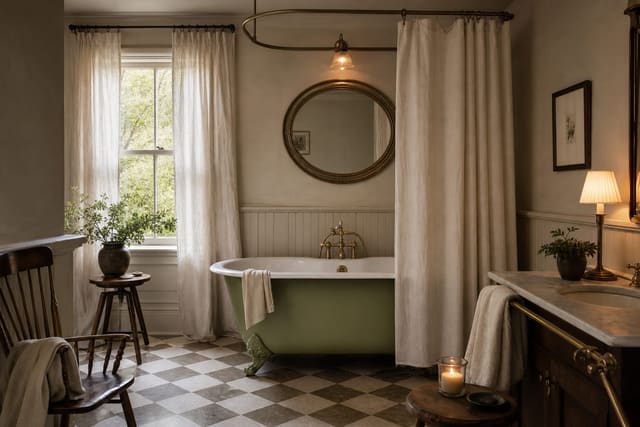
If you have vintage fixtures, the floor has to work with them. A green, pink, or beige suite often looks better with warm white, black-and-white checker, or soft stone-look tile than icy gray planks — the same logic covered in renovating an avocado green bathroom.
Test flooring options on your own room photo with ReDesign, keeping the doorway, walls, and fixed fixtures visible so the preview solves the room you actually have.
What mistakes should you avoid?
- Waiting for visible failure. By the time carpet stains, the pad underneath may already hold moisture.
- Installing new carpet for warmth. Use a washable 20x30 or 24x36 inch bath mat instead — it can be laundered and fully dried.
- Covering carpet with peel-and-stick tile. It needs a firm, nonfibrous base; over carpet it becomes lumpy and moisture-prone.
- Ignoring the toilet flange. Finished floor height changes after carpet removal; an unsupported flange means a wobbling toilet and a future leak.
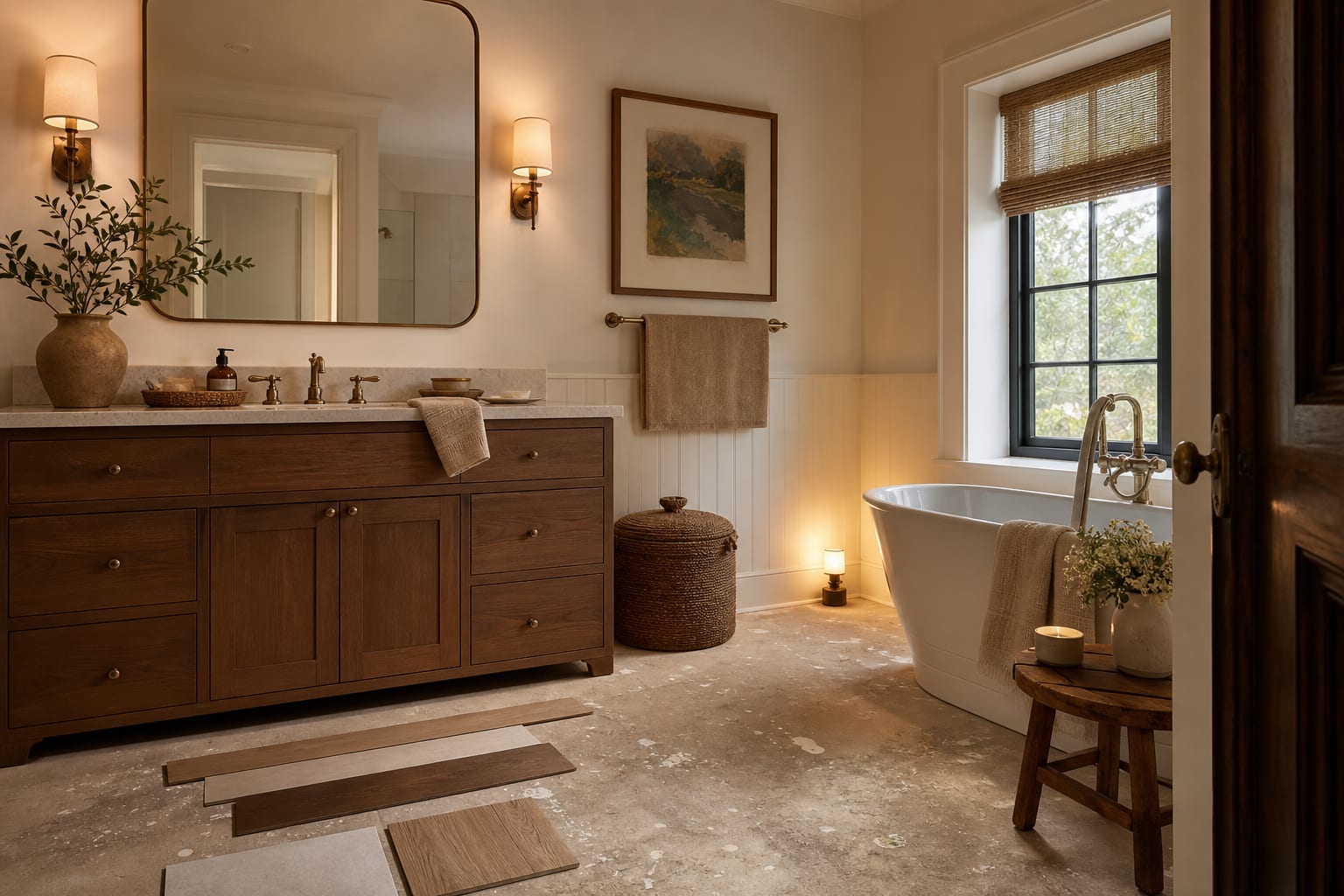
- Choosing from a sample board alone. Bring home samples at least 12x12 inches and check them near the tub under your actual bathroom lighting.
How can you preview the new floor before committing?
A sample that looks calm in a store can turn muddy beside beige tile or too gray beside warm fixtures. Photograph the bathroom from the doorway so the image includes the vanity, toilet, tub edge, floor, and mirror, then take a second shot in daylight if the room gets any.
Run focused previews rather than a full fantasy remodel: keep the vanity, tub, toilet, and wall color in place, and test only the floor. Try one porcelain tile, one sheet vinyl, one wood-look waterproof plank, and one darker contrast floor. If the best result only works with every fixture removed, it isn't answering the actual carpet problem.
Use the preview to check scale — large tile can create awkward slivers around a toilet in a tiny bath, and busy plank lines can clutter a small room. If the floor still looks tired under a harsh overhead bar, the bathroom mirror and lighting guide can help you tell whether it's the floor or the lighting.
What can renters do if the carpet cannot come out yet?
Treat it as a moisture-management problem first. Get landlord permission in writing before altering the floor, and document musty smells or staining with photos and dates.
- Use a washable cotton or teak bath mat only where feet land, and hang it to dry after every shower.
- Run the exhaust fan during and for 20 minutes after showers, or crack the door.
- Skip rubber-backed mats left in place for weeks — they trap moisture against the carpet.
- Keep a plain shower curtain, matching towels, and warm 2700K–3000K bulbs so the carpet doesn't define the room.
When removal is finally approved, don't overcomplicate it: pull the carpet, repair the subfloor, and install a floor built for water.
Frequently Asked Questions
Why do bathrooms have carpet in the first place?
1970s–1990s builders installed wall-to-wall bathroom carpet for warmth and sound deadening. The practice ended once moisture problems, mildew, and resale penalties showed up in inspections.
What replaces bathroom carpet cheapest?
Peel-and-stick sheet vinyl runs $1–$3 per sq ft installed and goes down in a weekend. LVP at $3–$6 per sq ft is the next tier and reads more upmarket; tile at $8–$15 per sq ft is the most durable.
Is LVP safe in a bathroom?
Waterproof rigid-core LVP rated for wet areas survives standing water for hours without swelling. Pick a product specifically rated for bathrooms, not laminate or budget LVP that's only moisture-resistant.
Can I leave carpet outside the wet zones?
A pedestal-sink half bath sometimes survives with carpet at the entry. Full bathrooms with toilets, tubs, and showers should never have carpet, since splash and bare-foot moisture transfer to mildew within months.
Does carpet hurt resale value?
Yes. Bathroom carpet is one of the top three items flagged in pre-listing inspections and routinely costs $2,000–$5,000 off the sale price; replacing it before listing recovers the cost almost dollar for dollar.
> Try this: Ready to see this on your own room? Open ReDesign and run the preview.
Three transformations to try
1. LVP wood-look bathroom floor 2. Hex tile floor with bound bath mat 3. Large-format porcelain bathroom floor