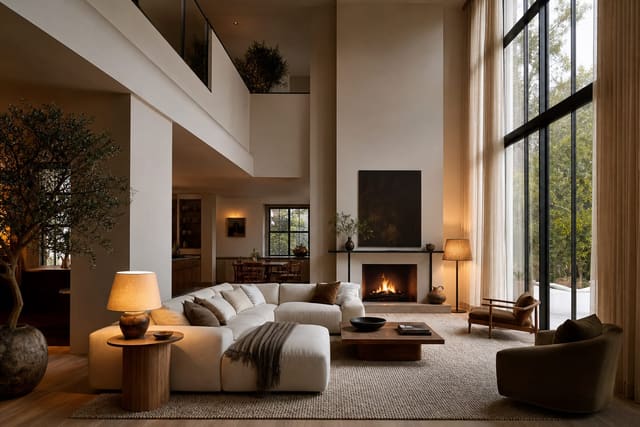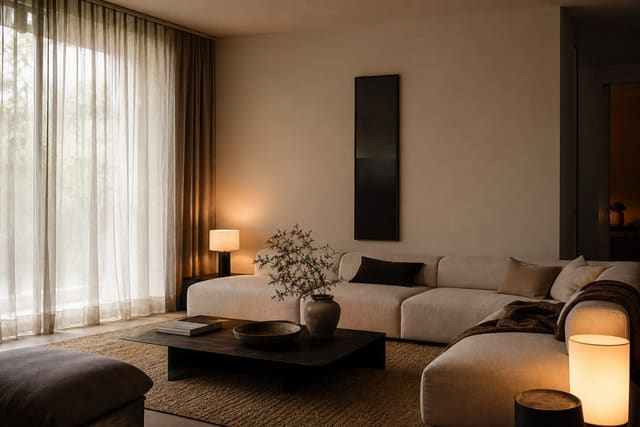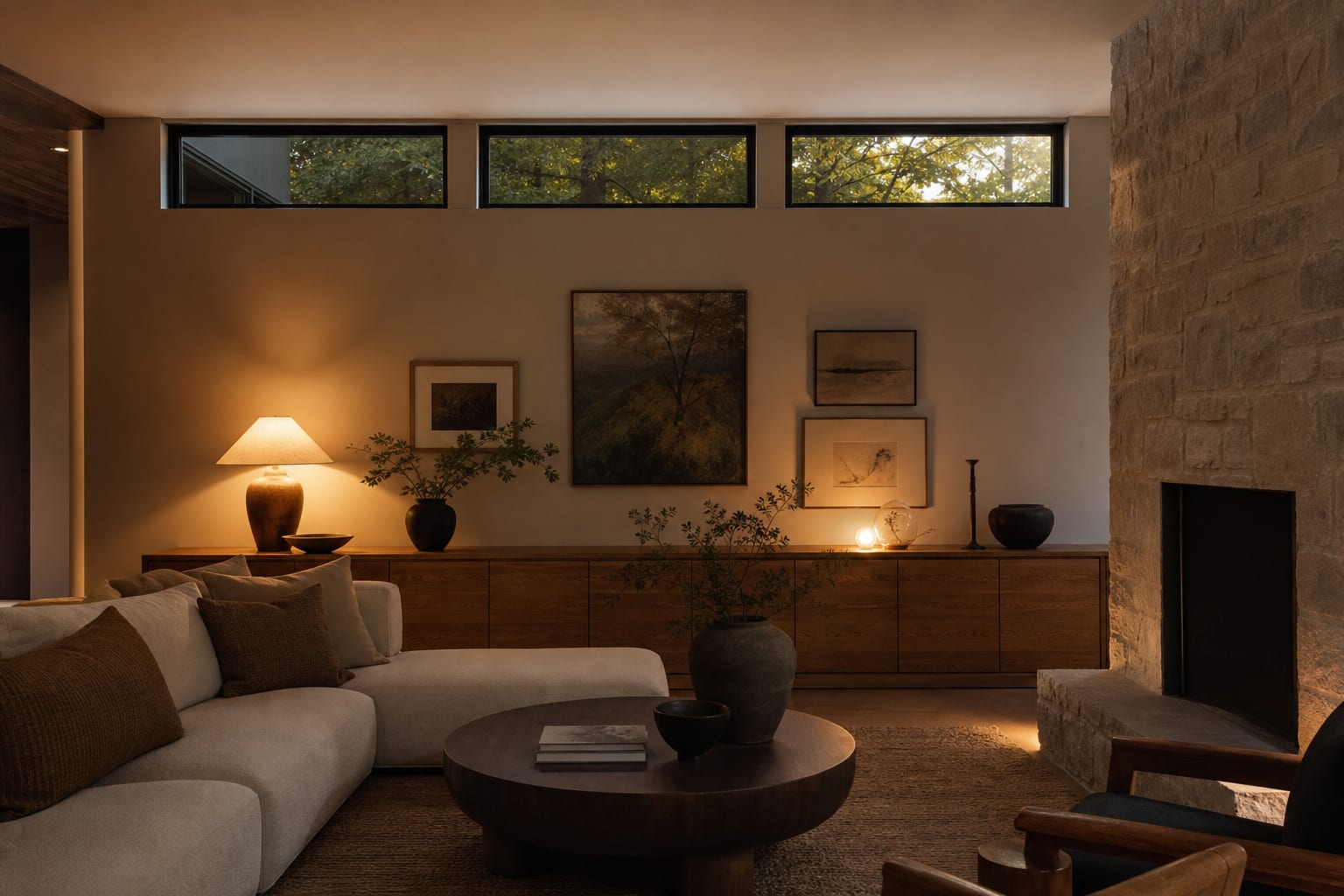
Clerestory window room design works best when you treat the high glass as the light source and give the wall below one clear job: art, storage, a headboard, or seating, kept 8-12 inches under the sill. The mistake is scattering small decor across that wall, which only widens the visual gap between the window band and the furniture.
How do you decorate a wall with clerestory windows?
Find the bottom edge of the glass first. If the sill sits at 7 feet or higher, everything below about 6 feet is your usable decorating zone: headboard, console, credenza, art grouping, bench, or built-in. Keep the top of the main furniture piece 8-12 inches under the sill so the window still reads as daylight rather than a trapped slot.
For long, narrow clerestories, think in horizontal layers. A 28-34 inch console, a 36-42 inch wainscot, or a low bookcase stretches the wall without competing with the window line. For privacy or glare, borrow from small high window treatment ideas: inside-mount cellular shades, slim roller shades, or ceiling-track sheers look cleaner than curtains hung directly at the glass.
Which anchor belongs under high narrow windows?
The right anchor depends on room function, not window shape. The test is whether the object below the glass occupies eye level.
| Room | Best anchor | Key dimension |
|---|---|---|
| Bedroom | Headboard | 48-60 in (72 in if vaulted); sconces at 56-64 in |
| Living room | Low storage or art rail | 12-18 in deep cabinet or 16-20 in bench |
| Dining/kitchen | Framed row, plate rail, or open shelving | Shelves 10-12 in deep, 18+ in above counters |
| Sloped-ceiling room | Fewer, stronger horizontal pieces | Lighting mounted lower than the roofline |
In a bedroom, leave a slim gap between headboard and window trim rather than pushing upholstery into the sill. In a narrow living room, skip deep furniture for a bench topped with art instead. In dining rooms, avoid one lonely centered picture; a row of matched frames or open shelves ties the wall together better. Sloped-ceiling rooms benefit from the same discipline covered in decorating rooms with vaulted ceilings: fewer tall objects, stronger horizontal grounding, lower lighting.
Test this on your own room photo with ReDesign before buying furniture — keep the doorway, walls, windows, main furniture, and lighting visible so the preview solves the room you actually have.
How do color, trim, and lighting keep the wall from looking sliced up?
Clerestory windows can split a room into bright glass above and clutter below. One continuous wall color from baseboard to ceiling usually prevents this, since contrast around high narrow windows can make them read like vents. If the wall needs more definition, add a lower treatment instead of outlining the window: a 36-42 inch painted wainscot, vertical paneling stopping below the sill, or limewash. Keep casing slim, 2-3 inches, unless the house already has heavy historic millwork.
Lighting matters because clerestories go dark at night. Add two or three lower sources: table lamps, plug-in sconces, picture lights, or a floor lamp. Warm 2700K bulbs suit bedrooms and living rooms; 3000K works better in kitchens and workrooms. If the room still feels dim overall, the clerestory may add height more than usable light — pair it with the tactics in faking natural light in darker rooms: pale matte walls, layered warm light, and mirrors angled to catch actual daylight.
Common clerestory window room design mistakes
- Hanging art too high. Art should relate to people, not the roofline — keep primary pieces centered around 57-60 inches and let the clerestory float above the composition.
- Using furniture that's too short and busy. A 24 inch cabinet under a 10 foot wall looks timid; one longer piece (72-96 inches) reads calmer than three small ones.
- Blocking the window to fill blankness. Tall faux trees, ladders, and oversized bookcases cancel the reason the window exists — use slender vertical art or a plant that stops below the sill instead.
- Assuming every clerestory room is modern. These windows show up in bungalows, lofts, cabins, and remodels — match materials to the house, not to a generic "modern" default.
Use AI design to preview the high-window wall before you commit
Clerestory walls are hard to judge from memory since the key feature sits above normal sightline. Uploading a photo to an AI interior design tool lets you test a headboard wall, storage wall, art wall, or seating wall before buying furniture at the wrong height.
Be specific in prompts: for a bedroom, ask for a 60 inch upholstered headboard with matching plug-in sconces and no furniture blocking the glass; for a living room, try a 14 inch floating cabinet, one large horizontal artwork, and recessed shades. Then compare a second version with paneling or a darker lower wall.
Judge proportion, not perfection — does your eye land on the furniture zone first and travel up, or does the wall still feel split in half? Top-heavy previews need a longer cabinet, darker upholstery, or a bigger rug; cramped ones need one fewer decorative layer. Renters can test peel-and-stick paneling, freestanding storage, and no-drill shades; owners can preview built-ins, new trim, or hardwired sconce boxes before spending on the real thing.
Frequently Asked Questions
Can I hang art under clerestory windows?
Yes. Hang art so the top edge stops 4-6 inches below the clerestory sill; the band between the sill and eye level is the natural art zone.
Do clerestory windows need curtains or shades?
Usually not. Clerestory glass sits above the privacy line, so most rooms look better with it bare. For glare or heat, a top-down shade that retracts fully preserves the airy look.
How tall should furniture be under clerestory windows?
Keep sofas and chairs under 36 inches and case goods under sill height. Taller pieces under the glass block the visual light spill the window is meant to provide.
Should the wall under clerestory windows be a feature wall?
Often yes. The band below the clerestory is a natural spot for a gallery grouping, paneling, or an accent color that balances the bright glass above it.
Does AI help plan a clerestory layout?
Yes. Upload a room photo and AI can preview art placement, accent color, and furniture scale against the existing clerestory band before you commit to a purchase.
> Try this: Ready to see this on your own room? Open ReDesign and run the preview.
Three transformations to try
1. Art band under clerestory at eye level 2. Low sofa under clerestory glass 3. Accent paneled wall under clerestory