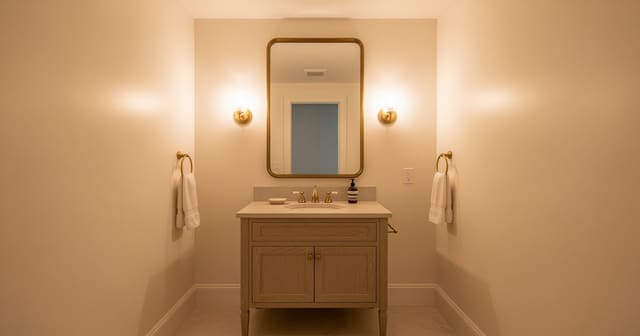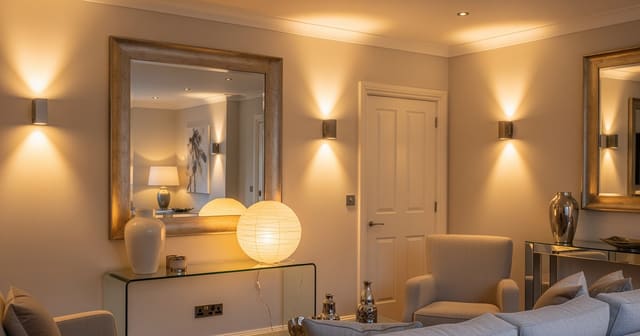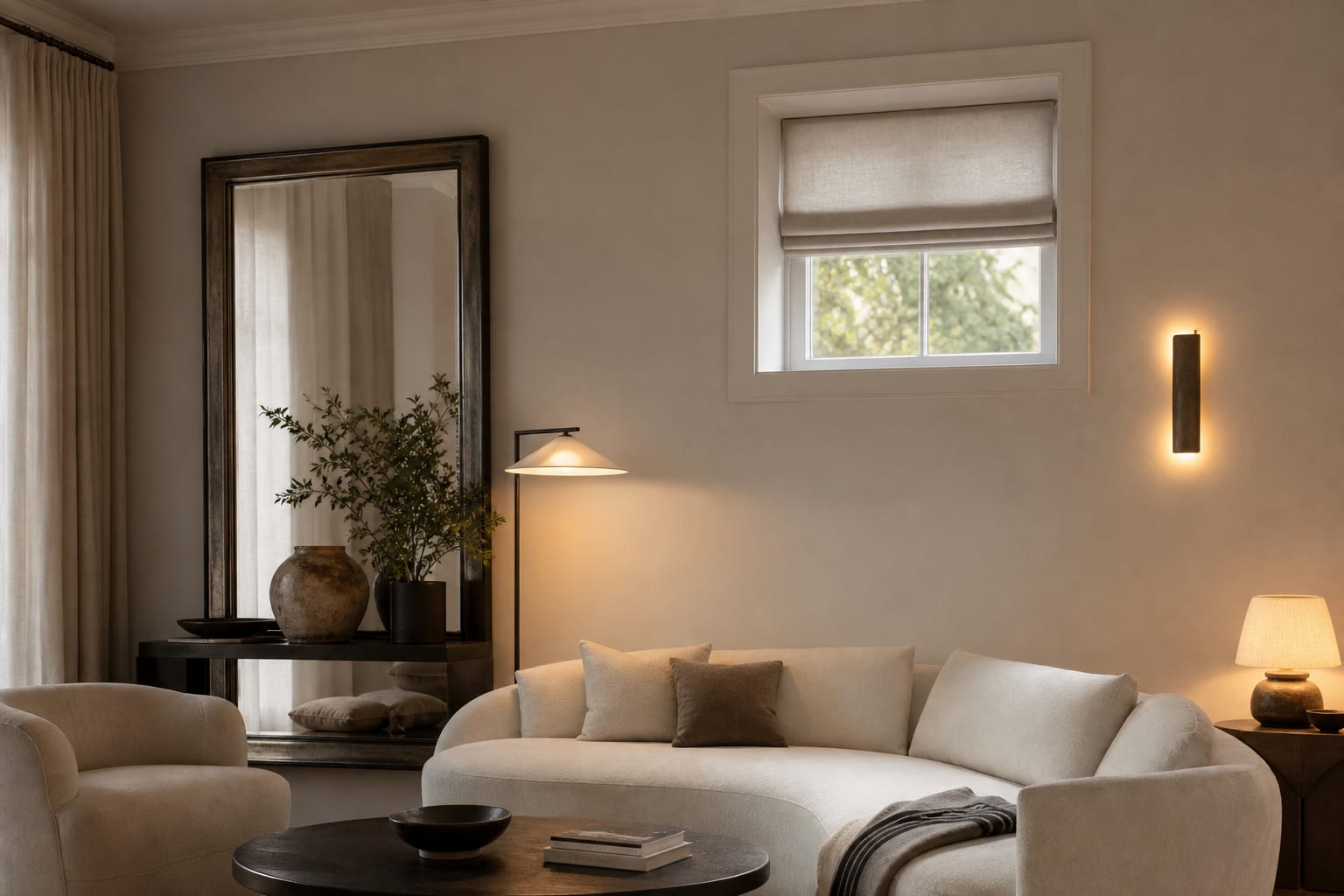
The best small high window treatment ideas use an outside-mount roman shade or woven shade hung wider and higher than the frame, paired with light-filtering fabric and a light source below. This adds visual height, protects the room's limited daylight, and makes the window feel intentional instead of like an afterthought near the ceiling.
What is the best window treatment for a small high window?
An outside-mount roman or woven shade that extends past the frame is the strongest default, sometimes paired with tall stationary drapery when the wall needs more height. The shade handles privacy and glare; the extra fabric width and height tell the eye the window is more substantial than the glass itself.
Mount the shade 2 to 4 inches beyond each side of the trim and 4 to 8 inches above the top edge when wall space allows. An inside mount on an 18 to 30 inch window often makes it look smaller, especially once the shade stack eats into the glass.
Choose light-filtering fabric over blackout unless the room is for sleeping or media. A linen roman, woven shade, or soft cellular shade keeps the opening bright. In a basement, favor top-down or light-filtering options before anything opaque.
If the room still feels dim, apply the same logic used to fake natural light in a dark room: put warm light where the eye expects daylight to spread. A shaded lamp, plug-in sconce, or small uplight below the window keeps the wall glowing after sunset.
How do you make a high window feel intentional?
A small high window needs a larger composition around it, not just a product inside it. Build a vertical zone from floor to ceiling and let the glass sit inside it as one layer.
Use stationary curtain panels when the wall feels tall or bare. Hang the rod 6 to 10 inches above the window, or just below the ceiling on very high windows. Extend the rod 8 to 12 inches beyond each side of the frame so open panels cover wall, not glass.
Pick fabric with body but no drama: linen blend, cotton, wool-look polyester, or a quiet texture beats shiny jacquard or thin sheer. Let panels stop half an inch above the floor, or use a sill-height shade alone if furniture blocks the drop.
Align the treatment with whatever sits below the window. A shade plus a 30- to 36-inch console, mirror, or plant gives a stranded window a base. A mirror placed perpendicular to the glass can also help amplify natural light with mirrors without bouncing the awkward window straight back.
Match color to the wall, not to white by default. Fabric one or two values off the wall color reads as built-in; stark white on a dark wall looks like a bandage.
Test this on your own room photo with ReDesign before finalizing, keeping the room structure, daylight, ceiling line, and main path visible.
How should you treat a basement high window?
A basement high window has a different job: bring in light, protect privacy, and avoid emphasizing that the room is partly underground.
Use moisture-tolerant materials near grade — faux wood blinds, composite shutters, cellular shades, polyester roman shades, or washable rollers instead of natural linen. Keep fabric at least 2 inches from damp masonry and avoid pooling drapery on the floor.
Privacy film works well on the lower half of the glass when the view is a window well or parked car. Frosted, reeded, or linen-texture film keeps daylight moving while blurring the view; skip faux stained glass unless the room supports that specific look.
Paint the window return and well-facing trim warm white to bounce light inward, and add a lamp below that spreads light upward and sideways. For a windowless-feeling bathroom, the tactics in brightening a windowless bathroom — layered light, reflective surfaces, warm finishes — matter more than the window treatment itself.
For a row of small basement windows, treat them as one band: a continuous shade, matching mount height, a shared painted panel, or a built-in ledge below. No random short curtains breaking the line.
Common small high window mistakes to avoid
- Inside-mounting by default. It shrinks visible glass and advertises the window's odd size; use an outside mount unless the trim itself is a feature.
- Sill-length curtains. A short curtain on a small high window looks like a napkin taped to the wall — go full height or intentionally café-length.
- Choosing heavy, dark fabric. A high window usually contributes glow more than view, so don't smother it unless glare or privacy demands it.
- Ignoring the wall below. Empty drywall under the window makes the glass feel marooned; add a console, art, plant, mirror, or shelf to connect floor to window.
- Fighting nearby architecture. Keep shades compact and moisture-safe above a shower, mount below nearby crown molding, and align shade tops with shelf lines when near a bookcase.
Should you preview the treatment with AI design first?
Yes — this is a proportion problem, not just a fabric choice, and a shade that looks fine in a product photo can look too squat once it's on your actual wall above a sofa, bed, or basement ledge.
Photograph the room from a corner so the window, floor, ceiling, adjacent furniture, and the blank wall below are all visible; don't crop tightly around the glass. Then test controlled versions: an outside-mount roman alone, the same shade with full-height side panels, frosted film with a woven shade, and a lamp-and-mirror pairing for a dim room. Keep wall color and furniture steady across previews so you're judging the treatment, not a style change.
Prompt with real constraints: shade mounted 4 to 8 inches above the frame, fabric 2 to 4 inches wider than the trim, rod extended 8 to 12 inches past the window, a warm 2700K lamp below, privacy film for a poor view, and no fabric touching damp basement surfaces. Compare daylight and evening results — the right version makes the window feel useful, not disguised.
For the broader workflow, use the AI design complete guide as the parent checklist, then return here for scale, light, and layout choices.
Frequently Asked Questions
Should small high windows have drapes?
Skip floor-length drapes on windows smaller than 30 by 36 inches set above 60 inches AFF. Use a frame-mounted roman, a top-down cellular shade, or a tension café curtain so the treatment matches the window's actual scale instead of overstating it.
How high do I mount the rod on a small high window?
Mount 4 to 6 inches above the trim for a clean reveal, and extend the rod 6 inches past each side for a wider visual frame. Mounting right at the trim line makes the window look stubby, especially in photos.
What is the best blind for a high transom window?
A motorized cordless cellular shade is best for unreachable transoms since a remote or wall-switch motor solves the reach problem and can add blackout for bedrooms or media rooms. Also check the result against everyday movement: chair pullout, walkway width, door swing, and glare.
How do I keep privacy on a small high bathroom window?
Use a sandblasted privacy film or a faux-glass-block film applied directly to the pane. Either keeps privacy at typical setback distances without sacrificing the daylight a small bathroom window usually provides.
Can I add a valance to a small high window?
A 6 to 8 inch upholstered valance can balance a too-tall ceiling, but it shouldn't exceed one-third of the window's vertical reveal. Longer valances cut into the daylight that small high windows are already working hard to deliver.
> Try this: Ready to see this on your own room? Open ReDesign and run the preview before you buy, paint, drill, or move furniture.
Three transformations to try
1. Outside-mount roman shade 6 inches above trim with cafe curtain 2. Motorized cordless cellular shade with crisp 8-inch top reveal 3. Privacy film and a single bracket plant ledge below