Symmetry is the organizing rule of a colonial interior, and almost every good decision flows from it. Rooted in 18th-century American design and its long-running colonial-revival comeback, the style is built on balance: centered fireplaces, paired windows, matched furniture arrangements, and crisp classical millwork. My read is that colonial done well feels calm and ordered rather than stuffy, and the way you avoid stuffiness is by keeping the bones formal and the textiles relaxed.
The house gives you the framework. Colonial floor plans tend toward a central hall with rooms arranged symmetrically on either side, often with 8 to 9 foot ceilings, double-hung windows in balanced pairs, and a fireplace centered on a primary wall. Lean into that order. When the architecture is symmetrical and the furnishings answer it, the whole room feels resolved.
Build the room around symmetry
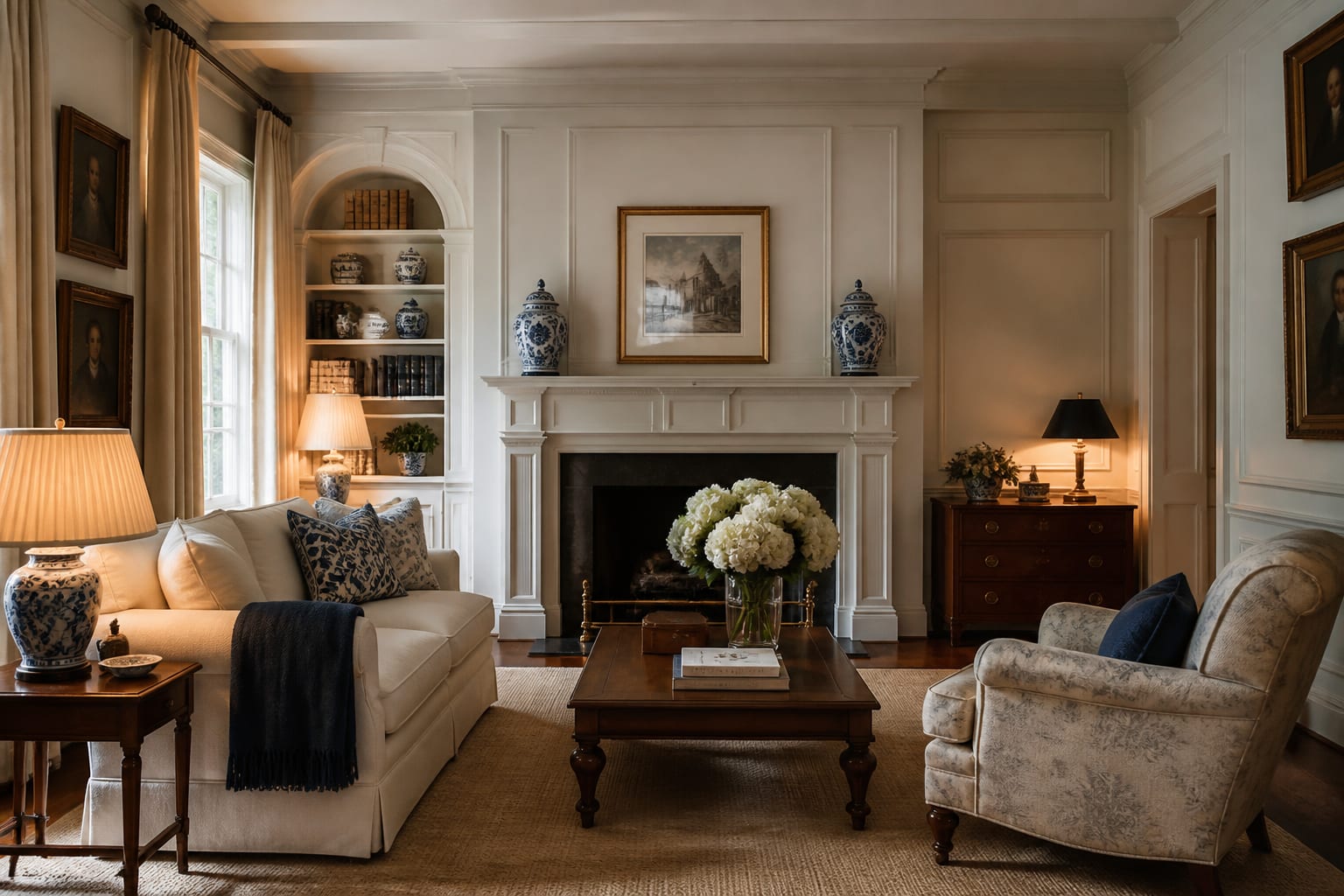
The one rule that defines colonial design is balance, and it shows up everywhere. A fireplace centered on the wall asks for a matched pair of chairs, lamps, or sconces on either side. A console between two windows wants symmetrical lamps and art. The eye reads this paired arrangement as orderly and calm, which is the entire feeling the style is after. When you fight the symmetry with a lopsided layout, a colonial room loses its anchor.
That does not mean rigid mirror-imaging everywhere. The trick is symmetry on the primary axis, the fireplace wall, the main seating group, the entry, with looser balance elsewhere so the room still feels lived in. Think of it as formal where it counts and relaxed in the corners. A pair of matching wingback chairs facing a centered hearth sets the tone; a single reading chair tucked in a corner keeps it human.
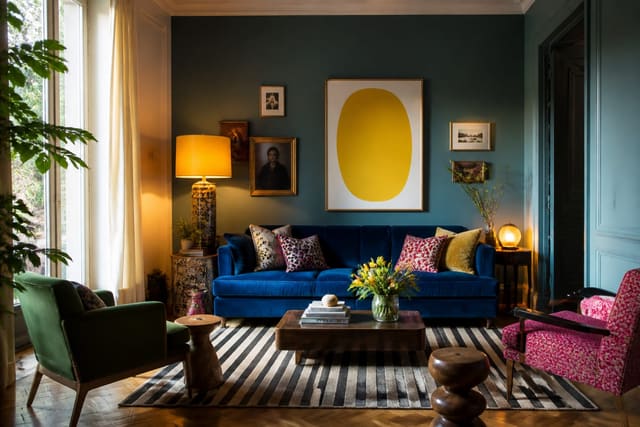
Color supports the calm. The colonial palette stays restrained: historic blues, soft sage and olive greens, warm creams, and muted brick reds, the muted tones of milk paint and early pigments. If you want to warm that restraint with a little more energy, the cheerful, mood-driven accent ideas in my dopamine decor ideas guide can add life through a few saturated pillows or a piece of art without breaking the ordered feel.
Get the millwork and proportions right
Colonial rooms are defined by their classical architectural detailing, and the millwork is where it lives. Crown molding at the ceiling, a chair rail typically set 32 to 36 inches off the floor, raised-panel wainscoting below it, and substantial door and window casings give the room its formal structure. If your colonial has lost this trim, restoring it does more for the style than any furniture purchase.
Proportion is the discipline behind the detail. Colonial design follows classical ratios, so the chair rail sits at roughly a third of the wall height, wainscoting fills the lower band, and crown caps the top. Get those bands right and even a plain box reads as architecturally correct. Mantels, too, follow classical proportions, often with pilasters and a dentil or egg-and-dart detail picked out in crisp white paint.
A few millwork moves that read as authentically colonial:
- Run crown molding around the main rooms and paint it the same crisp white as the trim.
- Set a chair rail at 32 to 36 inches and add raised-panel wainscoting beneath it.
- Use six-over-six or nine-over-nine double-hung windows, or muntins that mimic them, to echo the period.
- Center a classically proportioned mantel with pilasters as the room's formal anchor.
Furnish with classical lines and relaxed textiles
Colonial furniture carries the period through its silhouettes. Queen Anne pieces with graceful cabriole legs, Chippendale chairs with carved backs, and Windsor chairs with turned spindles all read instantly as colonial. Wood tones run warm, cherry, walnut, and mahogany, polished rather than distressed. A few well-chosen classical pieces anchor the room without turning it into a museum.
The softening comes from textiles, and this is what keeps a colonial from feeling stiff. Natural fibers, linen, cotton, wool, in checks, stripes, toile, and simple florals relax the formal architecture. A linen slipcover on a wingback, a wool rug with a classic pattern, and cotton curtains hung simply make the order feel comfortable rather than precious. The way I balance a hard, formal shell with warm, tactile layers in my soft industrial style ideas guide applies directly to keeping colonial symmetry from tipping into stiffness.
Lighting should respect the period without being a costume. Brass or pewter fixtures, candle-style sconces flanking the fireplace at around 66 inches off the floor, and warm 2700K bulbs keep the mood traditional and inviting. A symmetrical pair of table lamps on a console reinforces the balance the whole style depends on. Hang any central fixture so its lowest point clears 84 inches in a main room, and match the pair of sconces exactly so the eye reads the wall as deliberately composed rather than accidental.
Common mistakes to avoid
The most common mistake is ignoring symmetry and arranging a colonial room asymmetrically, which strips away the ordered balance that defines the style. Center the fireplace and flank it with matched pairs.
A second frequent mistake is removing the millwork, crown, chair rail, and wainscoting, to modernize, when that classical detailing is exactly what makes the room read as colonial; restore it. A third is letting the formality tip into stiffness by skipping relaxed textiles; natural-fiber slipcovers and simple patterns keep the order comfortable. People also reach for loud, trend-driven color that fights the restrained historic palette of blues, greens, and muted reds. The last common mistake is mixing in furniture with no classical lines at all, slick modern pieces that have no dialogue with the Queen Anne and Chippendale silhouettes the style is built on, which leaves the room feeling unanchored.
Use AI design to test a colonial scheme before you commit
The hard part of a colonial is judging whether your symmetry and your palette actually read as timeless or just stiff, and you usually cannot tell until the room is fully furnished. Re-Design lets you check first. Upload a photo of your actual colonial room, centered fireplace, paired windows, and existing millwork in frame, and the AI design re-renders it with matched seating, a restrained palette, and classical lighting so you can see the balance land in your own space.
Because you upload your real room, the preview keeps your true window placement, your fireplace position, and the trim you already have. Try a colonial-blue scheme with linen slipcovers, then test a soft-sage version with toile accents, and see which one keeps the order calm rather than stuffy before you commit to paint or new furniture.