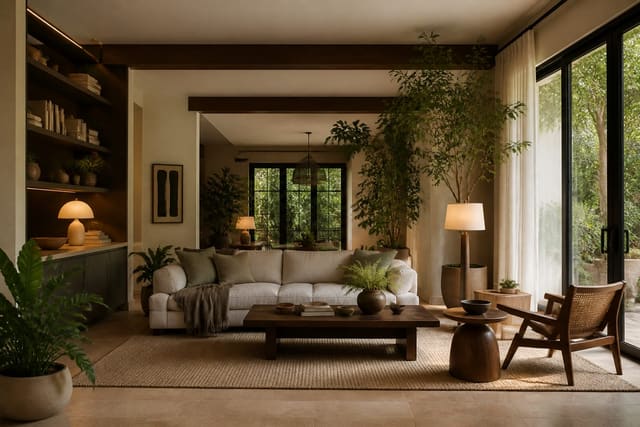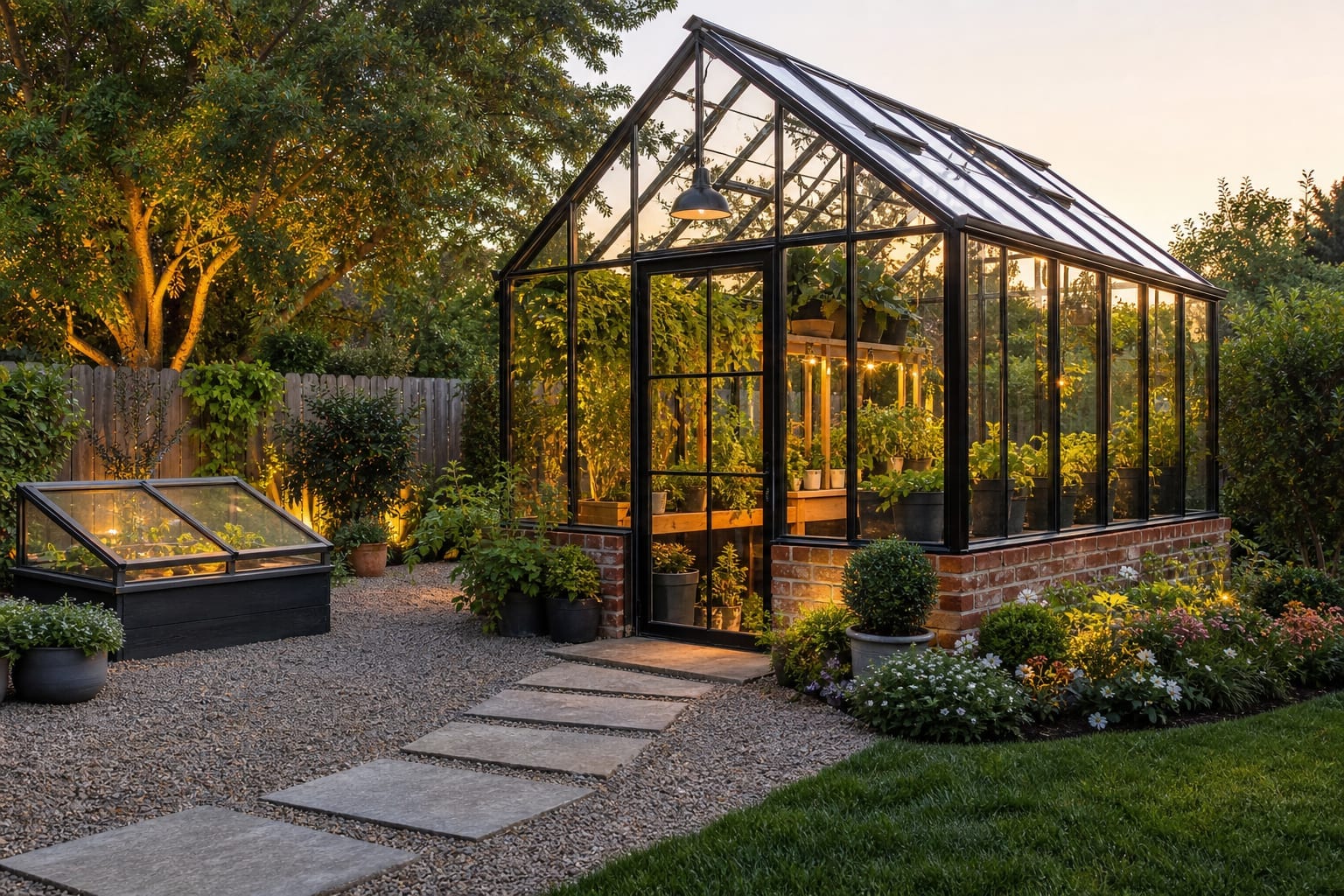
Conservatory interior design succeeds when the room is planned as glass architecture, not a standard living room. That means choosing flooring, shade, ventilation, and furniture built for sun, heat, and condensation, then layering plants by height so the space reads as a real garden room in every season.
How Do Heat, Light, And Flooring Work Together?
Stone, tile, brick, terrazzo, and polished concrete handle tracked-in soil, condensation, and temperature swings far better than wood or wall-to-wall carpet. They also add thermal mass that grounds the room. Add a flat-weave indoor-outdoor rug if the floor feels too hard underfoot.
Glazing determines comfort. Low-E glass, roof vents, operable windows, and ceiling fans separate a usable garden room from one that overheats by noon. South-facing rooms need woven blinds, exterior shade, or roof shading planned before furniture is chosen, since climate also dictates which plants will survive.
Design around the light path: put the main chair where morning or late-day sun feels good, not where midday glare ruins the seat. Keep a side table near every chair for coffee, books, and seed catalogs.
What Furniture Works Best In A Conservatory?
Furniture should feel indoor-comfortable and outdoor-appropriate. Rattan, wicker, teak, powder-coated metal, cane, and linen blends suit the setting without looking like patio overflow. Skip heavy upholstery that fades, blocks light, or fights the airy structure.
A simple layout works best: one sofa or daybed, two movable chairs, and a round table that keeps circulation open around plants. Narrow rooms do better with a single reading corner - a generous chair, ottoman, and plant stand - than a crammed sofa. Leave enough open space that plants and views still breathe.
Keep pattern botanical, striped, or textured rather than busy; a leaf-print cushion or plain olive linen outlasts a loud garden motif. Let real foliage carry most of the visual pattern.
How Should Plants Be Layered In A Glass Room?
Start with one structural plant - an olive, citrus, ficus, bird of paradise, or banana plant if climate allows - placed where it's visible from the house, not just inside the room. Add mid-height plants on stands and low pots so the greenery rises and falls naturally.
Trailing plants belong overhead or on high shelves to soften the glass and frame. A single solid wall is the best spot for a living wall, preserved moss feature, or vertical plant rack, giving the architecture a visual anchor.
Group plants by water and light needs. A sunny citrus tree and a shade-loving fern shouldn't share a corner even if both look good on paper; Re-Design can preview combinations, but the final list must match the room's real climate.
Bring The Look Home With Re-Design
Upload a photo to Re-Design and test the room as a true biophilic garden space. Try stone flooring, rattan seating, a citrus tree, trailing plants, and a living wall on the solid side. Compare a bright greenhouse mood against a quieter reading-room mood, then use the winning image to guide furniture scale, plant placement, and shade decisions.
Frequently Asked Questions
How do I design a conservatory or sunroom interior?
Start with comfort: flooring, shade, ventilation, and sun-tolerant furniture. Then layer plants by height so the space reads as a garden room rather than an ordinary room with extra windows.
What flooring works best in a conservatory?
Stone, tile, brick, and polished concrete are the strongest choices because they tolerate moisture, soil, and temperature swings while adding useful thermal mass to the room.
Which plants work in a bright conservatory?
High-light rooms can support citrus, olive, bird of paradise, bougainvillea, and some ficus varieties, but the right list depends on the room's actual heat, humidity, and winter temperature.
How do I stop a conservatory from overheating?
Plan ventilation before decor: roof vents, operable windows, ceiling fans, and exterior or woven shade. These control summer heat far more effectively than furniture or plant choices alone.
Should I use a rug on a conservatory floor?
Yes, once the base flooring is moisture-tolerant. A flat-weave indoor-outdoor rug adds softness and warmth without trapping damp or fading quickly in direct sun.