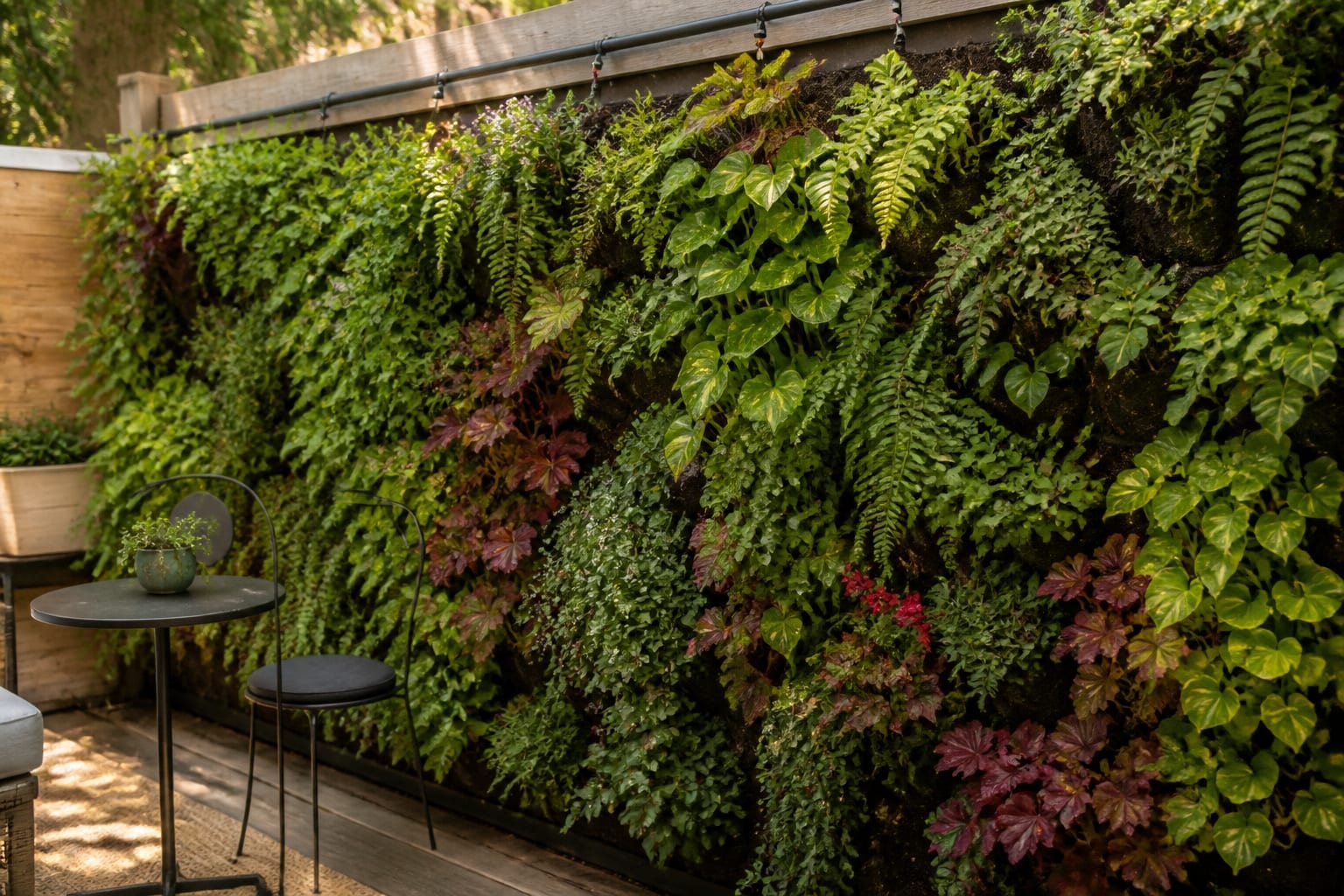
Vertical garden design is the simplest answer when the wall is available but the ground is not. A fence, balcony rail, exterior wall, or side-yard screen can hold herbs, climbers, flowers, or a full green feature if the system is chosen honestly. The design question is not only what will look lush on day one. It is whether the wall can carry the weight, whether the plants can root deeply enough, and whether watering will still happen in August.
Choose The Right Vertical Garden System
There are five useful categories. Pocket panels are soft or rigid grids with planting pockets, good for herbs, annuals, and shallow-rooted foliage. Stackable planters create a stepped wall that is easier to water and rearrange. Pallet and trough systems work for casual edible gardens if drainage is handled. Trellis systems support climbers such as jasmine, clematis, climbing roses, beans, and cucumbers. Modular living-wall panels are the most polished, but also the most demanding because they carry soil, water, and many plants in one vertical surface.
The mistake is choosing by the finished photo alone. A lush felt pocket wall may look perfect in spring and fail in summer if each pocket is too shallow or the sun is intense. For mature roots, deeper pockets are better; shallow pockets suit herbs and annuals rather than woody or long-lived plants. If the goal is a permanent feature, choose a system with replaceable plants, accessible irrigation, and a clear path for drainage.
For fences, climbers are often the most graceful solution. They use the vertical plane without loading it with saturated soil. Install a trellis or tensioned wire so the plant has structure and the fence still gets air.
Plan Water, Weight, And Sun Before Plants
Vertical gardens need more water than most people expect. Containers exposed to sun and wind can dry quickly, sometimes daily in hot weather. Drip irrigation, self-watering planters, or a nearby hose point can make the difference between a garden and a maintenance trap. If you want an edible wall, put watering on the plan from the beginning because herbs and strawberries resent drying out repeatedly.
Weight is the second constraint. Soil and water are heavy. A saturated planted panel can put serious load on a wall, especially when multiplied across many square feet. Use rated anchors, understand the wall material, and get professional advice for large systems or anything above a seating area. Balcony renters should check lease rules and railing load limits before hanging planters outside the rail.
Sun decides the plant list. Full sun can support herbs, strawberries, succulents, and many annuals if watering is reliable. Partial shade suits ferns, heuchera, mint, parsley, and some foliage plants. Deep shade wants a simpler plan: texture, containers, and shade-tolerant climbers rather than a high-production edible wall.
Make The Wall Look Designed
A vertical garden reads best when it has rhythm. Repeat one planter style, one material, or one plant color so the wall feels intentional. Mix leaf sizes rather than buying one tray of identical plants. A good formula is one trailing plant, one upright plant, and one fine-textured filler repeated across the wall.
If the space is small, keep the palette tighter. Use black or galvanized hardware, terracotta pockets, or warm wood battens, then let the plants provide color. On a balcony, a vertical herb wall beside a bistro table can do more than a dozen pots crowding the floor. In a backyard, a trellis planted with jasmine or climbing hydrangea can turn a plain fence into a soft green boundary.
Lighting can extend the effect after dark. Low-voltage uplights or warm wall washers make foliage feel architectural, but avoid hot fixtures too close to leaves. The garden should still feel alive and soft, not staged like a storefront.
Bring The Look Home With Re-Design
Use Re-Design to test the wall before drilling into it. Upload a photo of your patio, fence, balcony, or narrow side yard and preview pocket panels, trellis climbers, stacked planters, or an edible herb wall. The image will help you see whether the space wants one lush vertical feature or a simpler green screen with seating left open.
Frequently Asked Questions
How do I create a vertical garden?
Pick a structure first: pocket panel, stackable planter, trellis, pallet, or modular panel. Then match plants to sun exposure, root depth, water access, and wall load.
Do vertical gardens need more watering?
Usually yes. Wall-mounted containers dry faster than in-ground beds, especially in summer sun and wind, so drip irrigation or self-watering planters are helpful.
Can I grow food in a vertical garden?
Yes. Herbs, strawberries, peas, beans, cucumbers, lettuce, and compact greens can work well when pockets or planters are deep enough and water is consistent.


