A contemporary living room should read as confident, not cold. The best ones pair a quiet neutral foundation with a single decision that commands attention, because trying to make everything a focal point usually flattens the whole space. Contemporary style is always shifting, so the goal is not a frozen showroom but a room that absorbs current ideas without becoming a museum of them. Think low-profile seating, honest materials, and breathing room around each piece. When you keep the palette restrained and let one element carry the drama, the result feels intentional. These ideas focus on proportion, light, and texture so the room stays inviting for years.
Build a Neutral Base With Real Depth
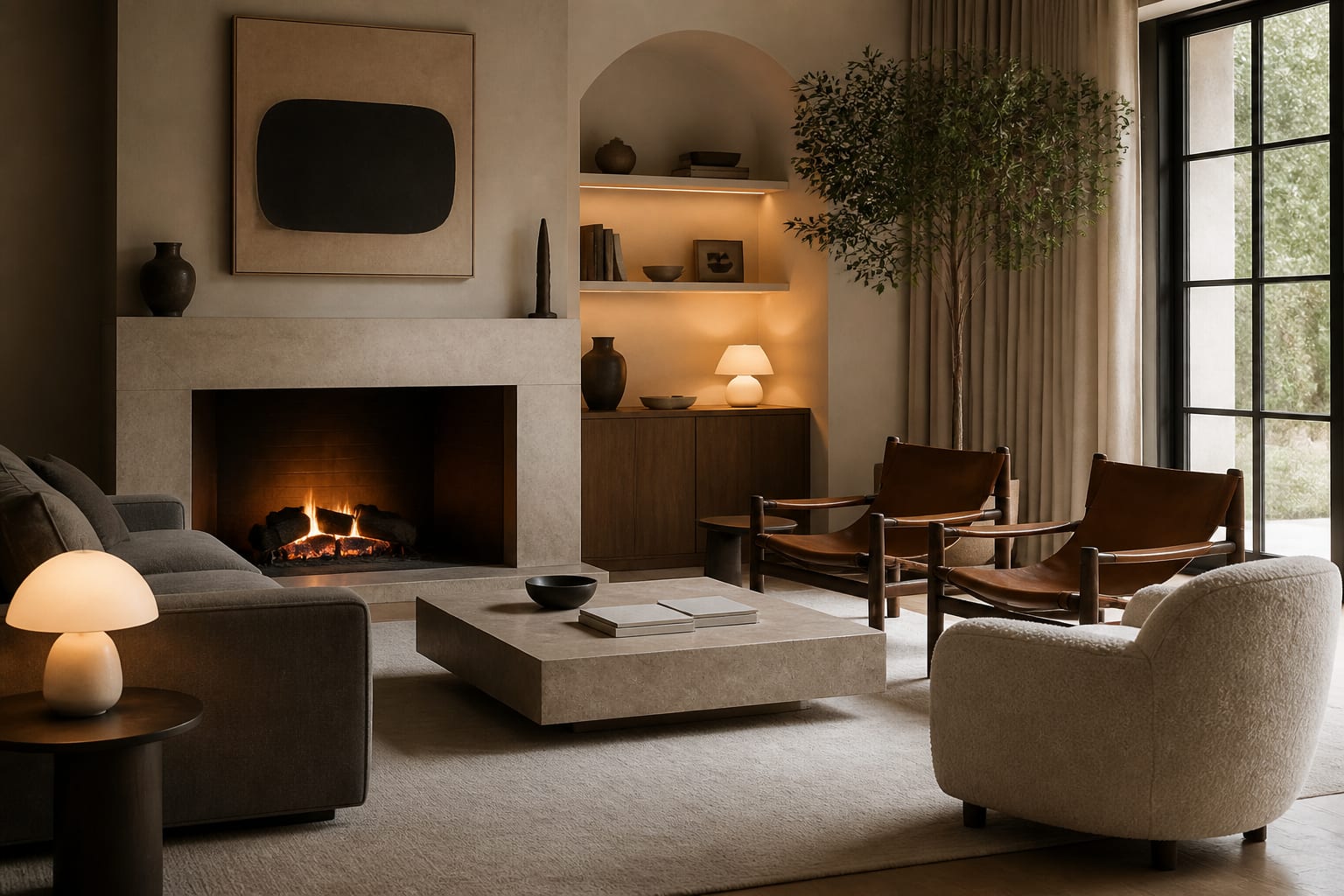
Contemporary rooms live or die on their neutral foundation, so treat beige, greige, charcoal, and warm white as active design choices rather than filler. A common error is reaching for a single flat shade and calling it minimal, which reads cheap instead of calm. Layer two or three neutrals that share an undertone, then vary their finishes so the eye still finds movement. A warm oatmeal sofa against a soft plaster wall and a deep graphite rug gives you contrast without a single saturated color. The undertone matters more than the name on the paint can. Warm greys can clash badly with cool greys, and the difference is obvious once light hits the surfaces in the afternoon. Paint large swatches and watch them across a full day before committing. Anchor the floor with a low-pile rug in a tone slightly darker than the walls, which grounds the seating and defines the conversation area. Keep trim and ceiling in the same family rather than stark white, so the boundaries dissolve and the room feels larger. When the base is this considered, you can introduce a bold accent later and it will land with real impact instead of fighting a busy backdrop. The restraint here is what separates a polished contemporary scheme from one that simply looks unfinished or beige by accident.
See also our guide to Cottagecore Living Room Ideas for more on contemporary living room ideas.
Choose Clean Lines and Low Profiles
Furniture silhouette does most of the heavy lifting in a contemporary living room. Look for sofas and chairs with straight or gently curved arms, exposed legs, and a low seat height that keeps sightlines open across the room. Bulky overstuffed pieces crowd the floor and break the airy quality the style depends on. A sofa that sits eight to ten inches off the floor on slim legs lets light pass underneath, which makes even a modest room feel less heavy. Pair angular upholstery with one softer curved element, such as a rounded ottoman or an arched accent chair, so the geometry does not turn rigid. Avoid matching every piece from one collection, because a room that is too coordinated loses its collected, evolving character. Instead, repeat a material or a finish to tie disparate shapes together. A walnut coffee table, walnut shelf brackets, and a walnut picture frame quietly link a room without any of them matching. Scale is the silent rule most people miss. A coffee table should run roughly two-thirds the length of the sofa, and side tables should sit close to the arm height of the seat beside them. Get these relationships right and the furniture feels designed for the space rather than dropped into it. The clean line is not about removing personality; it is about removing the visual noise that hides personality. When the shapes are disciplined, your textiles, art, and lighting get room to speak.
For a related angle on contemporary living room ideas, read Maximalist Living Room Ideas.
Layer Texture and Statement Lighting
Texture is how a neutral contemporary room avoids feeling sterile, and lighting is how it gains personality after dark. Because the palette stays restrained, the surfaces themselves have to do the work of generating interest. Combine a boucle or linen sofa, a chunky wool throw, a smooth leather chair, and a woven jute or flatweave rug so your hand finds something different in every direction. Add a slab of stone or a piece of raw timber for contrast against the soft goods. The trick is variety in feel while the colors stay close in tone. Lighting deserves the same intention you gave the seating. Skip the single overhead fixture and build three layers: ambient light from a sculptural pendant or recessed cans, task light from a slim floor lamp beside the reading chair, and accent light that grazes a wall or shelf. A statement pendant or linear fixture can serve as the room's bold accent all on its own, especially over a dining nook or a long sofa. Warm bulbs in the 2700K to 3000K range keep the mood relaxed; anything cooler pushes the space toward an office feel. Put the main sources on dimmers so the room shifts from bright and functional by day to low and intimate at night. Bounce some light off the ceiling rather than aiming it all downward, which softens shadows and flatters both the room and the people in it. Together, texture and light give a contemporary space the warmth that pure color restraint can otherwise drain away.
Edit Ruthlessly and Curate Negative Space
The hardest contemporary skill is knowing what to leave out. Negative space is a design element, not wasted real estate, and a room that respects it always reads more expensive than one packed with decor. Start by clearing every surface, then return only the pieces that earn their place through use or genuine visual weight. A coffee table needs maybe two or three objects of varying height, not a dozen. Shelves look intentional when roughly a third of each section stays empty, letting the displayed pieces register as choices rather than storage. Group accessories in odd numbers and vary their scale so each cluster feels composed. Resist the urge to fill every wall; a single large artwork commands more attention than a scattered gallery of small frames, and it suits the clean contemporary line better. Give your largest furniture a few inches of clearance from the walls when the room allows, because floating pieces feel more deliberate than those shoved against the baseboard. Storage matters here too. Closed cabinets and concealed cable management keep the visual field calm, which is the entire point of the negative space you worked to create. Walk the room and ask whether each item adds meaning or just fills a gap. If it merely fills a gap, remove it and live with the openness for a week before deciding anything is missing. Most of the time, the room feels better with less. This editing instinct is what makes a contemporary living room feel curated and current rather than merely sparse or unfinished.
- Float a low-profile sofa a few inches off the wall to add depth
- Hang one oversized artwork instead of a scattered gallery of small frames
- Add a sculptural pendant over the seating as your single bold accent
- Mix boucle, leather, and woven textures within a tight neutral palette
- Place a slim arc floor lamp beside the main reading chair for task light
- Use a flatweave rug two shades darker than the walls to ground the seats
- Keep one-third of every shelf empty so displayed objects read as choices
- Put ambient lighting on dimmers and use 2700K bulbs for evening warmth
Bring the look home with Re-Design
Before you commit to a new sofa or a bold accent wall, upload a photo of your current living room to Re-Design and preview the contemporary look in seconds. Seeing your real space with low-profile seating, a layered neutral palette, and a statement pendant removes the guesswork that leads to costly returns. You can test several directions side by side, compare textures and finishes against your actual light, and decide what truly fits before you buy anything. It turns a vague idea into a concrete plan you can act on with confidence.
Frequently Asked Questions
What makes a living room contemporary rather than modern?
Contemporary refers to what is current and evolving, so it borrows freely from many influences and shifts over time. Modern points to a specific mid-century movement with fixed traits. A contemporary living room favors clean lines and neutral bases but feels free to mix curves, current materials, and fresh accents that modern purism would avoid.
What colors work best in a contemporary living room?
Start with two or three neutrals that share an undertone, such as warm white, greige, and charcoal, then add a single bold accent through art, a pillow, or a rug. Keeping color restrained lets texture and form carry the room. Saturated walls rarely suit the style; concentrated, deliberate color works far better than spreading it everywhere.
How do I keep a contemporary room from feeling cold?
Lean on texture and warm lighting rather than color. Layer boucle, wool, leather, and natural wood so surfaces feel inviting to touch, and use bulbs in the 2700K to 3000K range on dimmers. Adding one organic material like raw timber or stone, plus a few plants, gives the clean palette the warmth it needs to feel like home.