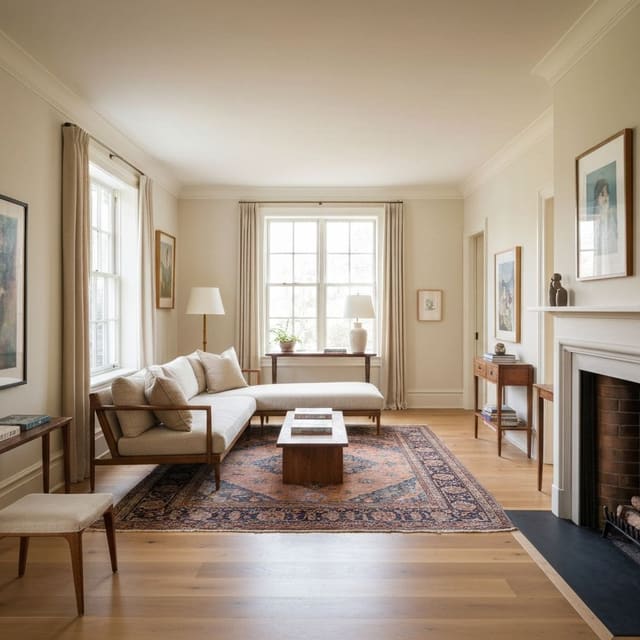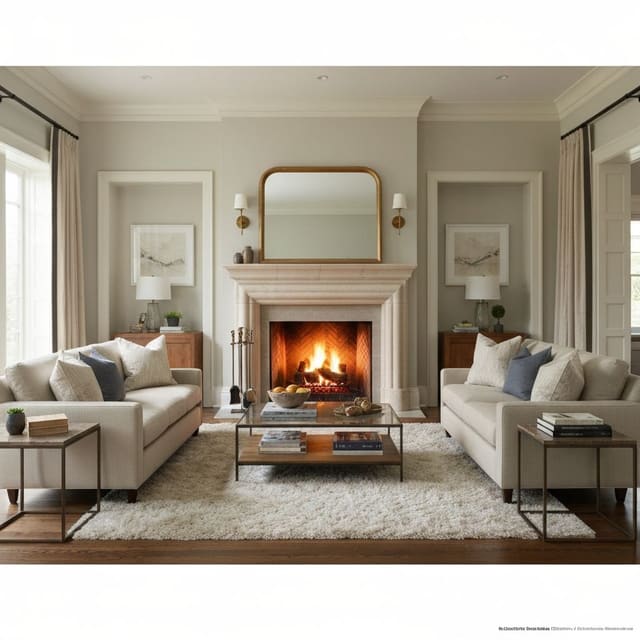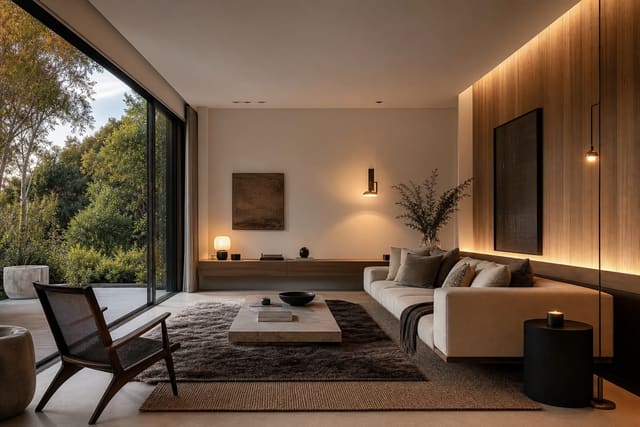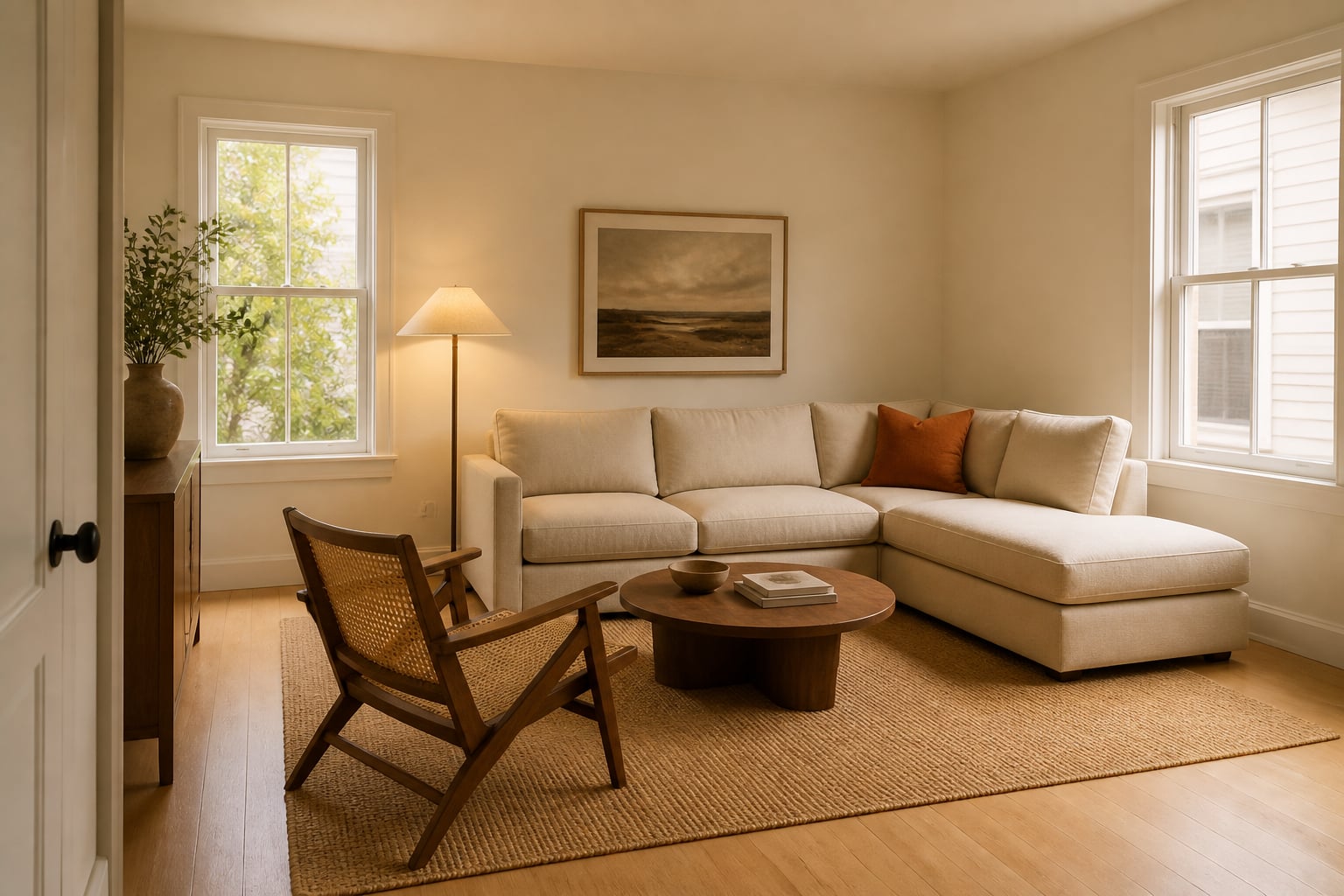
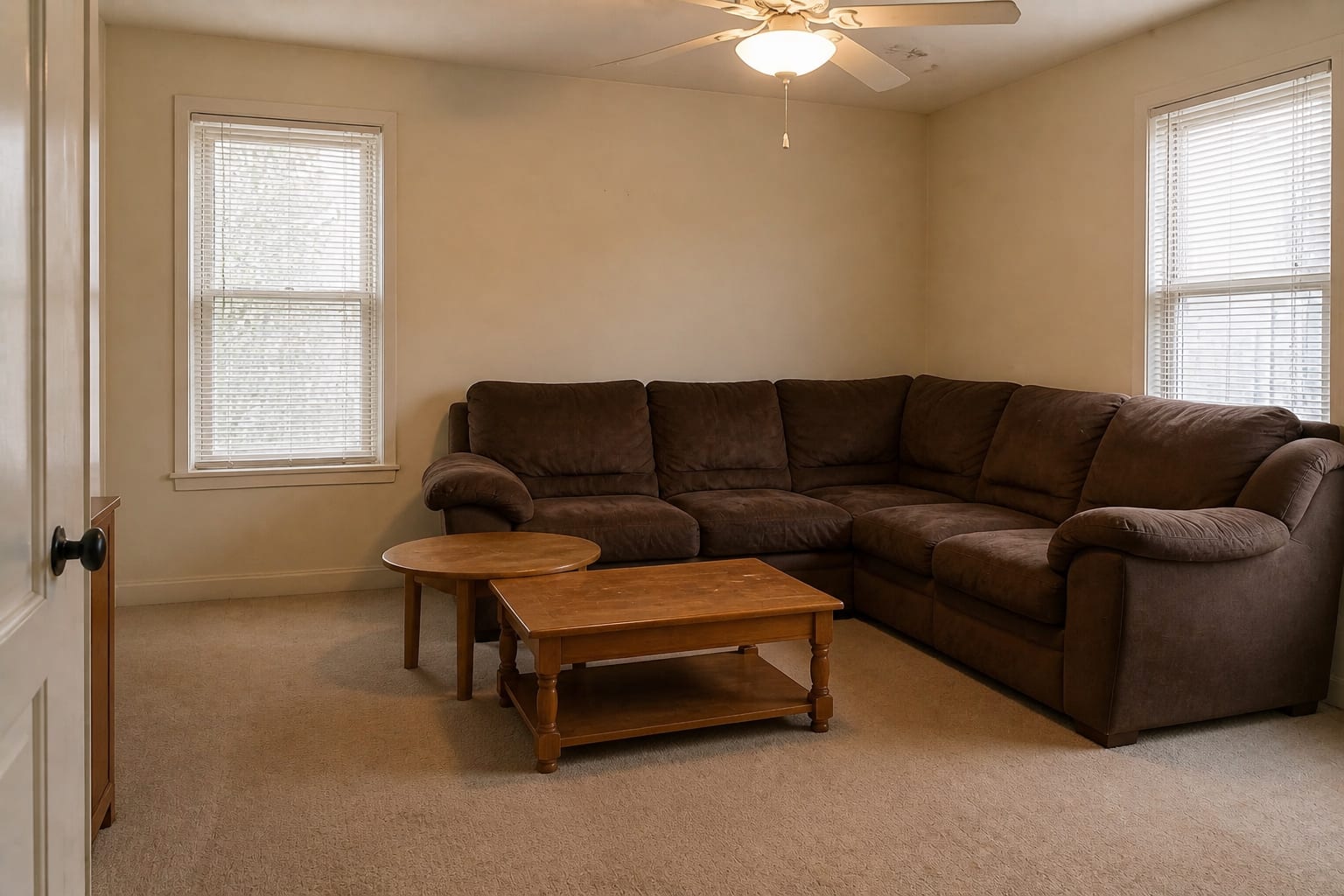
A corner sofa works in a square room when the L opens toward the center rather than the wall, a properly sized rug reaches under every front leg, and the sectional doesn't become the room's only traffic plan. The fix is choosing chaise direction by circulation first and dimensions second, before you buy.
What Makes a Corner Sofa Work in a Square Room?
A square room has no dominant wall, so the sectional has to build its own hierarchy by claiming one corner while the rest of the floor stays legible. Start with the path from the entry to the next destination — kitchen, hallway, stairs — and protect it before deciding which side gets the chaise.
- 30 inches minimum clearance for an occasional path.
- 36 inches for a daily route (laundry, drinks, a dog leash).
Face the sectional toward the TV or fireplace, and extend the chaise toward the secondary focal point (often a window), stopping short of curtains, vents, or radiators. Use layered lighting principles — one ambient source, one lamp near the chaise, one accent light in the opposite corner, warm 2700-3000K bulbs — so the sofa doesn't read as a dark block.
What Size Sectional Fits a Square Room?
The real decision isn't sectional-versus-not; it's whether the chaise runs with traffic or against it. Get that wrong and even a well-sized sofa feels oversized.
| Room condition | Sectional guidance |
|---|---|
| Small square room (under ~11x11 ft) | 84-96in long side, 60-68in chaise; consider a sofa plus ottoman instead of a full wraparound |
| Standard depth | 34-36in deep frame; avoid 40in lounge-depth sectionals |
| Arm width | 4in slim arms save space over bulky 8in arms |
| Coffee table | 30-36in round, 14-18in from the sofa edge |
Give the chaise to whoever actually lounges there nightly — but only if that side doesn't block the shortest route to the kitchen. Comfort answers to circulation, not the reverse.
Test this on your own room photo with ReDesign before buying; keep doorways, windows, and fixed furniture visible so the preview solves your actual room.
How Big Should the Rug and Extra Seating Be?
Use the rug as a scale test: an 8x10 rug is usually the minimum for a sectional to look intentional, with front legs on the rug and the chaise not stranded off the edge. A 5x7 rug under a large sectional signals the furniture has outgrown the room.
Add one loose chair, 28-32 inches wide with a light frame, across from the chaise. Leave 24 inches to the coffee table for a secondary path, 30 inches if it's a main route.
If the room doubles as a workspace, let the low sofa back zone the space rather than fence it — see home office in a living room zone for desk placement. In dim or north-facing rooms, a dark sectional can shrink the space further; check north-facing living room color choices before committing to charcoal or olive fabric.
What Are the Most Common Corner Sofa Mistakes?
- Ignoring door swing. Tape the sofa outline first, then open every nearby door to confirm the "perfect" corner is actually usable.
- Treating the sectional as the only seating. Add one chair or a pair of stools — a lone L-shape gives one person the best seat and everyone else a side view.
- Choosing a tall, overstuffed back. A 31-35in back keeps a square room open; anything taller near a window blocks daylight.
- Skipping side tables. Plan a 14-18in drink table near the chaise, or a narrow C-table if space is tight.
- Picking chaise side from a product photo. Showroom shots hide your doorways and traffic — decide chaise direction from your own layout instead.
How Do I Preview the Layout Before Buying?
Photos beat floor plans here because the risk is visual bulk, not just measurement. Shoot straight-on photos from the entry, the seating wall, and the opposite corner looking back, keeping windows and doors visible.
Run two comparisons: a 90in left-chaise sectional with an 8x10 rug, round coffee table, one accent chair, and a 36in clear path — versus a standard sofa with a movable ottoman and two chairs on the same rug. Check whether the chaise interrupts the kitchen route, whether the table stays reachable, and whether the far corner needs a lamp or plant to balance the sofa's weight.
AI previews can't confirm exact dimensions or delivery access, so treat them as a design filter. Once you've picked a direction, tape the footprint, chaise length, rug edge, and chair position on the floor, then walk it with a laundry basket before ordering.
Frequently Asked Questions
Should a sectional face the TV or the room?
Face the longest sightline — usually the TV wall in a casual room, the fireplace or window in a formal one — and let the chaise extend toward the secondary focal point so the seating works either direction.
How big a rug do I need for a sectional?
A 9x12ft rug fits most full sectionals so all four sides of the seating land on it. The chaise should sit fully on the rug or fully off; half-on reads accidental rather than intentional.
Does a sectional make a small room look smaller?
A well-scaled sectional actually makes a square room read more spacious because it absorbs all the seating into one mass. The alternative — sofa plus two chairs plus a loveseat — fragments the room visually and eats more floor space.
How do I balance the empty side of a sectional?
Add an accent chair or floor lamp opposite the chaise to anchor the other side, or pull the sectional 6 to 12 inches off the wall behind it so the surrounding air reads intentional rather than crammed.
Sectional or two facing sofas in a square room?
Square rooms over 200 sq ft work for either layout. Under 200 sq ft, a single sectional almost always reads cleaner because two facing sofas demand a symmetry that small square rooms rarely have.
> Try this: Ready to see this on your own room? Open ReDesign and run the preview.
Three transformations to try
1. L-sectional opened into square room with rug anchor 2. U-sectional in square room facing fireplace 3. Modular sectional with reversible chaise