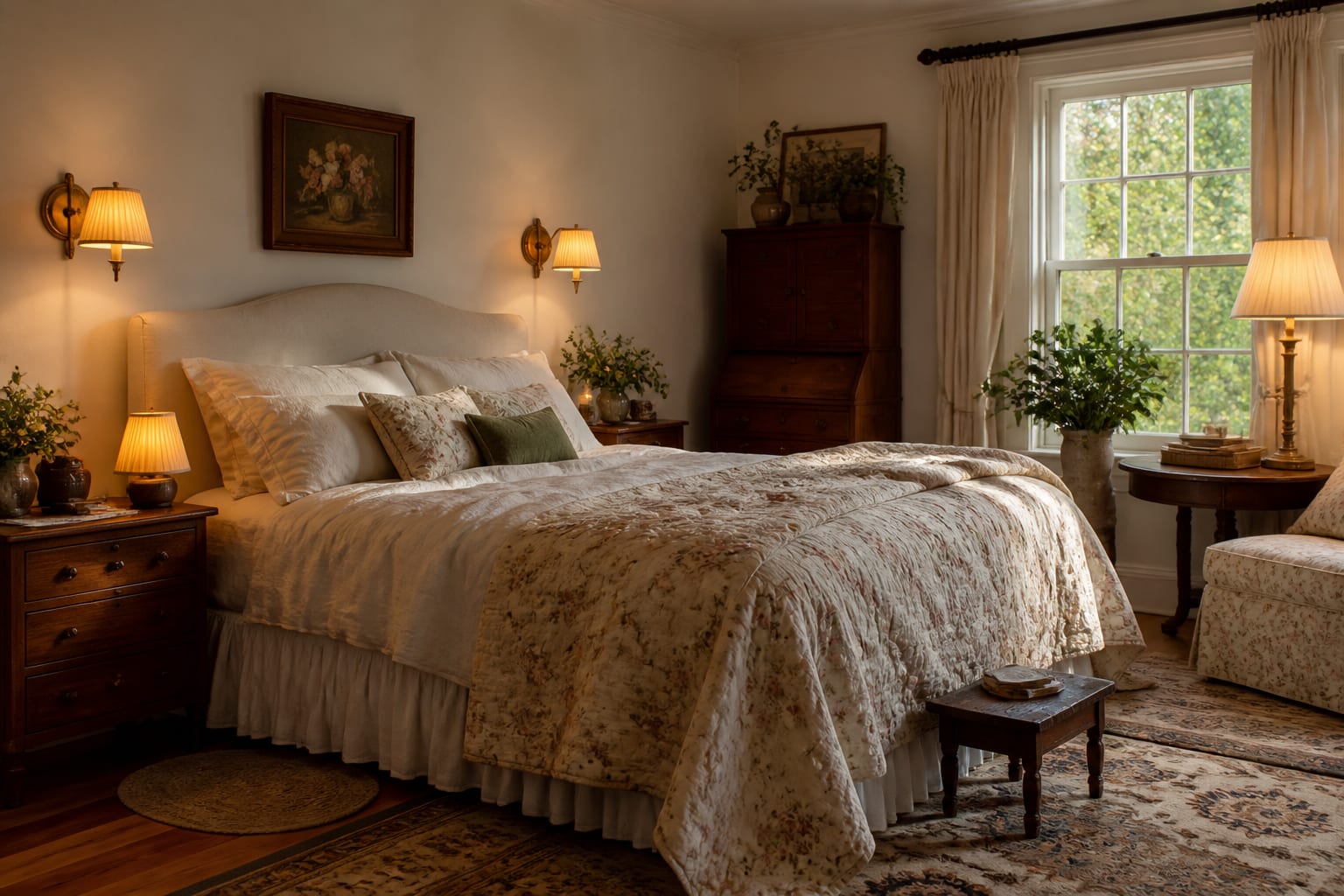
To make a bedroom look cottagecore, layer natural bedding, vintage-feeling furniture, botanical pattern, muted color, and warm light so the room feels lived-in rather than staged. Skip novelty decor and start with linen, wood, warm light, and one floral you genuinely love, then edit hard everywhere else.
What makes a bedroom look cottagecore?
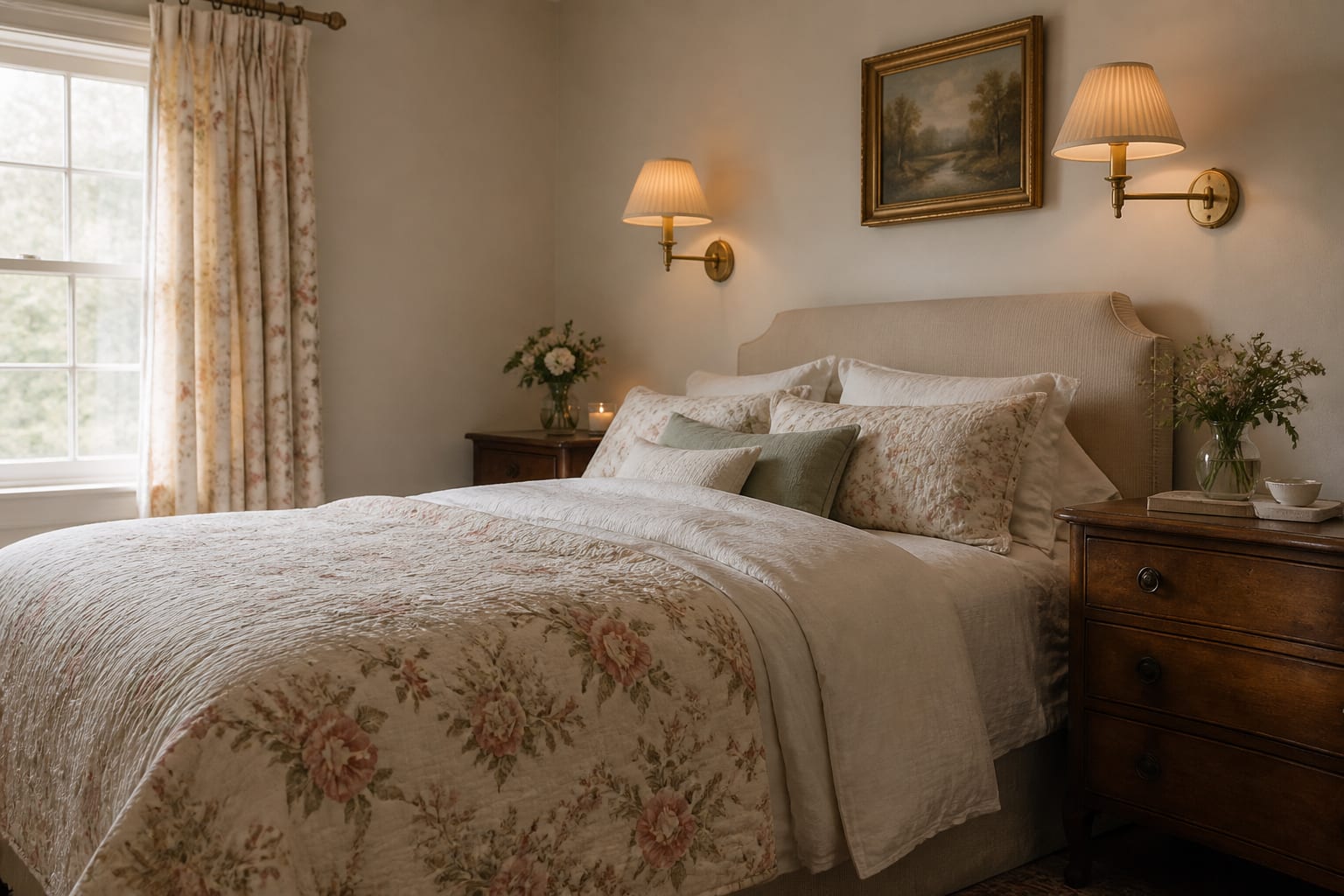
A cottagecore bedroom combines natural bedding, soft botanical pattern, vintage or vintage-feeling furniture, warm light, and a slightly gathered mix of personal objects. It's a balance between practicality and tenderness — the bed looks easy to climb into, surfaces look useful, and decor feels like it arrived over time.
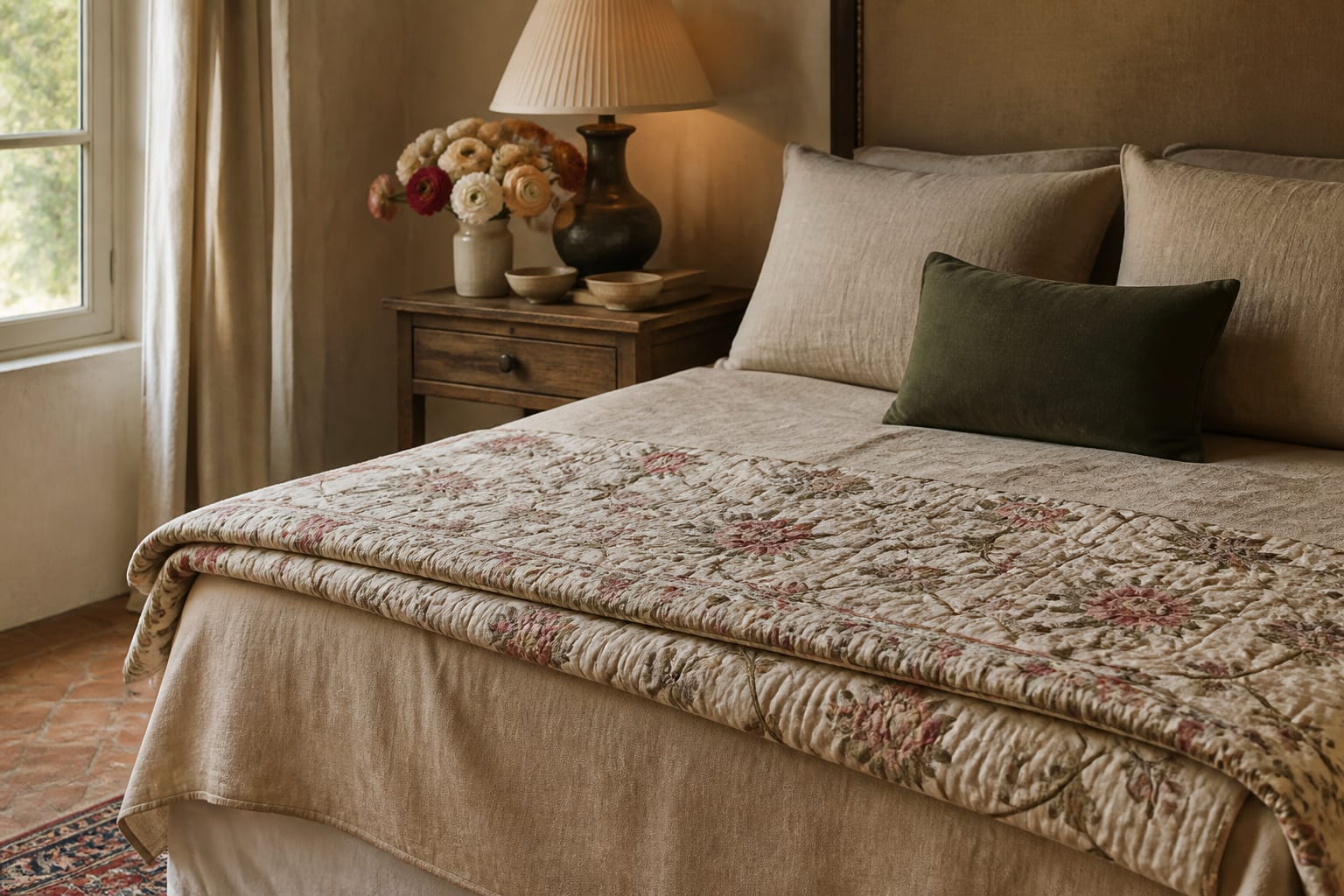
Start with visible bedding layers: a linen duvet cover, cotton sheets, a matelassé coverlet, or a small-scale floral quilt folded across the lower third of the mattress. Keep the quilt quieter against a tall upholstered headboard; add more pattern with a simple wood or iron frame.
Color choices matter more than social feeds suggest. Cream, oatmeal, butter yellow, faded rose, sage, dusty blue, and mushroom brown work better than stark white or candy pink. In a bedroom under 10 ft x 12 ft, keep walls quiet and spend the pattern budget on textiles; in a larger room, small floral wallpaper behind the bed can feel enveloping against a warm neutral elsewhere.
Which cottagecore bedroom ideas actually change the room?
Pick five or six of these medium-size moves rather than trying all of them:
- Hang floral curtains high and wide, rod 6 in-10 in above the casing and 8 in-12 in past each side, for softness and better daylight.
- Swap a synthetic comforter for a linen duvet plus a folded quilt at the foot of the bed for layered texture with only two shams.
- Use a vintage wood nightstand 24 in-30 in high, within 2 in of the mattress top, for charm without sacrificing reach.
- Add one confident botanical pattern — a floral quilt, a 24 in x 36 in framed print, or wallpaper behind the headboard — instead of scattered micro-florals.
- Switch bedside bulbs to 2200K-2700K warm light so cream paint, brass, rattan, and old wood look gentle at night.
- Bring in one skirted or slipcovered piece, like a bench or vanity stool, to soften the room and hide clutter.
- Set a rug extending 18 in-24 in beyond each side of the bed for warm footing and pattern.
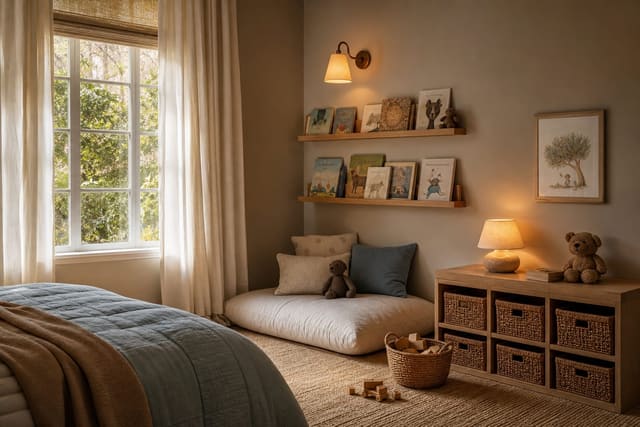
If the bedroom doubles as a reading spot, borrow the cozy logic from a kids reading corner with layered seating: one lamp, one soft seat, one nearby surface beats a random pillow pile.
How do you keep cottagecore from looking cluttered?
Cottagecore fails when every surface becomes a little altar. Aim for one collected surface per wall — a styled nightstand, a dresser vignette, a peg rail, or a vanity tray — not all four.
Use contrast to control the sweetness: plain curtains with floral bedding, solid bedding with busy wallpaper, a simple mirror against a carved dresser. The goal isn't minimalism; it's giving the eye a place to rest.
Storage saves the look. Closed drawers beat open baskets, and under-bed bins should disappear behind a bed skirt or low frame rail. A freestanding wardrobe or painted secondhand dresser carries the vintage mood in a rental without touching walls. Small rooms benefit from the same scale discipline as a small master bedroom that still feels luxurious: fewer, larger gestures instead of tiny decor everywhere.
Keep nightstands to a shaded lamp, a book, a small dish, and one natural element like flowers or a branch. Once chargers, skincare, and candles pile on together, the room stops feeling pastoral and starts feeling crowded.
Use AI to preview your cottagecore bedroom before you commit
Linen, florals, wood tones, and wall color can look charming separately and chaotic together. Uploading a bedroom photo to Re-Design lets you test the whole mood at once — floral curtains against your actual trim, a quilt against your current frame, or sage walls under your real light.
This matters most in north-facing rooms, where cool daylight can turn cream gray and fade pinks. Try a few versions from the same camera angle: pattern on the bed, pattern on the windows, wallpaper only behind the headboard. This also helps when your existing furniture doesn't read cottagecore — a black metal bed or plain white dresser can work with the right bedding, art, and hardware, and previewing shows which piece is actually fighting the room.
Common cottagecore bedroom mistakes
The aesthetic should still produce a usable bedroom that's easy to sleep in and clean.
- Too many tiny florals read as busy; choose one lead floral and support it with stripes, checks, or solids.
- All-pale palettes wash out; ground the room with one deep tone like walnut, bronze, olive, or burgundy.
- Undersized lamps break the cozy effect; a bedside lamp 20 in-28 in tall gives better light and visual weight.
- Decorating every wall removes calm; leave at least one wall quiet so bedding stays the focal point.
- Treating vintage as too fragile makes the room impractical; choose washable covers and sturdy wood that survives daily use.
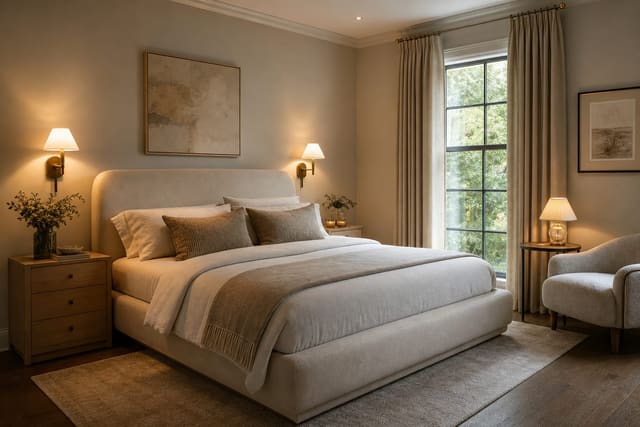
A builder-grade room may need textiles to create architecture — taller curtains, a wider headboard, a bench at the bed. For a larger room, study how a bedroom sitting area changes the room's rhythm before adding extra furniture.
How do you finish the room so it feels collected?
Add something woven, something aged, something floral, something ceramic, and something personal — that mix gives the room a human pace. Art should be gentle but not generic: botanical prints, landscape sketches, pressed flowers, or framed textile fragments, hung 6 in-8 in above a centered headboard or grouped over a dresser with 2 in-3 in between frames.
Keep scent and sound subtle — a lavender sachet beats five competing candles. Choose one small vase for fresh flowers rather than a large arrangement that blocks the lamp.
The final edit: stand in the doorway and remove the piece that shouts the theme loudest. Cottagecore convinces when it looks like a bedroom where someone actually sleeps, reads, and keeps favorite linens.
Frequently Asked Questions
What colors work best in a cottagecore bedroom?
Cream, oatmeal, butter yellow, faded rose, sage, dusty blue, and mushroom brown work best because they read as soft and aged rather than crisp. Stark white and candy pink tend to break the vintage mood. Ground pale palettes with one deeper tone, such as walnut or olive, so the room doesn't wash out.
How do I add cottagecore style without buying new furniture?
Focus on bedding, lighting, and one strong floral piece first. A linen duvet, a folded quilt, warm 2200K-2700K bulbs, and a framed botanical print change the room's mood more than furniture swaps. Existing pieces like a plain dresser or metal bed frame usually work fine once the textiles and light are right.
How much floral pattern is too much?
More than one dominant floral moment usually feels cluttered. Choose a single lead pattern — curtains, wallpaper, or a quilt — and pair it with stripes, checks, or solids elsewhere. Scattering several small florals across the room is the most common way cottagecore tips into busy.
What lighting makes a cottagecore bedroom feel cozy?
Warm bulbs between 2200K and 2700K near the bed keep cream paint, brass, rattan, and old wood looking gentle at night. Cool white bulbs flatten floral colors and make vintage furniture look harsh. Shaded lamps at 20 in-28 in tall also add better reading light and visual weight.
Can cottagecore work in a small bedroom?
Yes, but keep walls quieter and spend the pattern budget on textiles instead of wallpaper if the room is under 10 ft x 12 ft. Use fewer, larger gestures — one floral quilt, one framed print — rather than many small decorative objects, which crowd a small footprint fast.