Cottagecore dining rooms go wrong when people buy a matching set and call it nostalgic. The charm lives in imperfection: a scarred farmhouse table, chairs that clearly arrived from different decades, and linens softened by real washing. Aim for a room that looks gathered over generations rather than ordered in one weekend. Warm honey woods, faded floral cotton, and a shelf of everyday crockery do more than any single statement piece. The mood should feel a little overgrown and very welcoming, like a kitchen garden brought indoors to the table. Below are concrete ways to assemble that gentle, storied feeling, pick textiles that age beautifully, and arrange the room so meals stretch long.
Anchor the Room With a Vintage Farmhouse Table
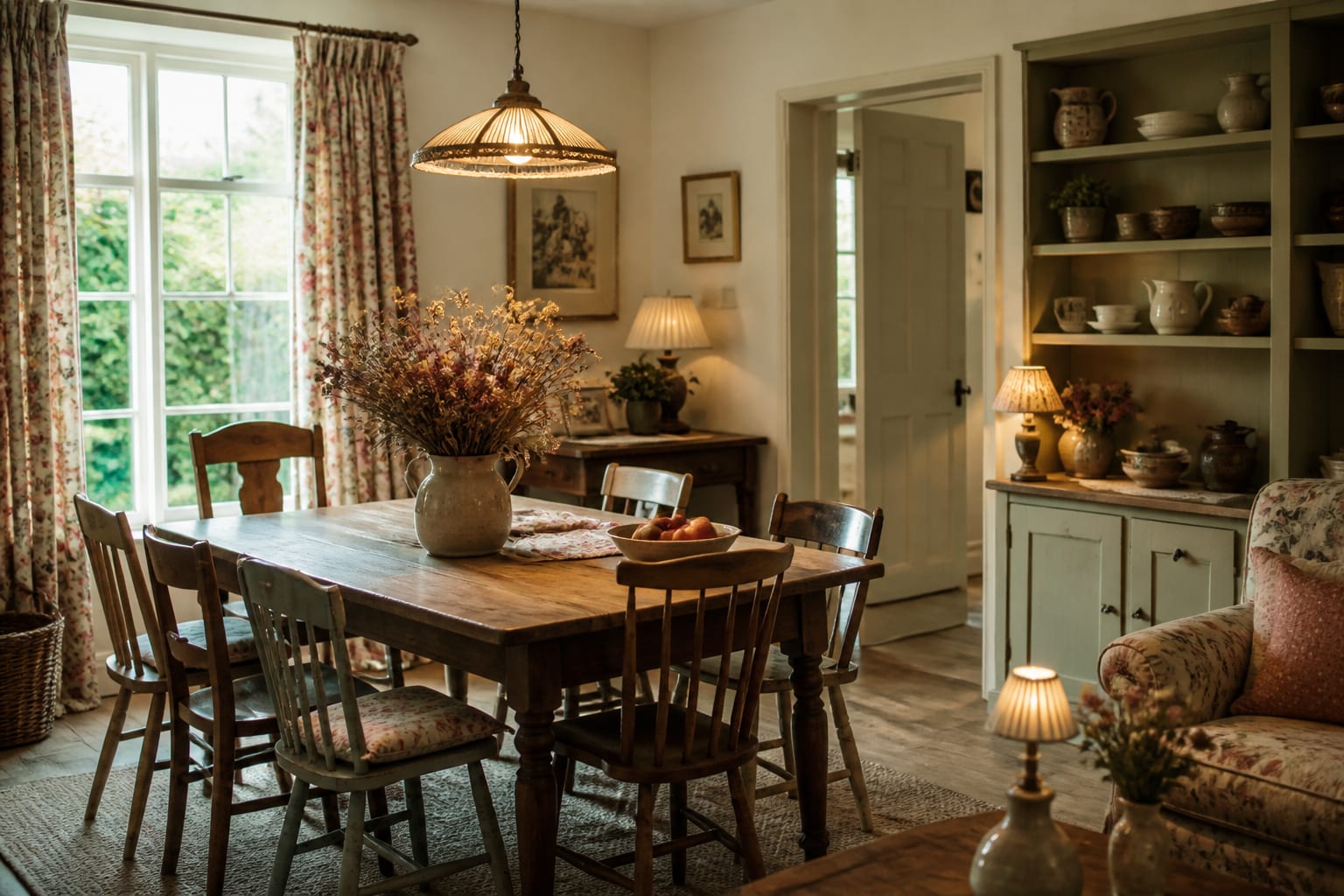
The table sets the entire tone, so let it show some history. A solid wood farmhouse table in oak, pine, or elm reads cottagecore far better than a glossy modern slab, especially when the surface carries small dents, ring marks, and a softly waxed sheen. Look for trestle or turned legs and a plank top wide enough to crowd with serving dishes. A standard top sits around 30 inches high and wants roughly 24 inches of width per diner, so a six-foot length comfortably seats six without anyone bumping elbows. If you cannot source a true antique, an unfinished pine table sanded and rubbed with a tinted wax ages convincingly within a season of family use. Resist the urge to refinish away every scratch; those marks are the point. Position the table so at least one long side faces a window, letting daylight catch the grain through the day. Leave about 36 inches of clearance on each side so chairs pull out and people pass behind seated guests. A table runner in faded ticking stripe or a stack of folded napkins keeps the surface feeling dressed even between meals. If the room is narrow, a table pushed against the wall with a bench on the window side opens the floor and nods to old cottage kitchens where space was always tight and every inch worked hard for the household. Avoid trendy black metal legs or epoxy-river slabs, since both pull the eye toward the contemporary and quietly break the gentle, nostalgic mood you are building. A pedestal base is worth seeking out because it lets extra guests squeeze in along the sides without battling table legs. Treat the table as the heirloom around which the whole room slowly accumulates, and the rest of the styling follows naturally from there.
See also our guide to Small Dining Room Under 100 Sqft for more on cottagecore dining room ideas.
Mix Chairs and Benches for a Collected Feel
Matching chairs are the fastest way to make a cottage room look like a showroom. Instead, gather seats that share a loose family resemblance while differing in shape, age, and finish. Spindle-back, ladder-back, and pressed-cane chairs sit happily together when a single thread ties them, such as a repeated paint color, a similar wood tone, or matching tie-on seat cushions. Painting two or three thrifted chairs the same soft sage or chalky cream instantly relates them without erasing their individuality. A long wooden bench down one side adds the communal, pile-in quality that defines cottage dining, and it tucks fully under the table to save room. Cushions matter more than the frames; a flat boxed pad in ditsy floral or faded gingham softens hard seats and ties the textiles together across the room. Keep cushion fabrics within one palette so the mismatch feels intentional rather than chaotic. Mind the proportions, since chair seats around 18 inches high pair correctly with a 30-inch table and leave comfortable thigh clearance. Mismatched does not mean uncomfortable, so test each seat before committing it to daily meals. A captain's chair or a small armchair at the head gives the table a gentle focal point and a coveted spot. Over time you can swap pieces as you find better ones at estate sales, which keeps the room evolving the way a real cottage always has, slowly and with a story behind every seat. Curved backs and gently worn arms invite people to lean and linger long after the plates are cleared. Where a true antique proves scarce or pricey, an unfinished beech chair lightly distressed by hand blends in convincingly beside the older finds. Aim for the warmth of a table that friends drift toward and refuse to leave, since comfort is the quiet goal hiding behind all the charming mismatch.
For a related angle on cottagecore dining room ideas, read Narrow Dining Room Galley.
Layer Floral Textiles, Gingham, and Linen
Soft, faded fabric is the heart of cottagecore, and a dining room gives you many surfaces to dress. Start with the windows, where a simple gathered curtain or a half cafe panel in small floral print filters light and frames the garden view without heavy formality. Unlined cotton or washed linen drapes loosely and moves in a breeze, which suits the relaxed mood far better than stiff pleats. On the table, mix a ticking-stripe runner with napkins in a contrasting ditsy print, then add a gingham cloth for everyday meals you do not mind staining. Three patterns coexist easily when they share a color, so let a dusty rose or soft butter yellow run through florals, checks, and stripes alike. Seat cushions extend the same fabric story down to the floor and pull the chairs into the scheme. Vintage tea towels draped over a shelf rail or hung from hooks add another layer of pattern at no real cost. Choose natural fibers that wrinkle and fade, since that gentle wear is what separates genuine cottage warmth from a costume version of it. Avoid anything slick, synthetic, or aggressively bright, as those finishes read modern and break the spell immediately. If pattern feels overwhelming, ground it with plain cream walls and bare wood so the textiles read as the accent rather than the entire story. A folded quilt over the bench gives one more soft layer and invites people to settle in for the long, unhurried conversations these rooms are built around. Embroidered or crewelwork cushions found secondhand add handmade detail that no mass-produced print can quite match. Lay a lace or crocheted topper beneath a centerpiece for one more delicate texture that catches the afternoon light. Build the layers gradually, washing and using each fabric until the colors soften, because that earned fade is what makes the room feel genuinely loved rather than freshly assembled for show.
Style Open Shelving With Crockery and Dried Flowers
Open shelving turns everyday dishes into the room's decoration, which is exactly the cottage spirit of beauty in the ordinary. A plate rack, a glass-front dresser, or a few simple wall shelves let your crockery earn its keep on display rather than hidden in a cupboard. Group transferware, ironstone, and floral-rimmed plates by color so the mix feels curated instead of cluttered, and lean larger platters at the back for depth. Stacked mismatched teacups, a cluster of brown stoneware jugs, and a row of clear jars holding dry goods all read warmly cottagecore. Vary the heights across the shelf, pairing tall pitchers with low bowls and tucking small framed botanical prints between stacks. Dried flowers are the finishing layer here, since a jug of dried hydrangea, wheat, or lavender brings the garden inside and lasts for months without fuss. Hang small bunches upside down from a shelf bracket or a length of twine for that classic farmhouse-kitchen look. Keep a few pieces in active rotation rather than purely decorative, because a dresser that you genuinely reach into stays dusted and alive. Edit the display when it starts to feel crowded, removing a piece for every new one you add so the shelves breathe. Warm wood shelving suits the palette best, though painted shelves in a soft heritage green or chalky blue add gentle color. Finish with a small lamp or a candle to throw soft pools of light across the crockery once the daylight fades and the room settles into evening. Hang a few enamel mugs or a string of garlic and dried chillies from cup hooks beneath a shelf for that working-kitchen touch. A shallow bowl of seasonal fruit or foraged greenery keeps the display tied to the garden as the months turn. Let the dresser change with you, swapping summer wildflowers for autumn seed heads, so the shelves quietly mark the passing seasons in the room.
- Set a worn oak farmhouse table beneath a window to catch the daylight.
- Group mismatched spindle and ladder-back chairs unified by one painted color.
- Add a long bench on one side for communal, pile-in family meals.
- Hang a small floral cafe curtain that filters light and frames the garden.
- Mix ticking stripe, gingham, and ditsy floral textiles within one soft palette.
- Display transferware and stoneware jugs on open shelving grouped by color.
- Tuck jars of dried hydrangea, wheat, and lavender among the crockery.
- Drape a folded quilt over the bench for an extra layer of cozy texture.
Bring the look home with Re-Design
Cottagecore lives or dies on how the layers actually combine, which is hard to judge from a single shop photo. Before you commit to a table tone, a wall color, or a curtain print, upload a photo of your dining room to Re-Design and preview the styled look in place. You can test honey oak against painted chairs, swap gingham for floral curtains, and see whether open shelving crowds the wall before anything is bought. Seeing the room rendered first saves you from a charming idea that turns cluttered once real furniture arrives.
Frequently Asked Questions
What table is best for a cottagecore dining room?
Choose a solid wood farmhouse table in oak, pine, or elm with visible grain and a softly worn surface. Trestle or turned legs and a plank top suit the style. A six-foot length seats six comfortably. Skip glossy modern finishes, since gentle dents and ring marks are what give the table its lived-in cottage charm.
Do dining chairs need to match in cottagecore style?