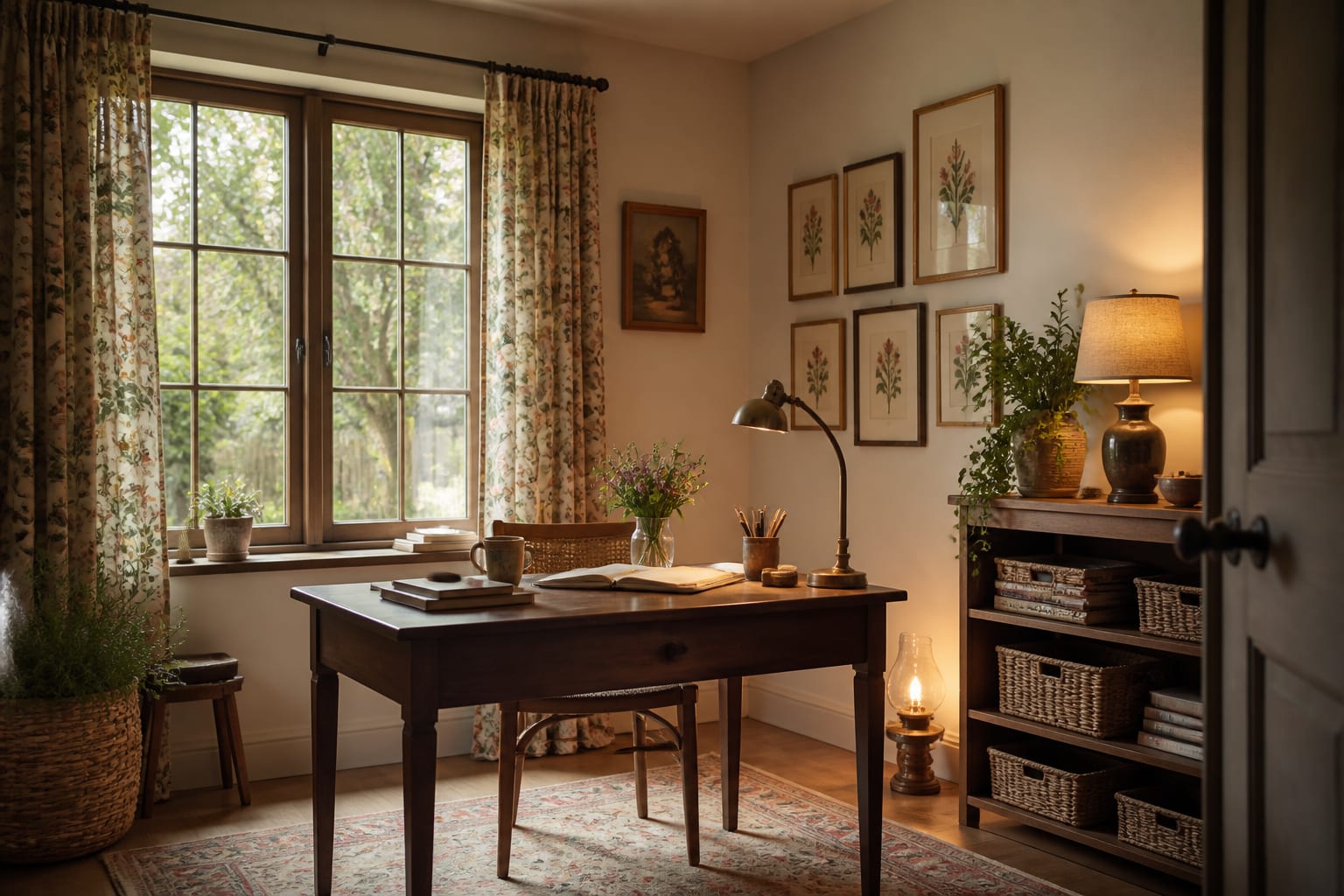
A cottagecore home office pairs a warm wood or painted desk, one confident botanical pattern, vintage-feeling storage, soft 2700K lighting, and enough clear surface to actually work. Prioritize the chair, task light, and storage over decorative objects so the room handles video calls, notebooks, and cords while still feeling hand-touched and calm.
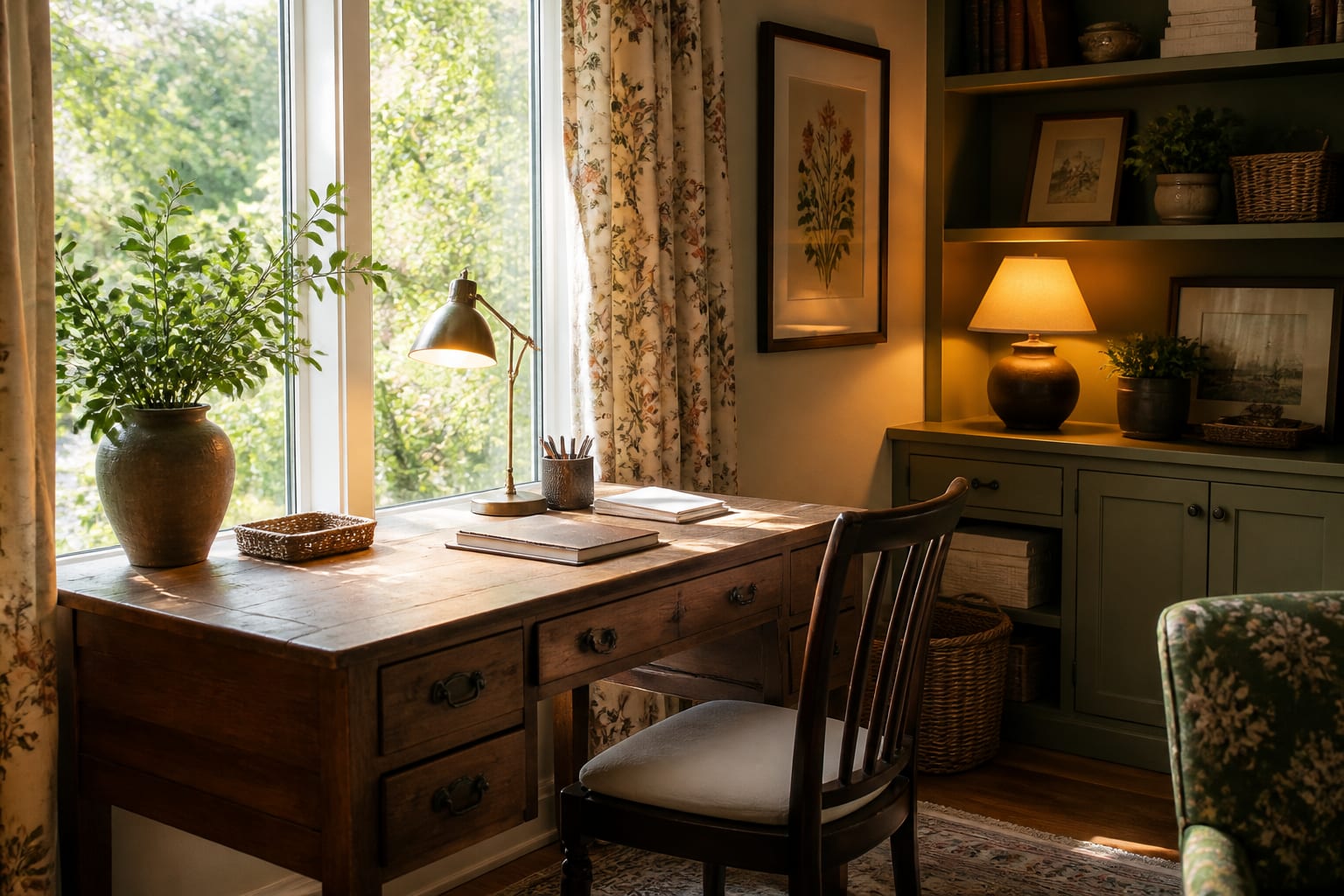
What makes a home office feel cottagecore without becoming cluttered?
A cottagecore office feels nature-led, tactile, and quietly useful: wood, fabric, paper, plants, old metal, and warm light, paired with storage that supports daily work. Aim for a writer's desk or garden-room mood, not a craft-store aisle. That distinction matters because remote work creates its own mess of cables, sticky notes, folders, and mugs.
Start with the desk. A real wood desk, painted writing table, or vintage dining table usually beats a glossy white slab. For laptop work, aim for a surface at least 42 in wide and 20 in–24 in deep; with a monitor, go 48 in–60 in wide. A desk height of 28 in–30 in suits most chairs, but chair height and keyboard position matter more than the silhouette.
Keep the palette grown, not sugary: cream, putty, sage, olive, warm brown, dusty blue, faded rose, and aged brass all pair naturally with paper, wood, and linen. If your room already has dark flooring or a black monitor, repeat that darker note once in a frame, lamp base, or cabinet pull so the office looks intentional rather than accidental.
Which cottagecore ideas actually change the desk setup?
The strongest ideas are visible from the doorway and useful from the chair. Pick five or six that match your workload; a full-time accountant needs different storage than someone writing at a laptop twice a week.
- Place the desk near natural light but perpendicular to the window to avoid screen glare.
- Hang floral or linen curtains 6 in–10 in above the casing, extended 8 in–12 in past each side, to soften the wall and let daylight reach the desk.
- Choose a desk lamp 18 in–26 in tall with a fabric, glass, or metal shade for real task light.
- Add one botanical focal point at a confident scale, such as a 24 in x 36 in garden print or a wallpaper panel behind open shelves.
- Use a vintage hutch or filing cabinet no deeper than 16 in–20 in in tight rooms to keep the walkway clear.
- Add a low-pile rug extending at least 24 in beyond the chair's pulled-out position; thick pile fights rolling casters.
- Corral cords in a woven box or cable sleeve under the desktop; visible wires break the mood fastest.
- Use a 4 in–6 in potted plant only where light supports it; in dim rooms, use branches or pressed botanicals instead.
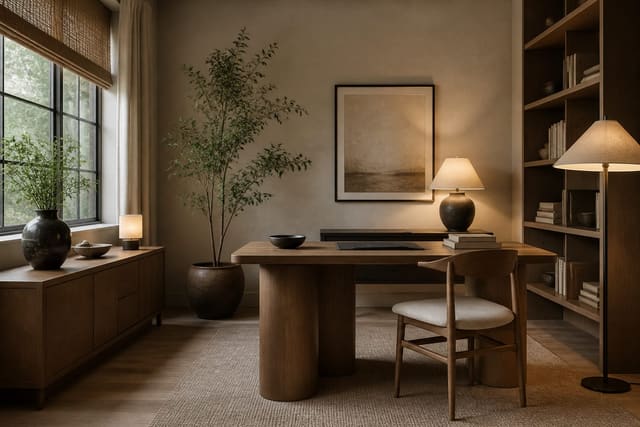
If you prefer a cleaner silhouette, compare the restraint in Japandi home office ideas before adding another patterned piece.
How should storage, color, and lighting support real work?
Cottagecore offices collapse when storage is an afterthought. Keep daily tools close, occasional supplies behind doors, and sentimental objects in the minority.
A practical desk zone has three layers: the desktop (laptop, one lamp, one notebook, one small tray), the arm's-reach zone (pens, chargers, weekly files, headphones in a drawer or caddy), and the background zone (books, printer paper, archives, decor on shelves). This hierarchy matters because the camera sees every restless object behind your shoulders on calls.
Keep the largest surfaces quiet for concentration: cream walls, mushroom shelving, warm white curtains, a wood desk. Put the cottagecore note in a floral shade, sage cushion, painted cabinet, or botanical art. If the office shares a bedroom, echo one bedding color so it reads as one room, not a bolted-on project.
For a greener direction, see biophilic home office ideas and keep the cottagecore layer softer: more wood grain, linen, and paper, less spa symmetry.
Common mistakes that make the office hard to work in
Cottagecore is forgiving in a bedroom but exposes bad decisions in an office by 10 a.m. The setup still has to support typing, filing, and looking presentable on camera.
- A charming but uncomfortable chair ruins the room by day two; use a supportive task chair and soften it with a linen cushion or cane-style back.
- Tiny decor on every shelf looks busy on camera; store files in lidded boxes and leave a third of each shelf visually quiet.
- A delicate writing table wobbles under a monitor setup; for two screens, use a sturdier desk at least 54 in wide with power strips hidden below.
- Florals everywhere weaken the room; pick one lead pattern and support it with stripe, plain linen, or painted storage.
- Ignoring existing black or silver tech makes the design feel fake; repeat that color once or twice in frames or hardware.
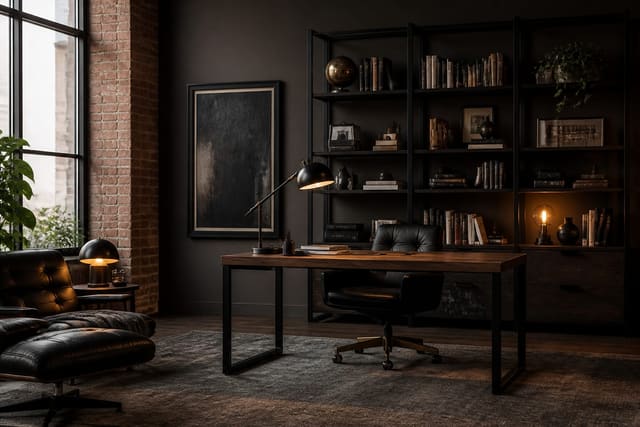
If your desk is black steel or pipe-framed, borrow balance from industrial home office ideas while adding cottagecore softness through curtains, warm bulbs, and wood.
Use AI design to test the desk corner before you commit
Cottagecore is risky to assemble one item at a time because relationships matter more than objects. Floral curtains can look lovely online and frantic beside a busy rug; a vintage hutch can block the only comfortable chair path at home.
Upload a photo of the actual corner to Re-Design and compare full versions before ordering furniture or paint. Test one version with pattern at the window, one with a painted desk, and one with a quieter palette plus more wood. Keep real constraints visible: outlet location, window size, door swing, and the chair's pulled-out depth.
Ask specific questions as you compare: Does a secretary desk look too small under the window? Does a hutch crowd the video-call background? Keep the camera angle consistent so you judge the design, not a prettier view.
What finishing details make the space feel personal?
The final layer should connect to the work you actually do. A writing-focused office might need stacked books, a shaded lamp, and a pinboard. A craft-heavy office needs closed drawers and a washable rug. A client-facing office needs a calmer background and fewer objects in frame.
Hang art 57 in–60 in on center when it stands alone, or keep 2 in–3 in between smaller framed pieces in a grouping. A framed landscape, pressed fern, or botanical study brings the garden mood without taking desk space. Edit a bulletin board weekly; one full of expired reminders is not romantic.
Add one scent, sound, or tactile habit only if it helps work: a ceramic pen cup, a linen notebook, or a vase with two stems does more than a shelf of themed objects. The office is finished when the desk has breathing room, storage hides the unlovely tools, and the room still feels gentle after the laptop opens.
Frequently Asked Questions
How big should a cottagecore desk be?
Aim for at least 42 in wide and 20 in–24 in deep for laptop work, or 48 in–60 in wide if you use a monitor. A desk height of 28 in–30 in suits most chairs, but chair height and keyboard position matter more than the desk's romantic silhouette for daily comfort.
What lighting works best for a cottagecore office?
Use warm bulbs around 2700K in shaded fixtures, paired with a desk lamp 18 in–26 in tall for real task light. Layered warm lighting keeps wood, cream paint, brass, and floral textiles feeling soft rather than sterile once daylight fades in the late afternoon.
How do I keep a floral office from looking too busy?
Pick one lead pattern at a confident scale, such as curtains or a large art print, and support it with plain linen, ticking stripe, or painted storage elsewhere. Repeating florals in multiple small doses is what makes a room feel cluttered instead of intentional.
Can a cottagecore office handle a monitor and heavy tech?
Yes, but use a sturdier desk at least 54 in wide for a two-screen setup, and hide power strips and cables below the surface. Repeat your equipment's black or silver tone once in a frame or lamp detail so the tech looks planned, not stranded.
How do I test cottagecore ideas before buying furniture?
Upload a photo of your desk corner to Re-Design and compare full design versions, such as one with pattern at the window and one with a quieter palette. Keep the camera angle and real room constraints, like outlets and door swing, consistent across each version you review.