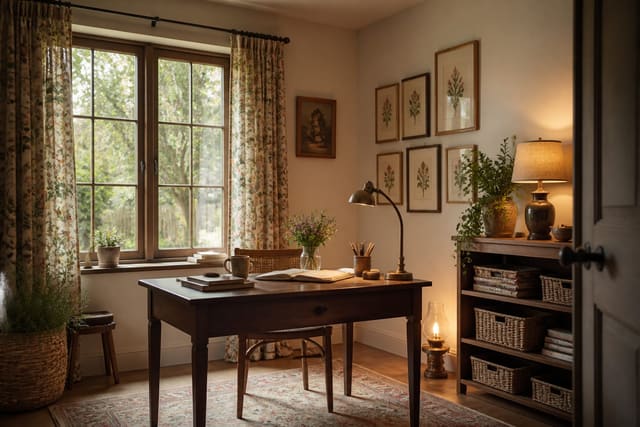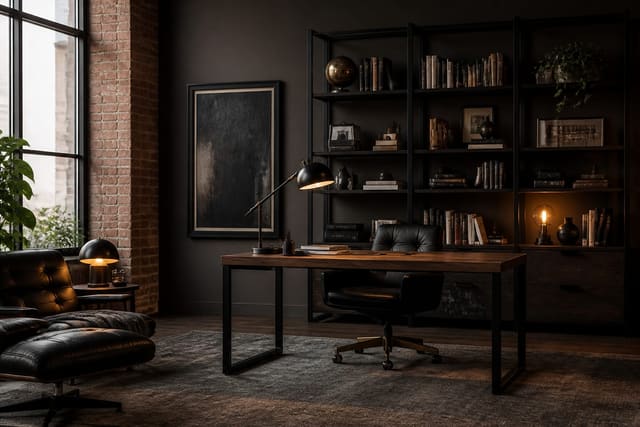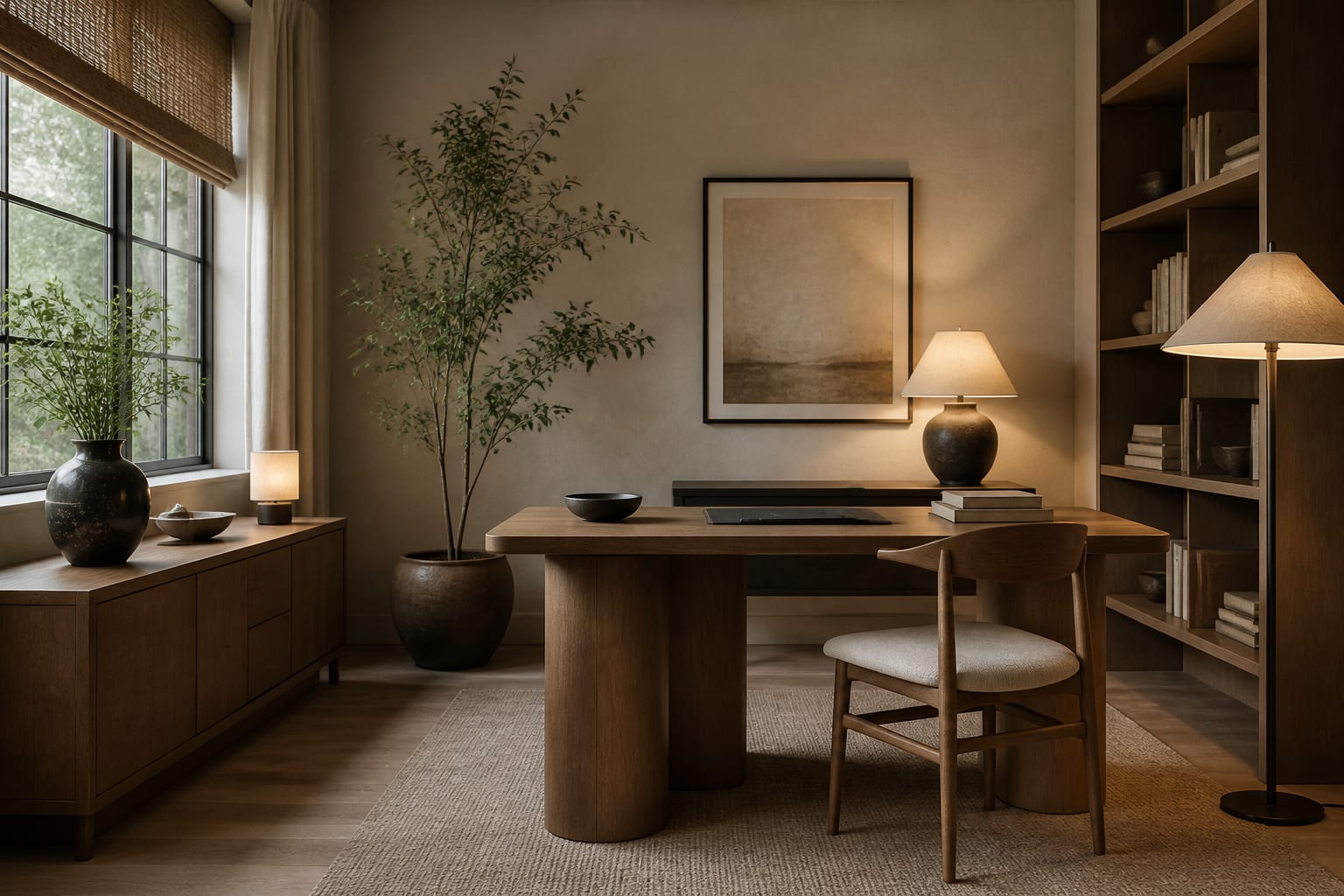
A Japandi home office pairs Japanese minimalism with Scandinavian warmth: a clean wood desk, muted neutral palette, closed storage, and layered warm lighting. Together these elements strip away visual noise while keeping the room comfortable, creating a calm, focused workspace that's inviting enough to sit in for hours.
What Kind of Desk and Layout Work Best?
Choose a desk with clean lines and a natural wood top in light Scandinavian oak or ash, or a slightly darker timber for contrast, with slim tapered legs that keep the piece feeling light. Skip bulky executive desks and glossy finishes, which fight the calm minimalism this style needs. Keep the surface mostly clear, reserving space only for daily essentials.
Position the desk to catch natural light from the side rather than straight ahead or behind, reducing screen glare. Leave at least 36 inches of clearance behind the chair so you can push back and stand freely. A simple wooden tray for a notebook and pen keeps the surface tidy without adding decoration.
See also our guide to Cottagecore Home Office Ideas for more on japandi home office ideas.
How Do You Control Clutter and Cables?
Favor closed storage over open shelving: a low wooden cabinet or a few discreet drawers keeps supplies and paperwork out of sight. If you use open shelves, style them sparingly with a handful of books and one or two natural objects. Route cables with an under-desk tray, fabric sleeves, and clips along the legs, since visible cords instantly undercut the calm look.
- Choose a wireless keyboard and mouse to cut down on desk clutter
- Tuck a small shredder or filing box inside a cabinet
- Keep at least 70% of visible surfaces clear
This discipline of hiding practical clutter is what lets natural materials and a quiet palette stand out.
For a related angle on japandi home office ideas, read Industrial Home Office Ideas.
Which Colors and Textures Fit a Japandi Office?
Build the palette from soft white, oatmeal, and pale gray walls with natural wood as the grounding tone. Add deeper accents, such as charcoal, ink black, or muted green, for the gentle contrast that separates Japandi from plain beige minimalism. Layer texture with a wool rug, a linen cushion, a ceramic pot, and the visible grain of the wood desk.
Choose a chair that supports good posture while looking refined, ideally wood and natural fabric or soft leather rather than a bulky gaming seat. A single plant, like a snake plant or small olive tree, adds life without clutter. Keep window treatments simple with a linen shade that softens daylight.
How Should You Light the Desk for Long Workdays?
Layer ample natural daylight with warm artificial sources rather than relying on one harsh overhead fixture. A clean-lined desk lamp with a warm bulb around 3000K gives focused task light, while a soft ambient source, like a low floor lamp or wall light, fills the room and prevents tiring contrast. Position the task lamp opposite your writing hand to avoid shadows.
During the day, let daylight lead, using a linen shade to diffuse strong direct sun that glares on screens. Dimmable fixtures let you adjust the mood as the day shifts, keeping the room comfortable from morning through evening.
- Choose a clean oak desk with slim tapered legs
- Hide supplies in a low closed wooden cabinet
- Route cables with under-desk trays and fabric sleeves
- Build the palette from warm neutrals and natural wood
- Add a single snake plant in a ceramic pot
- Layer warm task and ambient lighting at the desk
Bring the Look Home with Re-Design
Want to see your spare room or desk corner reworked as a calm Japandi office? Upload a photo to Re-Design and preview a clean oak desk, muted neutral walls, hidden storage, natural texture, and warm layered lighting against your actual room before deciding what to put into place.
Frequently Asked Questions
How do I design a Japandi home office?
Pair a clean Scandinavian desk with Japanese restraint and natural warmth. Choose a light timber surface, an ergonomic chair in muted fabric, and sparse open shelving. Stick to a calm palette of oak, white, and soft gray, and hide cables and clutter so the desk stays clear for focused, quiet work.
What desk works best for a Japandi office?
A simple solid-wood desk with slim legs and a flat, uninterrupted top works best. Oak, ash, or walnut in a matte finish suits the style and ages well. Skip heavy pedestals and ornate trim, and keep a small drawer or nearby cabinet for supplies so the surface stays open and uncluttered.
How do I add storage without clutter?
Use closed storage and a few well-edited open shelves. Low wooden cabinets, woven baskets, and a single floating shelf keep essentials reachable yet hidden. Display only a couple of meaningful objects, like a ceramic cup or one book, and keep cable management tidy so the eye has room to rest.
What colors suit a Japandi home office?
Warm neutrals anchor the room best: pale oak, off-white walls, soft gray textiles, and an occasional charcoal accent form a balanced, soothing base. Add a touch of muted green through a single plant for life and freshness, and avoid bright, energetic hues that distract during long work sessions.